Recombinant human TPO (Thrombopoietin) can be used to generate and expand hematopoietic stem cells. Megakaryocytes growth and development is also stimulated by TPO, and in vivo it regulates the level of circulating platelets thus, it is crucial for megakaryocytopoiesis and thrombopoiesis. Recombinant human TPO is optimized for use in cell culture, differentiation studies, and functional assays.


Related products for Human TPO
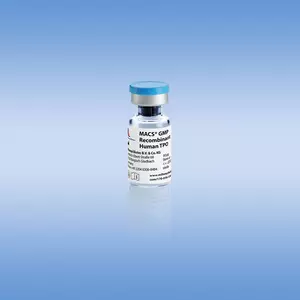
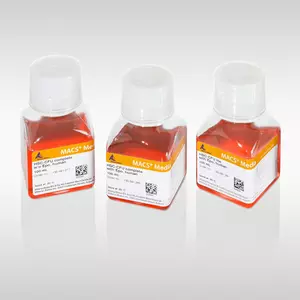
Recombinant human TPO (Thrombopoietin) can be used to generate and expand hematopoietic stem cells. Megakaryocytes growth and development is also stimulated by TPO, and in vivo it regulates the level of circulating platelets thus, it is crucial for megakaryocytopoiesis and thrombopoiesis. Recombinant human TPO is optimized for use in cell culture, differentiation studies, and functional assays.
Human TPO can be used for a variety of applications, including:
- Megakaryocyte proliferation and differentiation in vitro.
- In vitro expansion of CD34+ hematopoietic progenitor cells.
- Differentiation of ES-derived cells towards the hematopoietic lineage.
- In vitro platelet activation.
- Apoptosis assays.
MDGF, TSF, MGDF
Biological activity
Thrombopoietin (TPO), also known as thrombopoiesis stimulating factor (TSF), is a glycoprotein hormone and the major stimulator of megakaryopoiesis and platelet production. TPO is expressed in liver, kidney, spleen, lung, bone marrow, and brain. The TPO receptor is a product of the proto-oncogene c-mpl and displays homology with type I cytokine receptor superfamily members. Analogous to the effect of erythropoietin (EPO), the primary mode of action of TPO is inhibition of apoptosis of its target cells. By contrast, TPO is strongly proapoptotic in the brain and acts as a counterpart of EPO which has neuroprotective properties.
Research-grade cytokines are suitable for a wide variety of cell culture applications. They are sterile-filtered prior to lyophilization. Generally, endotoxin levels are <0.1 ng/μg (<1 EU/μg), and purities are >95%. The biological activity is tested in appropriate bioassays.
Premium-grade cytokines offer the convenience of high and well-defined biological activities and allow exact unit dosing for demanding applications. The biological activity is determined after lyophilization and reconstitution, and normalized to WHO/NIBSC standards whenever available. In general, endotoxin levels are <0.01 ng/μg (<0.1 EU/μg), and purities are >97%. Lot-specific activities are stated in the Certificate of Analysis (www. miltenyibiotec.com/certificates).
Human TPO biological activity. The biological activity of Human TPO, research grade is determined by proliferation assay using MO7e cells.
Human TPO biological activity. Activity of Human TPO, research grade, (red bar) was compared to another commercially available product (black bar).
SDS-PAGE of Human TPO, research grade under reducing (R) and non-reducing (NR) conditions.
Mass spectrometry analysis (ESI-MS) of Human TPO, premium grade. The first RP-HPLC peak corresponds to the calculated molecular mass of 18804 Da with N-terminal methionine.
Mass spectrometry analysis (ESI-MS) of Human TPO, premium grade. The second RP-HPLC peak corresponds to the calculated molecular mass of 18832 Da with N-terminal formyl-methionine.
To access a Certificate of Analysis (CoA) follow the link below and enter the specific lot of your product.
Should you wish to request additional documentation, such as a Safety Data Sheet (SDS) in other languages than English or Swedish, an SDS-replacement document, or a Certificate of Origin (CoO), please direct your inquiry to your local technical support team.
- Chae, H.-D. et al. (2020) RSK inhibitor BI-D1870 inhibits acute myeloid leukemia cell proliferation by targeting mitotic exit. Oncotarget. 11 (25): 2387-2403
- Laurenti, E. et al. (2015) CDK6 levels regulate quiescence exit in human hematopoietic stem cells. Cell Stem Cell 16 (3): 302-313
- Hornick, N. I. et al. (2015) Serum Exosome MicroRNA as a Minimally-Invasive Early Biomarker of AML. Sci Rep 5: 11295
- Zhang, J. et al. (2016) Deregulation of DUX4 and ERG in acute lymphoblastic leukemia. Nat. Genet. 48 (12): 1481-1489
- Brault, J. et al. (2014) Optimized generation of functional neutrophils and macrophages from patient-specific induced pluripotent stem cells: ex vivo models of X0-linked, AR220- and AR470- chronic granulomatous diseases. Biores Open Access 3 (6): 311-326
- Lamsfus-Calle, A. et al. (2020) Comparative targeting analysis of KLF1, BCL11A, and HBG1/2 in CD34 + HSPCs by CRISPR/Cas9 for the induction of fetal hemoglobin. Sci Rep 10 (1): 10133
- Arbesu, I. et al. (2016) Platelet-borne complement proteins and their role in platelet-bacteria interactions. J. Thromb. Haemost. 14 (11): 2241-2252
- Nakazawa, Y. et al. (2016) Anti-proliferative effects of T cells expressing a ligand-based chimeric antigen receptor against CD116 on CD34(+) cells of juvenile myelomonocytic leukemia. J Hematol Oncol. 9: 27
- Steinleitner, K. et al. (2012) EVI1 and MDS1/EVI1 expression during primary human hematopoietic progenitor cell differentiation into various myeloid lineages. Anticancer Res. 32 (11): 4883-4889
- Xie, Z. S. et al. (2019) Sphingolipid Modulation Activates Proteostasis Programs to Govern Human Hematopoietic Stem Cell Self-Renewal. Cell Stem Cell 25 (5): 639-653
- Diener, Y. et al. (2015) RNA-based, transient modulation of gene expression in human haematopoietic stem and progenitor cells. Sci Rep 5: 17154
You have previously chosen International as your location.
What do you want to do?