Autoimmune diseases: CAR T and emerging cell therapies


Autoimmune diseases: CAR T and emerging cell therapies
Immune cell dysfunction causes autoimmunity
Several autoimmune diseases (AID), like systemic lupus erythematosus (SLE), multiple sclerosis (MS), and rheumatoid arthritis (RA), stem from B cells secreting autoantibodies or eliciting antibody-independent cytokine secretion and T cell engagement that leads to inflammation. B cell involvement in other AIDs is less clear and an important research question. AIDs can lead to poor quality of life and, in some cases, to death due to secondary diseases.1
Treatment for many AIDs starts with symptom management with, for example, anti-inflammatory drugs.2 Small molecules and monoclonal antibodies targeting CD20, CD19, and BAFF are used in severe forms of B cell-mediated AID, but efficacy is variable as disease mechanisms are heterogeneous.2,3 Researchers are also exploring other targets, like BCMA, CD22, CD38, CD40, and its ligand CD154.2,3
Exploring the potential of cell therapy for autoimmune diseases
Immune system resetting with an autologous hematopoietic stem cell transplant (HSCT) can be an option for very severe AID, if the benefit of the transplant outweighs its risks.4 Allogeneic HSCT might produce more extended remission stability.4 Additionally, regulatory T cells, dendritic cells, and NKT cells have been explored in clinical trials.5–7
In recent studies, patients with SLE and other B cell-mediated AIDs were treated with CD19-specific CAR T cells.3,8 Promising clinical results prompted a wave of experimental studies that extended CAR T cell targeting to one or multiple alternative markers, like CD22 and BCMA, to treat several AID indications.3 Next-generation strategies include chimeric autoantibody receptor (CAAR) and B-cell antibody receptor (BAR) T cells, which target autoreactive B cells with constructs using an autoantigen as the binding domain.9 This approach can also be extended to other cytotoxic cell types like NK cells.6 Any of these engineered strategies can be combined with the tolerogenic function of regulatory T cells to switch the environment of targeted B cells through paracrine activity.6
Understanding autoimmune disease and cell therapy options
Cell therapy for AID is still exploratory as researchers elucidate the heterogeneity of these disorders, uncover appropriate antigens for targeting, and leverage synergistic immune cell functions. As a pioneer in the cell manufacturing space, Miltenyi Biotec offers the following solutions and workflows to make those developments a reality.
Improving cell therapy safety and immune monitoring
Most AID patients have a long life expectancy1,4, so risks associated with cell therapy must be minimized. Working with Miltenyi Biotec solutions for graft engineering and standardized quality control, clinicians are looking to reduce the side effects of HSCT and boost immediate and long-term efficacy.


Miltenyi Biotec solutions in the field
Cell therapies have expanded into treating autoimmune diseases, and results are promising.10 Miltenyi Biotec solutions have been vital to progress in this therapeutic area, from enriching hematopoietic stem cell grafts to engineering CAR T cells. The following materials show how our solutions are deployed in clinical research on autoimmune diseases.
Recorded talk
CAR T cells for the treatment of B cell–mediated autoimmune diseases
Andreas Mackensen, MD, Director of the Oncologic Center at University Clinic Erlangen, Germany, presents an update on the clinical efficacy and safety of the first SLE patients receiving CD19 CAR-T cell therapy.
Would you like to hear more from your peers?
Publication
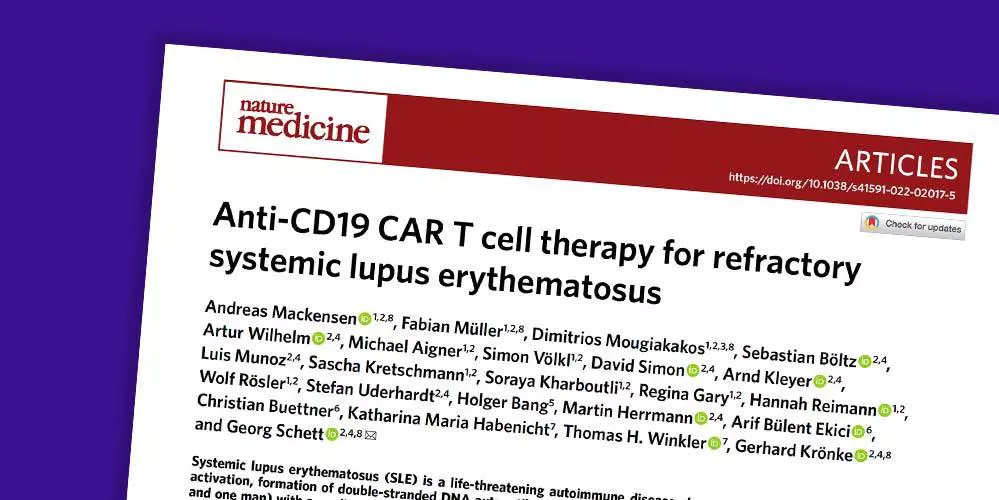
Anti-CD19 CAR T cell therapy for refractory systemic lupus erythematosus
Mackensen, A. et al. (2022) Nature Med. 28: 2124.
Five patients suffering from systemic lupus erythematosus (SLE) and unresponsive to standard therapy were treated with autologous T cells transduced with a lentiviral anti-CD19 CAR. After treatment, B cells decreased significantly, symptoms improved, and laboratory parameters normalized. Data suggested that CD19 CAR T cell transfer is feasible, tolerable, and highly effective in SLE.
Publication
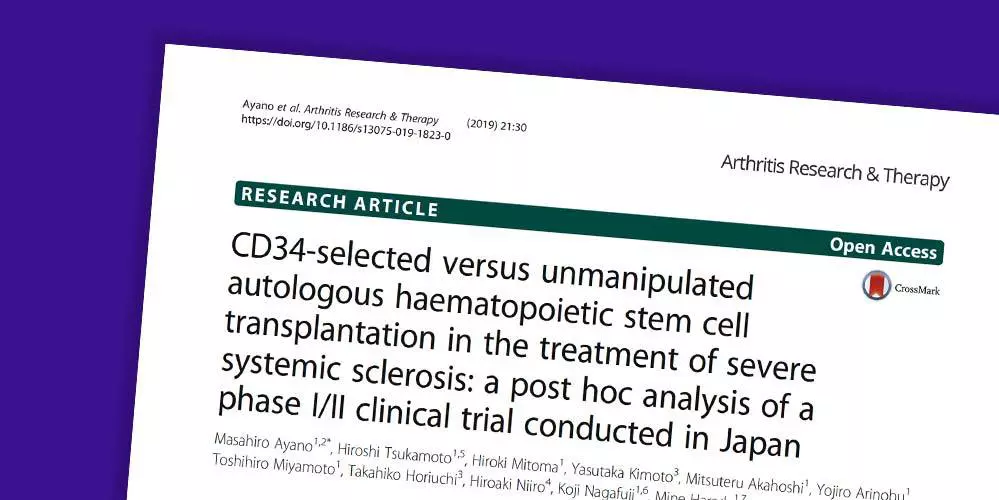
CD34-selected versus unmanipulated autologous hematopoietic stem cell transplantation in the treatment of severe systemic sclerosis: a post hoc analysis of a phase I/II clinical trial conducted in Japan
Ayano, M. et al. (2019) Arthritis Res. Ther. 21: 30.
Systemic sclerosis patients were treated with either unmanipulated HSCT or a CD34-selected graft. The condition improved in both patient groups, but improvements were greater in the CD34-selected group. The authors conclude that use of the selected HSCT "may offer an excellent benefit-to-risk balance."
Additional publications
- Mougiakakos, D. et al. (2025) Successful generation of fully human, second generation, anti-CD19 CAR T cells for clinical use in patients with diverse autoimmune disorders. Cytotherapy 27: 236–246. | Read article
- Auth, J. et al. (2025) CD19-targeting CAR T-cell therapy in patients with diffuse systemic sclerosis: A case series. Lancet Rheumatol. 7: e83–e93. | Read article
- Müller, F. et al. (2024) CD19 CAR T-cell therapy in autoimmune disease - a case series with follow-up. N. Engl. J. Med. 390: 687–700. | Read article
- Krickau, T. et al. (2024) CAR T-cell therapy rescues adolescent with rapidly progressive lupus nephritis from haemodialysis. Lancet 403: 1627–1630. | Read article
- Hagen, M. et al. (2024) Treatment of CNS systemic lupus erythematosus with CD19 CAR T cells. Lancet 404: 2158–2160. | Read article
- Bergmann, C. et al. (2023) Treatment of a patient with severe systemic sclerosis (SSc) using CD19-targeted CAR T cells. Ann. Rheum. Dis. 82: 1117–1120. | Read article
- Müller, F. et al. (2023) CD19-targeted CAR T cells in refractory antisynthetase syndrome. Lancet 401: 815–818. | Read article
- Pecher, A.-C. et al. (2023) CD19-targeting CAR T cells for myositis and interstitial lung disease associated with antisynthetase syndrome. JAMA 329: 2154–2162. | Read article
- Sullivan, K.M. et al. (2018) Myeloablative autologous stem-cell transplantation for severe scleroderma. N. Engl. J. Med. 378:35-47. | Read article
- Keever-Taylor, C. A. et al. (2017) Manufacture of autologous CD34+ selected grafts in the NIAID-sponsored HALT-MS and SCOT multicenter clinical trials for autoimmune diseases. Biol. Blood Marrow Transplant. 23:1463–1472. | Read article
- Oliveira, M. C. et al. (2016) Does ex vivo CD34+ positive selection influence outcome after autologous hematopoietic stem cell transplantation in systemic sclerosis patients? Bone Marrow Transplant. 2016, 51:501–505. | Read article

Explore other indications or contact our experts
Unless otherwise specifically indicated, Miltenyi Biotec products and services are for research use only and not for therapeutic or diagnostic use. For complete regulatory notes, please click here.
You have previously chosen International as your location.
What do you want to do?