Optimized cultivation, activation and expansion of human NK cells. The xeno-free composition with no need for feeder cells ensures reproducible results.


Related products for NK MACS® Medium, human


Optimized cultivation, activation and expansion of human NK cells. The xeno-free composition with no need for feeder cells ensures reproducible results.
NK MACS Medium was developed for the cultivation, activation, and expansion of human NK cells. It is produced without animal derived components and contains stable glutamine, as well as phenol red. The complete xeno-free media ensures reduced variability and standardized performances during culture. Robust and consistent results are backed as no feeder cells are necessary for NK cell expansion with NK MACS Medium (though they can be combined if wanted).
As starting material isolated human NK cells or PBMCs can be used. When starting the expansion from PBMCs, NK MACS Medium favors NK cell growth. Its defined composition limits the growth and expansion of unwanted cells, such as T cells, NKT cells, B cells, or DCs). Expanded NK cells are fully functional and can be used in downstream assays, e.g. killing assays.
Translation is made easy with NK MACS medium, as it is available also in MACS GMP grade with the same formulation as the research product.
High expansion of NK cells in NK MACS Medium. NK cell fold expansion from PBMCs (n=3) using 5% AB serum and 500 IU/mL of IL-2 and 140 U/mL IL-15 during 14 days showed high expansion rates for both, NK MACS Medium (research use) and NK MACS GMP Medium (Phenol Red).
Expanded NK cells are fully functional and can be used in downstream assays, e.g. cytotoxicity assays. NK cells from PBMCs were expanded for 14 days in NK MACS Medium (research use) and NK MACS GMP Medium (Phenol Red) and were analyzed via flow cytometry for cytotoxicity against cell line K-562 at different effector-to-target (E:T) ratios.
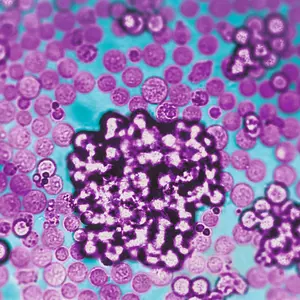
NK MACS Medium favors NK cell growth and limits the growth of unwanted cells.
Superior expansion of NK cells in NK MACS Medium compared to standard culture methods
- Hoerster, K. et al. (2021) HLA Class I Knockout Converts Allogeneic Primary NK Cells Into Suitable Effectors for "Off-the-Shelf" Immunotherapy. Front Immunol 11: 586168
- Caruso, S. et al. (2022) Safe and effective off-the-shelf immunotherapy based on CAR.CD123-NK cells for the treatment of acute myeloid leukaemia. J Hematol Oncol. 15 (1): 163
- Hejazi, M. et al. (2022) CD33 Delineates Two Functionally Distinct NK Cell Populations Divergent in Cytokine Production and Antibody-Mediated Cellular Cytotoxicity. Front Immunol 12: 798087
- Ma, S. et al. (2022) Hypoxia induces HIF1α-dependent epigenetic vulnerability in triple negative breast cancer to confer immune effector dysfunction and resistance to anti-PD-1 immunotherapy. Nat Commun 13 (1): 4118
- Murad, S. et al. (2022) NKG2C+ NK Cells for Immunotherapy of Glioblastoma Multiforme. Int J Mol Sci 23 (10): 5857
- Wolpaw, A. J. et al. (2022) Epigenetic state determines inflammatory sensing in neuroblastoma. Proc. Natl. Acad. Sci. U.S.A. 119 (6): e2102358119
- Albinger, N. et al. (2022) Primary CD33-targeting CAR-NK cells for the treatment of acute myeloid leukemia. Blood Cancer J 12 (4): 61
- Nishitani-Isa, M. et al. (2022) Trapping of CDC42 C-terminal variants in the Golgi drives pyrin inflammasome hyperactivation. J. Exp. Med. 219 (6): e20211889
- Wang, Y. et al. (2023) Transcriptional and chromatin profiling of human blood innate lymphoid cell subsets sheds light on HIV-1 pathogenesis. EMBO J. 42 (16): e114153
- Gurney, M. et al. (2022) CD38 knockout natural killer cells expressing an affinity optimized CD38 chimeric antigen receptor successfully target acute myeloid leukemia with reduced effector cell fratricide. Haematologica 107 (2): 437-445
- Colamartino, A. B L et al. (2022) Efficient and Robust NK-Cell Transduction With Baboon Envelope Pseudotyped Lentivector. Front Immunol 10: 2873
- Kust, S. A. et al. (2021) HLA-DR-Positive NK Cells Expand in Response to Mycobacterium Tuberculosis Antigens and Mediate Mycobacteria-Induced T Cell Activation. Front Immunol 12: 662128
- Huang, R.-S. et al. (2021) A robust platform for expansion and genome editing of primary human natural killer cells. J. Exp. Med. 218 (3): e20201529
- Jo, S. et al. (2022) Endowing universal CAR T-cell with immune-evasive properties using TALEN-gene editing. Nat Commun 13 (1): 3453
- Gerace, D. et al. (2023) Engineering human stem cell-derived islets to evade immune rejection and promote localized immune tolerance. Cell Rep Med. 4 (1): 100879