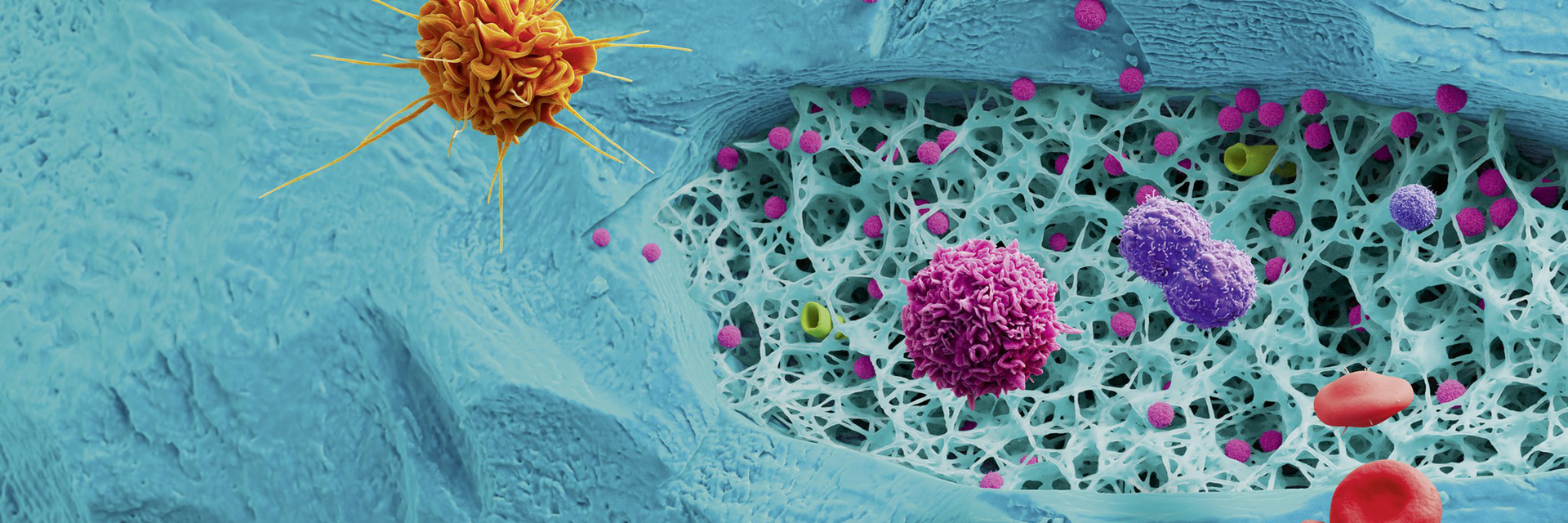
3D graphic showing human hematopoietic stem cells originating from bone marrow
Logo

Workflow solutions for CD34+ humanized mice in immuno-oncology research

Successful generation of CD34+ humanized mouse models requires a pure population of viable hematopoietic stem cells (HSCs) for transplantation.1 Start with the efficient and reliable cell isolation afforded by MACS® Technology. Then, ensure successful engraftment by vetting the quality of isolated HSCs and confirming immune reconstitution in mice using precise and standardized immunophenotyping via flow cytometry.1,2

A simplified workflow to model human immunity in mice

Humanized mouse models bridge the gap between in vitro experiments and clinical trials, streamlining the progress of immuno-oncology research. Engrafted with human CD34+ HSCs, mouse models mimic human physiology to test hypotheses that lead to new drugs and cell therapy products.1

Miltenyi Biotec offers solutions designed to efficiently and effectively generate humanized mouse models. Isolate pure CD34+ HSCs from human peripheral blood either manually1–4 or in an automated manner with the autoMACS® NEO Separator. Ensure the purity of the isolated cells before engraftment and confirm the successful reconstitution of the grafted human immune system with standardized flow cytometry analyses.1,2

Webinar

Miltenyi University: Fully humanized mouse models for immuno-oncology preclinical drug candidate selection

Join Dr. Sébastien Tabruyn, CSO of CRO TransCure bioServices, in a conversation about the use of humanized mouse models in assessing new cancer drug candidates, the detailed insights they enable, and the benefit of in vivo characterization of tumors and elucidation of immune cell behavior.

Application Note

Generation and preclinical applications of humanized mouse models to study human immunity and cancer immunotherapy

Dive deeper into the practical use of humanized mouse models with our comprehensive application note and review data demonstrating the suitability of our workflow for generating human immune system (HIS) mice.

Two steps to high-quality CD34+ humanized mice

Graft purity and quality checks are essential to successfully engraft human HSCs and generate CD34+ humanized mice for immune-oncology research. See below how HSC isolation and engraftment are efficiently and precisely controlled.

1. High-purity isolation of human CD34+ cells

Miltenyi Biotec’s MACS cell separation technology enables high-purity enrichment of CD34+ HSCs from cord or immobilized peripheral blood. Start your humanized mouse model project with our optimized isolation protocols that efficiently yield stem cell populations with low levels of dead cells and debris. Accelerate the process with the autoMACS NEO Separator and minimize hands-on time and experimental variability.

Dot plot of a flow cytometric analysis showing isolated CD34+ cells from blood with the CD34 MicroBead Kit UltraPure.
CD34+ cells are efficiently isolated from a debris-rich PBMC sample.

UltraPure technology isolates cell populations free of debris

Positive selection of CD34+ cells from cord blood or peripheral blood mononuclear cells (PBMCs) is highly efficient with the CD34 MicroBead Kit UltraPure. The isolated population consists of highly pure and viable HSCs with little debris carryover. That purity increases the likelihood of successful engraftment.

For the adjacent figure, the CD34 MicroBead Kit UltraPure, human, was used to separate HSCs from a sample of human PBMCs. Cells were stained with CD34-PE, CD45-FITC, and a propidium iodide solution and then analyzed via flow cytometry before (A) and after (B) separation. The plot clearly shows the high purity of the isolated cell population. The purity and recovery of CD34+ cells was calculated for individual samples, demonstrating the efficiency and consistency of the enrichment process (C; each dot corresponds to one donor).

2. QC analysis of HSCs and reconstitution evaluation
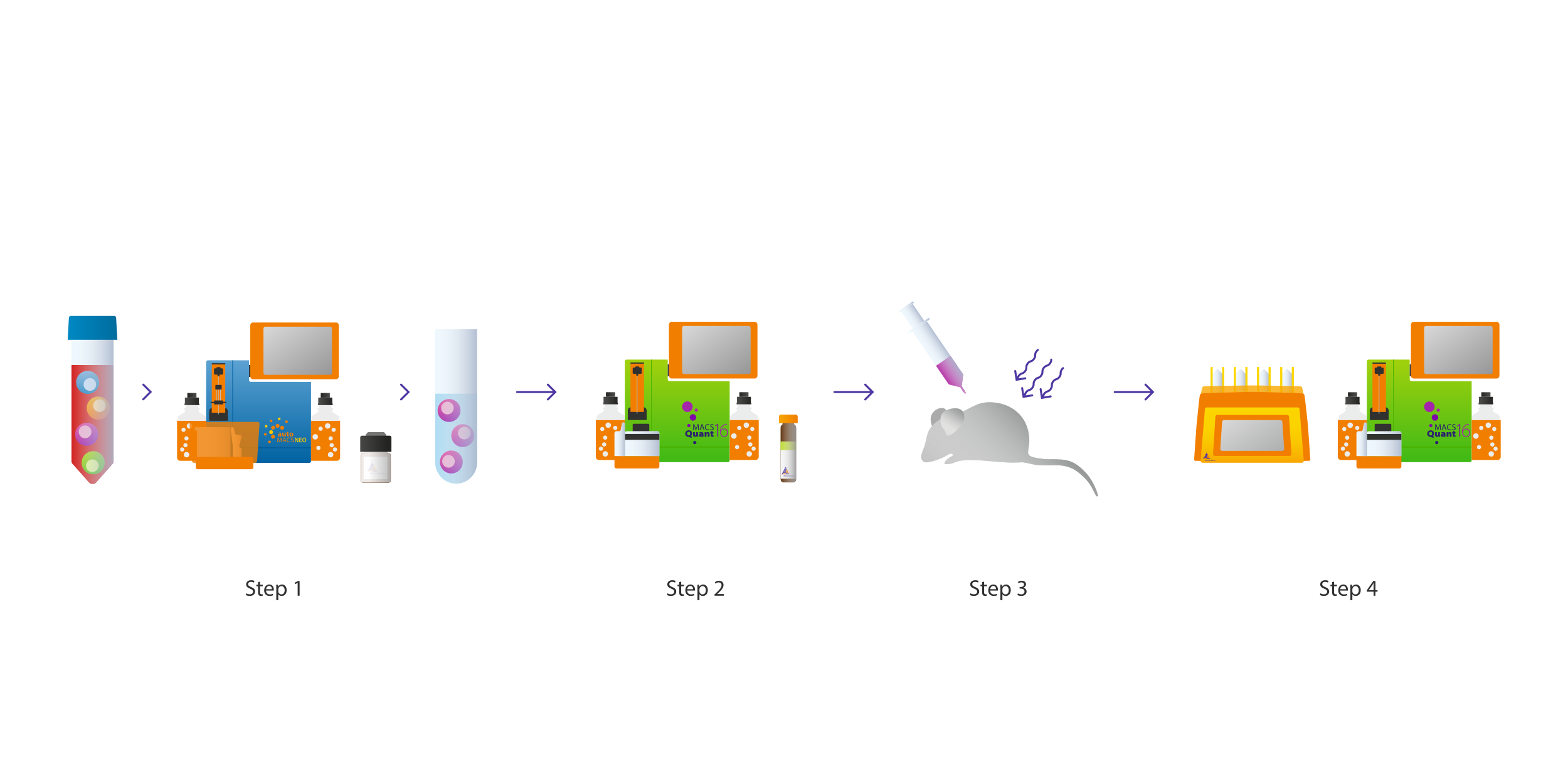
Quality control is paramount at every step of your process to ensure your engraftment's success and the highest research standards. Our REAfinity® Recombinant Antibodies and standardized analyses on MACSQuant flow cytometers simplify the rigorous testing and validation of your cell isolation before engraftment and confirmation of immune reconstitution after engraftment.

HSC quality evaluation before transplantation

Assess the quality of your isolated HSCs before transplantation into your immunodeficient mice to establish that your isolated HSC population is in top shape and meets the most stringent criteria of purity and viability. High cell numbers and purity will maximize engraftment efficiency.

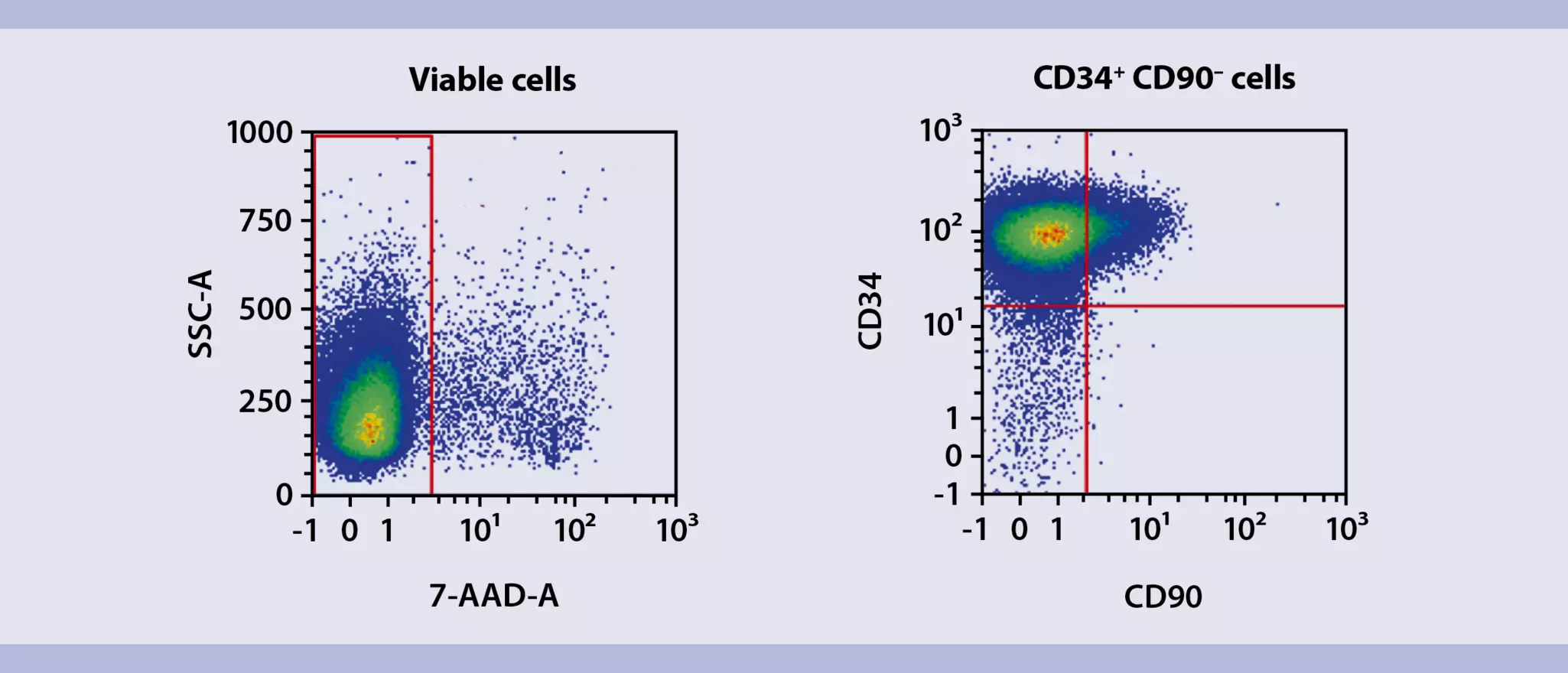
Dot plot of a flow cytometric analysis showing high viability of isolated CD34+ cells from blood with the CD34 MicroBead Kit UltraPure.
The isolated cell population shows high viability and a high proportion of HSCs.

Gentle separation ensures more viable cell isolates

Live cell samples are valuable and often precious. Therefore, Milteyni Biotec isolation workflows are designed to preserve cell viability through every processing step. The CD34 MicroBead Kit UltraPure gently enriches CD34+ HSCs. The increased proportion of healthy cells in the resulting isolate contributes to successful engraftment.

Cells were separated with the CD34 MicroBead Kit UltraPure, human, in the adjacent figure. The efficient and gentle separation, resulted in high numbers of CD34+CD90– cells (right) among viable cells (SSC-A, 7-AAD-A gating; left).

Quality control of HSCs after immune reconstitution

Carry out quality control directly on peripheral blood or examine cells in organs like the spleen, lymph nodes, thymus, or bone marrow. Use our Multi Dissociation Kit 1 in combination with our gentleMACS Octo Dissociator with Heaters to gently generate a viable single-cell suspension for flow cytometry analysis. Then, analyze the extent of immune system reconstitution (proportion of human versus murine cells), as well as their activation status and phenotype using standardized flow cytometry analysis solutions. For example, the 8-Color Immunophenotyping Kit, anti-human, REAfinity allows you to determine the frequencies of T, B, NK cells, monocytes, neutrophils, eosinophils, CD4+, CD8+, and CD56+CD3+ T cell subsets.

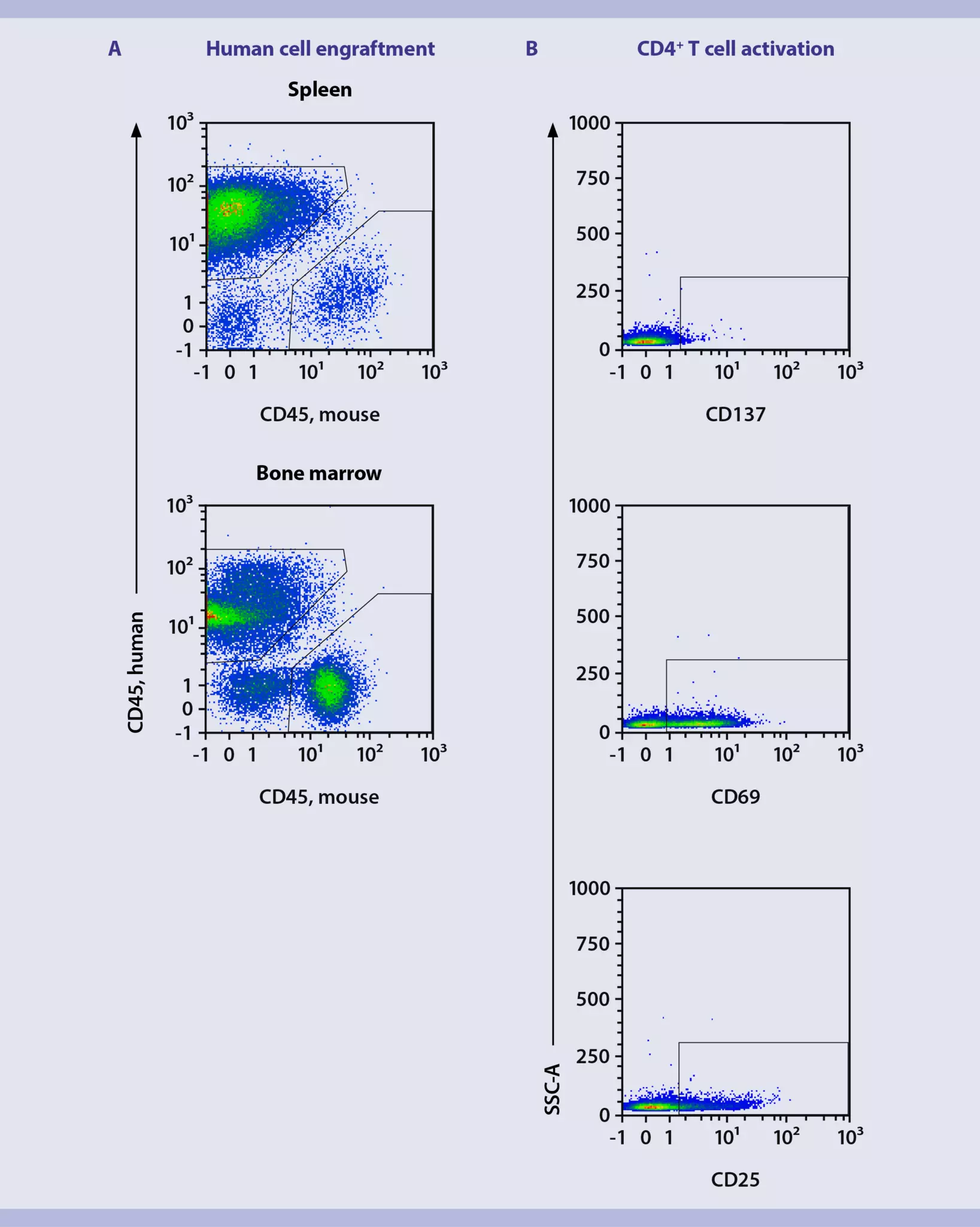
Dot plot of a flow cytometric analysis showing human CD34+ cells engrafted into mouse models.
Human CD34+ cells engrafted into mouse models show strong expansion and an activated phenotype.

Human CD34+ cells engrafted into mouse models

After grafting HSC cells into your immunodeficient mice, check your HIS mouse model by characterizing the quality of the resulting immune reconstitution.

The adjacent figure illustrates an engraftment assessment. Using pure and viable human HSCs for engraftment resulted in a high proportion of human leucocytes (CD45+ cells) relative to mouse CD45+ cells in spleen and bone marrow tissue (A). Furthermore, the immune reconstitution after engraftment with human cells is apparent from activated CD4+ T cells, based on the detection of CD137, CD69, and CD25 (B). The activation data shown are from spleen tissue.