3D graphic of CAR NK cells killing a cancer cell
Logo

Clinical-grade CAR-engineered NK cells via viral transduction

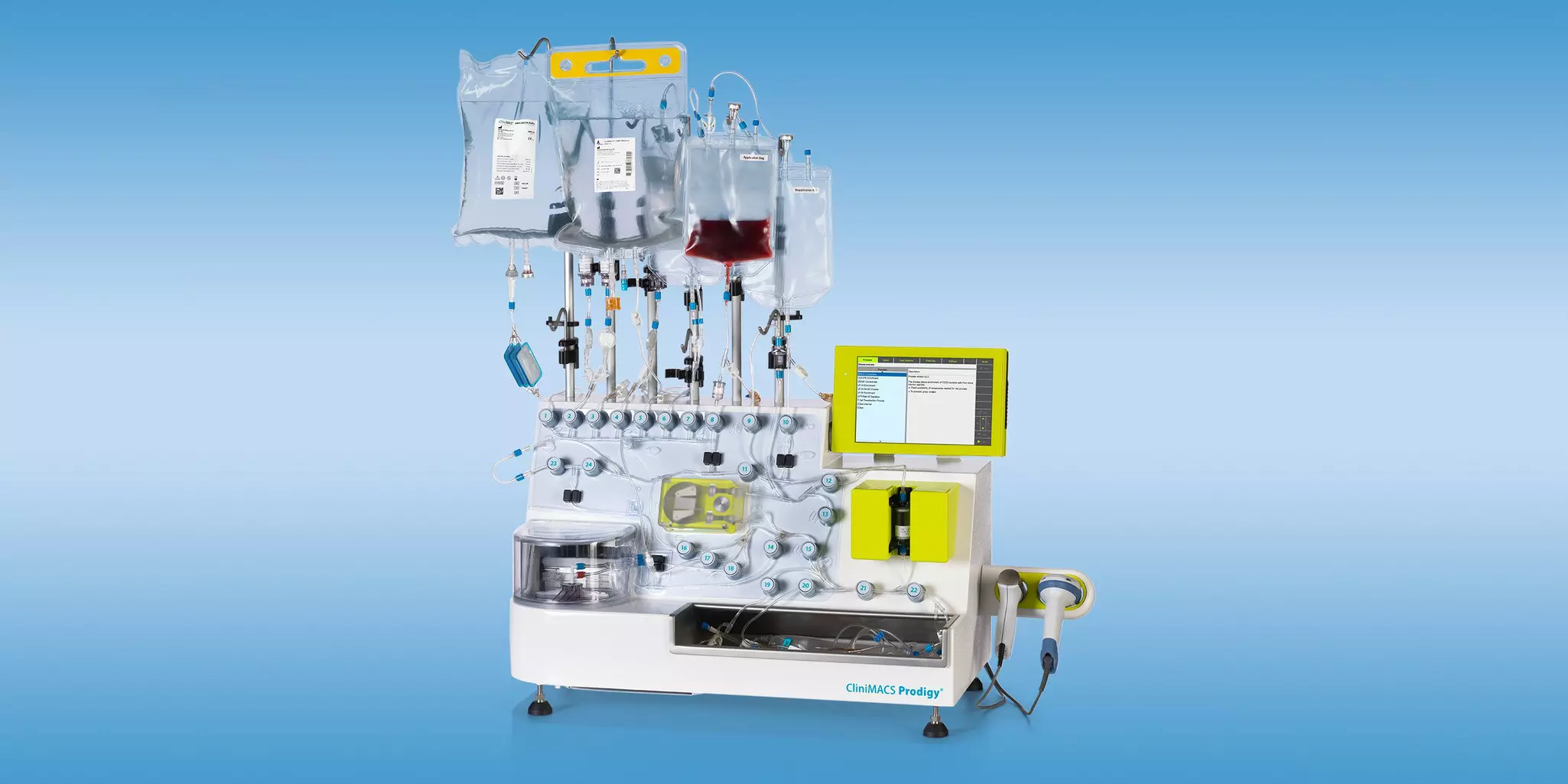
Automate your CAR NK cell manufacturing process and standardize your workflow. Manufacture your cells in a closed and software-controlled environment. The CliniMACS Prodigy® NK Cell Transduction (NKCT) Process integrates all manufacturing steps from cell selection, activation, and transduction to expansion and harvest of your final cell product.

Simplify CAR NK cell manufacturing with the CliniMACS Prodigy Platform

Chimeric antigen receptor (CAR)-based cell therapy is an impactful oncological treatment strategy based on genetically engineering immune cells to recognize and attack cancer cells more effectively.1 Currently approved CAR-based cell therapies use autologous T cells, but more recent approaches aim to leverage natural killer (NK) cells which, unlike T cells, can recognize and attack virally infected and tumor cells in an MHC-independent manner and without prior antigen priming.2

CAR-engineered NK cells offer several advantages in cancer immunotherapy, including multiple cytotoxicity mechanisms, a low risk of inducing graft-versus-host disease (GVHD) in the allogeneic setting, and a low risk of associated toxicities.3 As NK cell-based therapies do not require a matching donor, CAR NK cells can be manufactured from diverse cell sources, which allows the development of allogeneic and off-the-shelf products that are potentially a more affordable and readily available treatment option.4,5

The use of CAR NK therapy has shown promising results in multiple phase I/II clinical trials3 and researchers continue to explore its potential in treating a wide range of cancer types. The CliniMACS Prodigy NKCT Process helps to simplify the manufacturing of CAR NK cells.6

Video

Get ready for CAR NK cell manufacturing

The CliniMACS Prodigy NKCT Process simplifies and standardizes the manufacture of CAR NK cells on the CliniMACS Prodigy. From cell selection and activation to viral transduction and expansion, everything happens in a closed system for consistent results and reduced operator hands-on time.

Webinar

Solutions for clinical-grade manufacturing of gene-engineered natural killer (NK) cells

Learn about the efficient manufacture of engineered NK cells and options for scale-up and standardized in-process and quality control (IPC/QC).

A workflow to standardize CAR NK cell manufacturing

The production of CAR-engineered NK cells involves multiple steps. Done manually, the process is labor-intensive and error-prone, which impacts the quality and consistency of the final CAR NK cell product. The CliniMACS Prodigy NKCT Process uses a standardized procedure in a closed system to reduce the complexity of CAR NK cell manufacturing. The process is flexible to match your specific needs and establish a customized workflow that ensures consistent and reproducible results.

Overview of the CliniMACS Prodigy NKCT Process: Workflow automation of transduction-based CAR NK cell manufacturing.

Specifications of the CliniMACS Prodigy NKCT Process

 
Starting materialFresh leukapheresis
Culture capacity (volume)250 mL
Tubing setCliniMACS Prodigy TS 320
CliniMACS Prodigy TS 520
Cell culture reagentsNK MACS® GMP Medium
MACS GMP Cytokines
Final NK cell count (total)approx. 3×10⁹ total NK cells

Four easy steps from starting material to final CAR NK cell product

The CliniMACS Prodigy NKCT Process links two processes to isolate and manufacture gene-engineered NK cells. The first process automates CD3+ cell depletion to eliminate T cells from the sample. The second enriches CD56+ cells to boost NK cell purity and then carries out viral transduction, cell expansion, and harvest of the engineered cells.

1. NK cell isolation

Infographic showing the principle of magnetic cell separation

1a. Depletion of CD3+ cells

Efficient CD3+ cell depletion eliminates T cells from the starting material. This step is critical to prevent T cell alloreactivity when working with allogeneic cell sources. At the same time, depleting CD3+ cells increases the purity of the CD56+ NK cell population in your enriched sample. This step is performed in the CliniMACS Prodigy Tubing Set 320.

1b. Enrichment of CD56+ cells

After successful CD3+ cell depletion, the remaining cell fraction is transferred to the CliniMACS Prodigy Tubing Set 520 for CD56+ cell enrichment to generate highly pure and viable NK cells. This enrichment and all subsequent manufacturing steps take place in the same tubing set.

2. NK cell activation

NK cell activation is an important step before NK transduction on the CliniMACS Prodigy

To prepare the NK cells for viral transduction, they are activated in NK MACS GMP Medium supplemented with MACS GMP cytokines IL-2 and IL-15. Optionally, IL-1β or IL-18 can also be added.

Furthermore, stimulating NK cells for a short period of time with a combination of IL-12, IL-15, and IL-18 cytokines induces memory-like properties in NK cells7,8, which can then still be transformed into CAR NK cells.

3. Viral transduction

NK cell can be transduced with the help of lentiviral vectors

Long-term gene expression through stable genomic insertion is achieved through transduction with tailored viral vectors. This transduction step is optional and can be programmed to accommodate your specific viral transduction protocol.

The transduction enhancer Vectofusin®-1 helps boost NK cell transduction efficiency and is compatible with both static and spinoculation protocols.

4. CAR NK cell expansion

CAR NK cell are manufactured and expanded on the CliniMACS Prodigy

The transduced NK cells are expanded in the cell cultivation chamber of the CliniMACS Prodigy. The chamber is part of the used tubing set to maintain a closed system. The cell culture duration, as well as the medium supply and exchange, are flexibly programmable.

Ideal cultivation and expansion of transduced NK cells relies on the strong synergy of the NK MACS GMP Medium and MACS GMP Cytokines IL-2 and IL-15. Feeder cells can further boost NK cell expansion, and the administration of IL-21 at the onset of expansion has been shown to enhance NK cell proliferation.9–11

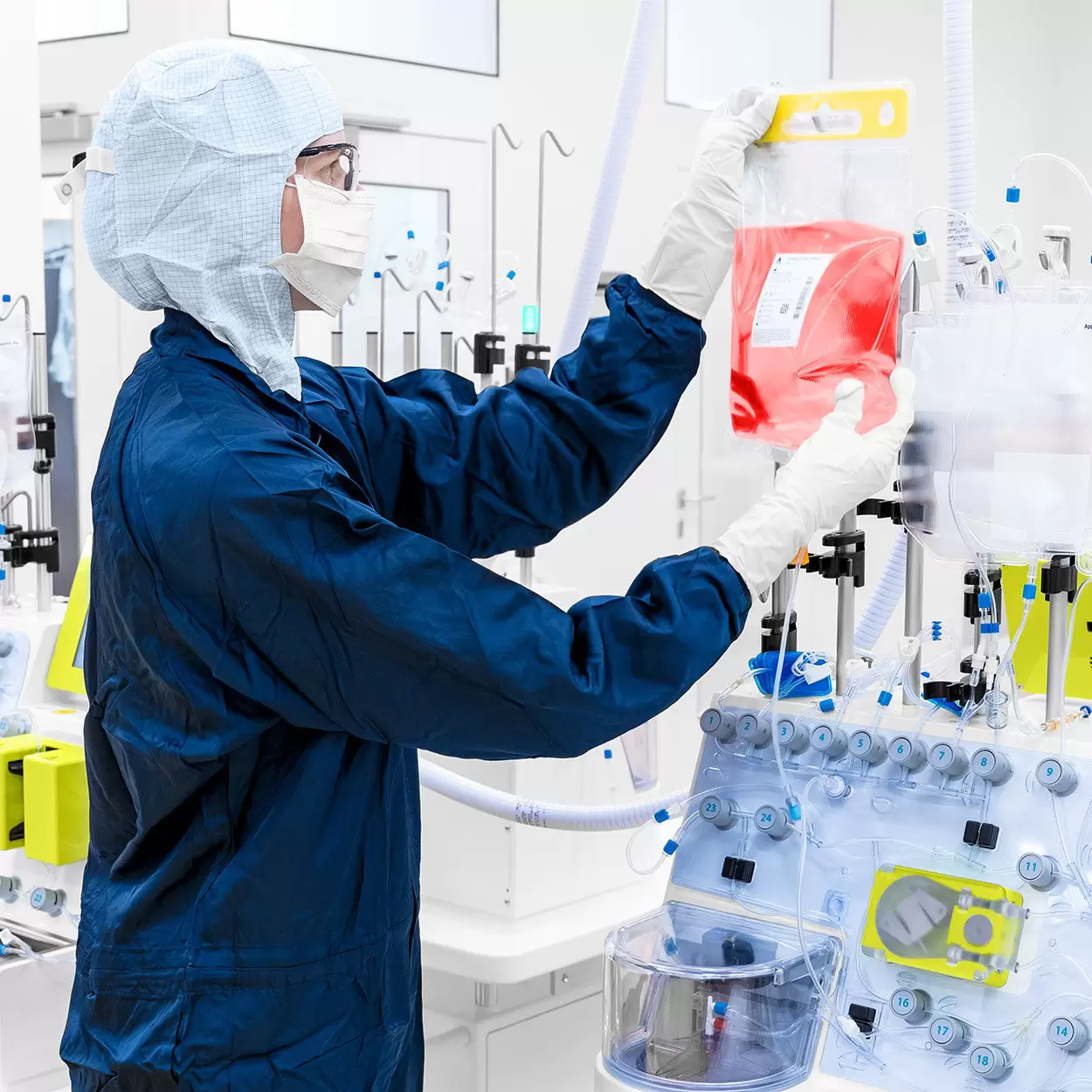
Scientist wearing protection cloths attaching a bag to the CliniMACS instrument

Relevant product: NK MACS GMP Medium

  • Specifically developed for NK cell culture
  • Xeno-free formulation
  • Consistent lot-to-lot performance
  • QC functionality test on every batch

NK MACS GMP Medium

Vials of MACS GMP cytokines

MACS GMP Cytokines

  • Lot-to-lot consistency and lot-specific certificates of analysis
  • Designed according to the recommendations of ancillary materials
  • Manufactured and tested under a certified ISO 13485 quality system

CliniMACS Formulation Solution

The CliniMACS Prodigy NKCT Process ends with the harvest of cells into 100 mL buffer of your choice, e.g., CliniMACS Formulation Solution. The final filling can be completed for direct infusion or cryopreservation using the CliniMACS Formulation Unit in combination with the CliniMACS Formulation Set. Our Customized Application Service is ready to develop your tailored process.

5. Quality control by standardized flow cytometry workflows

Quality control operator performing release testing of cell manufacturing samples on a MACSQuant 16 flow cytometer for cell and gene therapy analytics in a clean room environment
Express Modes of the MACSQuant Instruments allow for fully automated and standardized flow cytometry processes.

To enable safe and consistent cell manufacturing, implementation of robust in-process control and release testing (IPC/RT) is crucial.

Samples collected within the manufacturing process, for example, on the CliniMACS Prodigy, can be reliably analyzed using our standardized flow cytometry platform. Our comprehensive workflow solution comprises:

  • harmonized, automated MACSQuant® Flow Cytometers
  • automated data acquisition and analysis using Express Modes
  • 21 CFR Part 11 software module supporting GMP compliance
  • broad portfolio of REAfinity® Recombinant Antibodies delivering superior specificity and reproducibility
  • ready-to-use CAR detection reagents for accurate cell product characterization

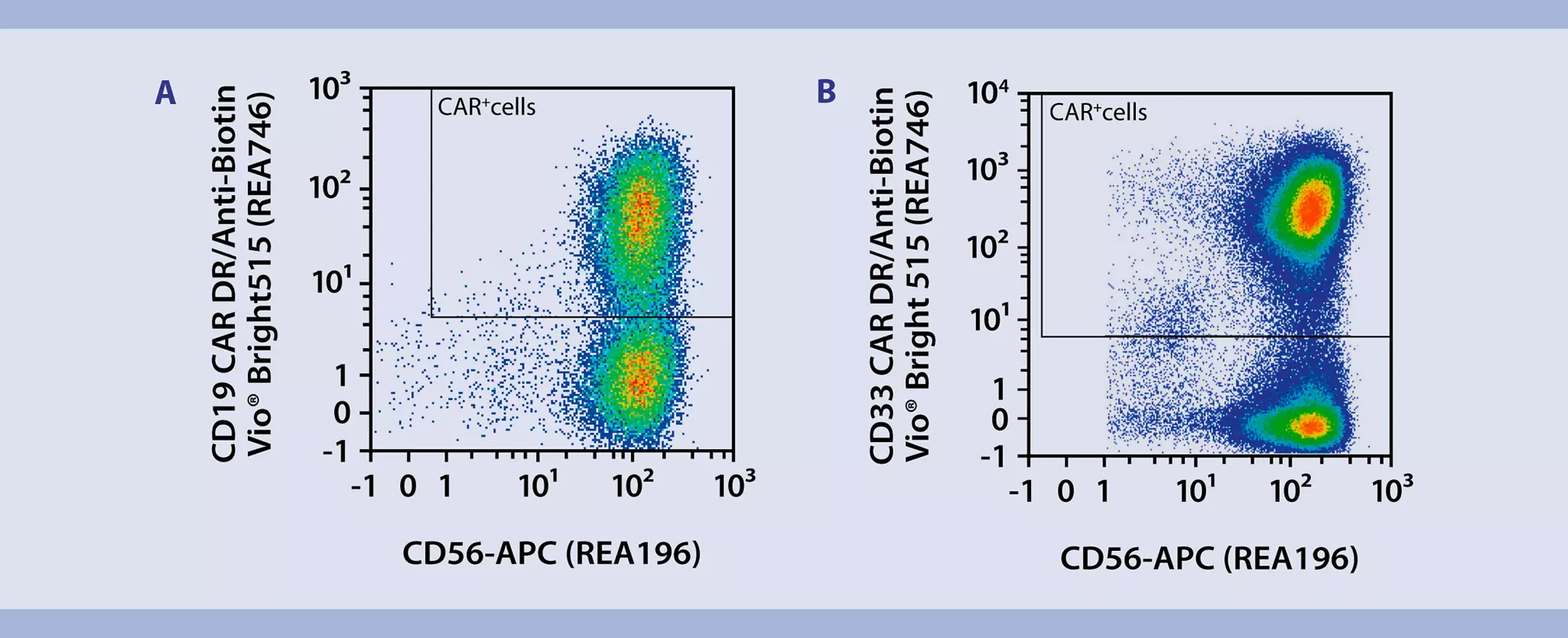
Flow cytometric analysis showing example plots of CAR NK cells stained with various CAR detection reagents
Reliable and sensitive staining of CAR NK cells with CAR Detection Reagents

Automated analysis of CAR NK cells

Highly specific CAR detection reagents enable robust, user-independent quality control evaluation of CAR NK cell products. Combined with automated acquisition and analysis using different NK Cell Express Modes on the MACSQuant Analyzer platform, our analytical solutions provide you with standardized, reproducible, and streamlined QC methods for CAR NK cells.

Selected references: how CliniMACS Instruments perform in NK cell manufacturing

Icon selected references in turquoise

Get up to speed with this selection of influential papers and reviews that show how CliniMACS Instruments are catalyzing applications with these powerful cells.

Get personalized support for your manufacturing workflow of CAR NK cells

Unless otherwise specifically indicated, Miltenyi Biotec products and services are for research use only and not for therapeutic or diagnostic use. For complete regulatory notes, please click here.