Cell therapy solutions for graft-versus-host diseases


Cell therapy solutions for graft-versus-host diseases
Balancing engraftment and immunosuppression in HSCT
Allogeneic hematopoietic stem cell transplantation (HSCT) has become a well-established treatment procedure that is, in many cases, the only curative treatment option for patients with hematological malignancies, inborn errors, or bone marrow failure syndromes. HSCT is now an essential part of many novel treatment concepts. Nonetheless, despite the rapid progress in this field, patients experience several complications that require innovative solutions.1,2
Severe side effects of treatment, like graft-versus-host disease (GVHD), infections, and poor graft function, remain challenges. Ex vivo T cell depletion strategies are employed in the clinic to overcome these challenges.
Immunosuppression is used after transplantation of a stem cell graft to prevent GVHD caused by alloreactive donor T cells, but it has side effects. Continued immunosuppression is known to increase the risk of opportunistic infections.3 Furthermore, patients may develop post-transplant lymphoproliferative disease (PTLD) caused by donor B cells infected with the Epstein-Barr virus.4 Others experience limited benefit from treatments, as in the case of the graft-versus-leukemia effect (GVL), where only low numbers of T cells specific for leukemic cells are present in the graft.5
Innovative solutions for complications after HSCT
Graft engineering strategies and the adoptive transfer of immune cells are currently used and under investigation to mitigate, treat, or even prevent the complications of HSCT. Stem cell enrichment and the targeted depletion of specific T cell subsets have been used for decades to reduce the risk of GVHD6–9 and enhance immune reconstitution10. More recently, clinicians have examined donor lymphocyte infusions (DLI) of memory T cells as infection prophylaxis11–13 and the adoptive transfer of memory T cells and antigen-specific T cells to treat active, drug-resistant infections after transplantation.14–22
Promoting engraftment and mitigating complications
For over 25 years, engineering grafts has been a strategy to prevent GVHD.6–9 Either hematopoietic stem cells (HSC) are enriched, or specific T cell subsets are depleted based on established markers.23,24 More recently, experimental treatments with regulatory T cells and mesenchymal stem cells (MSCs) aim to leverage the tolerogenic function of these cells to ameliorate GVHD.25–27 Miltenyi Biotec offers well-established and standardized workflows for generating specific cell products and shaping the cellular compartments of a graft.

Preventing and treating infections after transplantation
Miltenyi Biotec offers manufacturing solutions for cell products that prevent or treat infections after HSCT. Donor-derived memory T cells added to a stem cell graft or administered shortly after transplantation11–13, and antigen-specific T cells targeting opportunistic viruses are some examples14–24. Finally, ongoing studies have shown that innate cells like NK and γδ T cells enriched from the donor graft and administered after transplantation may also help keep infections at bay.28,29


Miltenyi Biotec solutions in the field
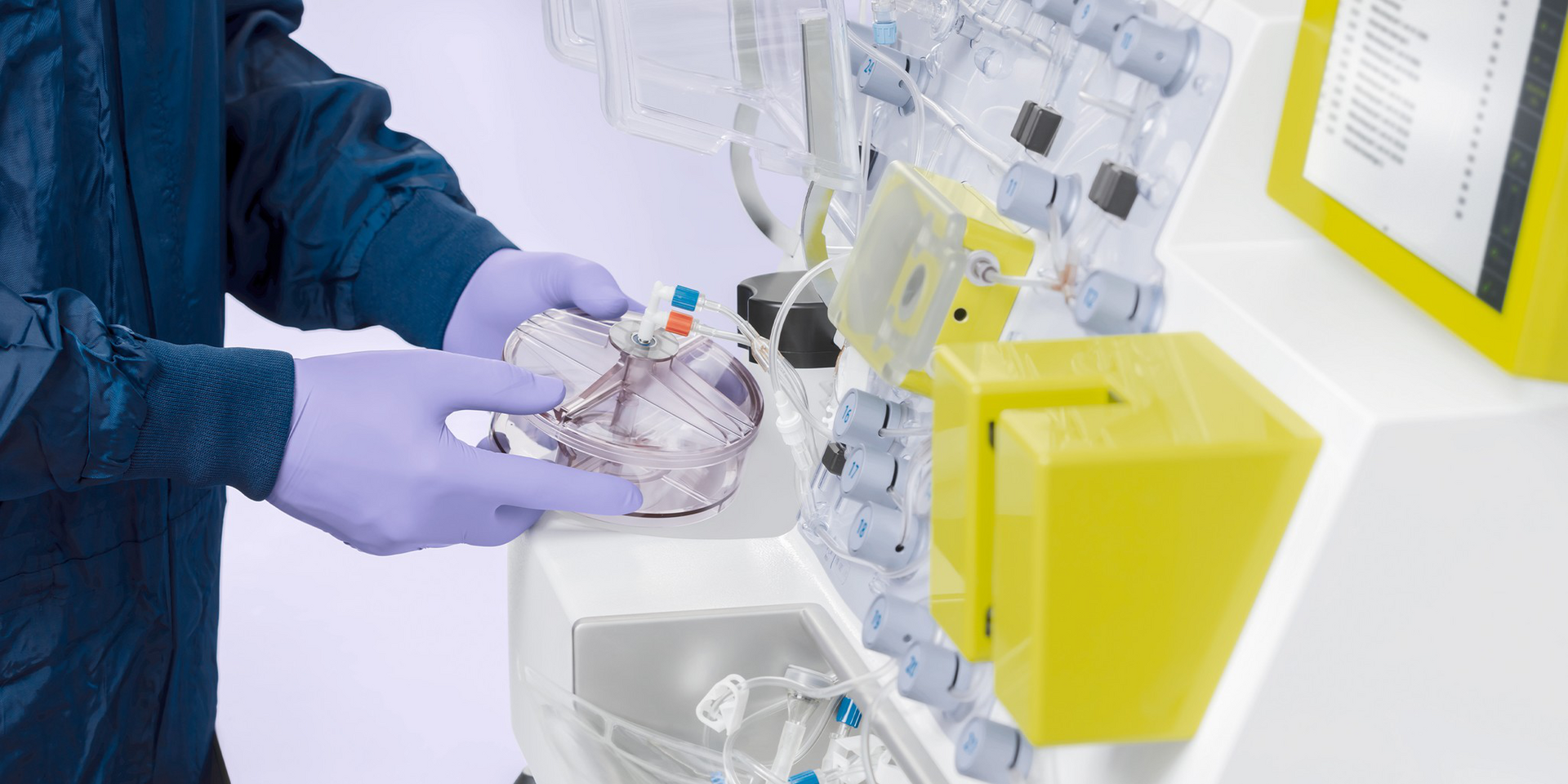
The CliniMACS Plus and CliniMACS Prodigy® Platforms standardize and automate the processing of donor material, providing a reliable workflow to generate engineered grafts and other cell products that minimize GVHD, post-transplant infections, and other complications. The following presentation and publications highlight relevant applications.
Recorded talk
Safety and efficacy of high-dose memory (CD45RA+-depleted) donor lymphocyte infusion in pediatric recipients after hematopoietic stem cell transplantation
Speaking at the Miltenyi Biotec Corporate Symposium of the 49th EMBT Annual Meeting in 2023, Antonio Perez discusses results from using memory T cells in donor lymphocyte infusion to treat pediatric recipients of HSCT.
Additional publications
- Triplett, B. M. et al. (2018) Selective T-cell depletion targeting CD45RA reduces viremia and enhances early T-cell recovery compared with CD3-targeted T-cell depletion. Transpl. Infect. Dis. 20: e12823. | Read article
- Merli, P. et al. (2022) TCRαβ/CD19 depleted HSCT from an HLA-haploidentical relative to treat children with different nonmalignant disorders. Blood Adv. 6: 281–292. | Read article
- Pulsipher, M. A. et al. (2022) KIR-favorable TCR-αβ/CD19-depleted haploidentical HCT in children with ALL/AML/MDS: primary analysis of the PTCTC ONC1401 trial. Blood 140: 2556–2572. | Read article
- Kabat, M. G. et al. (2024) Safety and efficacy of high-dose memory CD45RO+ donor lymphocyte infusion in pediatric recipients after hematopoietic stem cell transplantation. Cytotherapy: in press. | Read article

See other indications or send us your questions
Unless otherwise specifically indicated, Miltenyi Biotec products and services are for research use only and not for therapeutic or diagnostic use. For complete regulatory notes, please click here.