Recombinant human IL-2 (interleukin 2) stimulates growth and differentiation of cells of the lymphoid lineage, such as T, NK, and B cells. IL-2 is a potent immunomodulatory cytokine, as it prevents autoimmunity and has key functions during infections. IL-2 IS stands for interleukin 2 "Improved Sequence", also termed aldesleukin, and is a variant of IL-2 with a serine substitution for the native cysteine at amino acid position 125. Human IL-2 IS is a recombinant protein optimized for use in cell culture, differentiation studies, and functional assays, and possesses the same biological proper


Related products for Human IL-2 IS


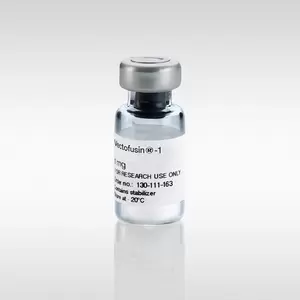

Recombinant human IL-2 (interleukin 2) stimulates growth and differentiation of cells of the lymphoid lineage, such as T, NK, and B cells. IL-2 is a potent immunomodulatory cytokine, as it prevents autoimmunity and has key functions during infections. IL-2 IS stands for interleukin 2 "Improved Sequence", also termed aldesleukin, and is a variant of IL-2 with a serine substitution for the native cysteine at amino acid position 125. Human IL-2 IS is a recombinant protein optimized for use in cell culture, differentiation studies, and functional assays, and possesses the same biological properties as naturally occurring IL-2.
Human IL-2 IS can be used for a variety of applications including:
- In vitro activation and propagation of T cells, e.g., in combination with the T Cell Activation/Expansion Kit, human.
- In vitro stimulation of cytolytic function and expansion of NK cells, e.g., using the NK Cell Activation/Expansion Kit, human.
- Generation of lymphokine-activated killer (LAK) cells or cytokine-induced killer (CIK) cells.
Biological activity
IL-2, a potent lymphoid cell growth factor, is a typical four α-helix bundle cytokine. It is produced by activated T cells, especially the CD4+ T helper cell population. It plays an important role in both the activation and maintenance of immune responses and in lymphocyte development. IL-2 promotes proliferation and differentiation of T cells, NK cells and B cells and is involved in the elimination of self-reactive T cells. IL-2 signals through a receptor complex consisting of IL-2 receptor α-chain (CD25), β- chain, and common γ-chain. The latter two are also used for IL-15 signaling.
Research-grade cytokines are suitable for a wide variety of cell culture applications. They are sterile-filtered prior to lyophilization. Generally, endotoxin levels are <0.1 ng/μg (<1 EU/μg), and purities are >95%. The biological activity is tested in appropriate bioassays.
Premium-grade cytokines offer the convenience of high and well-defined biological activities and allow exact unit dosing for demanding applications. The biological activity is determined after lyophilization and reconstitution, and normalized to WHO/NIBSC standards whenever available. In general, endotoxin levels are <0.01 ng/μg (<0.1 EU/μg), and purities are >97%. Lot-specific activities are stated in the Certificate of Analysis (www. miltenyibiotec.com/certificates).
Human IL-2 IS activity assay. Activity of Human IL-2 IS, premium grade (red line) was compared to commercially available aldesleukin (black line).
SDS-PAGE of Human IL-2 IS, premium grade under non-reducing (NR) and reducing (R) conditions.
Human IL-2 IS biological activity. Activity of Human IL-2 IS, premium grade, (red bar) was compared to another commercially available product (black bar).
Mass spectrometry analysis (ESI-MS) of Human IL-2 IS, premium grade. The peak corresponds to the calculated molecular mass of 15400 Da.
To access a Certificate of Analysis (CoA) follow the link below and enter the specific lot of your product.
Should you wish to request additional documentation, such as a Safety Data Sheet (SDS) in other languages than English or Swedish, an SDS-replacement document, or a Certificate of Origin (CoO), please direct your inquiry to your local technical support team.
- Jamali, A. et al. (2020) Highly Efficient Generation of Transgenically Augmented CAR NK Cells Overexpressing CXCR4. Front Immunol 11: 2028
- Valignat, M. P. et al. (2013) T lymphocytes orient against the direction of fluid flow during LFA-1-mediated migration. Biophys. J. 104 (2): 322-331
- Müller-Durovic, B. et al. (2016) Killer Cell Lectin-like Receptor G1 Inhibits NK Cell Function through Activation of Adenosine 5'-Monophosphate-Activated Protein Kinase. J Immunol 197 (7): 2891-2899
- Fallarini, S. et al. (2012) Invariant NKT cells increase drug-induced osteosarcoma cell death. Br J Pharmakon 167 (7): 1533-1549
- Pallett, L. J. et al. (2015) Metabolic regulation of hepatitis B immunopathology by myeloid-derived suppressor cells. Nat Med 21 (6): 591-600
- Zanoni, M. et al. (2020) Innate, non-cytolytic CD8+ T cell-mediated suppression of HIV replication by MHC-independent inhibition of virus transcription. PLoS Pathog. 16 (9): e1008821
- Kamei, R. et al. (2018) Expression levels of UL16 binding protein 1 and natural killer group 2 member D affect overall survival in patients with gastric cancer following gastrectomy. Oncol Lett 15 (1): 747-754
- Woods, K. et al. (2014) Effects of epithelial to mesenchymal transition on T cell targeting of melanoma cells. Front Oncol 4: 367
- Lee, H. J. et al. (2017) Expansion of tumor-infiltrating lymphocytes and their potential for application as adoptive cell transfer therapy in human breast cancer. Oncotarget. 8 (69): 113345-113359
- Niu, C. et al. (2017) Low-dose bortezomib increases the expression of NKG2D and DNAM-1 ligands and enhances induced NK and γδ T cell-mediated lysis in multiple myeloma. Oncotarget. 8 (4): 5954-5964
- Agarwal, S. et al. (2019) In vivo generated human CAR T cells eradicate tumor cells. Oncoimmunology 8 (12): e1671761
- Colson, P. et al. (2014) HIV infection en route to endogenization: two cases. Clin Microbiol Infect 20 (12): 1280-1288
- Schipp, C. et al. (2018) EBV Negative Lymphoma and Autoimmune Lymphoproliferative Syndrome Like Phenotype Extend the Clinical Spectrum of Primary Immunodeficiency Caused by STK4 Deficiency. Front Immunol 9: 2400
- Thangamani, S. et al. (2015) Cutting edge: progesterone directly upregulates vitamin d receptor gene expression for efficient regulation of T cells by calcitriol. J Immunol 194 (3): 883-886
- Fuchs, S. et al. (2014) Patients with T+/low NK+ IL-2 receptor γ chain deficiency have differentially-impaired cytokine signaling resulting in severe combined immunodeficiency. Eur. J. Immunol. 44 (10): 3129-3140
- Ng, S. B. et al. (2011) Dysregulated microRNAs affect pathways and targets of biologic relevance in nasal-type natural killer/T-cell lymphoma. Blood 118 (18): 4919-4929
- Engelmann, S. et al. (2013) T cell-independent modulation of experimental autoimmune encephalomyelitis in ADAP-deficient mice. J Immunol 191 (10): 4950-4959
- Surenaud, M. et al. (2016) Optimization and evaluation of Luminex performance with supernatants of antigen-stimulated peripheral blood mononuclear cells. BMC Immunol. 17 (1): 44
- Lissandrello, C. A. et al. (2020) High-throughput continuous-flow microfluidic electroporation of mRNA into primary human T cells for applications in cellular therapy manufacturing. Sci Rep 10 (1): 180445
- Nguyen, T. L. et al. (2011) Antigen-specific TGF-β-induced regulatory T cells secrete chemokines, regulate T cell trafficking, and suppress ongoing autoimmunity. J Immunol 187 (4): 1745-1753