

Synonyms: ITGAE, aM290, alpha-E1, alpha-M290, integrin alpha E
EXTENDED VALIDATION
- Clone:
- 2E7
- Type of antibody:
- Primary antibodies
- Isotype:
- hamster IgG
- Applications:
- FC, MICS, IF, IHC Glossary
- Select a conjugate:
- Select a size:


Other sizes
Related products for CD103 Antibody, anti-mouse
Flow cytometry applications
Biotin
FITC
PE
Recommended dilution:
1:10
Remark:
Cells should be stained prior to fixation, if formaldehyde is used as a fixative.
Data source:
Miltenyi Biotec
Conjugate:
Biotin
Used products:
130-101-920
Description:
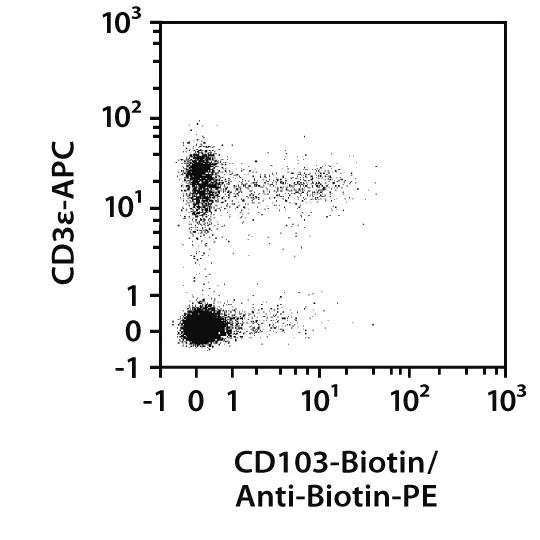
BALB/c mouse splenocytes were stained with CD103 antibodies as well as with CD3ε antibodies and analyzed by flow cytometry using the MACSQuant® Analyzer. Cell debris and dead cells were excluded from the analysis based on scatter signals and propidium iodide fluorescence.
MICS (MACSima Imaging Cyclic Staining) applications
FITC
PE
Fixation:
frozen – Acetone
Species tested:
mouse
Recommended dilution:
1:50
Data source:
Miltenyi Biotec
Compatible applications:
IF, IHC
Conjugate:
FITC
Used products:
130-118-553, 130-118-681
Testing grade:
Extended validation for CD103 Antibody, anti-mouse
Specificity
In order to compare the epitope specificity of an antibody, the clone being used is compared with other known clones recognizing the same antigen in a competition assay.
Other clones
Overlap in epitope recognition with 2E7
REA789
high
Cells were incubated with an excess of purified unconjugated CD103 (2E7) antibody followed by staining with fluorochrome-conjugated antibodies from other known clones targeting the same antigen. Fluorescence intensity was then used to assess epitope overlap: a minimal or absent signal indicated high epitope overlap, an intermediate signal suggested partial overlap, and a strong signal reflected low overlap.
Sensitivity
Selected fluorochrome conjugated antibodies from Miltenyi Biotec were compared to commercially available hybridoma clones in flow cytometry analysis.
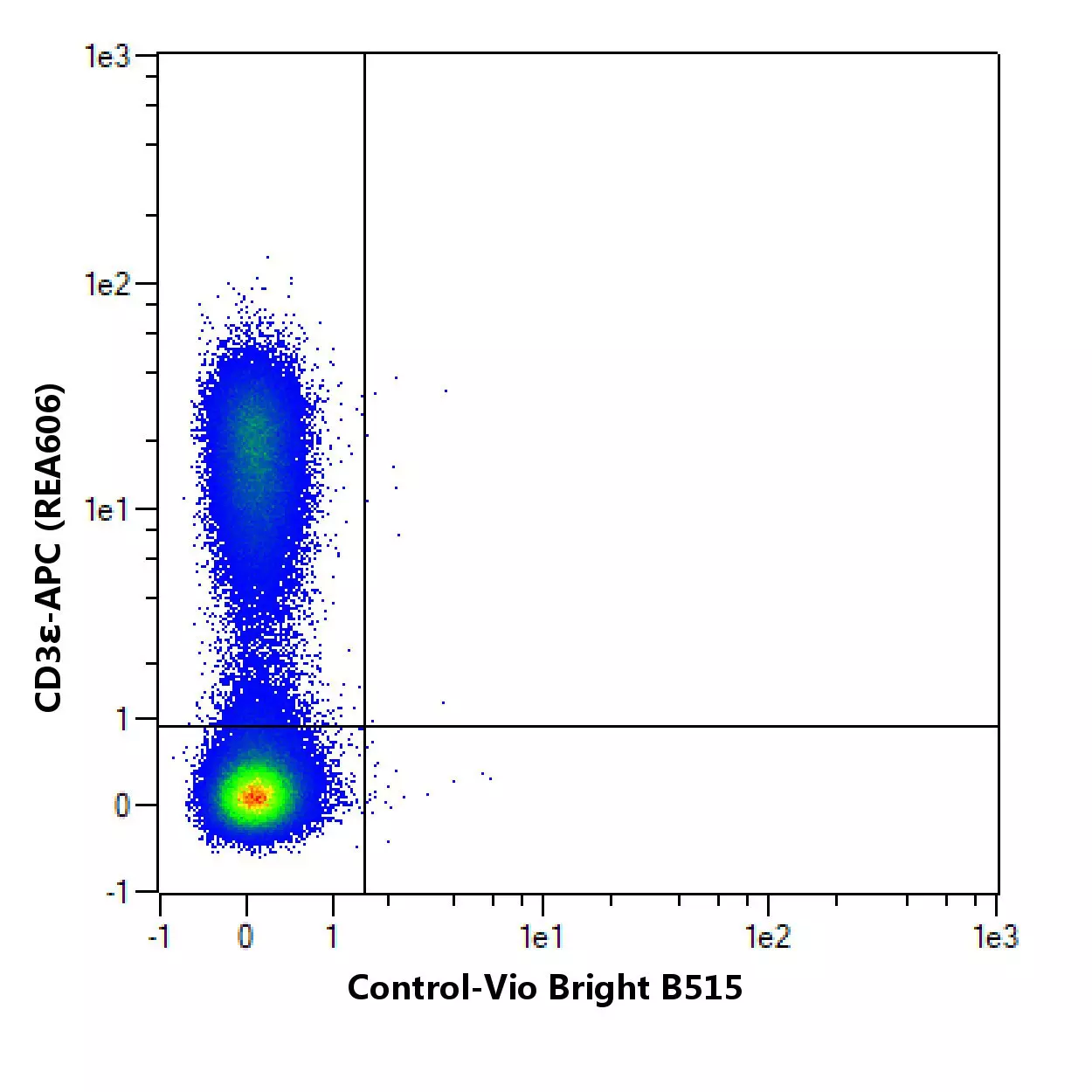
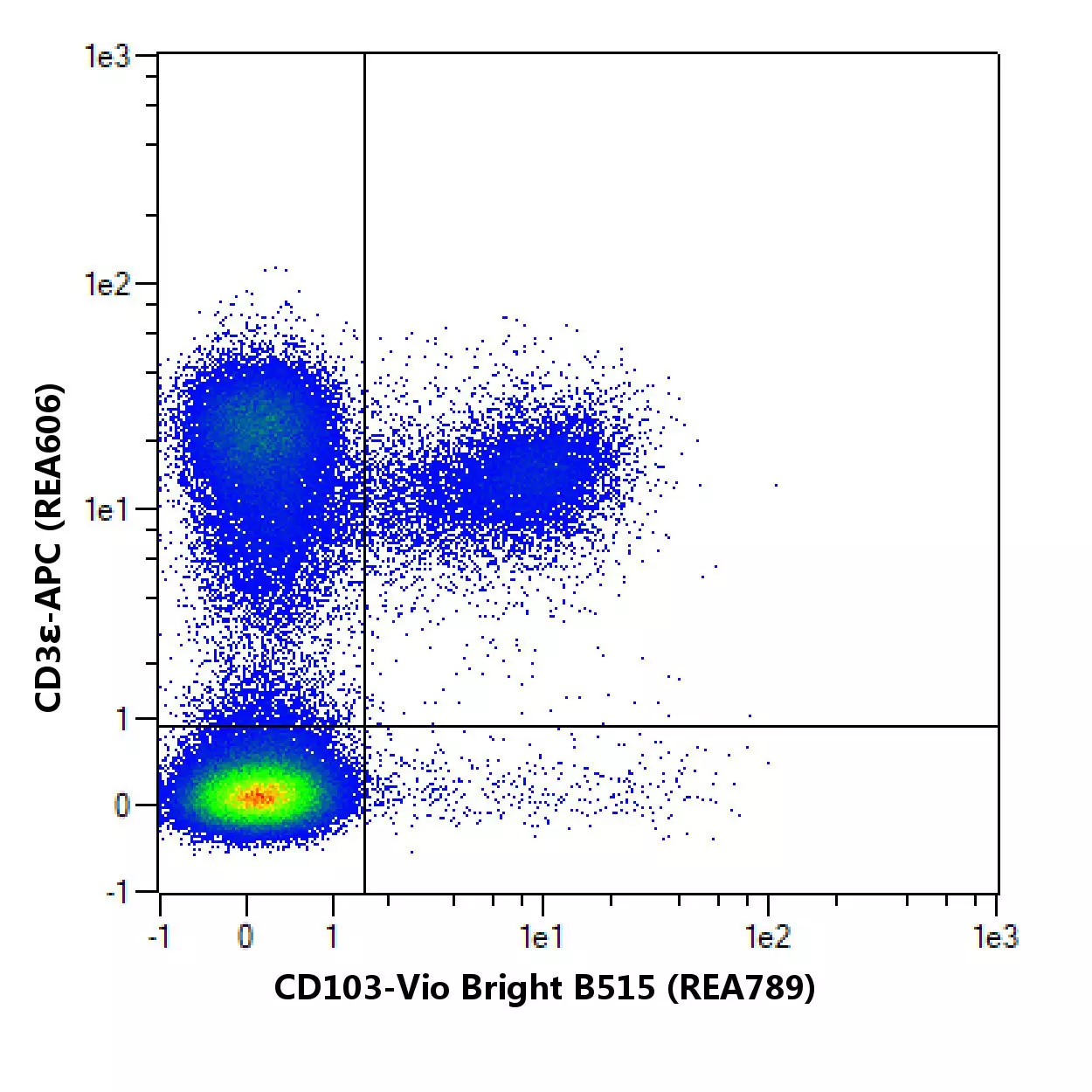
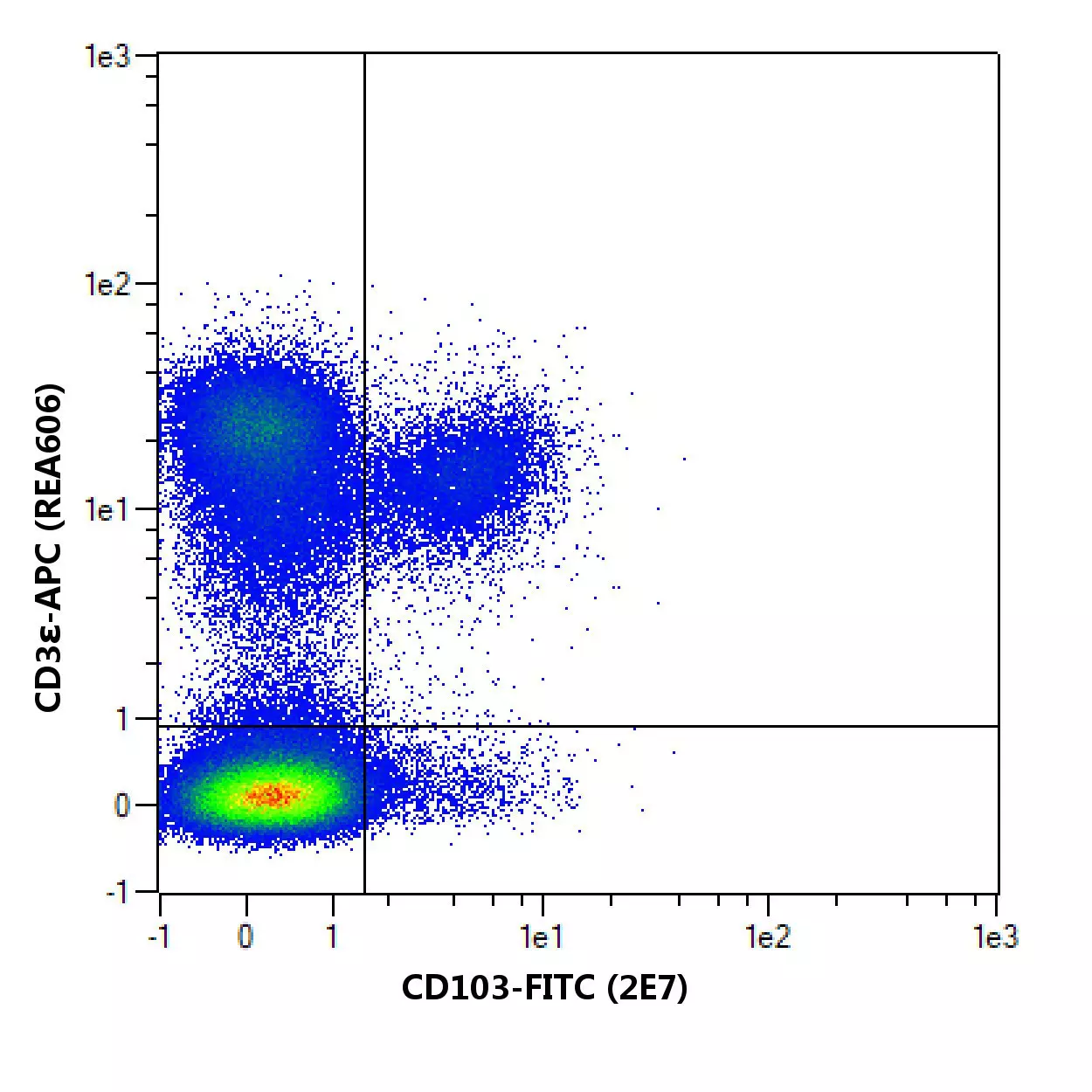
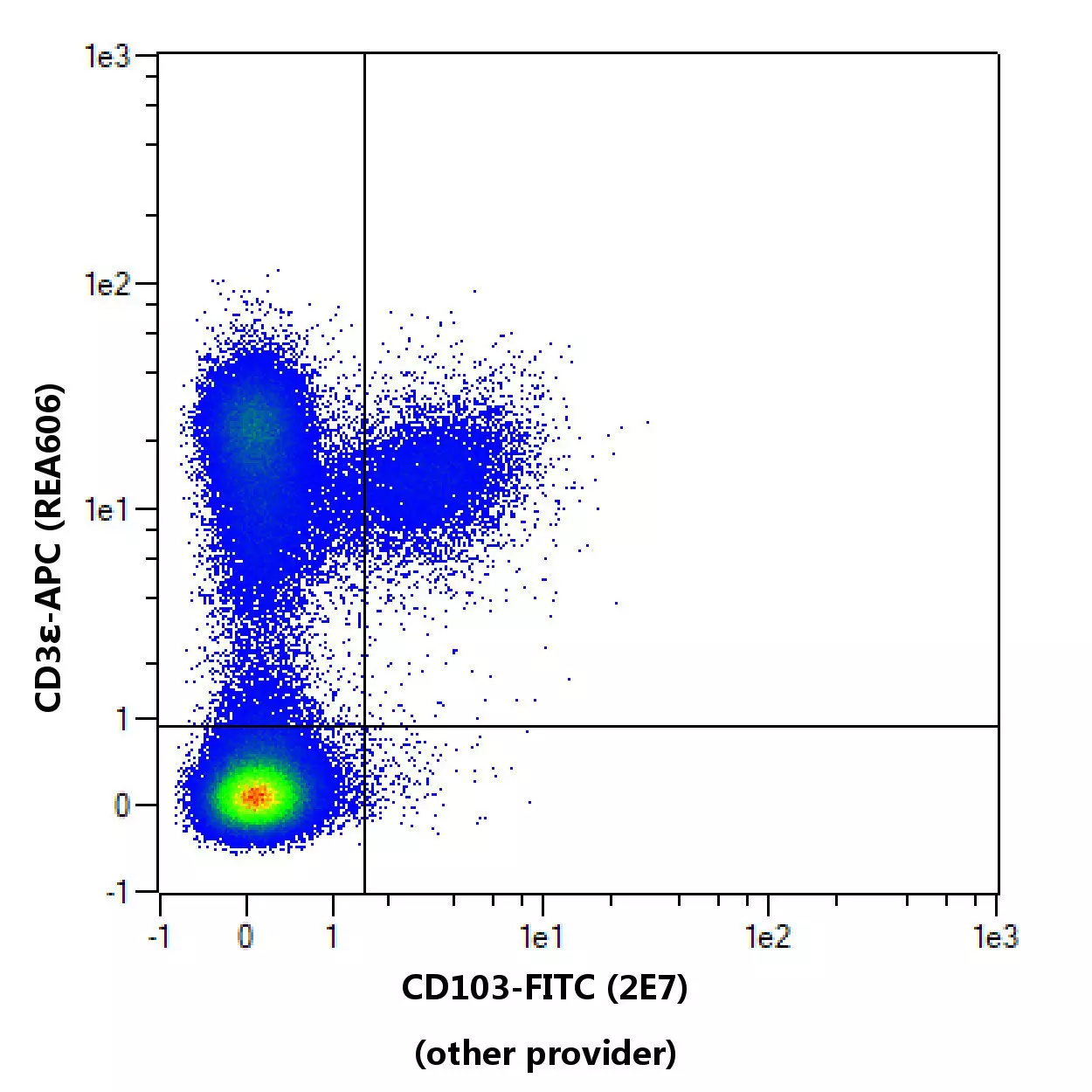
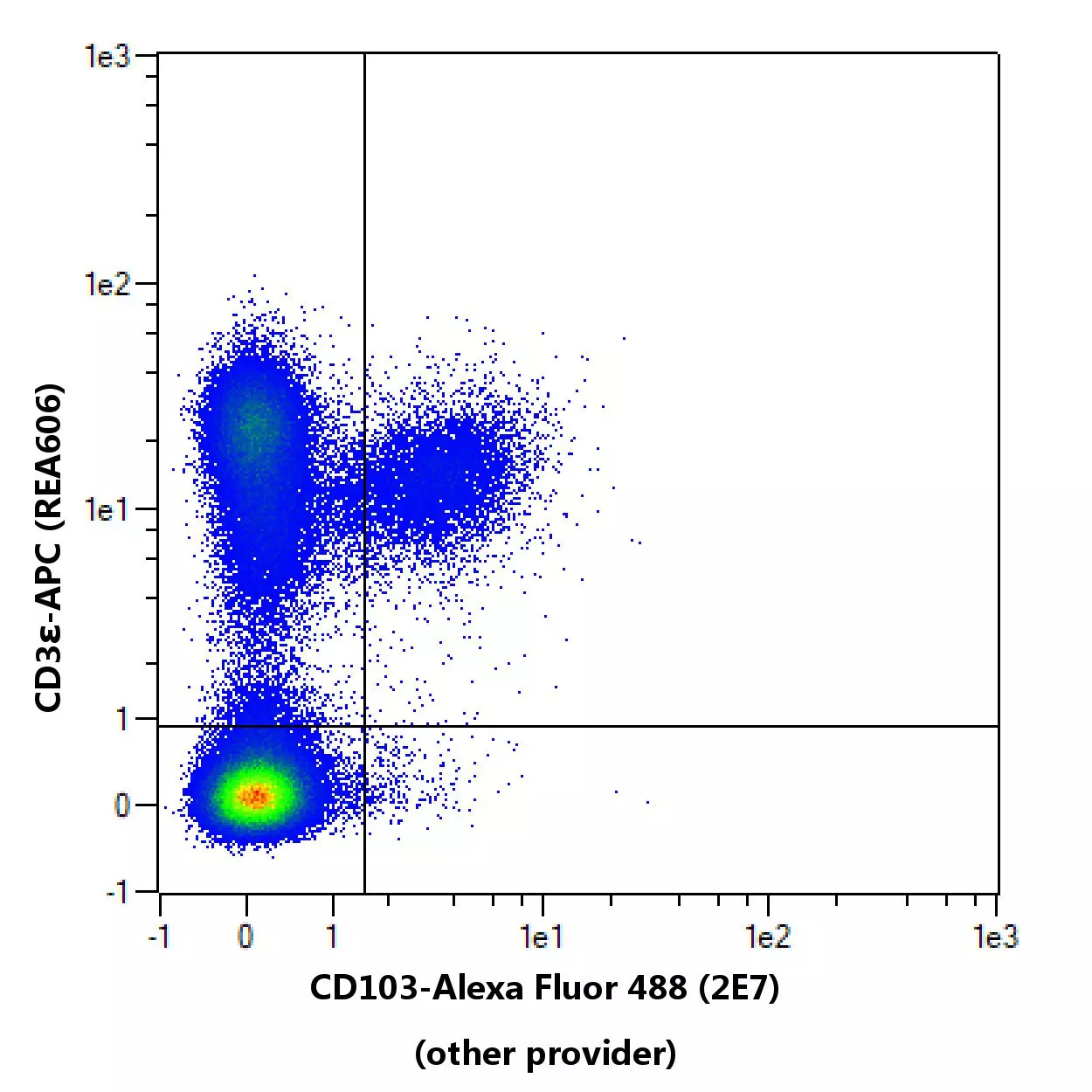
Flow cytometric comparison of different clones for CD103. Splenocytes from C57BL/6 mice were stained with CD103 antibodies and with a suitable counterstaining. As a control, CD103 antibody staining was omitted and cells were measured in the same channels. Flow cytometry was performed with the MACSQuant Analyzer. Cell debris, dead cells, and cell doublets were excluded from the analysis based on scatter signals and 4',6-diamidino-2-phenylindole (DAPI) fluorescence. No FcR Blocking Reagent was used. The recommended titers of respective antibodies from different suppliers were used.
Specifications for CD103 Antibody, anti-mouse
Overview
Armenian hamster IgG Clone 2E7 reacts with mouse CD103, a 175 kDa large, type I transmembrane glycoprotein also known as αE integrin. CD103 associates non-covalently with integrin β7 thereby forming the heterodimeric integrin αEβ7. It mediates cell-cell contact and is involved in homing processes by binding to its ligand e-cadherin. CD103 is expressed on >90% of intestinal intraepithelial lymphocytes (IEL), epithelial T cells, and regulatory T cells. Due to its differential expression on dendritic cells from peripheral tissues, it is useful in identifying dendritic cell subsets from intestinal lamina propria, lung, and dermis.
ITGAE, aM290, alpha-E1, alpha-M290, integrin alpha E
Detailed product information
Technical specifications
Clone
2E7
Clonality
monoclonal
Isotype
hamster IgG
Host
hamster
Type of antibody
Primary antibodies
Species reactivity
mouse
Antigen
CD103
Molecular mass of antigen [kDa]
127
Distribution of antigen
T cells, B cells, lymphocytes, thymocytes, leukemia cells, breast, pancreas, skin, small intestine, spleen
Entrez Gene ID
RRID
AB_2783898, AB_2751551, AB_2751541, AB_2654400
Resources for CD103 Antibody, anti-mouse
Certificates
To access a Certificate of Analysis (CoA) follow the link below and enter the specific lot of your product.
Should you wish to request additional documentation, such as a Safety Data Sheet (SDS) in other languages than English or Swedish, an SDS-replacement document, or a Certificate of Origin (CoO), please direct your inquiry to your local technical support team.
 Powered by Bioz