T cell suppression assays
Because of their suppressive abilities on T cells, macrophages and myeloid-derived suppressor cells, as well as regulatory T cells (Tregs) are considered promising therapeutic targets. In order to develop effective immunomodulatory therapeutics for complex diseases, such as cancer or autoimmune disorders, T cell suppression assays are required to assess whether a potential new treatment will inhibit or promote T cell responsiveness upon interaction with key regulatory cells.
Macrophage suppression assay for efficacy and potency testing of immune checkpoint inhibitors
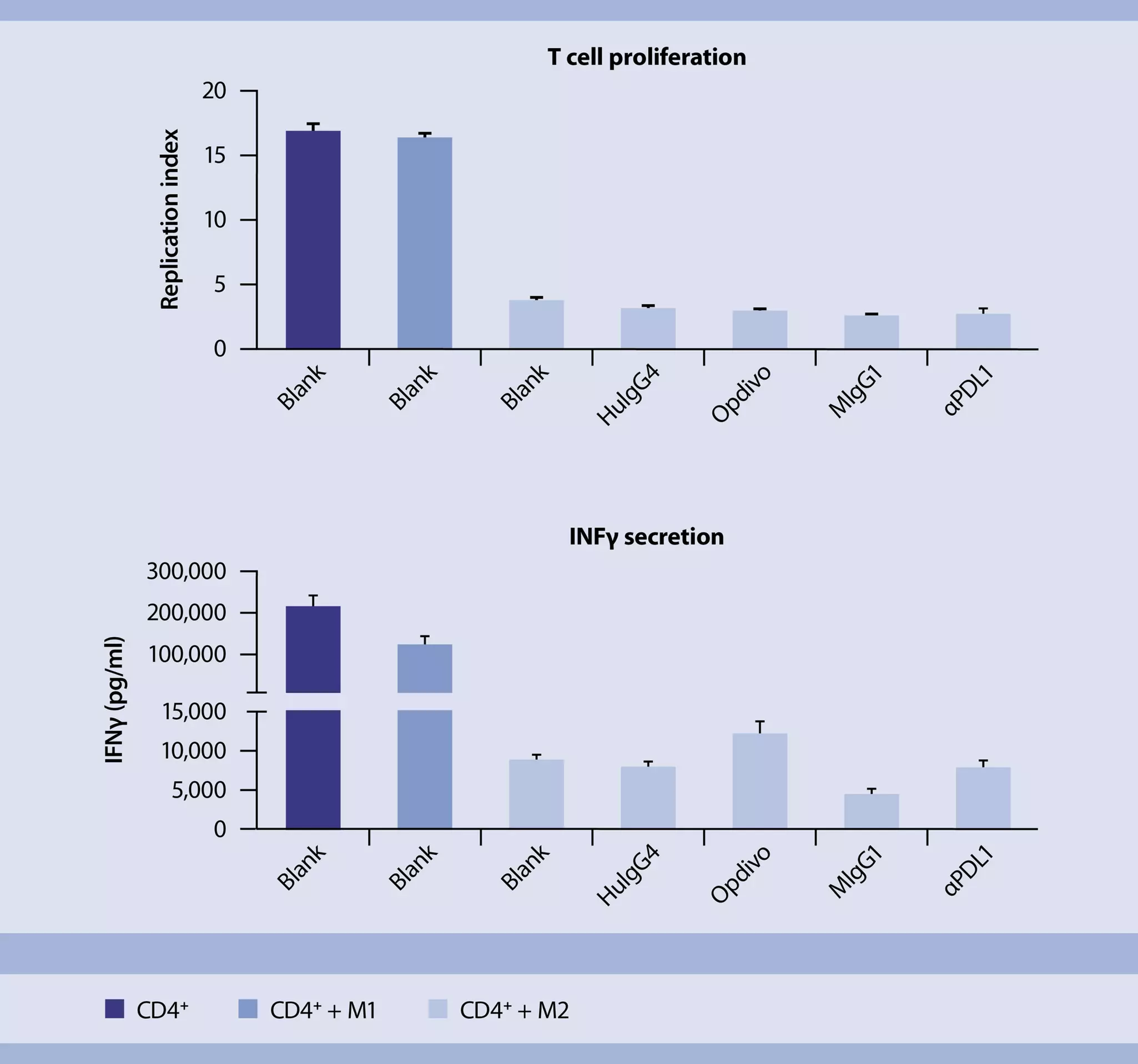
In this study by Janss et al., from ImmunXperts, a macrophage suppression assay was used to confirm the efficacy and potency of test compounds on the suppressive capacities of the macrophages on T cells. When comparing secretions of IFNγ and proliferation of CD4 T cells among untreated CD4 T cells alone, untreated CD4 T cells + M1 macrophage and CD4 T cells + M2 macrophages treated with different conditions highlights the suitability of our workflow solutions for a macrophage suppression assay for drug testing.

Webinar
Miltenyi University: Automated GMP-compliant PSC banking in a closed system
TAMs and the TME: Learn how preclinical in vitro techniques help predict the effect of immunotherapeutics in vivo.
T reg suppression assay to assess the immunomodulatory potency of novel test compounds
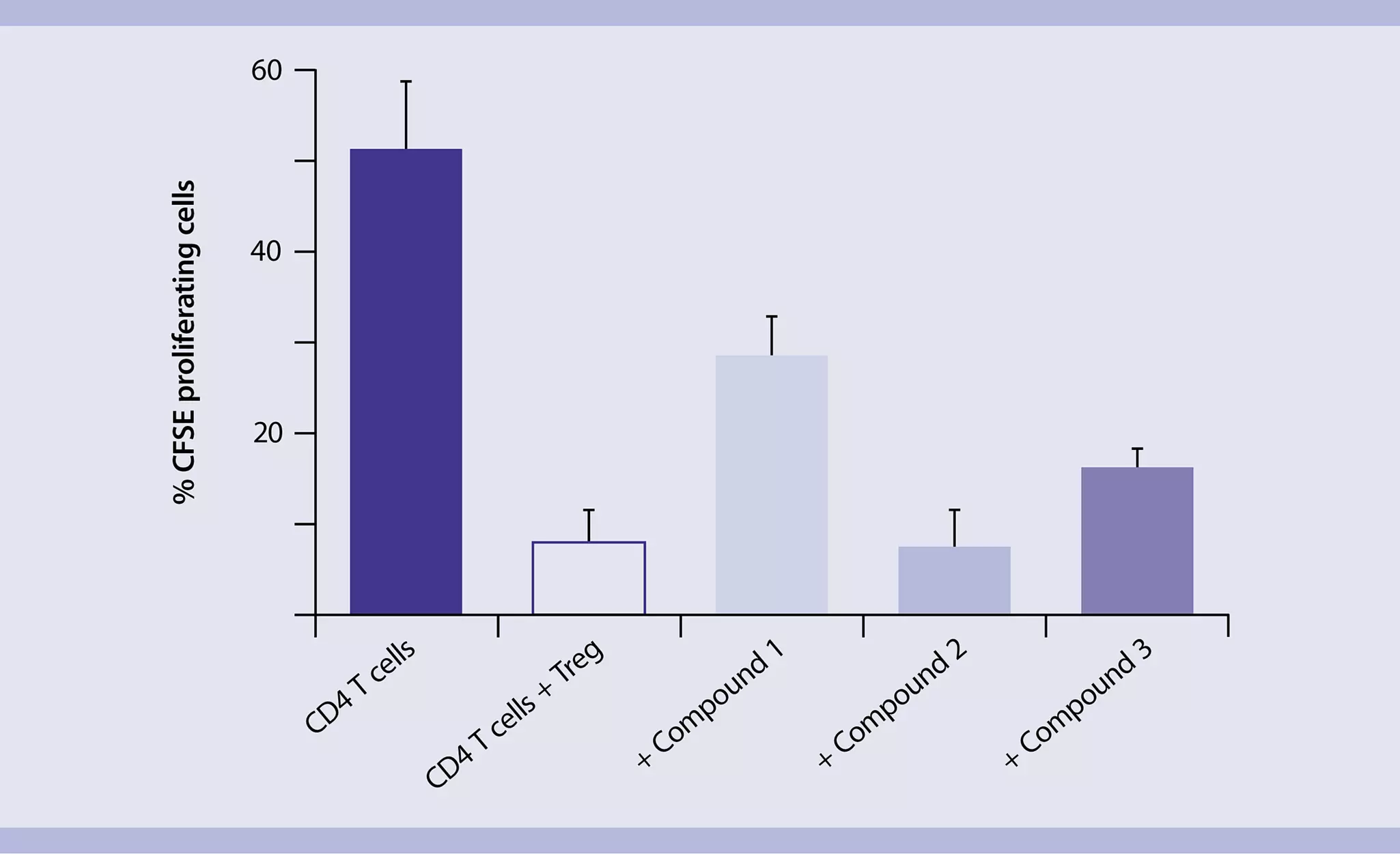
In this example study, the T reg suppression assay was used to assess the suppressive capacity of T regs on T cells upon treatment with three novel test compounds to assess their immunomodulatory potency. The resulting CFSE proliferating cell percentages allowed for a clear understanding on the action of the test compounds.