Using MLR and macrophage polarization assay for evaluating immune responses
In response to certain activation stimuli, T and B lymphocytes, macrophages, NK, and dendritic cells undergo rapid proliferation, which is critical to initiate the immune response. Evaluating the dynamic changes, the cell interactions, and the secretion of cytokines in these highly-regulated initial stages of the immune response is crucial to understand and characterize the immunomodulatory efficacy and potency of novel therapeutic drugs. MLR assay and macrophage polarization assay were used for determanitation of potential immune responses.
MLR assay to assess the efficacy of therapeutic antibodies on T cell responsiveness
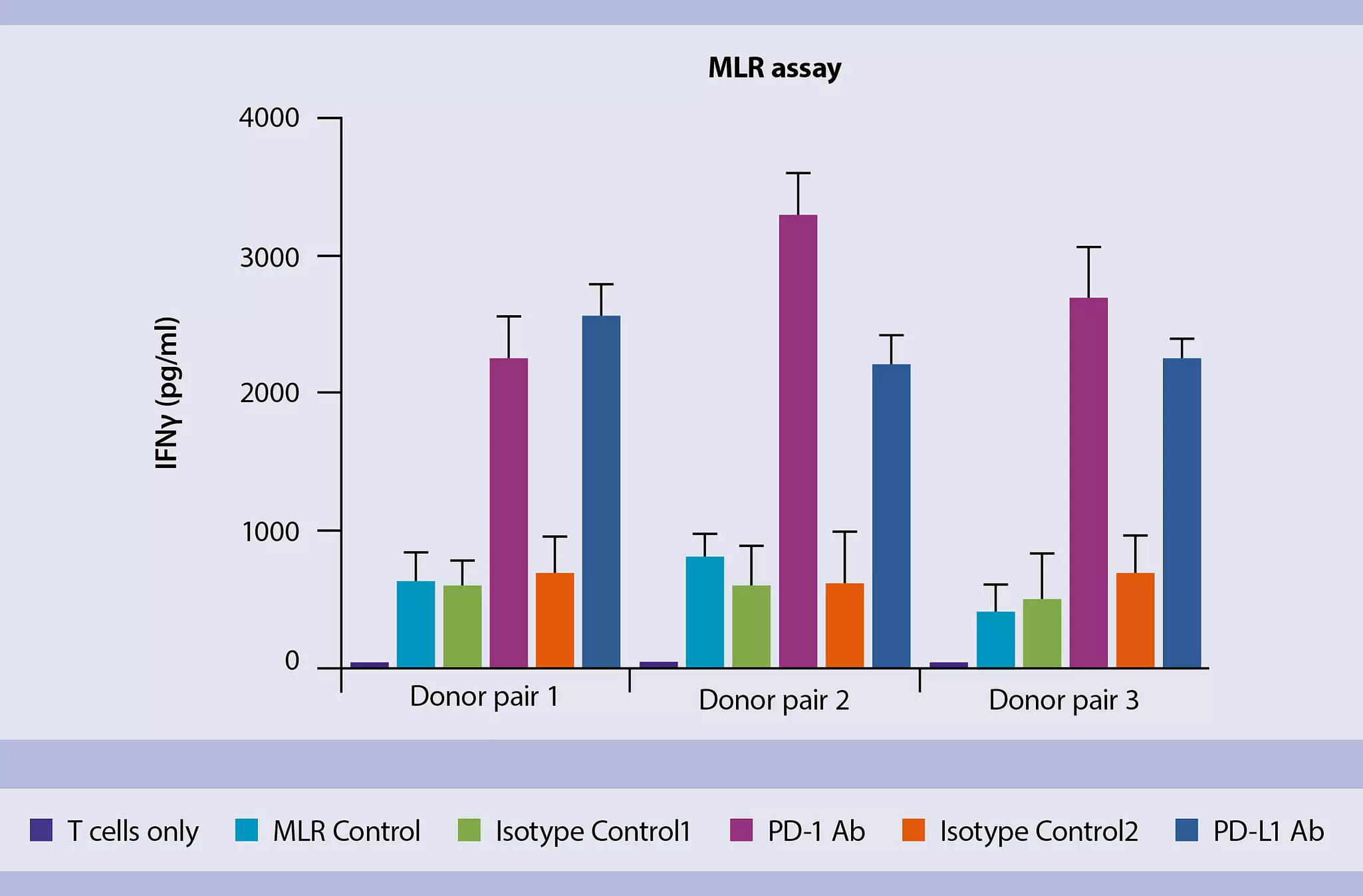
In this study, the receptivity of primary human T cells to therapeutic antibodies, immune checkpoint modulators, anti-PD-1 and anti-PD-L1, was assessed in an in vitro mixed-lymphocyte reaction. The investigated therapeutic antibodies demonstrated a clear response for IFN-γ production.
Webinar
Mixed leukocyte reaction and other antigen-presentation assays
M1/M2 polarization assay to assess the suppressive capacity of macrophages upon treatment with test compounds
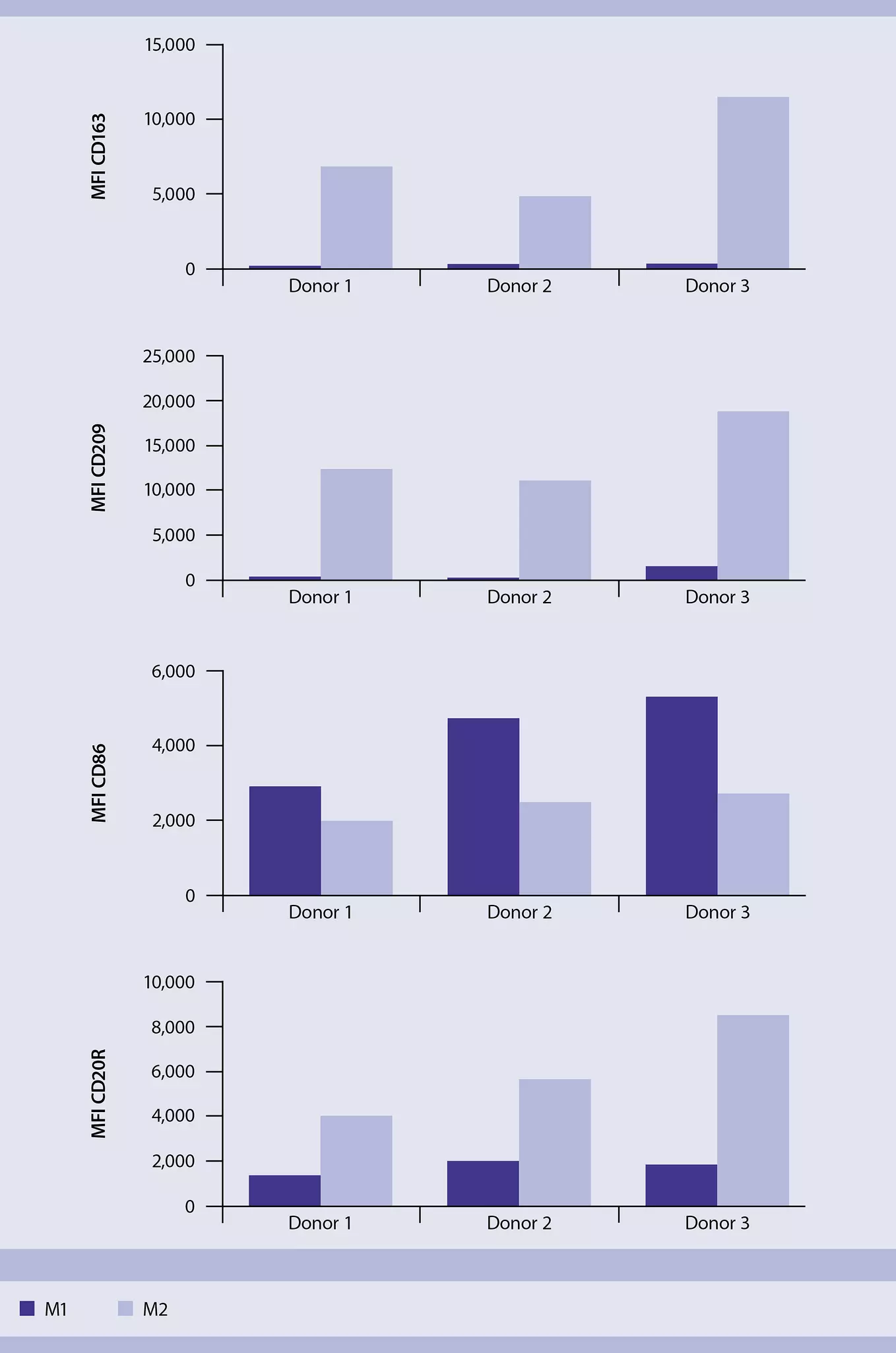
In this study by Janss et al., from ImmunXperts, a suppression assay was performed with a co-culture of macrophages, CD4 T cells, and test products. Multicolor immunophenotyping demonstrated successful polarization and the overall success of the suppression assay for drug efficacy evaluation.
Webinar
Understanding how in vitro macrophage assays drive IO drug development forward
TAMs and the TME: Learn how pre-clinical in vitro techniques help predict the effect of immunotherapeutics in vivo.