Content overview
What are cancer vaccines?
How do cancer vaccines work?
Types of therapeutic cancer vaccines
New developments
Content
- What are cancer vaccines?
- How do cancer vaccines work?
- Types of therapeutic cancer vaccines
- New developments
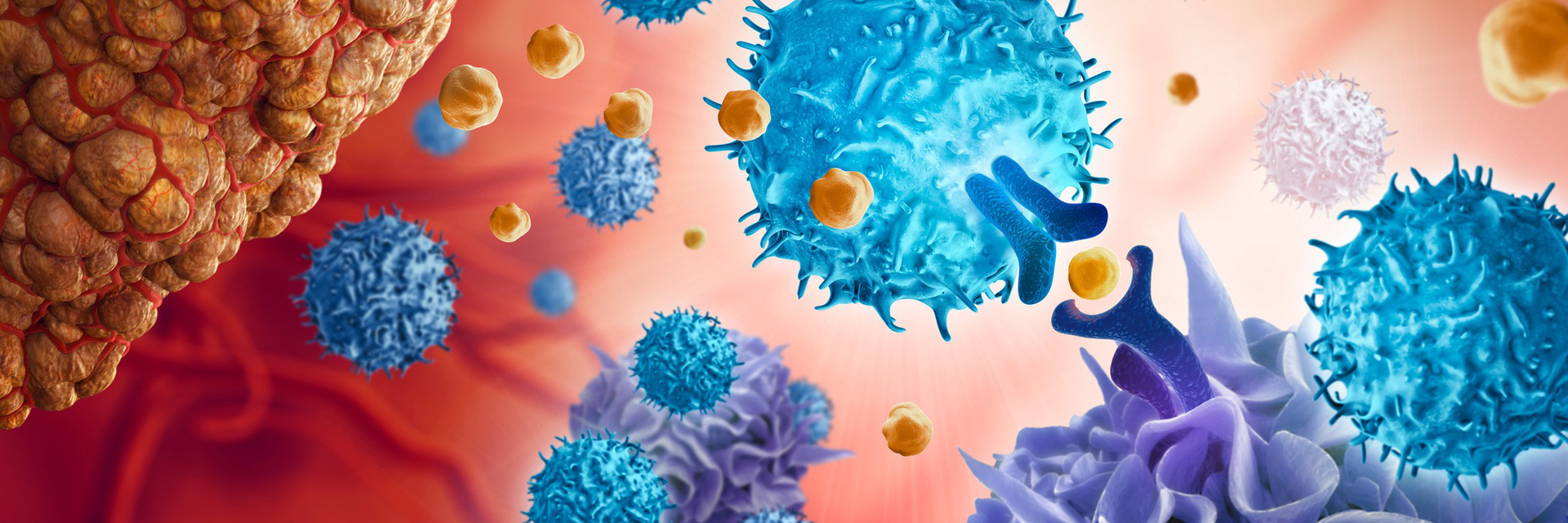

Cancer vaccines, once a distant dream in the realm of medical science, are quickly becoming a reality. As researchers delve deeper into the complex relationship between cancer and the immune system, vaccines designed to prevent or treat cancer are emerging as groundbreaking tools in the fight against this devastating disease.
In this blog post, we explore the types of therapeutic cancer vaccines and the latest breakthroughs in cancer vaccine research, from mechanism-driven design to clinical applications, providing key insights for scientists working at the intersection of oncology and immunology.
Read time: 5–10 minutes
This information is intended for biological researchers and should not be viewed as advice on the use of vaccines in preventing or treating cancer.
Content overview
What are cancer vaccines?
How do cancer vaccines work?
Types of therapeutic cancer vaccines
New developments
Cancer vaccines fall into two main categories:
Therapeutic cancer vaccines work by stimulating the immune system to recognize and destroy cancer cells. The key mechanisms involve antigen presentation, immune activation, and memory formation. Cancer vaccines introduce tumor-associated antigens (TAA) or tumor-specific antigens (TSA) to the immune system. These antigens can be 1) self-derived proteins (e.g., HER2 in breast cancer), 2) mutated proteins (neoantigens) unique to individual tumors, or 3) viral antigens (e.g., HPV for cervical cancer, HBV for liver cancer).3

Louis Pasteur’s discovery of the cholera vaccine for chickens was accidental. Pasteur left cholera bacteria exposed to air while on vacation. Upon his return, he injected the aged bacteria into chickens, and when they were later exposed to fresh cholera bacteria, the chickens didn’t get sick. This led to the discovery of the concept of attenuated vaccines.4
Therapeutic cancer vaccines are designed to stimulate the immune system to recognize and attack existing cancer cells. These vaccines can be classified based on how they present tumor antigens and activate immune responses.

Production of dendritic cell vaccines using different methods with equivalent results: Implications for emerging centers
da Silva Santos Duarte, A. et al. (2024) Hematol Transfus Cell Ther. 46(1):30-35. | Read article

Expansion of human papillomavirus-specific T cells in periphery and cervix in a therapeutic vaccine recipient whose cervical high-grade squamous intraepithelial lesion regressed
Shibata, T. et al. (2021) Case Reports Front Immunol. 12:645299. | Read article
Recent developments in cancer vaccine research have showcased significant advances, particularly in the areas of personalized medicine and mRNA technology. These developments underscore a transformative period in cancer vaccine research, with personalized and mRNA-based vaccines at the forefront of innovative cancer treatments.
A notable example is the investigational vaccine mRNA-4157/V940, developed by Moderna and Merck. This personalized vaccine targets neoantigens to stimulate an immune response against cancer cells. In a Phase 2b trial (NCT03897881) involving patients with resected stage III/IV melanoma, the combination of mRNA-4157/V940 and pembrolizumab (PD-1 inhibitor) demonstrated a 40% reduction in the risk of cancer recurrence or death compared to pembrolizumab alone. These promising results have led to the initiation of a Phase 3 trial to further assess its efficacy (NCT05933577).
Individualised neoantigen therapy mRNA-4157 (V940) plus pembrolizumab versus pembrolizumab monotherapy in resected melanoma (KEYNOTE-942): a randomised, phase 2b study
Weber, J.S. et al. (2024) Lancet. 17;403(10427):632-644 | Read article
In pancreatic cancer research, the personalized mRNA vaccine autogene cevumeran has shown encouraging outcomes. A Phase 1 trial (NCT04161755) reported that half of the treated patients exhibited a vaccine-induced immune response, which correlated with a longer recurrence-free survival. This suggests potential benefits in preventing cancer recurrence post-surgery.
Personalized RNA neoantigen vaccines stimulate T cells in pancreatic cancer
Rojas, L.A. et al. (2023) Nature. 618(7963):144-1504 | Read article
An experimental vaccine for advanced kidney cancer has demonstrated promising early-stage trial results (NCT02950766). Administered after tumor removal, the personalized vaccine prevented recurrence in all nine patients over nearly four years. It works by training the immune system to target remaining cancer cells using neoantigens, highlighting the potential of personalized vaccine approaches in oncology.
A neoantigen vaccine generates antitumour immunity in renal cell carcinoma
Braun, D.A. et al. (2025) Nature. doi: 10.1038/s41586-024-08507-5. Online ahead of print. | Read article