StraightFrom® Whole Blood CD14 MicroBeads have been developed for rapid positive selection of CD14+ cells directly from whole blood or bone marrow. No sample preparation is required, no density gradient centrifugation or erythrocyte lysis.


Related products for StraightFrom® Whole Blood CD14 MicroBeads, human

StraightFrom® Whole Blood CD14 MicroBeads have been developed for rapid positive selection of CD14+ cells directly from whole blood or bone marrow. No sample preparation is required, no density gradient centrifugation or erythrocyte lysis.
The CD14 antigen belongs to the LPS receptor complex. It is strongly expressed on most monocytes and macrophages and weakly on neutrophils.
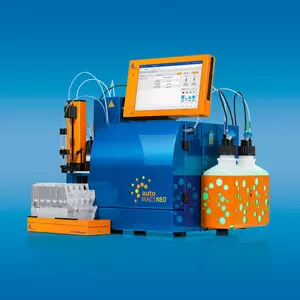
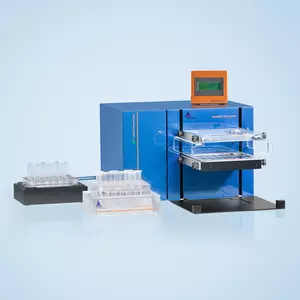
Anticoagulated cell samples of 0.25–15 mL are labeled with StraightFrom® Whole Blood CD14 MicroBeads to be subsequently separated with the autoMACS® Pro Separator, the MultiMACS™ Cell24 Separator Plus, or using the Whole Blood Column Kit.
StraightFrom® Whole Blood MicroBeads allow the fast isolation of CD14+ cells directly from whole blood or bone marrow, thus minimizing hands-on time and maximizing yield of target cells. StraightFrom Whole Blood MicroBeads in combination with the autoMACS® Separators allow standardization of the cell separation procedure and safer handling of hazardous samples. The purified CD14+ cells are well-suited for further flow cytometric, functional, or molecular analysis including lineage-specific chimerism analysis after allogeneic stem cell transplantation1,2.
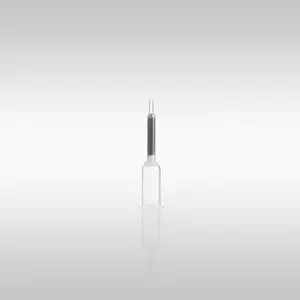
autoMACS® Columns or Whole Blood Columns.
Separation of a whole blood sample using the StraightFrom® Whole Blood CD14 MicroBeads and the MultiMACS™ Cell24 Separator Plus with the Single-Column Adapter and Whole Blood Columns without washing step after labeling. Cells were fluorescently stained with CD15-APC, CD14‑PE, as well as CD45-VioBlue® and analyzed by flow cytometry using the MACSQuant® Analyzer. Cells were triggered via CD45-VioBlue, cell debris and dead cells were excluded from the analysis based on scatter signals and propidium iodide fluorescence.
- Willasch, A. et al. (2010) Enrichment of cell subpopulations applying automated MACS technique: purity, recovery and applicability for PCR-based chimerism analysis. Bone Marrow Transplant. 45: 181-189
- Meyer, R. G. et al. (2007) Prophylactic transfer of CD8-depleted donor lymphocytes after T-cell-depleted reduced-intensity transplantation. Blood 109: 374-382
- Koehl, U. et al. (2003) Quantitative analysis of chimerism after allogeneic stem cell transplantation by PCR amplification of microsatellite markers and capillary electrophoresis with fluorescence detection: the Frankfurt experience. Leukemia 17: 232-236