Recombinant human IL-7 (interleukin 7) stimulates the development of lymphoid progenitors, T, and B cells. The hematopoietic cytokine is crucial for the proliferation of T and B cells, their survival, and homeostasis. Optimized for use in cell culture, functional assays, and differentiation studies.


Related products for Human IL-7


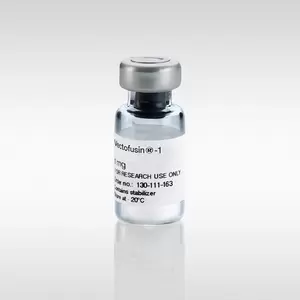
Recombinant human IL-7 (interleukin 7) stimulates the development of lymphoid progenitors, T, and B cells. The hematopoietic cytokine is crucial for the proliferation of T and B cells, their survival, and homeostasis. Optimized for use in cell culture, functional assays, and differentiation studies.
Human IL-7 can be used for a variety of applications, including:
- In vitro T cell expansion.
- In vitro T cell priming.
- In vitro differentiation of T cells and iNKT cells.
- Investigation of IL-7 mediated signaling pathways.
Biological activity
IL-7 is a member of the type I cytokine family. The primary sources of IL-7 are non-hematopoietic stromal cells in bone marrow, thymus, and lymphoid organs and tissues. It is a pleiotropic cytokine with central roles in modulating T cell development and peripheral T cell homeostasis. IL-7 can act both as a T cell growth factor as well as a critical anti-apoptotic survival factor for naive and memory T cells. IL-7 is related to IL-2 and signals through a heterodimeric receptor composed of the common cytokine signaling γ-chain and IL-7 receptor α-chain.
Research-grade cytokines are suitable for a wide variety of cell culture applications. They are sterile-filtered prior to lyophilization. Generally, endotoxin levels are <0.1 ng/μg (<1 EU/μg), and purities are >95%. The biological activity is tested in appropriate bioassays.
Premium-grade cytokines offer the convenience of high and well-defined biological activities and allow exact unit dosing for demanding applications. The biological activity is determined after lyophilization and reconstitution, and normalized to WHO/NIBSC standards whenever available. In general, endotoxin levels are <0.01 ng/μg (<0.1 EU/μg), and purities are >97%. Lot-specific activities are stated in the Certificate of Analysis (www. miltenyibiotec.com/certificates).
Human IL-7 activity assay. The biological activity of Human IL-7, premium grade was determined by proliferation assay using mouse 2E8 cells. The assay was calibrated with the reference standard for human IL-7 (NIBSC 90/530) provided by the National Institute for Biological Standards and Control.
SDS-PAGE of Human IL-7, premium grade under reducing (R) and non-reducing (NR) conditions.
Human IL-7 biological activity. Activity of Human IL-7, premium grade (red bar) was compared to another commercially available product (black bar).
Mass spectrometry analysis (ESI-MS) of Human IL-7, premium grade. The peak corresponds to the calculated molecular mass of 17382 Da.
To access a Certificate of Analysis (CoA) follow the link below and enter the specific lot of your product.
Should you wish to request additional documentation, such as a Safety Data Sheet (SDS) in other languages than English or Swedish, an SDS-replacement document, or a Certificate of Origin (CoO), please direct your inquiry to your local technical support team.
- Lee, S. W. L. et al. (2018) Characterizing the Role of Monocytes in T Cell Cancer Immunotherapy Using a 3D Microfluidic Model. Front Immunol 9: 416
- Laurenti, E. et al. (2015) CDK6 levels regulate quiescence exit in human hematopoietic stem cells. Cell Stem Cell 16 (3): 302-313
- Alzubi, J. et al. (2020) PSMA-Directed CAR T Cells Combined with Low-Dose Docetaxel Treatment Induce Tumor Regression in a Prostate Cancer Xenograft Model. Mol. Ther. Oncolytics 18: 226-235
- Dietz, L. et al. (2010) Tracking human contact allergens: from mass spectrometric identification of peptide-bound reactive small chemicals to chemical-specific naive human T-cell priming. Toxicol. Sci. 117 (2): 336-347
- Arcangeli, S. et al. (2020) Next-Generation Manufacturing Protocols Enriching T SCM CAR T Cells Can Overcome Disease-Specific T Cell Defects in Cancer Patients. Front Immunol 11: 1217
- Formenti, S. C. et al. (2018) Radiotherapy Induces Responses of Lung Cancer to CTLA-4 Blockade. Nat Med 24 (12): 1845-1851
- Alzubi, J. et al. (2020) Automated generation of gene-edited CAR T cells at clinical scale. Mol Ther Methods Clin Dev 20: 379-388
- Nicolas-Boluda, A. et al. (2021) Tumor stiffening reversion through collagen crosslinking inhibition improves T cell migration and anti-PD-1 treatment. Elife 10: e58688
- Shomuradova, A. S. et al. (2020) SARS-CoV-2 epitopes are recognized by a public and diverse repertoire of human T cell receptors. Immunity 53 (6): 1245-1257
- Ishihara, K. et al. (1991) Stromal-cell and cytokine-dependent lymphocyte clones which span the pre-B-to B-cell transition. Dev. Immunol. 1: 149-161
- Galletti, G. et al. (2020) Two subsets of stem-like CD8+ memory T cell progenitors with distinct fate commitments in humans. Nat Immunol 21 (12): 1552-1562
- Engelmann, S. et al. (2013) T cell-independent modulation of experimental autoimmune encephalomyelitis in ADAP-deficient mice. J Immunol 191 (10): 4950-4959
- Dussiau, C. et al. (2015) Targeting IRAK1 in T-cell acute lymphoblastic leukemia. Oncotarget. 6: 18956-18965
- Robertson, N. et al. (2020) Development of a novel mammalian display system for selection of antibodies against membrane proteins. J. Biol. Chem. 295 (52): 18436-18448
- Velardi, E. et al. (2014) Sex steroid blockade enhances thymopoiesis by modulating Notch signaling. J. Exp. Med. 211 (12): 2341-2349