The CD105 MultiSort Kit (PE), mouse has been developed for the isolation of CD105+ cells or cell subsets, including
- vascular endothelial cells from mouse tissue or cell cultures
- long-term repopulating hematopoietic stem cells (LTR-HSCs) from mouse bone marrow when used in combination with the Anti-Sca-1 MicroBead Kit (FITC).


Related products for CD105 MultiSort Kit (PE), mouse
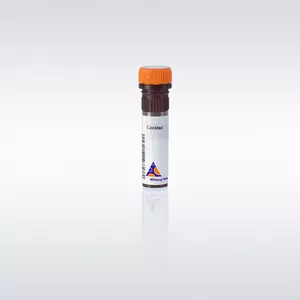
The CD105 MultiSort Kit (PE), mouse has been developed for the isolation of CD105+ cells or cell subsets, including
- vascular endothelial cells from mouse tissue or cell cultures
- long-term repopulating hematopoietic stem cells (LTR-HSCs) from mouse bone marrow when used in combination with the Anti-Sca-1 MicroBead Kit (FITC).
CD105, also known as Endoglin, is abundantly expressed on angiogenic endothelial cells. In mouse bone marrow, CD105 is also expressed on a subpopulation of Sca-1+ hematopoietic stem cells that displays long-term repopulating activity in lethally irradiated mice (LTR-HSCs)1.
In the first step, CD105+ cells are positively selected after labeling with the CD105 MultiSort MicroBeads. Subsequently, the MultiSort MicroBeads are enzymatically released from the CD105 antibody. The selected CD105+ cells can be magnetically labeled and sorted according to a second antigen. The kits contains CD105 MultiSort MicroBeads, MultiSort Release Reagent, and the MultiSort Stop Reagent.
Isolated CD105+Sca-1+ cells can be transplanted into lethally irradiated mice to evaluate the long-term engraftment potential of this cell population.
MS, LS, or autoMACS® Columns.
Isolation of CD105+Sca-1+ LTR-HSCs from mouse bone marrow using the CD105 MultiSort Kit (PE), mouse, and two LS Columns for the first positive selection followed by the Anti-Sca-1 MicroBead Kit (FITC), mouse, and two MS Columns in the second positive selection step.
- Chen, C. Z. et al. (2003) The endoglin(positive) sca-1(positive) rhodamine(low) phenotype defines a near-homogeneous population of long-term repopulating hematopoietic stem cells. Immunity 19: 525-533
- Chen, C. Z. et al. (2002) Identification of endoglin as a functional marker that defines long-term repopulating hematopoietic stem cells. Proc. Natl. Acad. Sci. U.S.A. 99: 15468-15473