GMP-compliant PSC expansion, banking, and differentiation
GMP-compliant cell sorting
Content
- GMP-compliant PSC expansion, banking, and differentiation
- GMP-compliant cell sorting
Watch these webinars and learn how the experts overcame challenges in PSC manufacturing


Pluripotent Stem Cells (PSCs) harbor immense clinical potential, with novel PSC-based clinical trials starting annually. However, attaining clinical-grade PSCs or PSC-derived cell types requires compliance with stringent GMP regulations regarding manufacturing, in-process and quality control, and precise isolation of the target cell population.
In tackling these challenges, we have collaborated with leading experts who generously shared their valuable experiences and strategies for successfully overcoming some of these hurdles with our solutions. Explore these webinars covering GMP-compliant PSC expansion, banking, and differentiation, as well as GMP-compliant cell sorting, and discover how these experts successfully navigated challenges in PSC manufacturing.
GMP-compliant PSC expansion, banking, and differentiation
GMP-compliant cell sorting
Efficient, GMP-compliant PSC expansion and banking is pivotal for organizations in the PSC field, especially for those establishing advanced cell banks such as iPSC haplobanks. Industry leaders, managing impressive GMP facilities, shared their valuable experiences with Dr. Chao Sheng, and discussed challenges and innovative solutions that led to their success.
Dr. Dhruv Sareen, Executive Director, Cedars-Sinai Biomanufacturing Center, USA
In this webinar, Dr. Dhruv Sareen will introduce the Cedars-Sinai Biomanufacturing Center, a leading center of excellence in the manufacturing of induced pluripotent stem cells (iPSCs) and cell and gene therapies. He will describe the manufacturing of human iPSCs under current Good Manufacturing Practices (cGMPs). Consideration will be provided to donor selection criteria, cell sources, reprogramming methods, genetic stability, cell banking process flows, expansion in open and closed systems, specifications, and related Critical Quality Attributes (CQAs).
Dr. Rafal Krol, Principal Investigator, CiRA Foundation, Japan
The CiRA Foundation is an offshoot of the Center for iPS Cell Research and Application (CiRA), Kyoto University. It assumed control of CiRA's management of induced pluripotent stem cells (iPS cells) and acts as a bridge for the transfer of iPS cell technology to the industry. Then, he will discuss the progress of protocol optimization for large-scale expansion of clinical grade iPS cells with the CliniMACS Prodigy Adherent Cell Culture process.
Dr. Boris Greber, Head of R&D iPSC/CT, Catalent Cell & Gene Therapy, Germany
Dr. Boris Greber will introduce the GMP-compliant induced pluripotent stem cell (iPSC) manufacturing workflow established by Catalent in addition to highlighting regulatory requirements and considerations surrounding the source material employed for reprogramming. He will furthermore elaborate on critical QC parameters to assess safety, genomic integrity, and pluripotency of iPSCs as a key starting point in ATMP production. Finally, Dr. Greber will discuss the concept of immune matching based on Catalent’s emerging library of HLA-homozygous GMP iPSC lines and provide an outlook for ATMP development based on ongoing differentiation projects.
Dr. Camie Chan, CEO, Xellera Therapeutics, Hong Kong
Dr. Camie Chan will discuss how cell therapies have emerged as a promising next-generation modality for many incurable diseases. In her talk on “Establishing the first southern Chinese haplobank of clinical-grade hiPSCs”, she will illustrate how Xellera has established the first commercial cGMP facility for cell and gene products in Hong Kong. By analyzing the HLA diversity of the southern Chinese population, Xellera has identified donors that are homozygous for the most frequent HLA-A,B,C, and DRB1 combination. The top seven human induced pluripotent stem cell (hiPSC) lines of the haplobank are expected to cover approximately 30% of the southern Chinese population, offering an off-the-shelf approach for allogeneic transplantation of hiPSC-derived cell therapies.
Dr. Christelle Monville, Professor, Evry Paris Saclay, and Team Leader I-Stem, France
In this webinar Dr. Christelle Monville will introduce the work done on developing a novel tissue-engineered product (TEP) consisting of RPE cells derived from clinical-grade human embryonic stem cells. These cells were disposed on a biocompatible substrate allowing the formation of a 3D functional sheet, suitable for transplantation. After functional validation in a rodent model of Retinitis Pigmentosa (Ben M'Barek et al., 2017), they have tested the safety of the surgery and local tolerance in non-human primates (Ben M’Barek et al., 2020). These results lay the foundations for the start of a phase I/II clinical trials in 2019 that is now on going (NCT03963154). 7 patients have been transplanted so far and first results are showing no major adverse events. In parallel they are developing protocols to upscale the production of RPE using culture automates (Régent et al., 2019) in GMP conditions.
Using the CliniMACS Prodigy ACC platform we are creating iPS derived vascular endothelial cells in a closed system with its own unique advantages.

The CliniMACS Prodigy Adherent Cell culture platform allows highly scalable iPSC expansion.

A closed, automated system like the CliniMACS Prodigy is important in reducing cost of goods, improving product quality, ensuring consistency, and reducing contamination risk.

Cell isolation under GMP conditions can be applied to obtain the desired cell populations during cell manufacturing processes. Discover the challenges encountered by these industry leaders, who oversee impressive GMP facilities, and learn about the innovative solutions that played a crucial role in shaping their success.
Dr. Dave Mann, CEO Vascugen, USA
Dr. Matthew George, Associate Director of Research, Vascugen, USA
This webinar will delve into the challenges of translating workflows into a GMP-compliant environment, specifically focusing on regenerative medicine in cardiovascular diseases. Discussion will focus on the pre-clinical development path, and hurdles related to raw materials supply chain management, and identifying equipment compatible with the execution of novel, compliant manufacturing processes. Learn how the MACSQuant® Tyto®, with its closed and sterile cell sorting system, is the ideal solution for easily translating workflows from the research bench to clinical manufacturing.
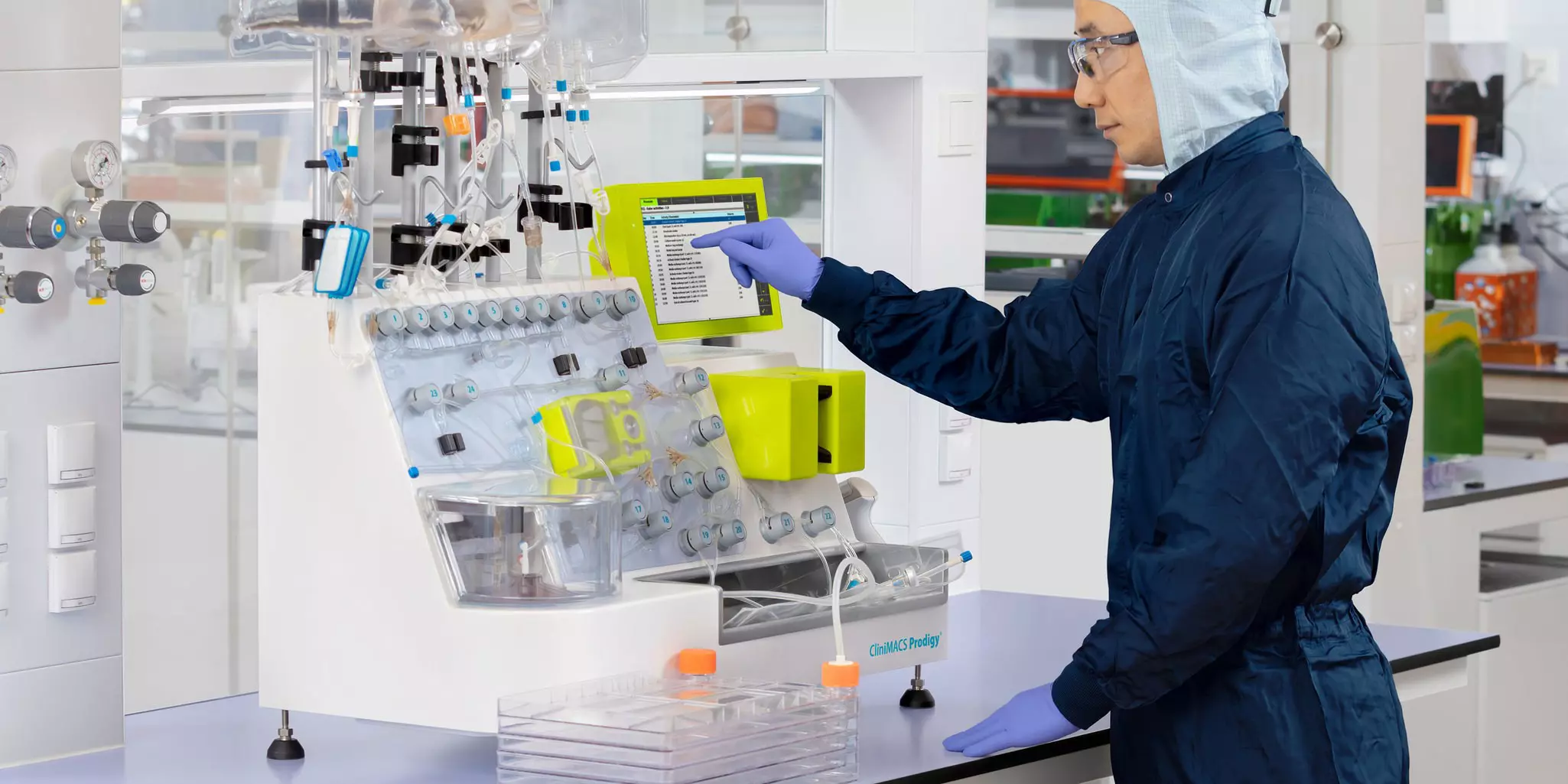
Learn more about the CliniMACS Prodigy Adherent Cell Culture process for human PSC manufacturing and discover the applications of PSC expansion and differentiation.