
MACS® Technology – excellence and efficiency at your fingertips

Noteworthy references using MACS Technology

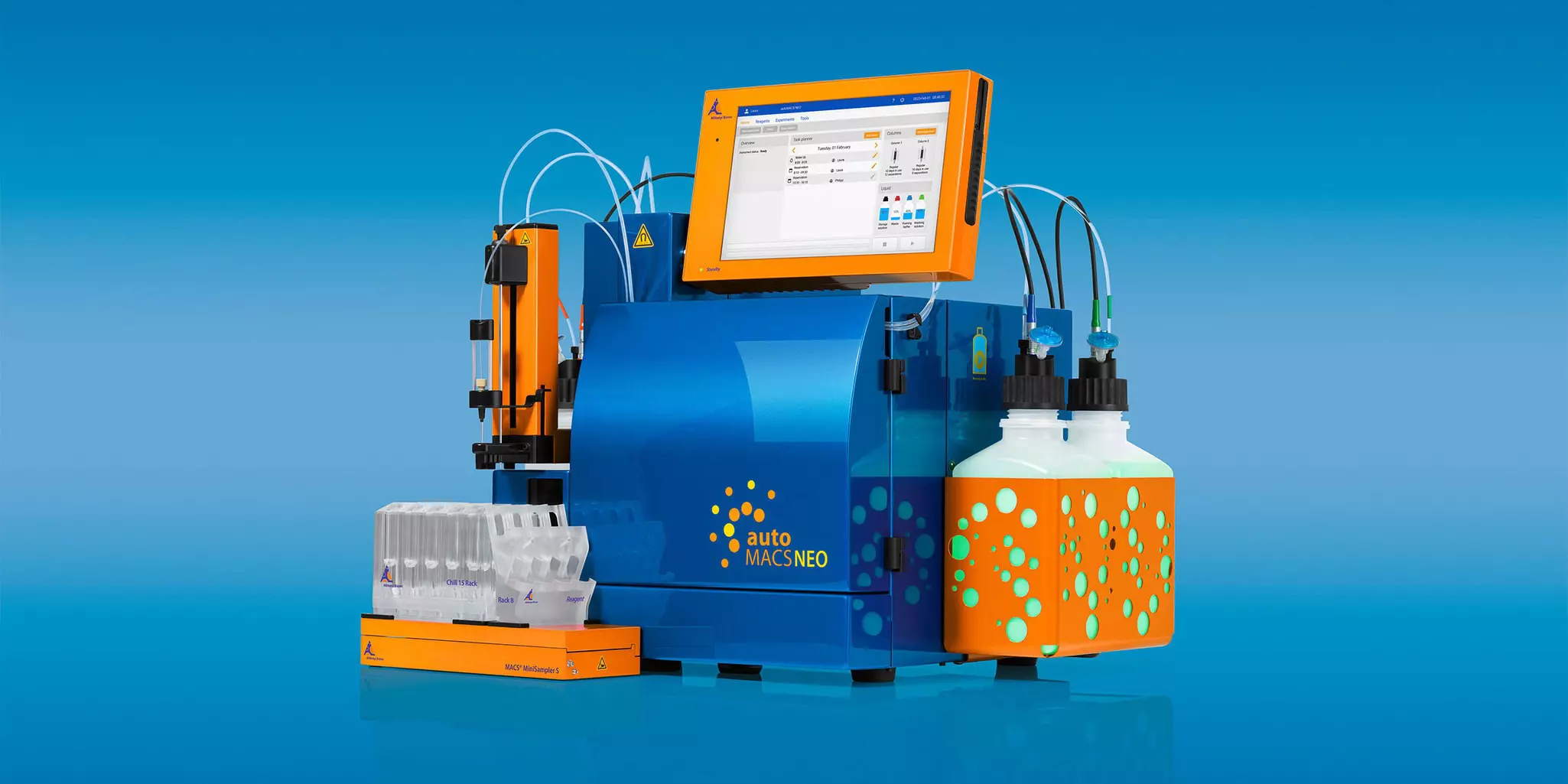
Automated cell separation instrument autoMACS NEO Separator for gentle and efficient cell isolations
Logo

MACS® Technology – excellence and efficiency at your fingertips

MACS Technology is compatible with a wide array of applications – choose your downstream technology of interest

Content

  • Flow cytometric analysis and sorting
  • Functional in vitro assays
  • In vivo applications
  • Engineered immune cells
  • Next-generation sequencing (NGS)
  • Genomic analysis
  • Single-cell RNA sequencing
  • TCR sequencing
  • Mass cytometry (CyTOF)
  • Proteomics & metabolomics
  • Pharmacology
  • Automated cell separation

Flow cytometric analysis and sorting

Preenrichment of target cells increases sensitivity and reduces run time in flow cytometric sorting and analysis, which helps minimize cellular stress. Magnetic cell separation lowers running costs by reducing the number of cells processed while improving the quality of the sorted cell population.

  • ImmuniT platform for improved neoantigen prediction in lung cancer
    Hachey, S. J. et al. (2025) Vaccines 13: 921 | Read article

  • Neutrophils aggravate inflammatory lesions in intestinal organoids from necrotizing enterocolitis
    Heuer, K. M. et al. (2025) Front. Immunol. 16: 1582526 | Read article

  • Validation of a new high-throughput cell separation method for downstream molecular applications
    Shillingford, D. et al. (2025) Int. J. Mol. Sci. 26: 6747 | Read article

  • NET proteomic profiling reveals new pathways potentially implicated in dendritic cell-mediated inflammation in DADA2 patients
    Signa, S. et al. (2025) J. Clin. Immunol. 45: 106 | Read article

  • Targeting PD-1 and CD85j can restore intratumoral CD4+ GzmB+ T-cell functions to combat MHC-II-expressing tumors
    Wang, B. et al. (2025) J. Immunother. Cancer 13: e010890 | Read article

  • Naturally arising memory-phenotype CD4+ T lymphocytes give rise to multiple helper subsets to contribute to tumor immunity while inhibiting GVHD
    Yang, Z. et al. (2025) Cancer Immunol. Res. 13: 897–911 | Read article

  • Effector memory–type regulatory T cells display phenotypic and functional instability
    Wendering, D. J. et al. (2024) Sci. Adv. 10: eadn3470 | Read article

  • Checkpoint blockade accelerates a novel switch from an NKT-driven TNFα response toward a T cell driven IFN-γ response within the tumor microenvironment
    Aoyama, S. et al. (2021) J. Immunother. Cancer 9: e002269 | Read article

  • Thymic iNKT single cell analyses unmask the common developmental program of mouse innate T cells
    Krovi, S. H. et al. (2020) Nat. Commun. 11: 6238 | Read article

  • Modest declines in proteome quality impair hematopoietic stem cell self-renewal
    Hidalgo San Jose, L. et al. (2020) Cell Rep. 30: 69–80 | Read article

  • CD11cHi monocyte-derived macrophages are a major cellular compartment infected by Mycobacterium tuberculosis
    Lee, J. et al. (2020) PLoS Pathog. 16: e1008621 | Read article

  • Standardized 11-color flow cytometry panel for the functional phenotyping of human T regulatory cells
    Manuszak, C. et al. (2020) J. Biol. Methods 7: e131 | Read article

  • Mouse models of neutropenia reveal progenitor-stage-specific defects
    Muench, D. E. et al. (2020) Nature 582: 109–114 | Read article

  • Combination immune checkpoint blockade to reverse HIV latency
    Van der Sluis, R. (2020) J. Immunol. 204: 1242–1254| Read article

  • SIRT1 is downregulated by autophagy in senescence and ageing
    Xu, C. et al. (2020) Nat. Cell Biol. 22: 1170–1179 | Read article

  • Helios + and Helios- Treg subpopulations are phenotypically and functionally distinct and express dissimilar TCR repertoires
    Thornton, A. et al. (2019) Eur. J. Immunol. 49: 398–412 | Read article

  • Immune checkpoint blockade to improve tumor infiltrating lymphocytes for adoptive cell therapy
    Kodumudi, K. et al. (2016) PLoS One 11: e0153053 | Read article

3D graphic of strands of DNA and leukocytes

Workflow solutions for the preparation of cells prior to genomic analysis

Functional in vitro assays

Functional in vitro assays using primary cells and MACS Cell separation technology evaluate key downstream effects such as proliferation, viability, signal transduction, and cytokine production, providing mechanistic insights under standardized conditions.

  • PD-1 receptor deficiency enhances CD30+ Treg cell function in melanoma
    Lim, J. X. et al. (2025) Nat. Immunol. 26: 1074–1086 | Read article
    Cell type: CD4+CD25+ Treg cells, CD90.2 T cells

  • Mitochondrial metabolism is rapidly re-activated in mature neutrophils to support stimulation-induced response
    Lika, J. et al. (2025) Front. Immunol. 16: 1572927 | Read article
    Cell type: Neutrophils

  • Protocol for the biofabrication of immunocompetent tumor-on-chip models from patient solid tumors for assessment of anticancer therapies
    Nurmik, M. et al. (2025) STAR Protoc. 6: 103895 | Read article
    Cell type: CD8+ T cells, Tumor cells

  • Chemoradiotherapy-induced ACKR2+ tumor cells drive CD8+ T cell senescence and cervical cancer recurrence
    Dai, D. et al. (2024) Cell Rep. Med. 5 | Read article
    Cell type: CD8+ cells, Myeloid cells

  • Mitochondrial DNA-boosted dendritic cell-based nanovaccination triggers antitumor immunity in lung and pancreatic cancers
    Shang, L. et al. (2024) Cell Rep. Med. 5: 101648 | Read article
    Cell type: T cells, NK cells

  • Understanding monocyte-driven neuroinflammation in Alzheimer’s disease using human cortical organoid microphysiological systems
    Tian, C. et al. (2025) Sci. Adv. 11: eadu2708 | Read article
    Cell type: Organoids

  • Inhibition of iNKT cells by the HLA-G-ILT2 checkpoint and poor stimulation by HLA-G-expressing tolerogenic DC
    Wu, C.-L. et al. (2025) Front. Immunol. 11: 608614 | Read article
    Cell type: iNKT cells

  • The longevity-associated BPIFB4 gene guarantees vascular homeostasis and immune protection through platelets
    Ciaglia, E. et al. (2024) Aging Cell 23: e14021 | Read article
    Cell type: CD61+ cells, Monocytes

  • Natural resistance to meglumine antimoniate is associated with treatment failure in cutaneous leishmaniasis caused by Leishmania (Viannia) panamensis
    Fernández, O. L. et al. (2024) PLoS Negl. Trop. Dis. 18: e0012645 | Read article
    Cell type: Monocytes

  • GNUV201, a novel human/mouse cross-reactive and low pH-selective anti-PD-1 monoclonal antibody for cancer immunotherapy
    Kim, H.-M. et al. (2024) BMC Immunol. 25: 29 | Read article
    Cell type: Monocytes,T cells

  • Microglia exhibit a unique intact HIV reservoir in human postmortem brain tissue
    Nühn, M. M. et al. (2024) PLoS Pathog. 20: e1015748 | Read article
    Cell type: Microglia, Monocytes, CD4+ T cells

  • CD19-CD28: An affinity-optimized CD28 agonist for combination with glofitamab (CD20-TCB) as off-the-shelf immunotherapy
    Sam, J. et al. (2024) Blood 143: 2152–2165 | Read article
    Cell type: CD20+ B cells

  • IL-23 stabilizes an effector Treg cell program in the tumor microenvironment
    Wertheimer, T. et al. (2024) Nat. Immunol. 25: 512–524 | Read article
    Cell type: CD4+CD25+ Treg cells

  • Human dendritic cell subset isolation by magnetic bead sorting: A protocol to efficiently obtain pure populations
    Flórez-Grau, G. et al. (2023) Bio-protocol 13: e4851 | Read article
    Cell type: Dendritic cells

  • Reinforcement of cell-mediated immunity driven by tumor-associated Epstein-Barr Virus (EBV)-specific T cells during targeted B-cell therapy with rituximab
    Tischer-Zimmermann, S. et al. (2023) Front. Immunol. 14: 878953 | Read article
    Cell type: Monocytes, CD3+ T cells, CD20+ B cells

  • NOX4 is the main NADPH oxidase involved in the early stages of hematopoietic differentiation from human induced pluripotent stem cells.
    Brault, J. et al. (2020) Free Radic. Biol. Med. 146: 107–18 | Read article
    Cell type: iPSC-derived CD34+ cells

  • Optimised generation of iPSC-derived macrophages and dendritic cells that are functionally and transcriptionally similar to their primary counterparts
    Monkley, S. et al. (2020) PLoS One 15: e0243807 | Read article
    Cell type: iPSC-derived CD14+ cells

  • TET2 haploinsufficiency alters reprogramming into induced pluripotent stem cells.
    Secardint, L. et al. (2020) Stem Cell Res. 44: 101755 | Read article
    Cell type: iPSC generation from CD34+ cells

  • Disrupted filamin A/αIIbβ3 interaction induces macrothrombocytopenia by increasing RhoA activity
    Donada, A. et al. (2019) Blood 133: 1778–1788 | Read article
    Cell type: iPSC generation from CD34+ cells

In vivo applications

For efficient in vivo research applications, the quality of isolated cells is critical for robust and reproducible results. MACS Technology enables the isolation of highly pure and viable cell populations, supporting reliable performance across a wide range of downstream studies.

  • Site-directed multivalent conjugation of antibodies to ubiquitinated payloads
    el Hebieshy, A. F. et al. (2025) Nat. Portfolio 9: 1101–1116 | Read article

  • Airway-resident memory CD4 T cell activation accelerates antigen presentation and T cell priming in draining lymph nodes
    Finn, C. M. et al. (2024) JCI Insight 10: e182615 | Read article

  • Checkpoint inhibitor-expressing lentiviral vaccine suppresses tumor growth in preclinical cancer models
    Tada, T. et al. (2024) J. Immunother. Cancer 12: e008761 | Read article

  • Human monocyte-derived suppressor cell supernatant induces immunoregulatory effects and mitigates xenoGvHD
    Gérard, C. et al. (2022) Front. Immunol. 10: 3389 | Read article

  • Testing cancer immunotherapy in a human immune system mouse model: correlating treatment responses to human chimerism, therapeutic variables and immune cell phenotypes
    Marín-Jiménez, J. A. et al. (2021) Front. Immunol. 12: 607282 | Read article

  • Persistence of self-reactive CD8+ T cells in the CNS requires TOX-dependent chromatin remodeling
    Page, N. et al. (2021) Nat. Commun. 12: 1009 | Read article

  • Genetic in vivo engineering of human T lymphocytes in mouse models
    Weidner, T. et al. (2021) Nat. Protoc. 16: 3210–3240 | Read article

  • Anti-tumor effects of anti-PD-1 antibody, pembrolizumab, in humanized NSG PDX mice xenografted with dedifferentiated liposarcoma
    Choi, B. et al. (2020) Cancer Lett. 478: 56–69 | Read article

  • Peripheral host T cells survive hematopoietic stem cell transplantation and promote graft-versus-host disease
    Divito, S. J. et al. (2020) JCI 130: 4624–4636 | Read article

  • Interferon gamma mediates hematopoietic stem cell activation and niche relocalization through BST2
    Florez, M. A. et al. (2020) Cell Rep. 33: 108530 | Read article

  • Development of an adrenocortical cancer humanized mouse model to characterize anti-PD1 effects on tumor microenvironment
    Lang, J. et al. (2020) J. Clin. Endocrinol. Metab. 105: 26–42 | Read article

  • Adoptive transfer of basophils enriched from mouse spleen
    Piliponsky, A. M. et al. (2019) Bio-protocol 9: e3416 | Read article

  • Bioimaging of alloantigen-stimulated regulatory T cells in rat vascularized composite allotransplantation
    Cheng, H.-Y. et al. (2018) PLoS One 13: e0203624 | Read article

  • Pathogenic TH17 inflammation is sustained in the lungs by conventional dendritic cells and toll-like receptor 4 signaling
    Shalaby, K. H. et al. (2018) J. Allergy Clin. Immunol. 142: 1229–1242.e6 | Read article

Engineered immune cells

Automated magnetic cell separation results in a well-defined, enriched cell population ready for your CAR cell research. Together, the autoMACS® NEO and MACS Technology are key to obtaining robust, standardized, and reproducible results.

  • Differential roles of human CD4+ and CD8+ regulatory T cells in controlling self-reactive immune responses
    Chen, X. et al. (2025) Nat. Immunol. 26: 230–239 | Read article
    Cell type: T cells

  • Gene editing of CD3 epsilon to redirect regulatory T cells for adoptive T cell transfer
    Du, W. et al. (2025) Mol. Ther. 33: 997–1013 | Read article
    Cell type: T cells

  • γδ T-cell autoresponses to ectopic membrane proteins: a new type of pattern recognition
    You, H. et al. (2025) Cell. Mol. Immunol. 22: 356–370 | Read article
    Cell type: γδ T cells

  • Protocol for the simultaneous activation and lentiviral transduction of primary human T cells with artificial T cell receptors
    Tan, J. Y. M. et al. (2025) STAR Protoc. 6: 103685 | Read article
    Cell type: T cells

  • Optimization of anti-CD19 CAR T cell production for treatment of patients with chronic lymphocytic leukemia
    Amatya, C. et al. (2024) Mol. Ther. Methods Clin. Dev. 32: 101212 | Read article
    Cell type: CD4+ and CD8+ T cells, CD19+ B cells

  • Integration of ζ-deficient CARs into the CD3ζ gene conveys potent cytotoxicity in T and NK cells
    Kath, J. et al. (2024) Blood 143: 2599–2611 | Read article
    Cell type: T cells, NK cells

  • Immunosuppressant therapy averts rejection of allogeneic FKBP1A-disrupted CAR-T cells
    Maldini, C. R. et al. (2024) Mol. Ther. 32: 3204–3216 | Read article
    Cell type: T cells

  • Regulatory T cells targeting a pathogenic MHC class II: insulin peptide epitope postpone spontaneous autoimmune diabetes
    Obarorakpor, N. et al. (2023) Front. Immunol. 14: 1207108 | Read article
    Cell type: CD4+CD25+ Treg Cells

  • Universal ready-to-use immunotherapeutic approach for the treatment of cancer: Expanded and activated polyclonal γδ memory T cells
    Polito, V. A. et al. (2019) Front. Immunol. 10: 2717 | Read article
    Cell type: γδ T cells GMP-Grade

  • Vectofusin-1 improves transduction of primary human cells with diverse retroviral and lentiviral pseudotypes, enabling robust, automated closed-system manufacturing
    Radek, C. et al. (2019) Hum. Gene Ther. 30: 1477–1493 | Read article
    Related technologies: Induction of CAR-T

  • Optimization of IL13Rα2-targeted chimeric antigen receptor T cells for improved anti-tumor efficacy against glioblastoma
    Brown, C. E. et al. (2018) Mol. Ther. 26: 31–44 | Read article
    Cell type: CD45RO+ CD62L+ Tcm

  • CAR T cells releasing IL-18 convert to T‑Bethigh FoxO1low effectors that exhibit augmented activity against advanced solid tumors
    Chmielewski, M. et al. (2017) Cell Rep. 21: 3205–3219 | Read article
    Cell type: CD4+ and CD8+ T cells

Microscopic image showing a CAR T cell killing a cancer cell

Workflow solutions for CAR T cell research

Find more information on full workflow solutions for CAR T cell research.

Next-generation sequencing (NGS)

For any NGS application, the quality of the cells being sequenced is critical. Standardization of the cell isolation process through automation with the autoMACS NEO Separator and MACS Technology ensures reproducibility, cell quality, and purity for reliable NGS analysis.

  • DNA sequencing of CD138 cell population reveals TP53 and RAS-MAPK mutations in multiple myeloma at diagnosis
    Dragomir, M. et al. (2024) Cancers 16: 358 | Read article

  • Tumor cell enrichment by tissue suspension enables detection of mutations with low variant allele frequency and estimation of germline mutations
    Hatakeyama, K. et al. (2022) Sci. Rep. 12: 2953 | Read article

  • Asymptomatic infection of Marburg virus reservoir bats is explained by a strategy of immunoprotective disease tolerance
    Guito, J. C. et al. (2021) Curr. Biol. 31: 257–270.e5 | Read article

  • Interferon-Λ3 exacerbates the inflammatory response to microbial ligands: Implications for SARS-CoV-2 pathogenesis
    Read, S. A. et al. (2021) J. Inflamm. Res. 14: 1257–1270 | Read article

  • Genetic characterization of a unique neuroendocrine transdifferentiation prostate circulating tumor cell-derived explant model
    Faugeroux, V. F. et al. (2020) Nat. Commun. 11: 1884 | Read article

  • A metastasis map of human cancer cell lines
    Jin, X. et al. (2020) Nature 588: 331–336 | Read article

  • Regulation of the methylome in differentiation from adult stem cells may underpin vitamin D risk in MS
    Ong, L. T. C. et al. (2020) Genes Immun. 21: 335–347 | Read article

  • Impaired microRNA processing in neutrophils from rheumatoid arthritis patients confers their pathogenic profile modulation by biological therapies
    Rosa, I. A. et al. (2020) Haematologica 105: 2250–2261 | Read article

  • Detection of neoantigen-reactive T cell clones based on the clonal expansion using next-generation sequencing of T cell receptor β complementarity-determining region 3
    Sumimoto, H. et al. (2020) J. Immunol. Methods 476: 112679 | Read article

  • The DNA methylation inhibitor zebularine controls CD4+ T cell mediated intraocular inflammation
    Zou, Y. et al. (2019) Front. Immunol. 10: 1950 | Read article

  • Self-renewing resident cardiac macrophages limit adverse remodeling following myocardial infarction
    Dick, S. A. et al. (2019) Nat. Immunol. 20: 29–39 | Read article

  • The use of PanDrugs to prioritize anticancer drug treatments in a case of T-ALL based on individual genomic data
    Fernández-Navarro, P. et al. (2019) BMC Cancer 19: 1005 | Read article

  • The NASA twins study: A multidimensional analysis of a year-long human spaceflight
    Garrett-Bakelman, F. E. et al. (2019) Science 364: 6436 | Read article

  • TNF-α–induced protein 3 is a key player in childhood asthma development and environment-mediated protection
    Krusche, J. et al. (2019) J. Allergy Clin. Immunol. 144: 1684–1696.e12 | Read article

  • Single-cell transcriptomics of the human retinal pigment epithelium and choroid in health and macular degeneration
    Voigt, A. P. et al. (2019) Proc. Natl. Acad. Sci. USA 116: 24100–24107 | Read article

  • TCR repertoire analysis reveals mobilization of novel CD8+ T cell clones into the cancer-immunity cycle following anti-CD4 antibody administration
    Aoki, H. et al. (2018) Front. Immunol. 9: 3185 | Read article

  • Redox-dependent BMI1 activity drives in vivo adult cardiac progenitor cell differentiation
    Herrero, D. et al. (2018) Cell Death Differ. 25: 809–822 | Read article

  • Next-generation sequencing (NGS) analysis on single circulating tumor cells (CTCs) with no need of whole-genome amplification (WGA)
    Palmirotta, F. et al. (2017) Cancer Genom. Proteom. 14: 173–179 | Read article

3D graphic of strands of DNA and leukocytes

Workflow solutions for the preparation of cells prior to genomic analysis

Find more information on full Miltenyi Biotec workflow solutions for the preparation of cells prior to genomic analysis.

Genomic analysis

Reliability and speed are important factors in achieving publishable CRISPR/Cas9 genome editing results. Isolation of target cells with MACS Technology increases the frequency of rare cells and provides a standardized process with high-quality input for optimal genome editing efficiency.

  • Correction of β-thalassemia by CRISPR/Cas9 editing of the α-globin locus in human hematopoietic stem cells
    Pavani, G. et al. (2021) Blood Adv. 5: 1137–1153 | Read article
    Cell type: CD34+ cells

  • Ex vivo editing of human hematopoietic stem cells for erythroid expression of therapeutic proteins
    Pavani, G. et al. (2020) Nat. Commun. 11: 3778 | Read article
    Cell type: CD34+ cells

  • Large DNA methylation nadirs anchor chromatin loops maintaining hematopoietic stem cell identity
    Zhang, X. et al. (2020) Mol. Cell 78: 506–521.e6 | Read article
    Cell type: CD34+ cells

  • Activated invariant natural killer T cells directly recognize leukemia cells in a CD1d‐independent manner
    Aoki, T. et al. (2020) Cancer Sci. 111: 2223–2233 | Read article
    Cell type: iNKT cells

  • Kidney GATA3+ regulatory T cells play roles in the convalescence stage after antibody-mediated renal injury
    Sakai, R. et al. (2020) Cell. Mol. Immunol. 17: 1–13 | Read article
    Cell type: CD4+ T cells

  • TraFo-CRISPR: Enhanced genome engineering by transient foamy virus vector-mediated delivery of CRISPR/Cas9 components
    Lindel, F. et al. (2019) Mol. Ther. Nucleic Acids 18: 708–726 | Read article
    Cell type: CD4+ T cells

Single-cell RNA sequencing

For single-cell RNA sequencing, cell quality at the start strongly shapes the quality of the data. Isolation of target cells with MACS Technology enriches rare populations, removes unwanted background, and provides a standardized preparation of viable single cells for reliable downstream transcriptomic analysis.

  • Single-cell transcriptomics analysis reveals that the tumor-infiltrating B cells determine the indolent fate of papillary thyroid carcinoma
    Li, C. et al. (2025) J. Exp. Clin. Cancer Res. 44: 91 | Read article

  • NET proteomic profiling reveals new pathways potentially implicated in dendritic cell-mediated inflammation in DADA2 patients
    Signa, S. et al. (2025) J. Clin. Immunol. 45: 106 | Read article

  • Single-cell RNA sequencing reveals that an imbalance in monocyte subsets rather than changes in gene expression patterns is a feature of postmenopausal osteoporosis
    Tao, L. et al. (2024) J. Bone Miner. Res. 39: 980–993 | Read article

  • Tumor-associated hematopoietic stem and progenitor cells positively linked to glioblastoma progression
    Lu, I.-N. et al. (2021) Nat. Commun. 12: 3895 | Read article

  • Cellular heterogeneity of circulating CD4+CD8+ double-positive T cells characterized by single-cell RNA sequencing
    Choi, S. M. et al. (2021) Sci. Rep. 11: 23607 | Read article

TCR sequencing

T cell receptor (TCR) sequencing is a technique to analyze the genes encoding T cell receptors on T lymphocytes, focusing on their diversity and antigen specificity. MACS Technology enables fast and gentle isolation of viable, highly pure T cells, ensuring reliable input for accurate TCR sequencing results.

  • Isolation of a tumor neoantigen specific CD8+ TCR from a skin biopsy of a vaccination site
    Roberti, M. P. et al. (2025) OncoImmunology 14: 2457793. | Read article

  • Tumor reactive γδ T cells contribute to a complete response to PD-1 blockade in a merkel cell carcinoma patient
    Lien, S. C. et al. (2024) Nat. Commun. 15: 1094 | Read article

Mass cytometry (CyTOF)

For CyTOF, pure samples ensure clear detection of key markers, improving results and analysis. MACS Cell Separation enhances sample quality for mass cytometry.

  • Proteomic analysis of bone marrow CD138+ cells to identify proteins associated with the response of multiple myeloma patients to commonly used therapeutic regimens
    Paradeisi, F. et al. (2025) Proteomics 25: 48–60 | Read article
    Cell type: CD138+ Plasma cells

  • Distinct immune cell populations define response to Anti-PD-1 monotherapy and Anti-PD-1/Anti-CTLA-4 combined therapy
    Gide, T. N. et al. (2019) Cancer Cell 35: 238–255.e6 | Read article
    Cell type: CD45+ cells

  • Multiplex peptide-MHC tetramer staining using mass cytometry for deep analysis of the influenza-specific T cell response in mice
    Fehlings, M. et al. (2018) J. Immunol. Methods 453: 30–36 | Read article
    Cell type: CD45+ cells

  • In-depth phenotypic characterization of reticulocyte maturation using mass cytometry
    Thomson-Luque, R. et al. (2018) Blood Cells Mol. Dis. 72: 22–33 | Read article
    Cell type: Red blood cells (RBC)

  • Respiratory syncytial virus infects regulatory B cells in human neonates via chemokine receptor CX3CR1 and promotes lung disease severity
    Zhivaki, D. et al. (2017) Immunity 46: 301–314 | Read article
    Cell type: CD19+ cells

  • Human skin is protected by four functionally and phenotypically discrete populations of resident and recirculating memory T cells
    Watanabe, R. et al. (2015) Sci. Transl. Med. 7: 279ra39 | Read article
    Cell type: T cells

Proteomics & metabolomics

Isolation of specific populations with MACS Technology allows the study of proteome and metabolome in specific cell types with minimal to no alterations.

  • Systematic discovery and validation of T cell targets directed against oncogenic KRAS mutations
    Choi, J. et al. (2021) Cell Rep. Methods 1: 100084 Read article

  • Persistence of adoptively transferred T cells with a kinetically engineered IL-2 receptor agonist
    Parisi, G. et al. (2020) Nat. Commun. 11: 660 | Read article

  • Targeted co-delivery of tumor antigen and α-galactosylceramide to CD141+ dendritic cells induces a potent tumor antigen-specific human CD8+ T cell response in human immune system mice
    Huang, J. et al. (2020) Front. Immunol. 11: 2043 | Read article

  • Multi-omics resolves a sharp disease-state shift between mild and moderate COVID-19
    Su, Y. et al. (2020) Cell 183: 1479–1495.e20 | Read article

  • Population-specific metabolic alterations in professional antigen-presenting cells contribute to sepsis-associated immunosuppression
    Schenz, J. et al. (2020) Shock 53: 5–15 | Read article

  • Fatty acid and carnitine metabolism are dysregulated in systemic sclerosis patients
    Ottria, A. et al. (2020) Front. Immunol. 11: 822 | Read article

  • Analyzing the impact of mycobacterium tuberculosis infection on primary human macrophages by combined exploratory and targeted metabolomics
    Vrieling, F. et al. (2020) Sci. Rep. 10: 7085 | Read article

  • Adiponectin limits IFN-γ and IL-17 producing CD4 T cells in obesity by restraining cell intrinsic glycolysis
    Surendar, J. et al. (2019) Front. Immunol. 10: 2555 | Read article

  • Distinct regulation of Th17 and Th1 cell differentiation by glutaminase-dependent metabolism
    Johnson, M. O. et al. (2018) Cell 175: 1780–1795.e19 | Read article

Pharmacology

Isolation of target cells is essential for reliable pharmacological research and drug response studies. Magnetic cell separation with MACS Technology enables gentle enrichment of defined cell populations, supporting reproducible and downstream analysis.

  • Immunomagnetic separation is a suitable method for electrophysiology and ion channel pharmacology studies on T cells
    Tajti, G. et al. (2020) Channels 15: 53–66 | Read article

Automated cell isolation at the push of a button

Automated cell separation instrument autoMACS NEO Separator for gentle and efficient cell isolations

Publishable and reliable results can be yours as well with the ever-dependable autoMACS® NEO Separator. Investigate the instrument for yourself.