The StraightFrom® Buffy Coat CD14 MicroBeads, human have been developed for the rapid positive selection of CD14+ cells directly from buffy coat using the MultiMACS™ Cell24 Separator Plus for semi-automated separation, an autoMACS NEO for fully automated separation or a MACS® Separator for manual separation.
To enable direct processing of a full buffy coat, please consider the datasheet of the MicroBeads or the ‘Materials’ tab of the respective protocol to ensure the required columns and buffers are included on the kit or need to be purchased separat


Related products for StraightFrom® Buffy Coat CD14 MicroBeads, human

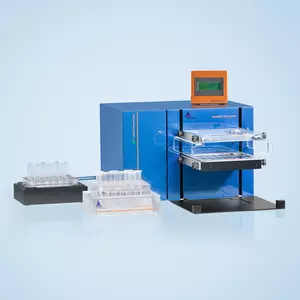
The StraightFrom® Buffy Coat CD14 MicroBeads, human have been developed for the rapid positive selection of CD14+ cells directly from buffy coat using the MultiMACS™ Cell24 Separator Plus for semi-automated separation, an autoMACS NEO for fully automated separation or a MACS® Separator for manual separation.
To enable direct processing of a full buffy coat, please consider the datasheet of the MicroBeads or the ‘Materials’ tab of the respective protocol to ensure the required columns and buffers are included on the kit or need to be purchased separately.
The CD14 antigen belongs to the LPS receptor complex. It is strongly expressed on most monocytes and macrophages and weakly on neutrophils.
Buffy coats are labeled with StraightFrom® Buffy Coat CD14 MicroBeads to be subsequently separated with the autoMACS® NEO Separator, the MultiMACS™ Cell24 Separator Plus, or manually with a MACS® Separator.
The purified CD14+ cells are well-suited for further flow cytometric, functional, or molecular analysis.
Separation of a buffy coat sample using the StraightFrom® Buffy Coat CD14 MicroBead Kit and the MultiMACS™ Cell24 Separator Plus with the Single-Column Adapter and Whole Blood Columns. Cells were fluorescently stained with CD15-APC, CD14-PE, as well as CD45‑VioBlue® and analyzed by flow cytometry using the MACSQuant® Analyzer. Cells were triggered via CD45-VioBlue, cell debris and dead cells were excluded from the analysis based on scatter signals and propidium iodide fluorescence.