PepTivator® HHV-6 U90 Select, is a pool of lyophilized peptides, covering important MHC-I and MHC-II epitopes of the U90 protein (UniProt ID: Q77PU6) of the human herpes virus type 6 (HHV-6) variant B.
In vitro stimulation of antigen-specific T cells with PepTivator Peptide Pools causes the secretion of effector cytokines and the up-regulation of activation markers, which then allow the detection and isolation of antigen-specific T cells.


Related products for PepTivator® HHV-6 U90 Select

(excl. tax)
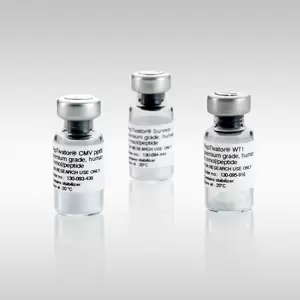

PepTivator® HHV-6 U90 Select, is a pool of lyophilized peptides, covering important MHC-I and MHC-II epitopes of the U90 protein (UniProt ID: Q77PU6) of the human herpes virus type 6 (HHV-6) variant B.
In vitro stimulation of antigen-specific T cells with PepTivator Peptide Pools causes the secretion of effector cytokines and the up-regulation of activation markers, which then allow the detection and isolation of antigen-specific T cells.
HHV-6 is a ubiquitous β-herpesvirus which is widespread among humans. It exists as two closely related variants: HHV-6A and HHV-6B, with HHV-6B being the primary cause of roseola infantum (exanthem subitum), while HHV-6A is less well characterized but has been associated with neurological diseases and multiple sclerosis. Both variants establish lifelong latency (a state where the viral genome persists without active production of infectious virions), mainly in mononuclear cells, and can reactivate, especially in immunocompromised individuals (e.g., transplant recipients). The HHV protein U90, also known as Immediate-Early-Protein (IE1), is a major regulatory protein produced immediately after virus infection of a host cell. Its sequence is only moderately conserved between HHV6A (UniProt ID Q69567) - and HHV6B -subtype. They show about 70 % sequence homology. The U90 protein is a transactivator which starts the virus life cycle by signaling the host cell to start making middle- and late-stage viral proteins. Moreover, it can block host cell defense mechanism (e.g. impairs interferon gene expression) to restrict the development of cellular anti-viral measures.
The PepTivator Peptide Pools have been specially developed for efficient in vitro stimulation of antigen-specific CD4+ and CD8+ T cells in various applications. Stimulation of T cells with PepTivator Peptide Pools causes the secretion of effector cytokines and upregulation of activation markers, which then allows the detection or isolation of antigen-specific T cells. Quantitative, phenotypical, or functional analysis of antigen-specific T cell immunity can provide important information on the natural course of immune responses in healthy or immunocompromised individuals.