The Pan T Cell Isolation Kit II was developed for the isolation of untouched mouse T cells from single-cell suspensions from spleen or lymph nodes.


Related products for Pan T Cell Isolation Kit II, mouse

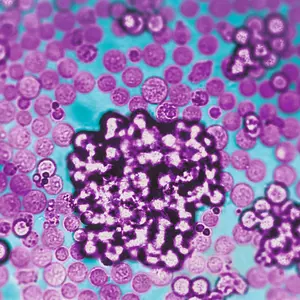

The Pan T Cell Isolation Kit II was developed for the isolation of untouched mouse T cells from single-cell suspensions from spleen or lymph nodes.
The kit is based on a cocktail of biotin-conjugated antibodies against CD11b, CD11c, CD19, CD45R (B220), CD49b (DX5), CD105, Anti-MHC-class II, and Ter-119. The isolation of T cells is achieved by depletion of magnetically labeled cells.
Untouched T cells are used for functional studies in which cross-linking of surface molecules should be excluded. Isolated T cells can also be further magnetically separated into T cell subsets.
The Pan T Cell Isolation Kit has been used for adoptive transfer experiments1,2, T cell proliferation assays3,4, coculture with dendritic cells5, and cytokine analysis6 experiments.
LS or autoMACS® Columns.
A single-cell suspension from mouse spleen was prepared using the program m_spleen_01.01 on the gentleMACS™ Dissociator. T cells were isolated from this single-cell suspension using the Pan T Cell Isolation Kit II, an LS Column, and a MidiMACS™ Separator. Cells were fluorescently stained with the MC CD90.2 T Cell Cocktail, mouse as well as with CD3ε-APC and analyzed by flow cytometry using the MACSQuant® Analyzer. Cell debris and dead cells were excluded from the analysis based on scatter signals and propidium iodide fluorescence.
- Felio, K. et al. (2009) CD1-restricted adaptive immune responses to Mycobacteria in human group 1 CD1 transgenic mice. J. Exp. Med. 206: 2497-2509
- Kawaguchi, A. et al. (2009) Inhibition of the SDF-1alpha-CXCR4 axis by the CXCR4 antagonist AMD3100 suppresses the migration of cultured cells from ATL patients and murine lymphoblastoid cells from HTLV-I Tax transgenic mice. Blood 114: 2961-2968
- Walters, S. et al. (2009) Increased CD4+Foxp3+ T cells in BAFF-transgenic mice suppress T cell effector responses. J Immunol 182: 793-801
- Alzabin, S. et al. (2009) Hematopoietic progenitor kinase 1 is a negative regulator of dendritic cell activation. J Immunol 182: 6187-6194
- Bruns, A. M. et al. (2009) Memory alloreactive B cells and alloantibodies prevent anti-CD154-mediated allograft acceptance. J Immunol 182: 1314-1324
- Tasso, R. et al. (2009) Development of sarcomas in mice implanted with mesenchymal stem cells seeded onto bioscaffolds. Carcinogenesis 30: 150-157