
Synonyms: MHC class II antigen HLA-DM
RECOMBINANT
- Clone:
- REAL549
- Type of antibody:
- Releasable fluorochromes, Primary antibodies, Recombinant antibodies
- Applications:
- MICS, IF, IHC Glossary
- Select a conjugate:


Related products for HLA-DM Antibody, anti-human, REAdye_lease™


MICS (MACSima Imaging Cyclic Staining) applications
FITC
PE
Fixation:
frozen – Acetone
Species tested:
human
Tissue used:
tonsil
Recommended dilution:
1:50
Data source:
Miltenyi Biotec
Compatible applications:
IF, IHC
Conjugate:
FITC
Used products:
130-122-267
Testing grade:
Description:
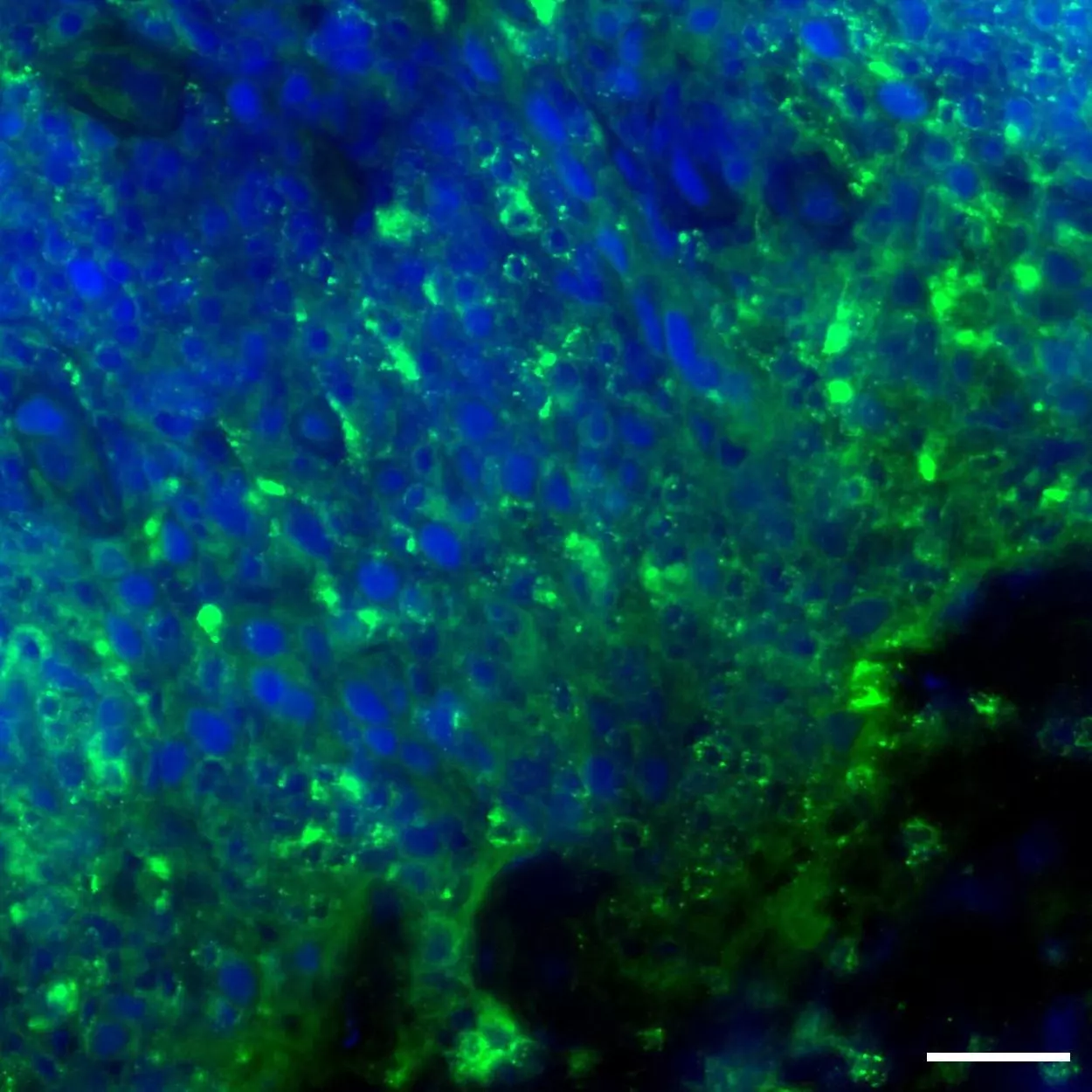
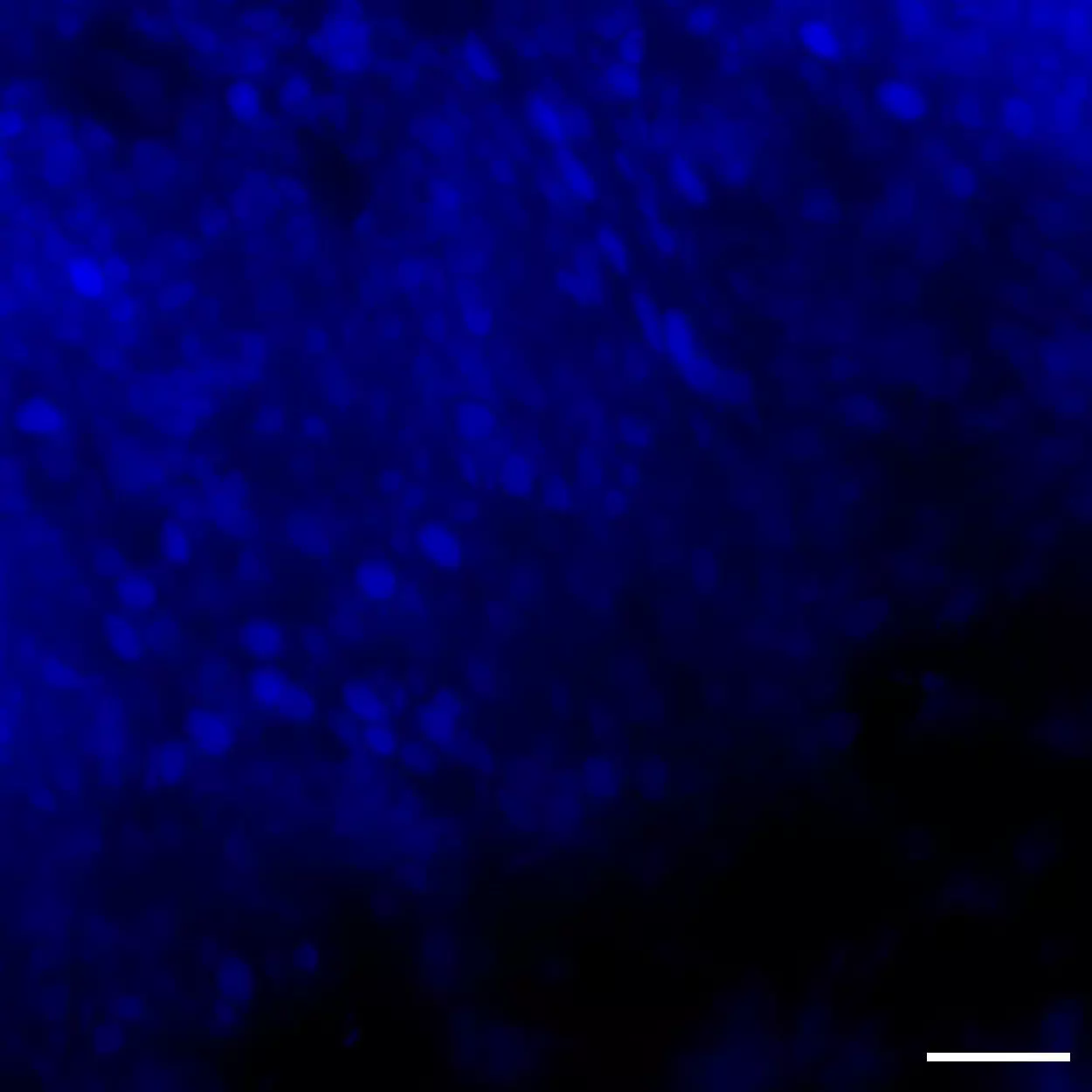
Immunofluorescence analysis of a human tonsil cryosection fixed with ice-cold acetone. The section was stained using HLA-DM Antibody, anti-human, FITC (green) for 10 min at room temperature (A). HLA-DM Antibody, anti-human, FITC staining was released using the REAlease Release Reagent (B). Nuclei were visualized with Hoechst™ (blue). Scale bar: 30 µm.
A
 view details
B
 view details
Specifications for HLA-DM Antibody, anti-human, REAdye_lease™
Overview
Clone REAL549 is an antibody fragment derived from the full HLA-DM antibody molecule. It displays no binding to Fc receptors. The recombinantly engineered antibody fragments are multimerized to form the REAdye_lease Complex to bind markers with high avidity.
Clone REAL549 recognizes the human HLA-DM antigen, a non-classical MHC Class II molecule (MHC II) chaperone that works in lysosomes and endosomes. MHC II molecules are transmembrane glycoproteins which function by binding processed antigenic peptides and presenting them to CD4+ T lymphocytes to initiate or maintain a specific immune response. Constitutive MHC II expression is restricted to professional antigen presenting cells including dendritic cells, B cells, and macrophages and to the epithelial cells of the thymus. A high HLA-DM expression is found in lymph nodes, the spleen, and bone marrow. Functional class II expression is highly dependent on the expression of two main chaperones, the invariant chain (Ii) and DM. Newly synthesized class II α- and β-chains form a nonameric complex with three Ii molecules in the endoplasmic reticulum where Ii blocks the peptide-binding groove and guides class II dimers to the endocytic pathway where Ii is proteolytically cleaved leaving the CLIP fragment bound to class II. HLA-DM, an endocytic chaperone, protects empty class II dimers until they bind a peptide capable to confer enough stability to the complex.
For removal of REAdye_lease fluorochromes for optional relabeling with different fluorochrome-conjugated REAdye_lease antibodies use the REAlease Support Kit (130-120-675).
MHC class II antigen HLA-DM
Detailed product information
Technical specifications
Clone
REAL549
Clonality
monoclonal
Isotype control
Control Antibody
Host
cell line
Type of antibody
Releasable fluorochromes, Primary antibodies, Recombinant antibodies
Species reactivity
human
Antigen
HLA-DM
Distribution of antigen
B cells, dendritic cells, macrophages, epithelial cells, antigen-presenting cells, antigen-specific T cells, lymph node, spleen, bone marrow
RRID
AB_2905248, AB_2905247
Resources for HLA-DM Antibody, anti-human, REAdye_lease™
Certificates
To access a Certificate of Analysis (CoA) follow the link below and enter the specific lot of your product.
Should you wish to request additional documentation, such as a Safety Data Sheet (SDS) in other languages than English or Swedish, an SDS-replacement document, or a Certificate of Origin (CoO), please direct your inquiry to your local technical support team.
Citations for HLA-DM Antibody, anti-human, REAdye_lease™
Publications
- van Lith, M. et al. (2010) HLA-DP, HLA-DQ, and HLA-DR have different requirements for invariant chain and HLA-DM. J. Biol. Chem. 285 (52): 40800-40808
- Oldford, S. A. et al. (2006) Tumor cell expression of HLA-DM associates with a Tʜ1 profile and predicts improved survival in breast carcinoma patients. Int. Immunol. 18 (11): 1591-1602
- Pos, W. et al. (2013) Mechanisms of peptide repertoire selection by HLA-DM. Trends Immunol. 34 (10): 495-501