

Synonyms: Lamp4, SCARD1, gp110, macrosialin
EXTENDED VALIDATION
- Clone:
- FA-11
- Type of antibody:
- Primary antibodies
- Isotype:
- rat IgG2a
- Applications:
- ICFC, MICS, IF, IHC Glossary
- Select a conjugate:
- Select a size:


Other sizes
Related products for CD68 Antibody, anti-mouse


Intracellular flow cytometry applications
APC
Biotin
FITC
PE
PE-Vio 770
PerCP-Vio 700
VioBlue
VioGreen
pure
Recommended dilution:
1:10
Remark:
The antibody is suited for staining of formaldehyde-fixed cells.
Data source:
Miltenyi Biotec
Conjugate:
APC
Used products:
130-102-585, 130-102-918
Description:
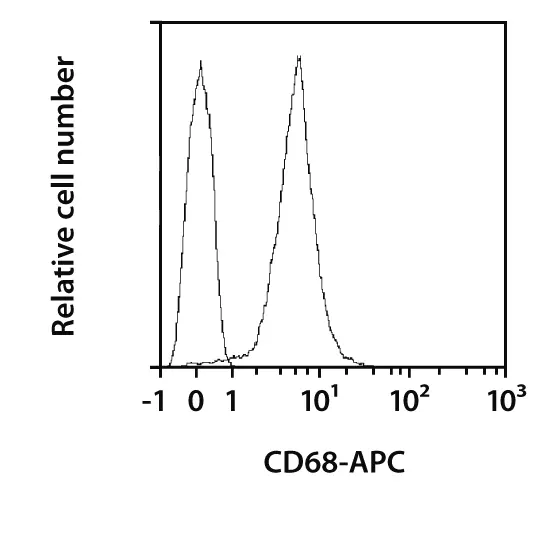
Staining of gated F4/80+ permeabilized mouse macrophages from peritoneal lavage with CD68 antibodies. Cells were then analyzed by flow cytometry using the MACSQuant® Analyzer. Unstained cells are represented by the left peak. Cell debris and dead cells were excluded from the analysis based on scatter signals.
MICS (MACSima Imaging Cyclic Staining) applications
APC
FITC
PE
Fixation:
frozen – PFA
Species tested:
mouse
Recommended dilution:
1:10
Data source:
Miltenyi Biotec
Compatible applications:
IF, IHC
Conjugate:
APC
Used products:
130-102-585, 130-102-918
Testing grade:
Fixation:
frozen – Acetone
Species tested:
mouse
Recommended dilution:
1:10
Data source:
Miltenyi Biotec
Compatible applications:
IF, IHC
Conjugate:
APC
Used products:
130-102-585, 130-102-918
Testing grade:
Extended validation for CD68 Antibody, anti-mouse
Specificity
In order to compare the epitope specificity of an antibody, the clone being used is compared with other known clones recognizing the same antigen in a competition assay.
Other clones
Overlap in epitope recognition with FA-11
REA835
partial
Cells were incubated with an excess of purified unconjugated CD68 (FA-11) antibody followed by staining with fluorochrome-conjugated antibodies from other known clones targeting the same antigen. Fluorescence intensity was then used to assess epitope overlap: a minimal or absent signal indicated high epitope overlap, an intermediate signal suggested partial overlap, and a strong signal reflected low overlap.
Sensitivity
Selected fluorochrome conjugated antibodies from Miltenyi Biotec were compared to commercially available hybridoma clones in flow cytometry analysis.
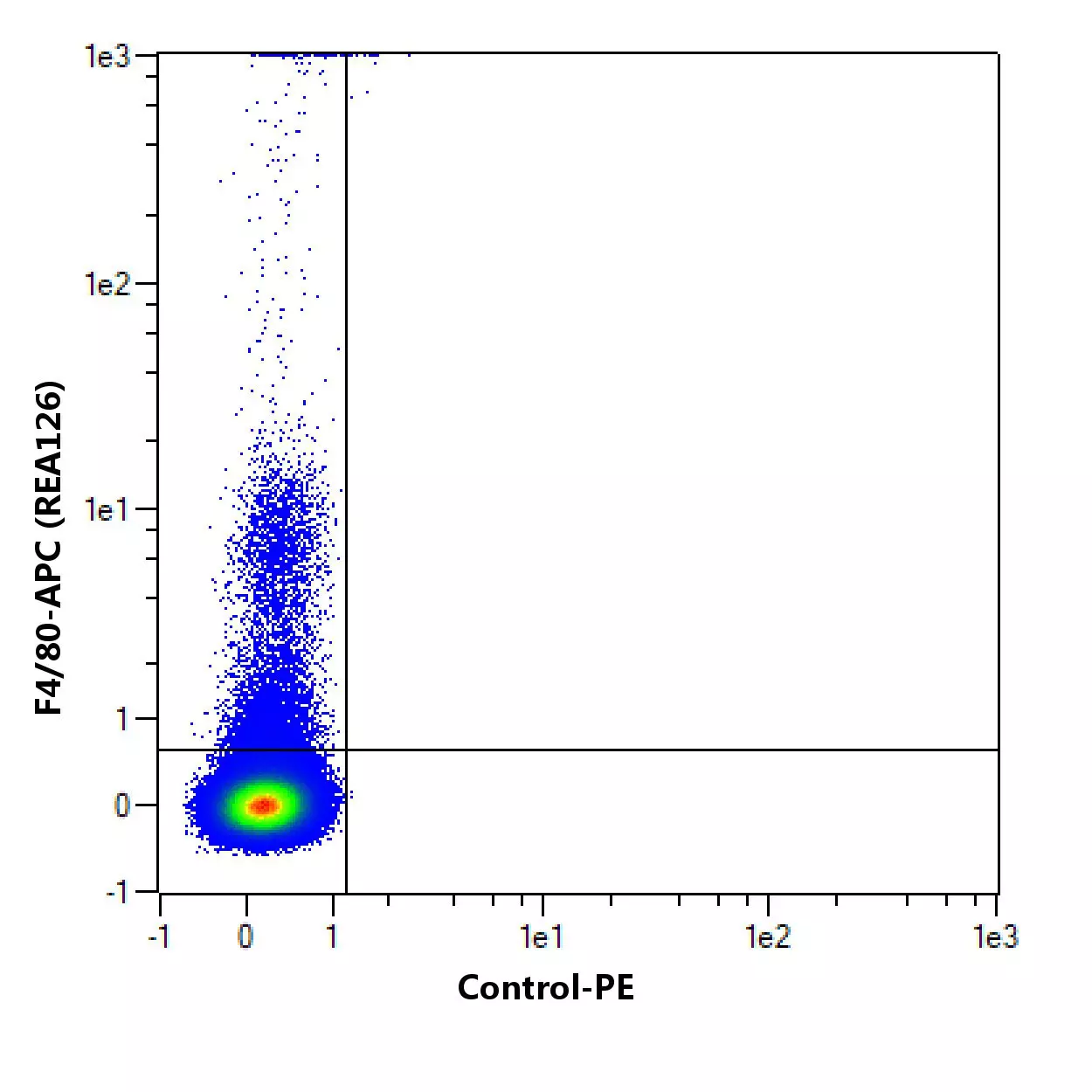
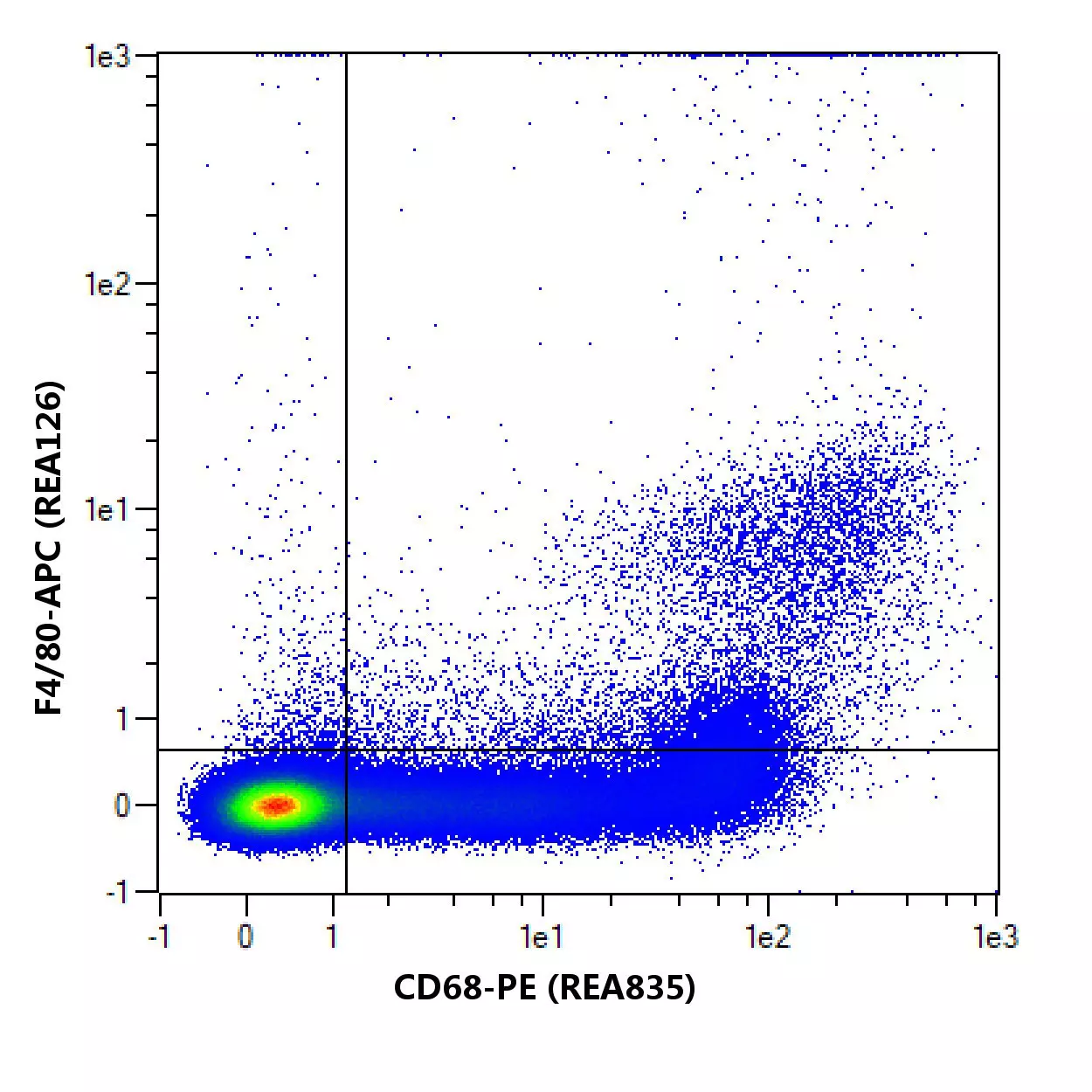


Flow cytometric comparison of different clones for CD68. Mouse splenocytes were first stained with Viobility™ Fixable Dye followed by a suitable counterstaining. Cells were then fixed and permeabilized using the Inside Stain Kit followed by a staining with CD68 antibodies. As a control, CD68 antibody staining was omitted and cells were measured in the same channels. Flow cytometry was performed with the MACSQuant® Analyzer. Cell debris, dead cells, and cell doublets were excluded from the analysis based on scatter signals and Viobility 405/452 Fixable Dye fluorescence. No FcR Blocking Reagent was used. The recommended titers of respective antibodies from different suppliers were used.
Specifications for CD68 Antibody, anti-mouse
Overview
The monoclonal antibody FA-11 recognizes mouse CD68, also known as macrosialin, which is a heavily glycosylated type I transmembrane protein of the LAMP (lysosomal-associated membrane protein) family. It is expressed on tissue macrophages, langerhans cells and at a low density on dendritic cells. Murine CD68 is predominantly intracellular but it is reported that 10-15% of CD68 is expressed on the cell surface as well. Macrosialin functions as a macrophage receptor for oxidized low density lipoprotein.
Lamp4, SCARD1, gp110, macrosialin
Detailed product information
Technical specifications
Clone
FA-11
Clonality
monoclonal
Isotype
rat IgG2a
Isotype control
Isotype Control Antibody, rat IgG2a
Host
rat
Type of antibody
Primary antibodies
Species reactivity
mouse
Antigen
CD68
Molecular mass of antigen [kDa]
33
Distribution of antigen
dendritic cells, macrophages, Langerhans cells
Entrez Gene ID
RRID
AB_2659053, AB_2659060, AB_2659051, AB_2659050, AB_2659054, AB_2659061, AB_2659052, AB_2659046, AB_2659058, AB_2659047, AB_2659049, AB_2659048, AB_2659057, AB_2659055, AB_2659059, AB_2659056, AB_2727202
Resources for CD68 Antibody, anti-mouse
Documents and Protocols
Certificates
To access a Certificate of Analysis (CoA) follow the link below and enter the specific lot of your product.
Should you wish to request additional documentation, such as a Safety Data Sheet (SDS) in other languages than English or Swedish, an SDS-replacement document, or a Certificate of Origin (CoO), please direct your inquiry to your local technical support team.
 Powered by Bioz