
Synonyms: Bp50, CD40L receptor, CDW40
RECOMBINANT EXTENDED VALIDATION
- Clone:
- REAL131
- Type of antibody:
- Releasable antibodies, Primary antibodies, Recombinant antibodies
- Applications:
- FC, MICS, IF, IHC Glossary
- Select a conjugate:
- Select a size:


Other sizes
Related products for CD40 Antibody, anti-human, REAlease®



Flow cytometry applications
APC
PE
Recommended dilution:
1:50
Data source:
Miltenyi Biotec
Conjugate:
APC
Used products:
130-122-681, 130-115-427, 130-115-548
Description:
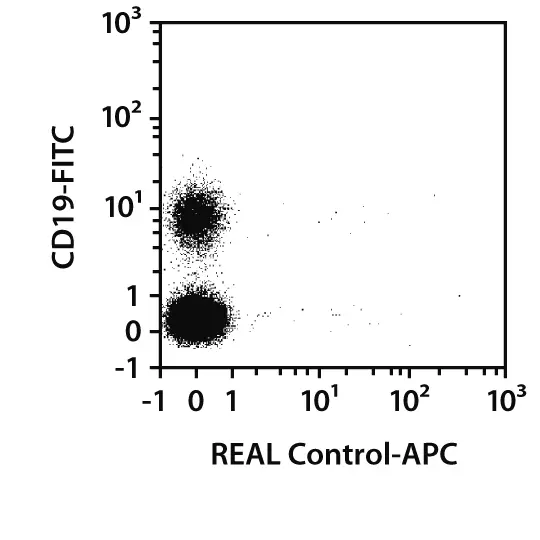
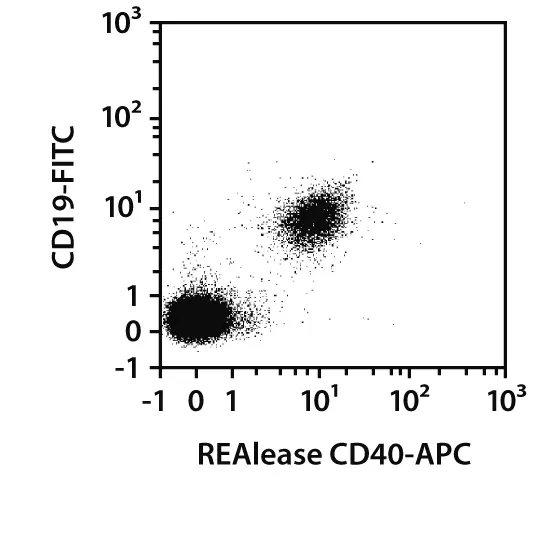
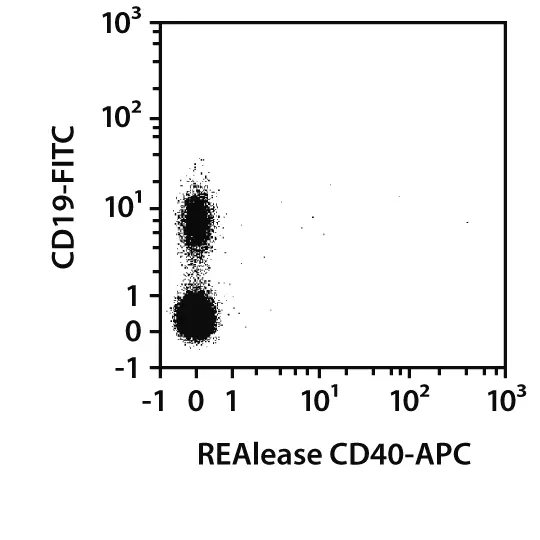
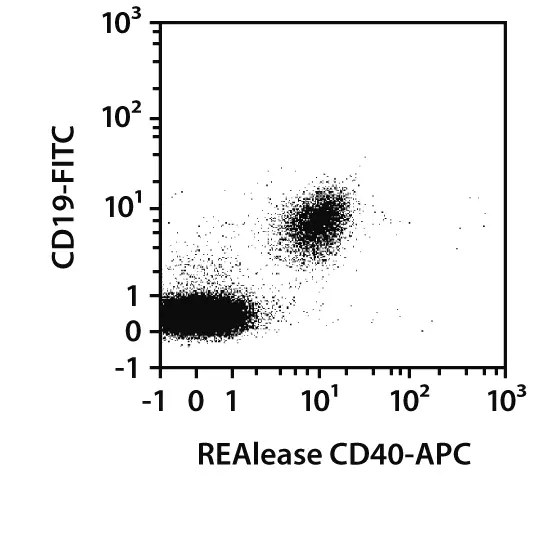
Human peripheral blood mononuclear cells (PBMCs) were stained with REAlease CD40-APC (B) or with the corresponding REAL Control (A). REAlease CD40-APC was released using the REAlease Release Reagent (C). To show epitope accessibility after REAlease Complex release, the cells were washed with the REAlease Stop Reagent and restained with REAlease CD40-APC (D). Cells were labeled with CD19 antibodies in addition and analyzed by flow cytometry using the MACSQuant® Analyzer. Cell debris and dead cells were excluded from the analysis based on scatter signals and 4',6-diamidino-2-phenylindole (DAPI) fluorescence.
 view details
 view details
 view details
 view details
MICS (MACSima Imaging Cyclic Staining) applications
APC
PE
Fixation:
frozen – Acetone
Species tested:
human
Tissue used:
tonsil
Recommended dilution:
1:50
Data source:
Miltenyi Biotec
Compatible applications:
IF, IHC
Conjugate:
APC
Used products:
130-115-548, 130-115-427
Testing grade:
Description:
Immunofluorescence analysis of a human tonsil cryosection fixed with ice-cold acetone. The section was stained using CD40 Antibody, anti-human, APC (green) for 10 min at room temperature. Nuclei were visualized with Hoechst™ (blue).Scale bar: 30 µm.

Fixation:
frozen – PFA
Species tested:
human
Tissue used:
tonsil
Recommended dilution:
1:25
Data source:
Miltenyi Biotec
Compatible applications:
IF, IHC
Conjugate:
APC
Used products:
130-115-548, 130-115-427
Testing grade:
Description:
Immunofluorescence analysis of a human tonsil cryosection fixed with 4% PFA. The section was stained using CD40 Antibody, anti-human, APC (green) for 10 min at room temperature. Nuclei were visualized with Hoechst™ (blue). Scale bar: 30 µm.

Extended validation for CD40 Antibody, anti-human, REAlease®
Specificity
To ensure antibody specificity, the target gene is knocked out in a suitable cell line using the CRISPR/Cas9 system and the knockout is confirmed by sequencing of the target locus. The antibody is considered to bind specifically to the intended epitope if no antibody binding to the knockout cells can be detected. The antibody staining is controlled by fluorescence microscopy and/or flow cytometry.
WT

KO
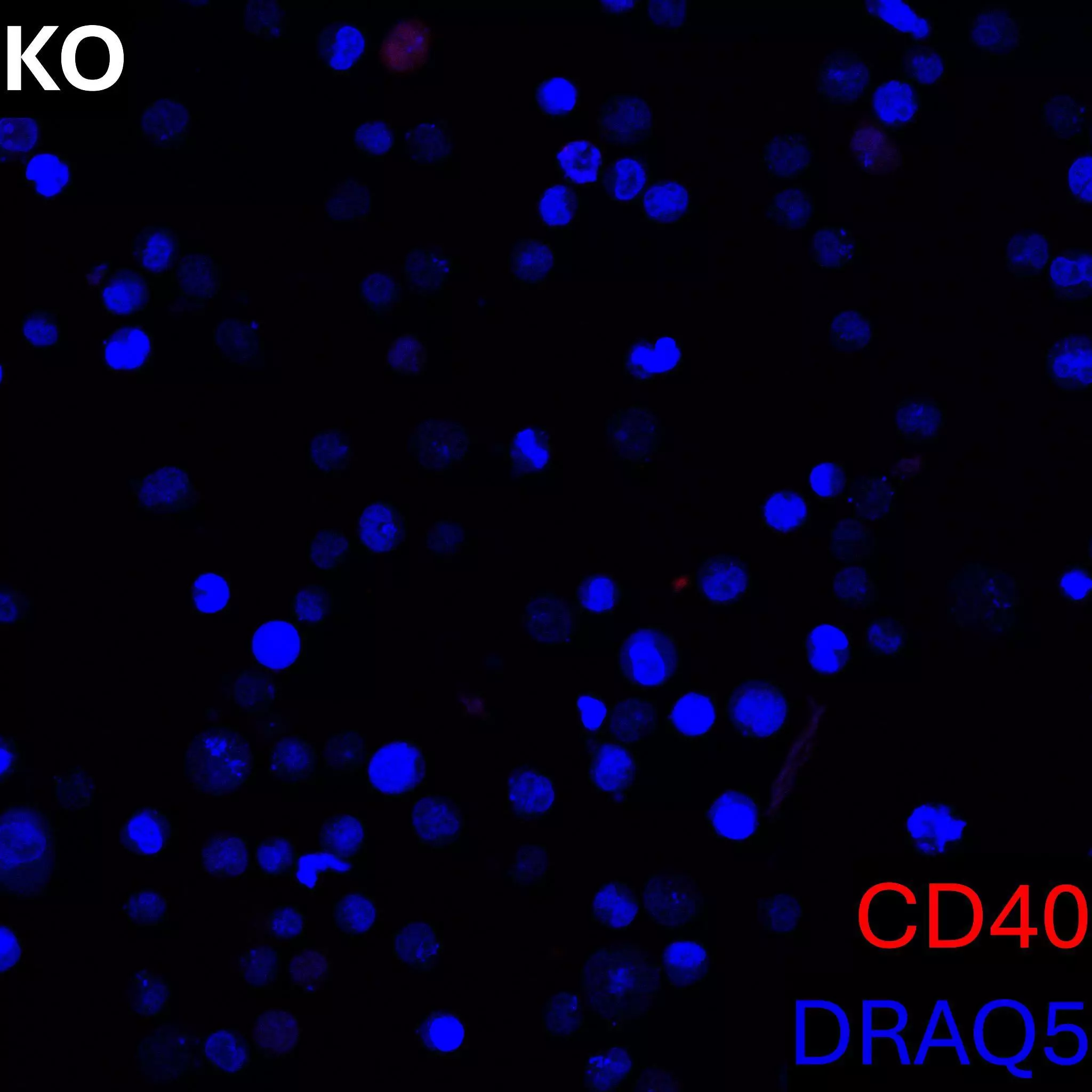
Fluorescence microscopy image of CD40 knockout cells. Wild type (WT, left) and knockout cells (KO, right) were stained with CD40-PE (REAL131, red) and counterstained with DRAQ5 (blue) as DNA stain.
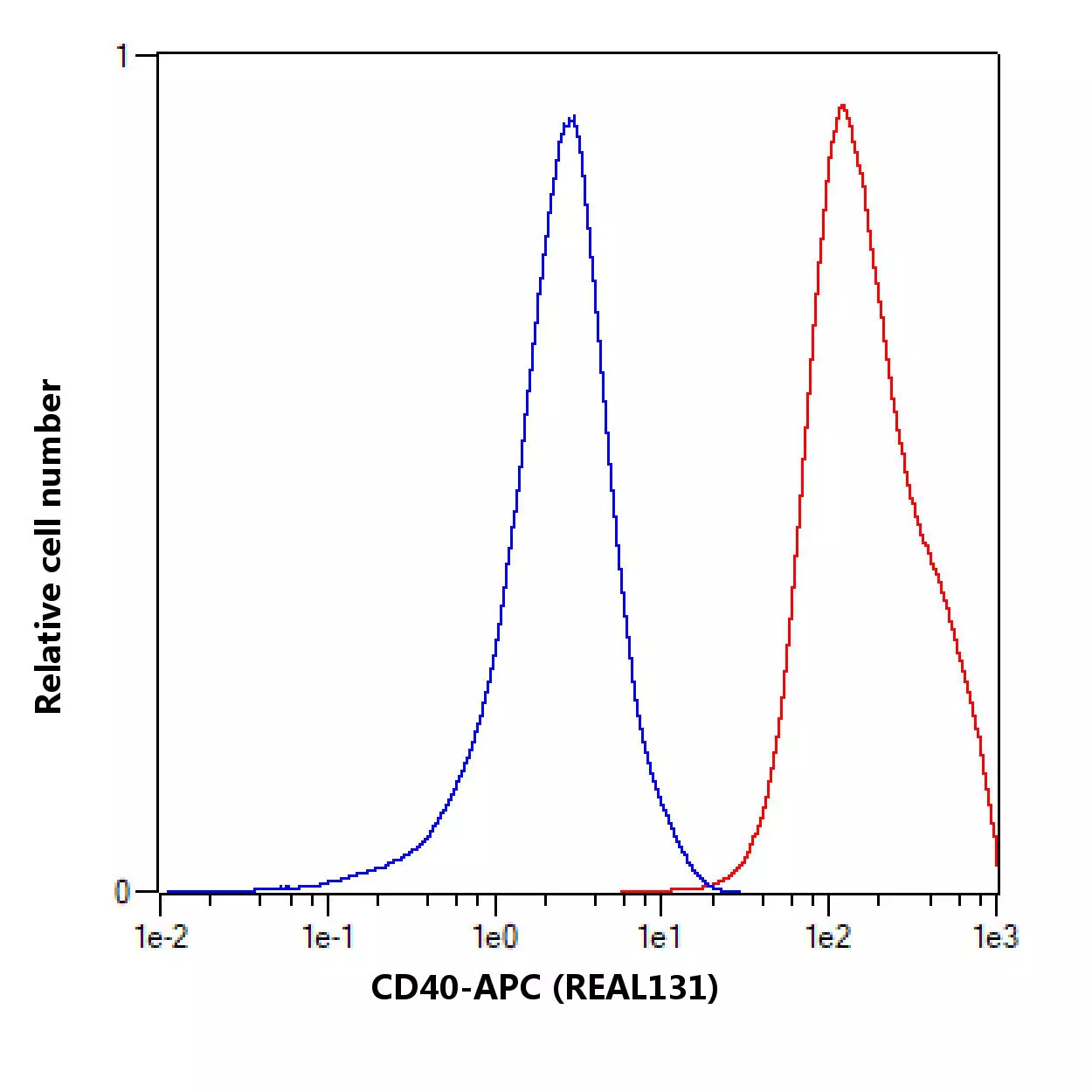
Overlay histogram showing flow cytometric analysis of CD40 knockout cells. Wild type (red) and knockout cells (blue) were stained with CD40-APC, clone (REAL131). Flow cytometry was performed with the MACSQuant® Analyzer. Cell debris, dead cells and cell doublets were excluded from the analysis based on scatter signals and propidium iodide fluorescence.
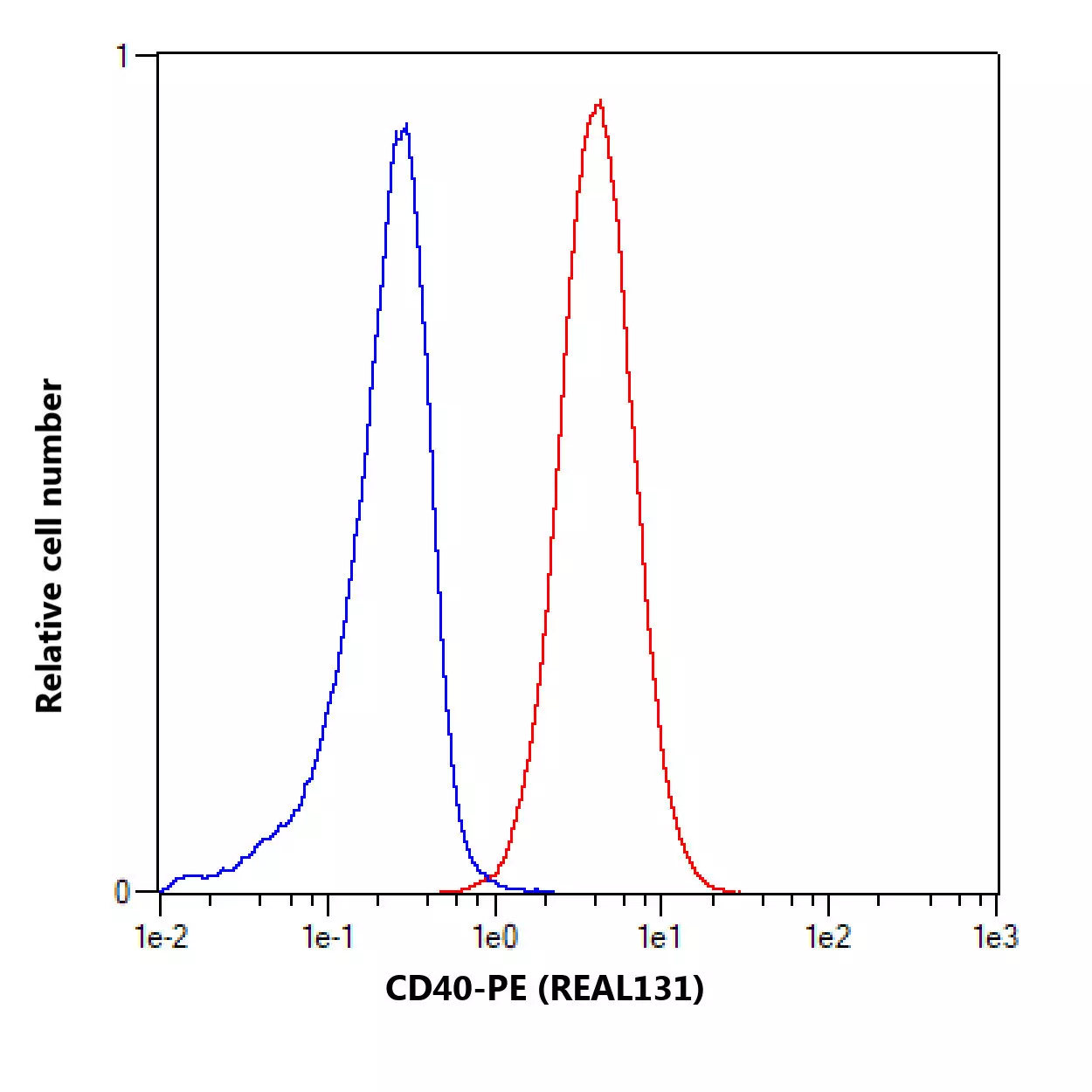
Overlay histogram showing flow cytometric analysis of CD40 knockout cells. Wild type (red) and knockout cells (blue) were stained with CD40-PE (REAL131). Flow cytometry was performed with the MACSQuant Analyzer. Cell debris and dead cells were excluded from the analysis based on scatter signals and propidium iodide fluorescence
Specifications for CD40 Antibody, anti-human, REAlease®
Overview
Clone REAL131 is an antibody fragment derived from the full CD40 antibody molecule. It displays no binding to Fc receptors. The recombinantly engineered antibody fragments are multimerized to form the REAlease Complex to bind markers with high avidity.
Clone REAL131 recognizes the human CD40 antigen, a transmembrane receptor of the tumor necrosis factor gene superfamily. CD40 is a co-stimulatory protein constitutively expressed by antigen presenting cells, including dendritic cells, B cells, and macrophages and on endothelial, smooth muscle cells, and fibroblasts. The binding of CD40 to CD154 (CD40L) on T helper cells activates antigen presenting cells and enhances the expression of cytokines, chemokines, matrix metalloproteinases, growth factors, and adhesion molecules. CD40 has been shown to interact with members of the TRAF family.
The REAlease Kits consist of the respective fluorochrome-conjugated REAlease Complexes and the REAlease Support Kit for removal of the REAlease Complexes and optional relabeling with different fluorochrome-conjugated REAlease Complexes.
Bp50, CD40L receptor, CDW40
Detailed product information
Technical specifications
Clone
REAL131
Clonality
monoclonal
Isotype control
Control Antibody
Host
cell line
Type of antibody
Releasable antibodies, Primary antibodies, Recombinant antibodies
Species reactivity
human
Antigen
CD40
Distribution of antigen
dendritic cells, B cells, macrophages, endothelial cells, fibroblasts, smooth muscle
RRID
AB_2905001, AB_2784185, AB_2751270, AB_2905002, AB_2751263
Resources for CD40 Antibody, anti-human, REAlease®
Certificates
To access a Certificate of Analysis (CoA) follow the link below and enter the specific lot of your product.
Should you wish to request additional documentation, such as a Safety Data Sheet (SDS) in other languages than English or Swedish, an SDS-replacement document, or a Certificate of Origin (CoO), please direct your inquiry to your local technical support team.
Citations for CD40 Antibody, anti-human, REAlease®
Publications
- Sato, T. et al. (1995) A novel member of the TRAF family of putative signal transducing proteins binds to the cytosolic domain of CD40. FEBS Lett. 358 (2): 113-118
- Stamenkovic, I. et al. (1989) A B-lymphocyte activation molecule related to the nerve growth factor receptor and induced by cytokines in carcinomas. EMBO J. 8 (5): 1403-1410
- Chatzigeorgiou, A. et al. (2009) CD40/CD40L signaling and its implication in health and disease. Biofactors 35 (6): 474-483