
Synonyms: MCAM, 1-gicerin, CD149, MUC18, S-endo, s-gicerin, Endo-CAM, Mel-CAM
RECOMBINANT
- Clone:
- REAL507
- Type of antibody:
- Releasable fluorochromes, Primary antibodies, Recombinant antibodies
- Applications:
- MICS, IF, IHC Glossary


Related products for CD146 (LSEC) Antibody, anti-mouse, REAdye_lease™

MICS (MACSima Imaging Cyclic Staining) applications
PE
Fixation:
frozen – Acetone
Species tested:
mouse
Tissue used:
kidney
Recommended dilution:
1:25
Data source:
Miltenyi Biotec
Compatible applications:
IF, IHC
Conjugate:
PE
Used products:
130-127-626
Testing grade:
Description:
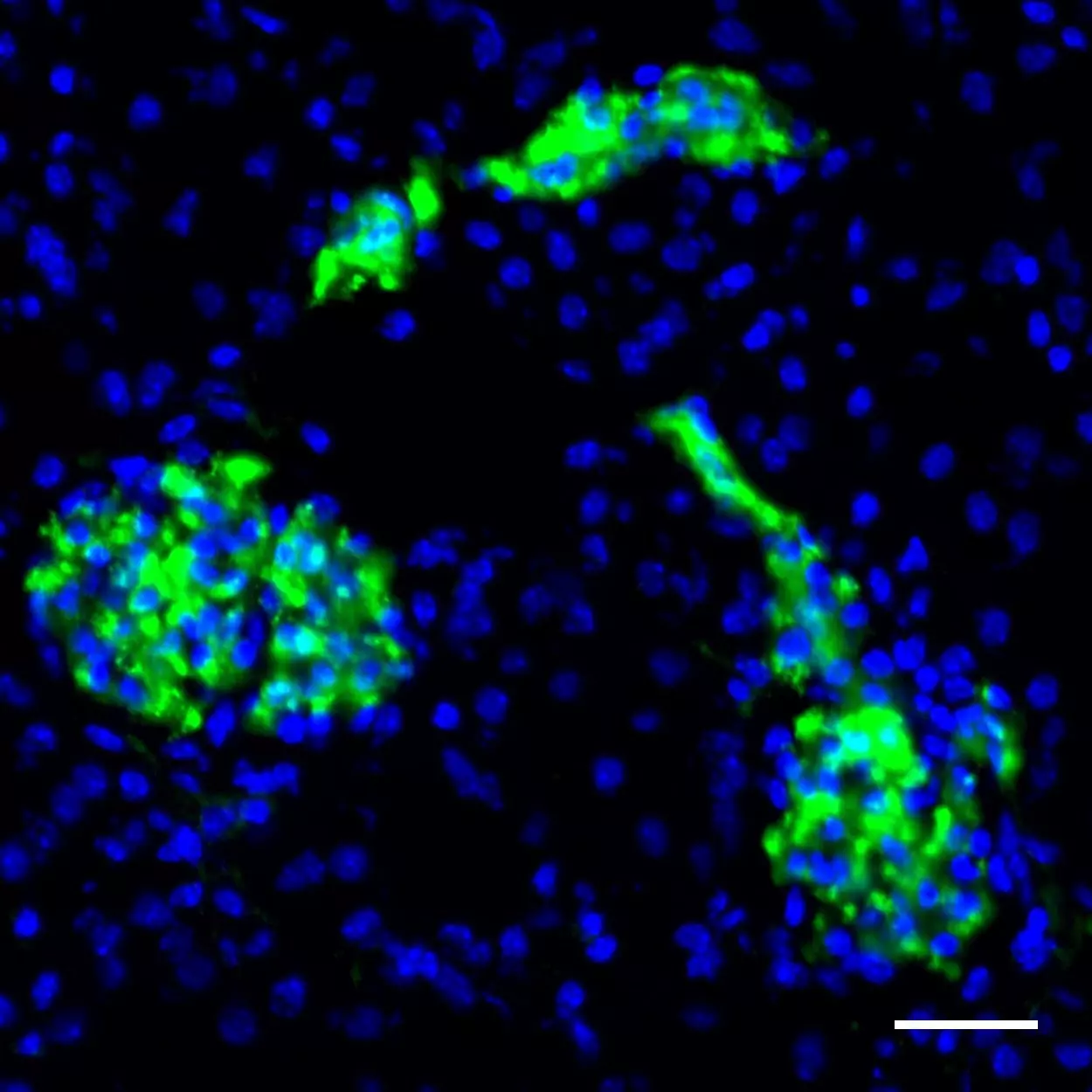
Immunofluorescence analysis of a mouse kidney cryosection fixed with ice-cold acetone. The section was stained using CD146 (LSEC) Antibody, anti-mouse, PE (green) for 10 min at room temperature. Nuclei were visualized with Hoechst™ (blue).Scale bar: 30 µm.
Fixation:
frozen – PFA
Species tested:
mouse
Tissue used:
kidney
Recommended dilution:
1:25
Data source:
Miltenyi Biotec
Compatible applications:
IF, IHC
Conjugate:
PE
Used products:
130-127-626
Testing grade:
Description:
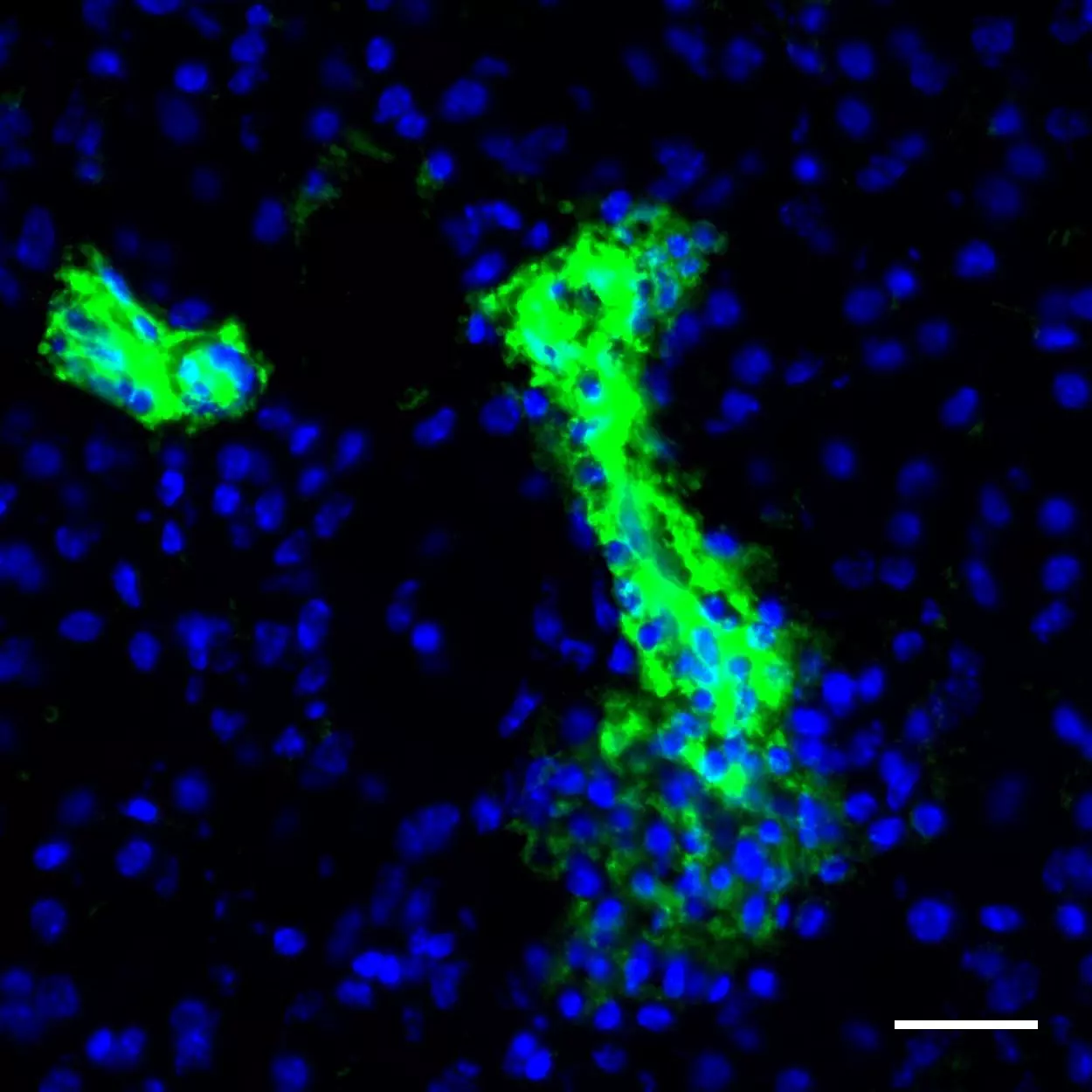
Immunofluorescence analysis of a mouse kidney cryosection fixed with 4% PFA. The section was stained using CD146 (LSEC) Antibody, anti-mouse, PE (green) for 10 min at room temperature. Nuclei were visualized with Hoechst™ (blue).Scale bar: 30 µm.
Specifications for CD146 (LSEC) Antibody, anti-mouse, REAdye_lease™
Overview
Clone REAL507 is an antibody fragment derived from the full CD146 (LSEC) antibody molecule. It displays no binding to Fc receptors. The recombinantly engineered antibody fragments are multimerized to form the REAdye_lease Complex to bind markers with high avidity.
Clone REAL507 recognizes the mouse CD146 antigen, which is expressed on mouse endothelial cells, including liver sinusoidal endothelial cells (LSECs), smooth muscle cells, and the basal membrane. LSECs are microvascular endothelial cells lining the hepatic sinusoidal wall. Their strategic positioning favors a tight interaction with lymphocytes migrating through the liver. They possess a high capacity for antigen uptake and processing. However, in contrast to professional antigen-presenting cells, e.g. dendritic cells, they express only low levels of costimulatory molecules.
For removal of REAdye_lease fluorochromes for optional relabeling with different fluorochrome-conjugated REAdye_lease antibodies use the REAlease Support Kit (130-120-675).
MCAM, 1-gicerin, CD149, MUC18, S-endo, s-gicerin, Endo-CAM, Mel-CAM
Detailed product information
Technical specifications
Clone
REAL507
Clonality
monoclonal
Isotype control
Control Antibody
Host
cell line
Type of antibody
Releasable fluorochromes, Primary antibodies, Recombinant antibodies
Species reactivity
mouse
Antigen
CD146 (LSEC)
Distribution of antigen
endothelial cells, smooth muscle
RRID
AB_2889455
Resources for CD146 (LSEC) Antibody, anti-mouse, REAdye_lease™
Certificates
To access a Certificate of Analysis (CoA) follow the link below and enter the specific lot of your product.
Should you wish to request additional documentation, such as a Safety Data Sheet (SDS) in other languages than English or Swedish, an SDS-replacement document, or a Certificate of Origin (CoO), please direct your inquiry to your local technical support team.
Citations for CD146 (LSEC) Antibody, anti-mouse, REAdye_lease™
Publications
- Harder, R. et al. (1991) Dissection of murine lymphocyte-endothelial cell interaction mechanisms by SV-40-transformed mouse endothelial cell lines: novel mechanisms mediating basal binding, and alpha 4-integrin-dependent cytokine-induced adhesion. Exp. Cell Res. 197: 259-267
- Diehl, L. et al. (2008) Tolerogenic maturation of liver sinusoidal endothelial cells promotes B7-homolog 1-dependent CD8+ T cell tolerance. Hepatology 47: 296-305