Anti-Prominin-1 MicroBeads have been developed for the isolation of mouse Prominin-1+ neural progenitor cells.


Related products for Anti-Prominin-1 MicroBeads, mouse

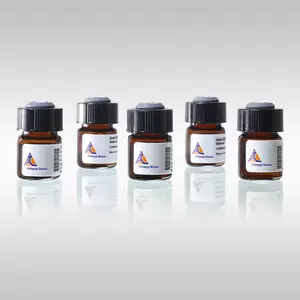
Anti-Prominin-1 MicroBeads have been developed for the isolation of mouse Prominin-1+ neural progenitor cells.
Prominin-1 is a glycoprotein with close structural similarity to its human ortholog, CD1331. Prominin-1 expression has been demonstrated on cells of different embryonic and adult tissues, including ES-derived committed and early progenitor cells2, the developing3 and postnatal4 central nervous system, kidney tubules3, and cells of the hematopoietic system3. In the developing nervous system prominin-1 is predominantly expressed on neuroepithelial cells and other epithelia. In the postnatal brain, prominin-1 expression has been found in areas of neurogenesis, such as the subventricular zone (SVZ). Prominin-1 is preferentially localized to plasma membrane protrusions of the apical membrane.5
For positive selection: MS, LS, or autoMACS® Columns. For depletion: LD or autoMACS Columns.
Enrichment of Prominin-1+ cells from mouse cerebellum (postnatal day 1) using Anti-Prominin-1 MicroBeads, a MiniMACS™ Separator, and MS Columns.
- Weigmann, A. et al. (1997) Prominin, a novel microvilli-specific polytopic membrane proteine of the apical surface of epithelial cells, is targeted to plasmalemmal protrusions of non-epithelial cells. Proc. Natl. Acad. Sci. U.S.A. 94: 12425-12430
- Marzesco, A.-M. et al. (2005) Release of extracellular membrane particles carrying the stem cell marker prominin-1 (CD133) from neural progenitors and other epithelial cells. J. Cell. Sci. 118: 2849-2858
- Lee, A. et al. (2005) Isolation of neural stem cells from the postnatal cerebellum. Nat. Neurosci. 8: 723-729
- Corbeil, D. et al. (2001) Prominin: a story of cholesterol, plasma membrane protrusions and human pathology. Traffic 2: 82-91
- Kania, G. et al. (2005) Somatic stem cell marker prominin-1/CD133 is expressed in embryonic stem cell-derived progenitors. Stem Cells 23: 791-804