



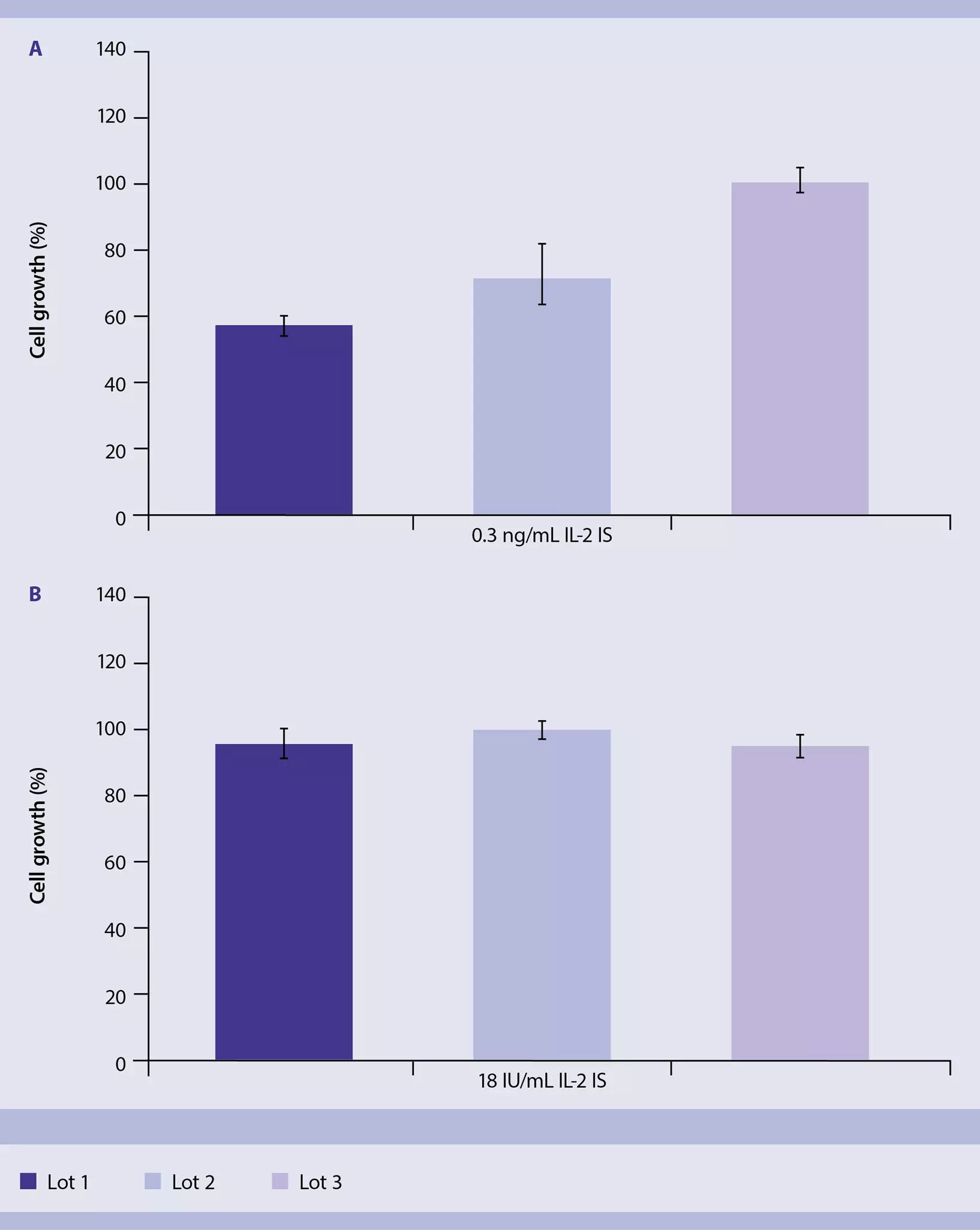
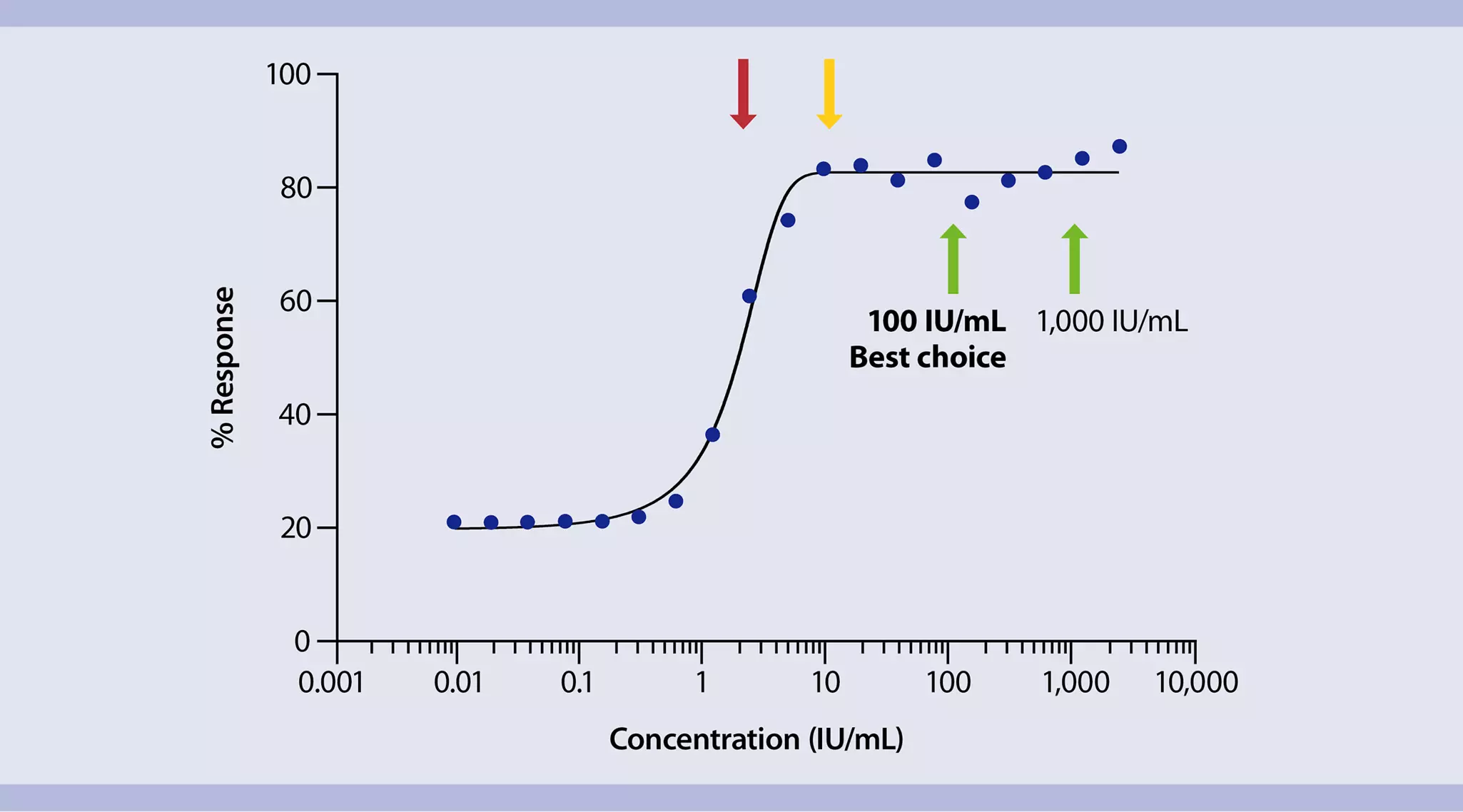
The following examples illustrate that the cytokine concentration may determine the cell fate:
IL-2 in CAR T cell expansion:
Kaartinen et al. showed that low IL-2 concentrations favor differentiation of early memory over effector T cells. As memory T cells multiply faster than effector T cells in vivo, excessive IL-2 concentrations can significantly reduce the efficacy of CAR T cell production.
GM-CSF in myeloid differentiation:
Rautela et al. demonstrated that GM-CSF quantities orchestrate cell fate during myeloid differentiation. Low GM-CSF levels promote the granulocytic lineage, moderate quantities drive moDC differentiation, and high levels stimulate the monocytic lineage. Moreover, monocytes/macrophages generated with different doses of GM-CSF differ in their function.
FGF-2 (FGFb) in ESC differentiation:
Ameri et al. found that differentiation of hESC-derived definitive endoderm into foregut/midgut cell lineage is dependent on the FGF-2 concentration. High FGF-2 levels inhibit hepatocyte differentiation and promote pulmonary cell fate, whereas moderate levels promote pancreatic differentiation.

