
Synonyms: CD20cy, CD20 cytoplasmic domain
RECOMBINANT
- Clone:
- REAL649
- Type of antibody:
- Releasable fluorochromes, Primary antibodies, Recombinant antibodies
- Applications:
- MICS, IF, IHC Glossary
- Select a conjugate:


Related products for CD20 Cytoplasmic Antibody, anti-human, REAdye_lease™


MICS (MACSima Imaging Cyclic Staining) applications
APC
PE
Vio B515
Fixation:
FFPE
Species tested:
human
Tissue used:
spleen
Recommended dilution:
1:50
Data source:
Miltenyi Biotec
Compatible applications:
IF, IHC
Conjugate:
APC
Used products:
130-123-088
Testing grade:
Description:
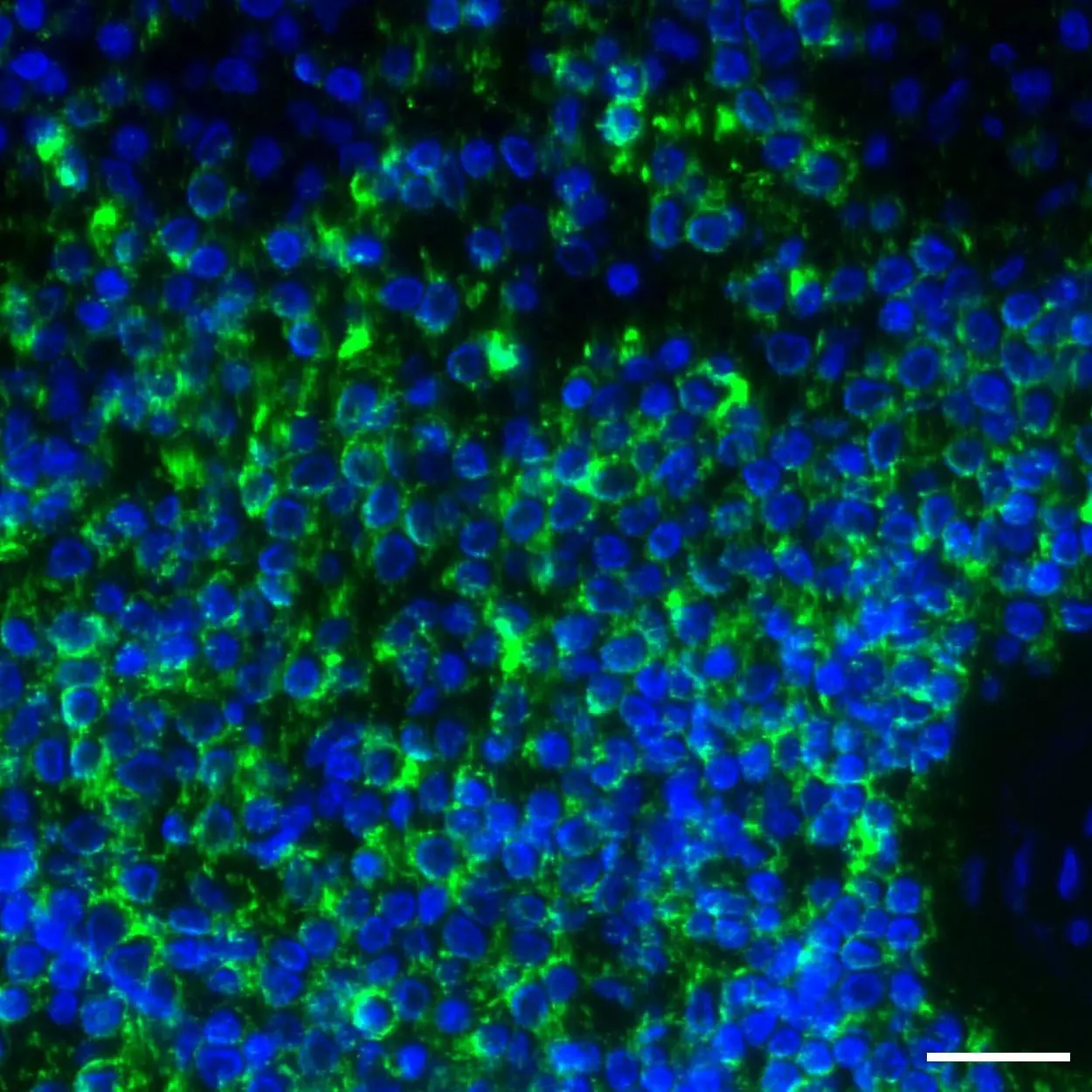
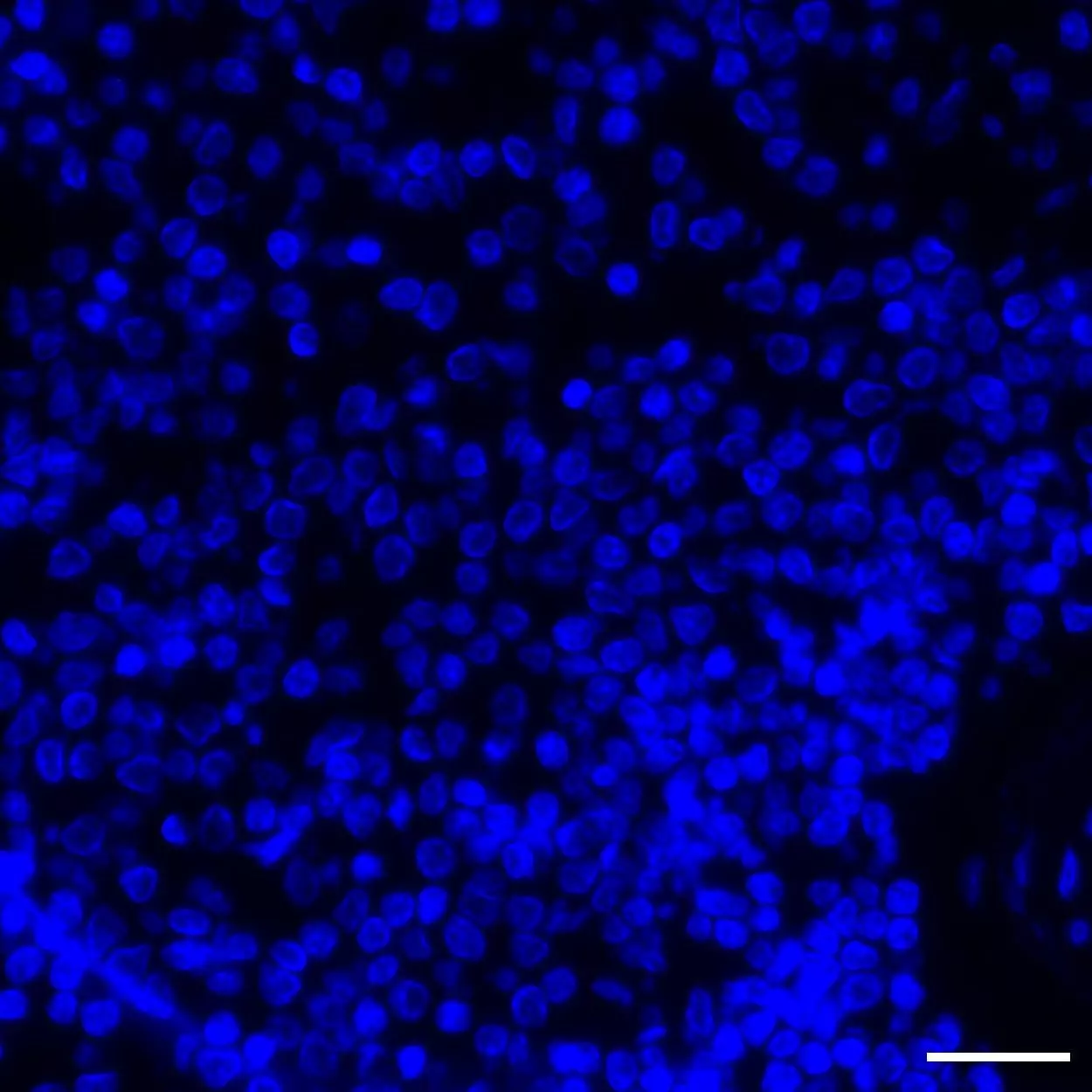
Immunofluorescence analysis of a formalin-fixed, paraffin embedded (FFPE) human spleen. Before staining, antigens were retrieved using heat-induced epitope retrieval (HIER) at pH 9. The section was stained using CD20 Cytoplasmic Antibody, anti-human, APC (green) for 10 min at room temperature (A). CD20 Cytoplasmic Antibody, anti-human, APC staining was released using the REAlease Release Reagent (B). Nuclei were visualized with Hoechst™ (blue). Scale bar: 30 µm.
A
 view details
B
 view details
Specifications for CD20 Cytoplasmic Antibody, anti-human, REAdye_lease™
Overview
Clone REAL649 is an antibody fragment derived from the full CD20 Cytoplasmic antibody molecule. It displays no binding to Fc receptors. The recombinantly engineered antibody fragments are multimerized to form the REAdye_lease Complex to bind markers with high avidity.
Clone REAL649 recognizes an intracytoplasmic epitope localized on the CD20 antigen, which is a non-glycosylated transmembrane protein of 33–37 kDa that is expressed on B lineage cells from the pre–B cell stage to the B cell lymphoblast stage. The antigen is also expressed on most malignant B cells. CD20 is not found on early B cell progenitors or plasma cells. Oligomers of CD20 form a Ca2+ channel and might function in the regulation of local responses during B cell activation. In vitro effects of CD20-specific antibodies on resting B cells indicate that CD20 is able to transduce an extracellular signal affecting the G0/G1 cell cycle transition. Studies have demonstrated that CD20-initiated intracellular signals involve tyrosine kinase activation and that CD20 is tightly associated with both serine and tyrosine kinases.
For removal of REAdye_lease fluorochromes for optional relabeling with different fluorochrome-conjugated REAdye_lease antibodies use the REAlease Support Kit (130-120-675).
CD20cy, CD20 cytoplasmic domain
Detailed product information
Technical specifications
Clone
REAL649
Clonality
monoclonal
Isotype control
Control Antibody
Host
cell line
Type of antibody
Releasable fluorochromes, Primary antibodies, Recombinant antibodies
Species reactivity
human
Antigen
CD20 Cytoplasmic
Distribution of antigen
B cells, spleen
RRID
AB_2857576, AB_2857574
Resources for CD20 Cytoplasmic Antibody, anti-human, REAdye_lease™
Certificates
To access a Certificate of Analysis (CoA) follow the link below and enter the specific lot of your product.
Should you wish to request additional documentation, such as a Safety Data Sheet (SDS) in other languages than English or Swedish, an SDS-replacement document, or a Certificate of Origin (CoO), please direct your inquiry to your local technical support team.
Citations for CD20 Cytoplasmic Antibody, anti-human, REAdye_lease™
Publications
- Shanehbandi, D. et al. (2017) CD20-based Immunotherapy of B-cell Derived Hematologic Malignancies. Curr. Cancer Drug Targets 17 (5): 423-444
- Einfeld, D. A. et al. (1988) Molecular cloning of the human B cell CD20 receptor predicts a hydrophobic protein with multiple transmembrane domains. EMBO J. 7 (3): 711-717
- Deans, J. P. et al. (1995) Association of 75/80-kDa phosphoproteins and the tyrosine kinases Lyn, Fyn, and Lck with the B cell molecule CD20. Evidence against involvement of the cytoplasmic regions of CD20. J. Biol. Chem. 270 (38): 22632-22638
- Vaughan, A. T. et al. (2015) Activatory and inhibitory Fcγ receptors augment rituximab-mediated internalization of CD20 independent of signaling via the cytoplasmic domain. J. Biol. Chem. 290 (9): 5424-5437
You have previously chosen International as your location.
What do you want to do?