

Synonyms: ENG, Endo, S-endoglin
EXTENDED VALIDATION
- Clone:
- MJ7/18
- Type of antibody:
- Primary antibodies
- Isotype:
- rat IgG2aκ
- Applications:
- FC, MICS, IF, IHC Glossary
- Select a conjugate:
- Select a size:


Other sizes
Related products for CD105 Antibody, anti-mouse


Flow cytometry applications
APC
Biotin
FITC
PE
PE-Vio 770
Vio Bright B515
pure
Recommended dilution:
1:10
Remark:
Cells should be stained prior to fixation, if formaldehyde is used as a fixative.
Data source:
Miltenyi Biotec
Conjugate:
APC
Used products:
130-102-495, 130-102-820
Description:
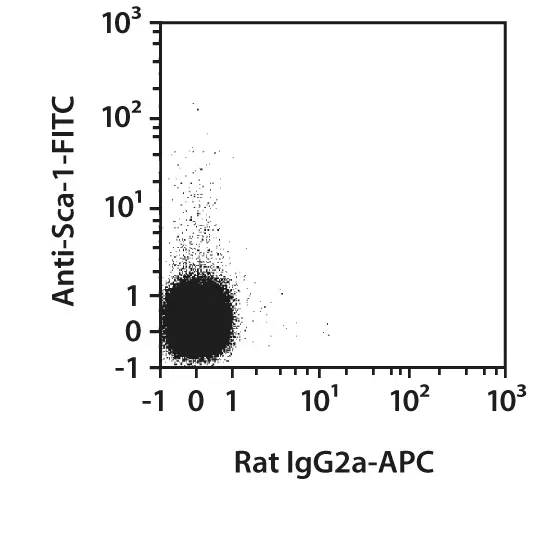
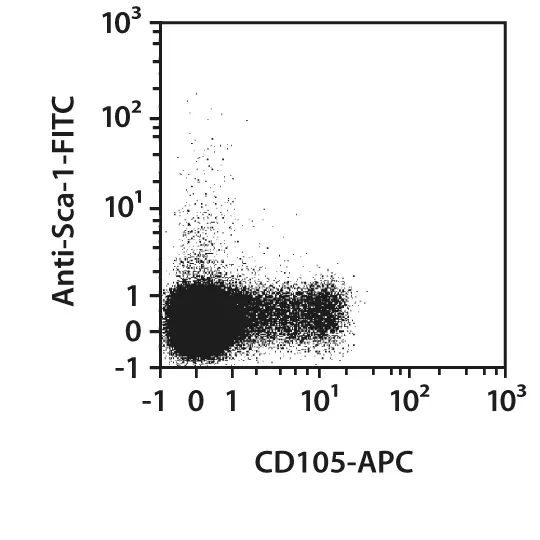
Bone marrow cells from BALB/c mice were stained with CD105 antibodies or with the corresponding isotype control (left image) as well as with Anti- Sca-1 antibodies. Flow cytometry was performed using the MACSQuant® Analyzer. Cell debris and dead cells were excluded from the analysis based on scatter signals and propidium iodide fluorescence.
 view details
 view details
MICS (MACSima Imaging Cyclic Staining) applications
APC
FITC
PE
Fixation:
frozen – Acetone
Species tested:
mouse
Recommended dilution:
1:10
Data source:
Miltenyi Biotec
Compatible applications:
IF, IHC
Conjugate:
APC
Used products:
130-102-495, 130-102-820
Testing grade:
Fixation:
frozen – PFA
Species tested:
mouse
Recommended dilution:
1:10
Data source:
Miltenyi Biotec
Compatible applications:
IF, IHC
Conjugate:
APC
Used products:
130-102-495, 130-102-820
Testing grade:
Extended validation for CD105 Antibody, anti-mouse
Specificity
In order to compare the epitope specificity of an antibody, the clone being used is compared with other known clones recognizing the same antigen in a competition assay.
Other clones
Overlap in epitope recognition with MJ7/18
REA1058
high
Cells were incubated with an excess of purified unconjugated CD105 (MJ7/18) antibody followed by staining with fluorochrome-conjugated antibodies from other known clones targeting the same antigen. Fluorescence intensity was then used to assess epitope overlap: a minimal or absent signal indicated high epitope overlap, an intermediate signal suggested partial overlap, and a strong signal reflected low overlap.
Sensitivity
Selected fluorochrome conjugated antibodies from Miltenyi Biotec were compared to commercially available hybridoma clones in flow cytometry analysis.
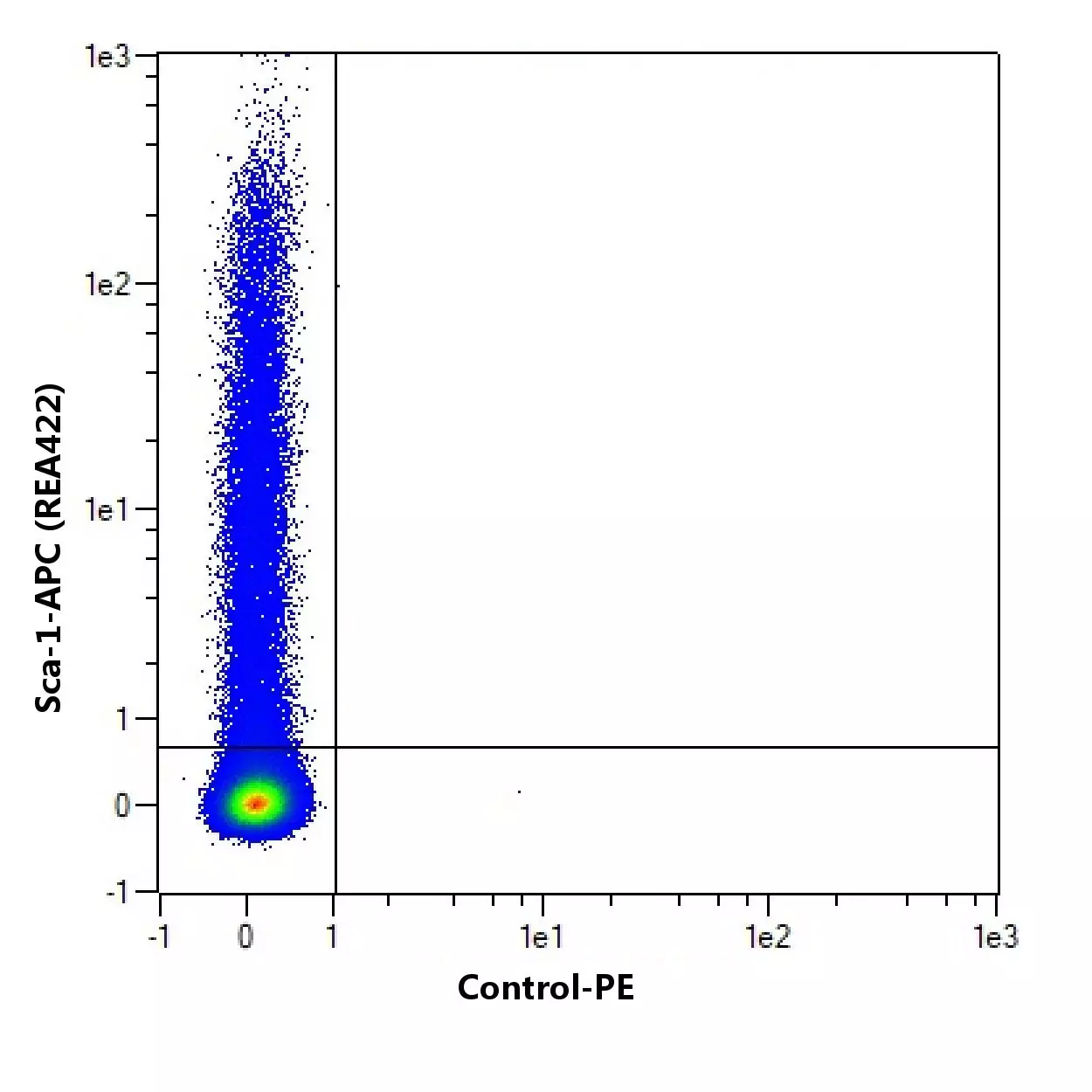
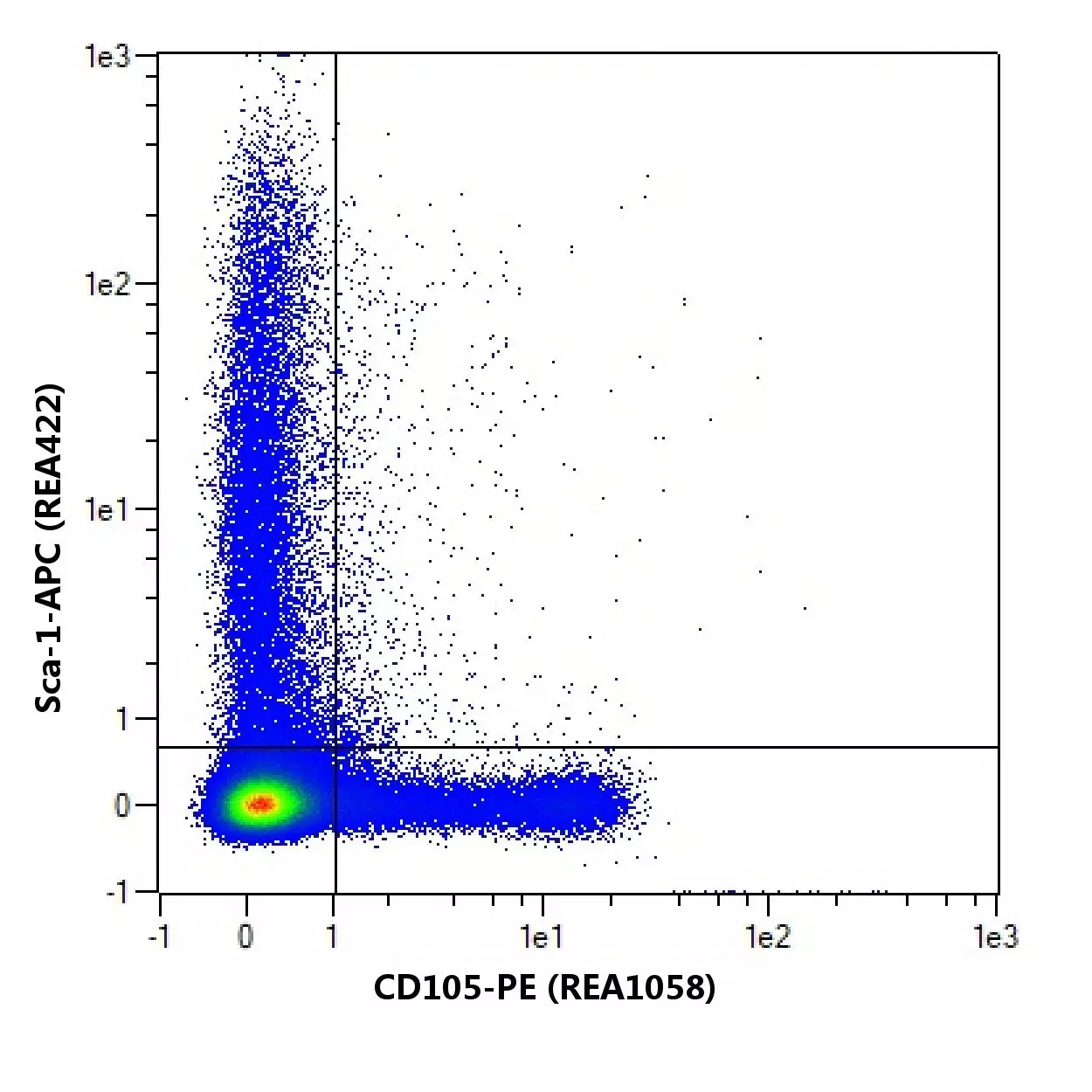
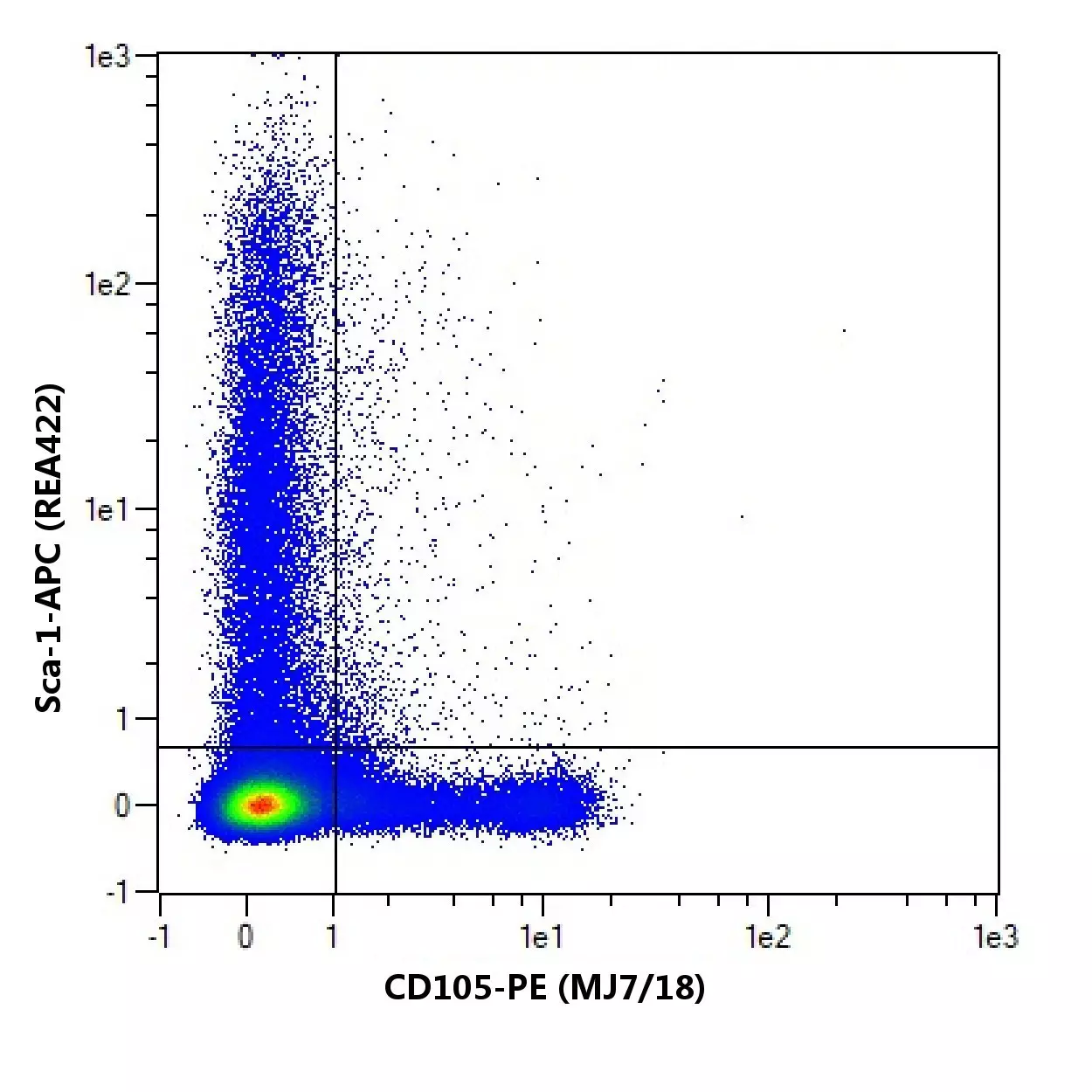
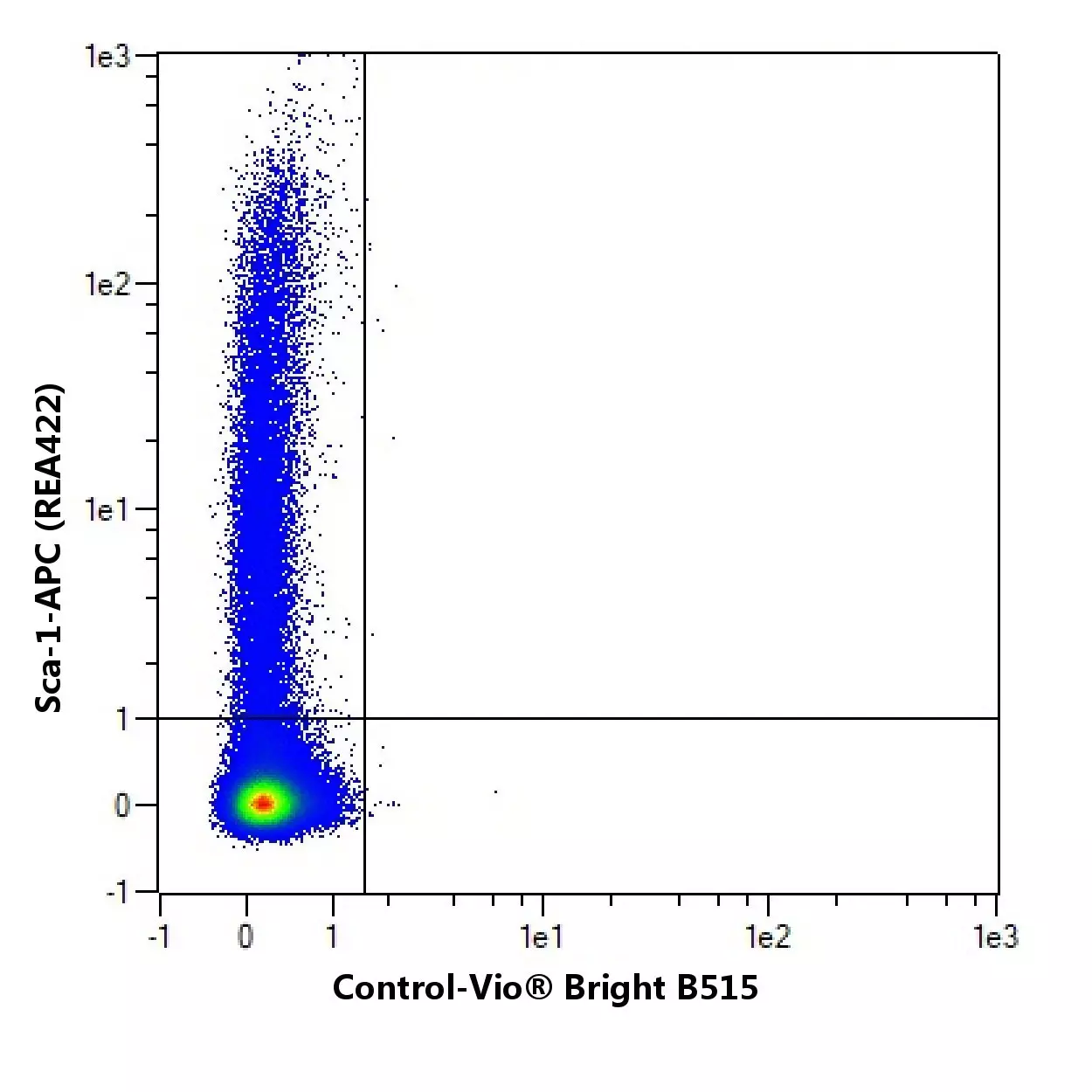

Flow cytometric comparison of different clones for CD105. Mouse bone marrow cells were stained with CD105 antibodies and with a suitable counterstaining. As a control, CD105 antibody staining was omitted and cells were measured in the same channels. Flow cytometry was performed with the MACSQuant® Analyzer. Cell debris, dead cells, and cell doublets were excluded from the analysis based on scatter signals and 4',6-diamidino-2-phenylindole (DAPI) fluorescence. No FcR Blocking Reagent was used. The recommended titers of respective antibodies from different suppliers were used.
To provide an indication on how an antibody performs after fixation of cells, in-house data on staining results before and after fixation with 3.7% formaldehyde using Miltenyi Biotec antibodies are provided. Different experimental settings may lead to different results.
No fixation
Post fixation
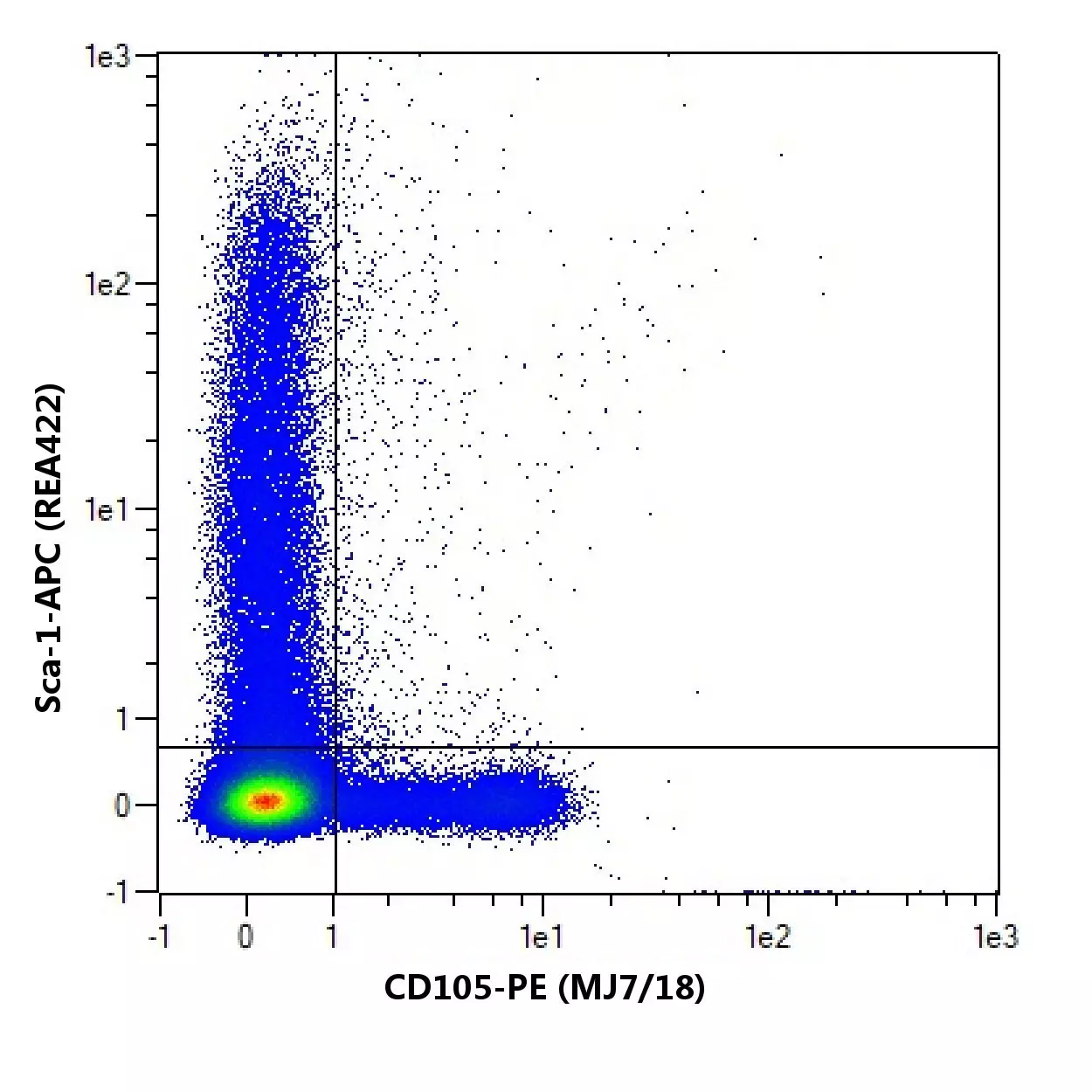
Comparison of staining pattern on non-fixed and fixed cells using CD105 (MJ7/18). The performance of the antibody after fixation was tested by comparing the staining pattern on fresh (no fixation) versus fixed (post fixation) cells.
Specifications for CD105 Antibody, anti-mouse
Overview
The CD105 antibody (clone MJ7/18) recognizes the CD105 antigen, also known as endoglin. CD105 is a proliferation-associated and hypoxia-inducible protein, abundantly expressed in angiogenic endothelial cells. In mouse bone marrow, CD105 is also expressed on a population of Sca-1+ hematopoietic stem cells (HSCs). This population has a long-term repopulating (LTR) capacity and is therefore termed LTR-HSCs1,2. Furthermore, on liver sinusoidal endothelial cells (LSEC), CD105 is co-expressed with CD146 (LSEC).
ENG, Endo, S-endoglin
Detailed product information
Technical specifications
Clone
MJ7/18
Clonality
monoclonal
Isotype
rat IgG2aκ
Isotype control
Isotype Control Antibody, rat IgG2a
Host
rat
Type of antibody
Primary antibodies
Species reactivity
mouse
Antigen
CD105
Molecular mass of antigen [kDa]
67
Distribution of antigen
endothelial cells, monocytes, stem cells, mesenchymal stem cells, leukemia cells, bone marrow
Entrez Gene ID
RRID
AB_2660100, AB_2660094, AB_2660092, AB_2660091, AB_2660095, AB_2660093, AB_2660090, AB_2660097, AB_2660098, AB_2660099, AB_2660096, AB_1103219, AB_2660101
Resources for CD105 Antibody, anti-mouse
Certificates
To access a Certificate of Analysis (CoA) follow the link below and enter the specific lot of your product.
Should you wish to request additional documentation, such as a Safety Data Sheet (SDS) in other languages than English or Swedish, an SDS-replacement document, or a Certificate of Origin (CoO), please direct your inquiry to your local technical support team.
 Powered by Bioz
You have previously chosen International as your location.
What do you want to do?