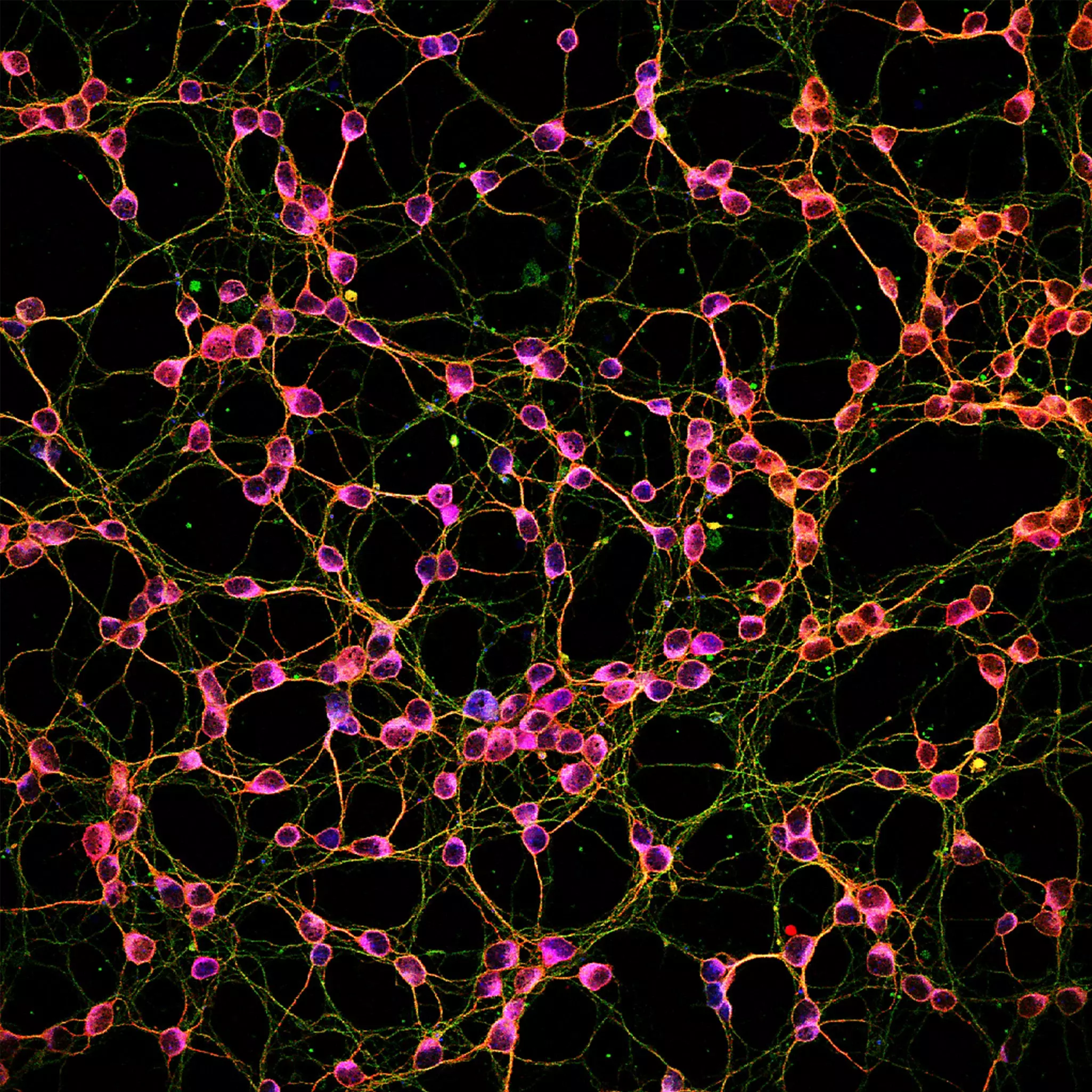
Isolation and cultivation of CD171 (L1CAM)-positive neurons from neonatal mouse brain
CD171 (L1CAM) (L1 cell adhesion molecule) is expressed by tetanus-toxin positive neurons, endothelial cells, certain epithelial cells, reticular fibroblasts, and several malignant tumors, including colon and breast carcinomas, colon melanoma, and tumor cells of neuronal and mesothelial origin. CD171 plays a vital role in cell adhesion and signal transduction and has been demonstrated to play a role in augmenting tumor growth. It is involved in the development of the nervous system and regulates processes such as neuron–neuron adhesion, myelination, axonal guidance, and neuronal migration. CD171 (L1CAM) MicroBeads are designed for the separation of neurons based on the expression of CD171 (L1CAM) and especially optimized for use with dissociated postnatal CD-1® mouse brain tissue derived from animals younger than postnatal day eight (P8). Up to 99.5% purity can be achieved with P7 cerebellum tissue because the expression of CD171 is found almost exclusively on neurons. Purity decreases with age: P9 up to 80%; P12 up to 64%. For other brain regions, glial cells may need to be depleted if high purities are required. The CD171 (L1CAM) epitope shows papain sensitivity. Therefore, the Neural Tissue Dissociation Kit (T) is recommended to generate a single-cell suspension.
Protocol
Isolation and cultivation of CD171 (L1CAM)-positive neurons from neonatal mouse brain
45 min
Dissociation of brain tissue
1 h
Isolation of CD171 (L1CAM)-positive neurons
30 min
Flow cytometric analysis
7 d
Cell culture
1–24 h
Immunocytochemical staining of cultured cells
Protocol

This protocol includes detailed instructions for preparing necessary reagents and materials and then carrying out each step.
 View details
You have previously chosen International as your location.
What do you want to do?