Immune repertoire profiling at unprecedented resolution and quality

Miltenyi Biotec offers library preparation solutions for bulk RNA sequencing tailored to leading immune profiling approaches, enabling highly precise and sensitive investigation of the human immune system. These solutions are based on our longstanding expertise in immunology and T cell biology and offer substantial benefits:

  • Direct PBMC or T cell input without RNA isolation
  • FFPE compatibility
  • UMI-based error correction
  • Wide RNA input range (0.1–500 ng)

Immune receptor profiling by next-generation sequencing

Next-generation sequencing (NGS) technologies allow researchers to investigate millions of DNA or RNA fragments from nearly any sample type simultaneously, providing fast, comprehensive insights into the genomes or transcriptomes of these biological samples. These technologies have been adapted to address a variety of research questions, for instance, to study the immune repertoire at unprecedented scale and sensitivity.

Analysis of the receptor expression within a sample has countless applications in immune repertoire research. Some of the most common include:

  • Characterizing immune repertoire diversity to gain deeper insight into immune cell dynamics and clonal expansions.
  • Identifying clonotypes and immune biomarkers to sensitively detect disease-associated immune cell populations and precisely monitor immune responses.
  • Tracking immune responses over time for research into immuno-oncology, vaccine development, and infection or autoimmunity.

Bulk vs. single-cell immune repertoire sequencing

Bulk RNA immune repertoire sequencing is often described as a simplified alternative to single-cell approaches. But why would one want to analyze pooled receptor sequences when single-cell resolution is technically possible?

The simple answer is: There’s a fundamental difference between the two approaches and their application scenarios. Bulk and single-cell technologies address different biological questions and operate at different analytical scales. While single-cell methods provide phenotypic context, bulk immune repertoire sequencing offers unparalleled depth, quantitative robustness, and statistical power at the population level.

Rather than being a reduced version of single-cell analysis, bulk immune receptor profiling is a powerful, scalable approach for characterizing repertoires comprehensively, particularly when sensitivity, cohort size, and detection of rare clonotypes are critical.

 Bulk receptor RNA sequencingSingle-cell receptor RNA sequencing
AdvantagesDeep repertoire coverageReceptor-transcriptome linkage
Sensitive clonotype detectionDirect α/β chain pairing
Cost effectiveImmune cell subset identification
Robust clonotype quantificationSingle-cell resolution
Application examplesRepertoire diversity analysis, clonality assessment, immune monitoringCell state characterization, TCR phenotype analysis

Our solution for immune repertoire library preparation

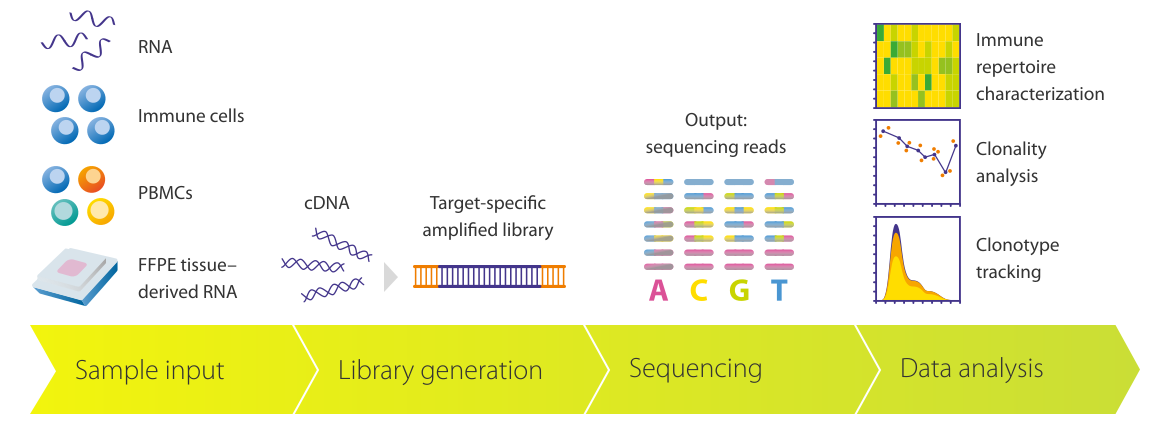
A key step in immune repertoire sequencing is the library preparation, during which the input sample is converted into structured, sequencing-ready libraries. The illustration below shows the process from sample input to data analysis and highlights how our immune repertoire profiling solutions support a seamless, robust, and reproducible end-to-end workflow.

1. Sample input

The protocol allows for the use of RNA from immune cells or tissues as well as direct input of sorted immune cells or PBMCs without prior RNA extraction. It is also compatible with FFPE tissue–derived RNA.
Infographic showing different source materials for immune repertoire sequencing

1. Sample input

The protocol allows for the use of RNA from immune cells or tissues as well as direct input of sorted immune cells or PBMCs without prior RNA extraction. It is also compatible with FFPE tissue–derived RNA.

2. Library generation

To ensure the precise capture of target molecules for high-quality library generation, the TCR α/β RNA Profiling Kit, human, combines sensitive multiplex PCR primers and unique molecular identifiers (UMIs). The protocol takes 7.5 hours to complete, with 4.5 hours of hands-on time.
Infographic showing cDNA that is used to build a target-specific amplified library

2. Library generation

To ensure the precise capture of target molecules for high-quality library generation, the TCR α/β RNA Profiling Kit, human, combines sensitive multiplex PCR primers and unique molecular identifiers (UMIs). The protocol takes 7.5 hours to complete, with 4.5 hours of hands-on time.

3. Sequencing

Our immune repertoire bulk library preparation solutions are optimized for Illumina® Platforms. Refer to the respective product protocols for specific sequencing parameter recommendations.
Infographic showing sequencing results

3. Sequencing

Our immune repertoire bulk library preparation solutions are optimized for Illumina® Platforms. Refer to the respective product protocols for specific sequencing parameter recommendations.

4. Data analysis

For downstream analysis, a preset optimized for our kit's chemistry is available on MiLaboratories Platforma, a no-code NGS data analysis platform. It enables immune repertoire analysis, including clonality analysis, characterization, and clonotype tracking.
Infographic showing results of immune repertoire characterization, clonality analysis, and clonotype tracking

4. Data analysis

For downstream analysis, a preset optimized for our kit's chemistry is available on MiLaboratories Platforma, a no-code NGS data analysis platform. It enables immune repertoire analysis, including clonality analysis, characterization, and clonotype tracking.
Overview of a workflow for immune repertoire sequencing

1. Sample input

The protocol allows for the use of RNA from immune cells or tissues as well as direct input of sorted immune cells or PBMCs without prior RNA extraction. It is also compatible with FFPE tissue–derived RNA.
Infographic showing different source materials for immune repertoire sequencing

1. Sample input

The protocol allows for the use of RNA from immune cells or tissues as well as direct input of sorted immune cells or PBMCs without prior RNA extraction. It is also compatible with FFPE tissue–derived RNA.

2. Library generation

To ensure the precise capture of target molecules for high-quality library generation, the TCR α/β RNA Profiling Kit, human, combines sensitive multiplex PCR primers and unique molecular identifiers (UMIs). The protocol takes 7.5 hours to complete, with 4.5 hours of hands-on time.
Infographic showing cDNA that is used to build a target-specific amplified library

2. Library generation

To ensure the precise capture of target molecules for high-quality library generation, the TCR α/β RNA Profiling Kit, human, combines sensitive multiplex PCR primers and unique molecular identifiers (UMIs). The protocol takes 7.5 hours to complete, with 4.5 hours of hands-on time.

3. Sequencing

Our immune repertoire bulk library preparation solutions are optimized for Illumina® Platforms. Refer to the respective product protocols for specific sequencing parameter recommendations.
Infographic showing sequencing results

3. Sequencing

Our immune repertoire bulk library preparation solutions are optimized for Illumina® Platforms. Refer to the respective product protocols for specific sequencing parameter recommendations.

4. Data analysis

For downstream analysis, a preset optimized for our kit's chemistry is available on MiLaboratories Platforma, a no-code NGS data analysis platform. It enables immune repertoire analysis, including clonality analysis, characterization, and clonotype tracking.
Infographic showing results of immune repertoire characterization, clonality analysis, and clonotype tracking

4. Data analysis

For downstream analysis, a preset optimized for our kit's chemistry is available on MiLaboratories Platforma, a no-code NGS data analysis platform. It enables immune repertoire analysis, including clonality analysis, characterization, and clonotype tracking.

TCR α/β RNA Profiling Kit – key advantages

Clear small tubes with Miltenyi logo and color code

Building on our long-standing expertise in immunology and T cell biology, we provide the TCR α/β RNA Profiling Kit, human, a bulk RNA library preparation solution designed specifically for high-confidence TCR profiling with NGS based on Illumina® Technology. This kit enables you to work with RNA from fresh samples, FFPE tissue–derived RNA, or directly with PBMCs and T cells. Whether your research requires very low input (starting from 0.1 ng of RNA) or compatibility with complex samples, the kit provides the required sensitivity and flexibility. In addition, optimized primer design supports accurate clonotype capture and highly reproducible results. The performance data below demonstrate these capabilities.

Sensitive clonotype detection across a broad input range.

Sensitive clonotype detection across a broad input range

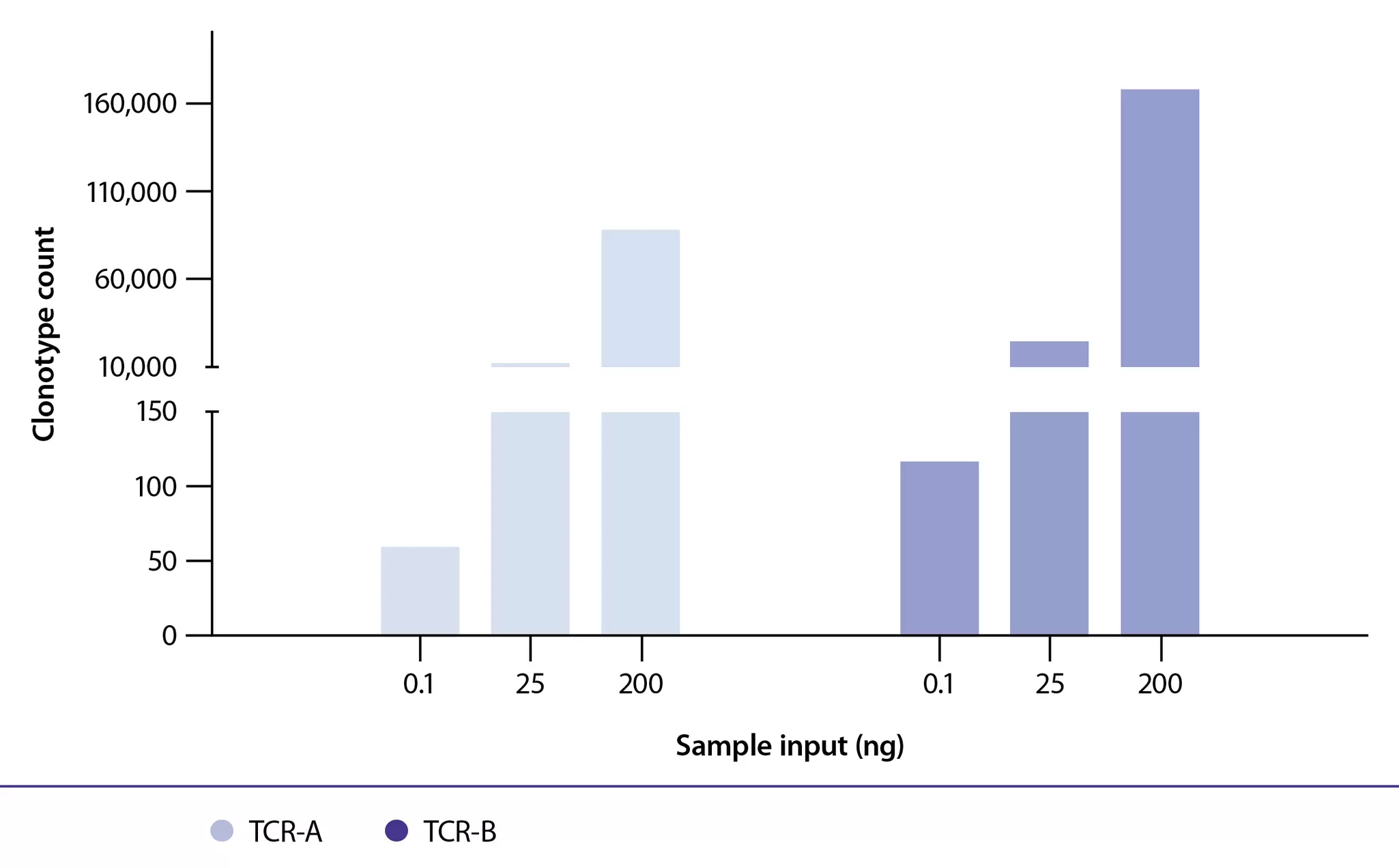
Through the combination of unique molecular identifiers with highly sensitive multiplex primers for PCR, our chemistry allows for the accurate and reliable detection of clonotypes within a broad range of input material, starting from as little as 0.1 ng of RNA.

Operator-independent reproducibility.

Operator-independent reproducibility

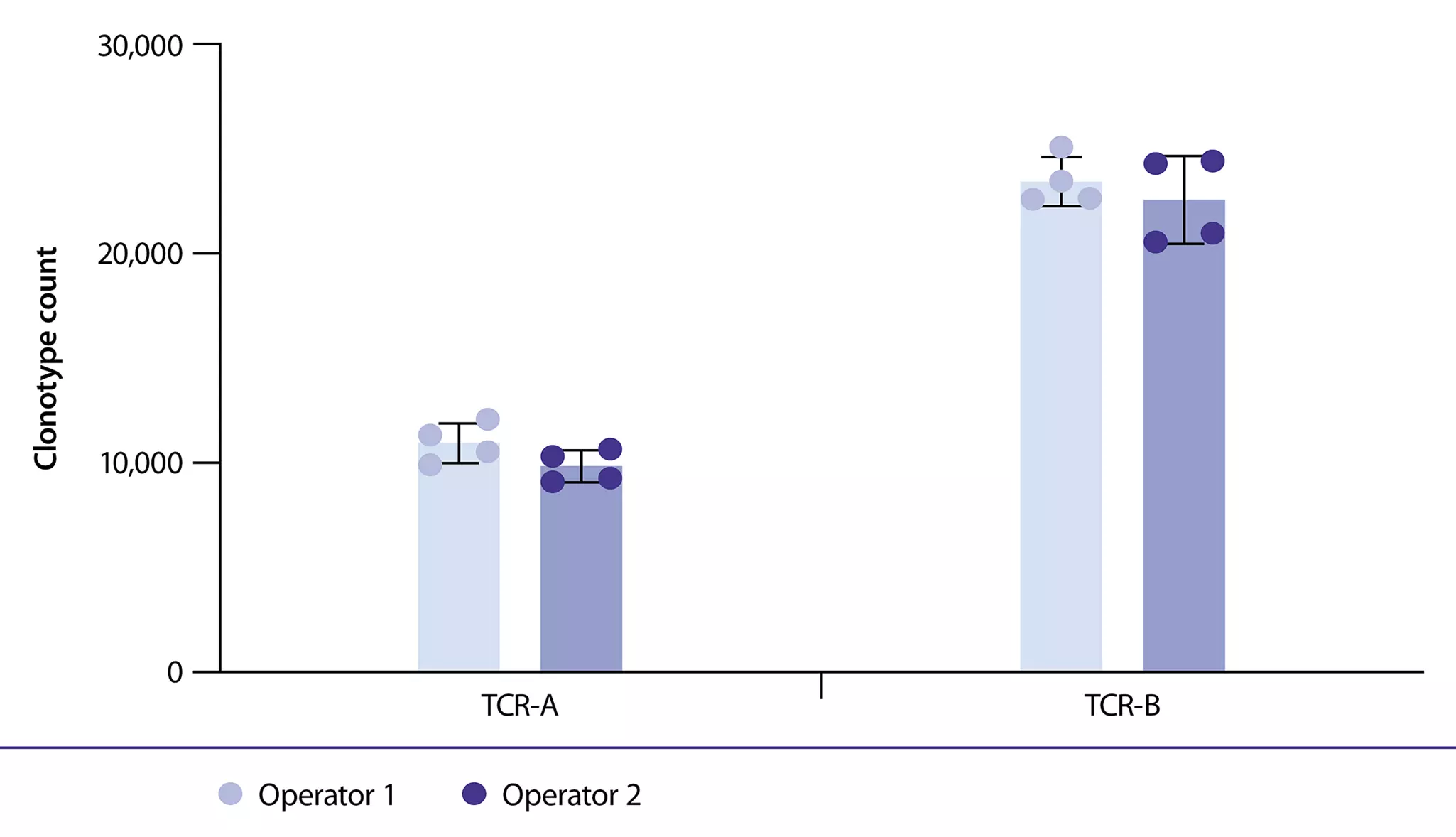
The balanced chemistry of the kit ensures high reproducibility across experiments. Two operators independently generated two libraries with two technical replicates, on different days, in different laboratories. The numbers of detected clonotypes were highly comparable across technical replicates, operators, and laboratory sites. These results demonstrate the robustness of the workflow and support reliable comparison of immune repertoire data across experiments, making it the ideal solution in trusted and innovative molecular research.

High-performance immune repertoire profiling from FFPE samples.

High-performance immune repertoire profiling from FFPE samples

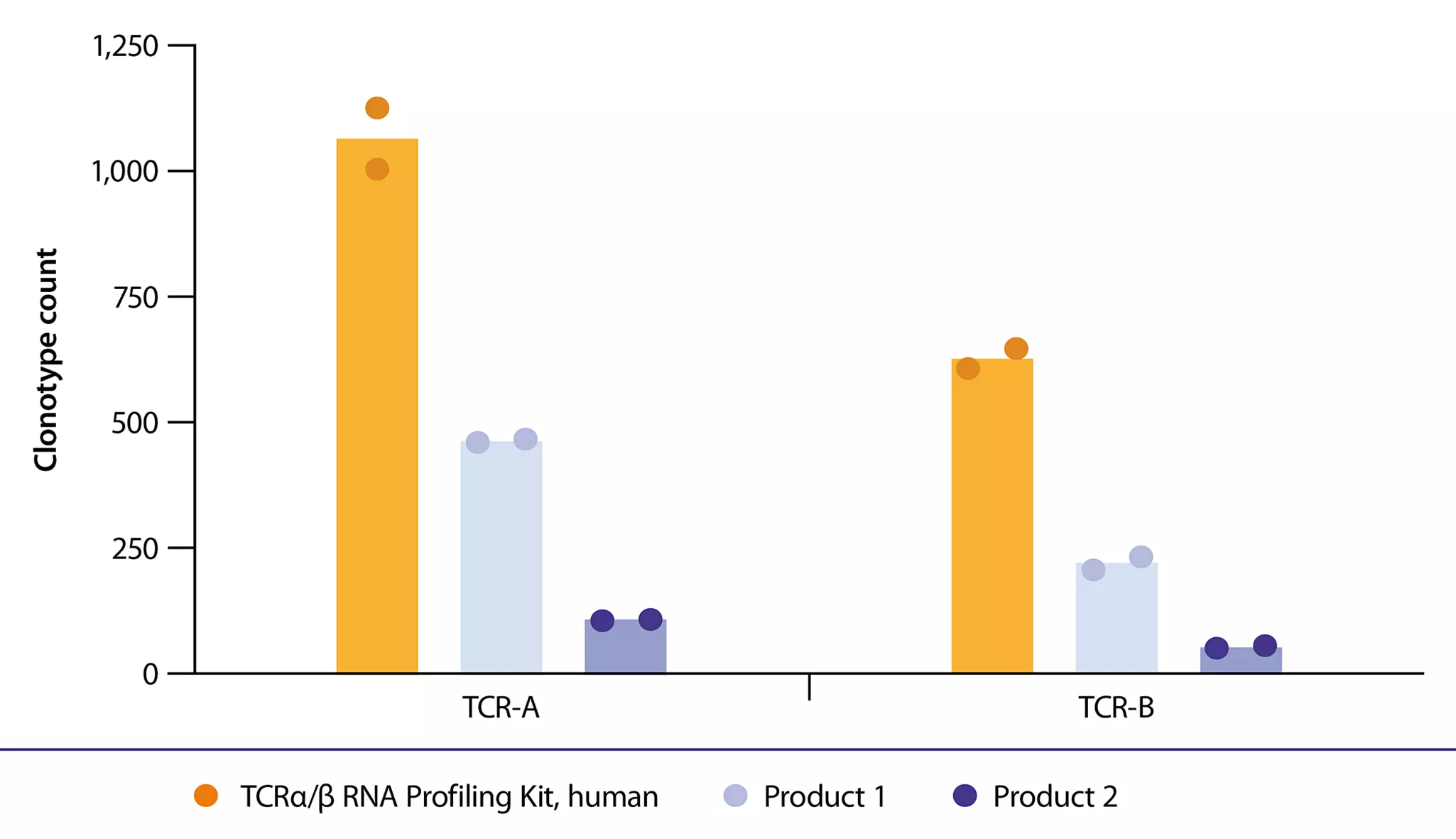
To support research using challenging sample material, the protocol has been adapted for FFPE tissue–derived RNA. When benchmarked against commercially available alternatives, the TCR α/β RNA Profiling Kit, human, generated substantially higher numbers of detected clonotypes, demonstrating efficient repertoire recovery from FFPE samples.

Chart showing TCRα clonotype comparison after sequencing of RNA from fresh/frozen or FFPE lung cancer tissue
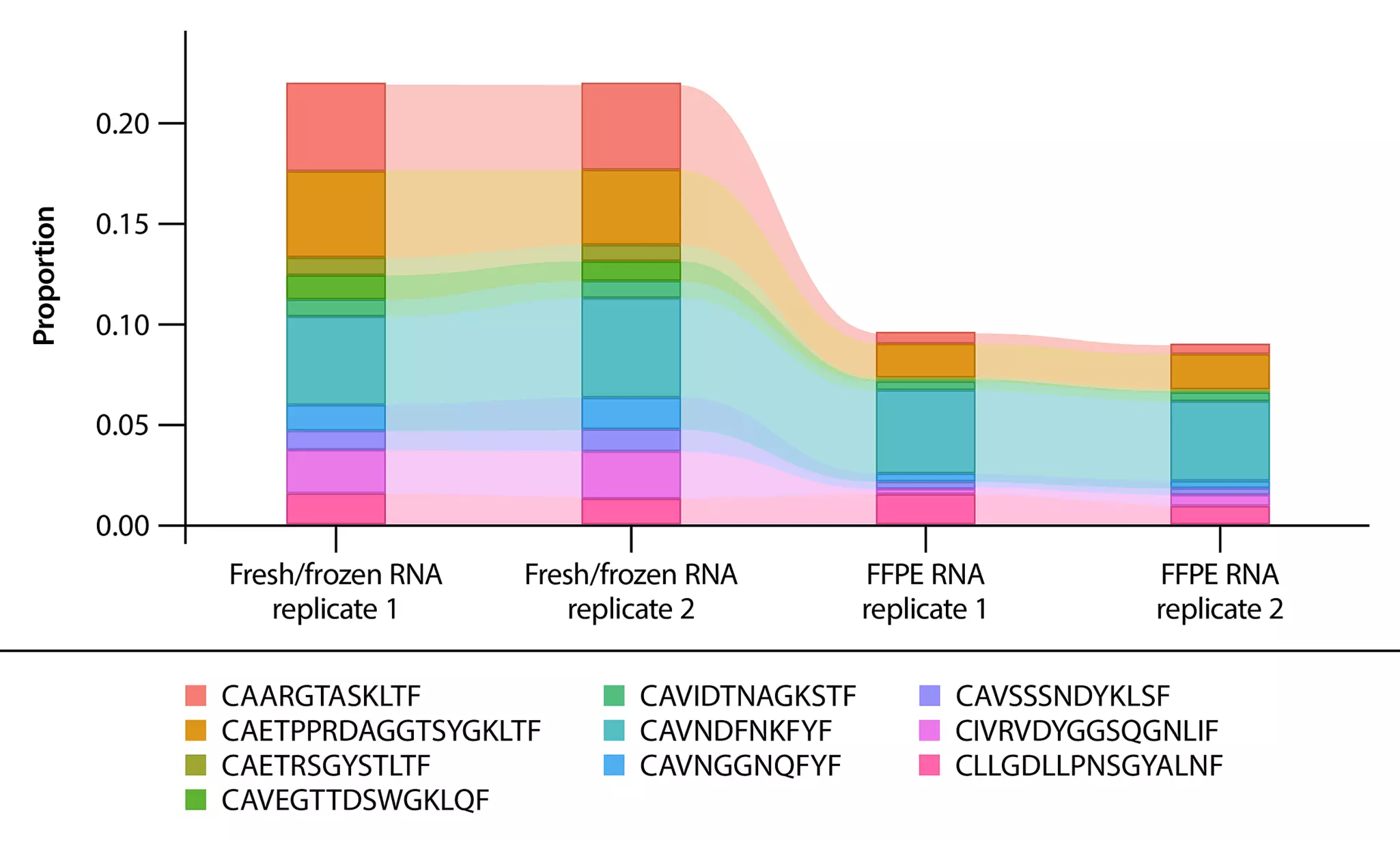
Libraries obtained from FFPE tissue–derived RNA and freshly extracted RNA lead to comparable clonotype output.

To further evaluate performance with FFPE samples, clonotype profiles generated from 500 ng FFPE tissue–derived RNA were compared with those generated from 100 ng freshly isolated RNA, both from lung tissues. Tracking the top 10 clonotypes across both sample types revealed substantial overlap, demonstrating that the kit can generate biologically meaningful repertoire data from FFPE tissue–derived RNA. This enables retrospective immune repertoire studies using valuable archived clinical samples.

Sequencing recommendations

Our protocol results in an indexed library which is ready for sequencing using Illumina Technology. We recommend performing paired-end sequencing with at least 150 × 150 bp read length and a sequencing depth of 100 reads per input T cell. For details about the sequencing strategy please refer to the application protocol of the product.

To streamline downstream analysis, we have collaborated with MiLaboratories, a leading provider of immune repertoire analysis software. Their Platforma software provides a guided user interface for processing NGS data. A dedicated analysis preset tailored to the chemistry of the TCR α/β RNA Profiling Kit, human, is available within Platforma, facilitating streamlined and standardized data analysis. The software can be accessed at https://platforma.bio.

Resources

Webinars

Watch this webinar to learn more about the end-to-end solution for T cell receptor α/β immune repertoire analysis, starting with the TCR α/β RNA Profiling Kit, human, and finishing with advanced sequencing data analysis and visualization with MiLaboratories' Platforma.

Watch the webinar here

All immune repertoire profiling kits

2 products found

|

You have previously chosen International as your location.
What do you want to do?