Solid tumors: the next goal of cell therapy


Solid tumors: the next goal of cell therapy
A turning point in solid cancer care
Usually categorized based on primary tissue or organ affected1, solid cancers are a heterogeneous group of malignant diseases that account for over 20 million new cancer cases and almost 10 million deaths worldwide every year2,3. Lung, breast, colorectal, and prostate cancers are the most common solid tumor types globally. Lung, colorectal, and liver cancers have the highest death tolls2,3.
Typical first-line treatments for solid cancers include surgical resection of the tumor, chemotherapy, and radiation.4 Exact treatment depends on tumor type, disease stage, tumor genetics, and patient age, among other factors. Though standard approaches can be very effective, they often cause severe adverse events that decrease quality of life with sometimes long-term effects.5
Emerging cell therapy strategies to target solid tumors
Immunotherapy using monoclonal antibodies to target immune checkpoints has shown remarkable clinical efficacy.6 However, a curative therapy is still missing, especially for tumors with a modest presence of immune cells (cold tumors).7 Cell therapies are being explored to fill this gap.8 In fact, tumor-infiltrating lymphocyte (TIL) therapy is one of the first cellular therapies to show important clinical results9 and is currently approved to treat melanoma10.
Many developers are exploring CAR and TCR-engineered T or innate cells (e.g., NK cells, macrophages) to target solid tumors or exploit the natural tumor specificity of NK cells or γδ T cells.8,11–14 However, a lack of specific and persistent tumor antigens and the immunosuppressive tumor microenvironment have limited the efficacy of cell therapies in solid tumors.14,15 Novel targeting approaches and next-generation CAR and TCR constructs are urgently needed.8,12–14
A promising approach for highly mutating tumors is neoantigen-based therapy16, including peptide, mRNA, or dendritic cell vaccines and neoantigen-specific T cells8. Considered a promising way to improve efficacy in solid tumor treatment, neoantigen-based therapies are highly personalized, which increases cost and complexity.17,18 Furthermore, γδ T cells hold great potential as a novel immunotherapeutic approach for solid tumors.19,20
Cell therapy aiming for stable remission of solid tumors
Miltenyi Biotec offers products and services to help clinicians identify new tumor targets and explore more potent cell therapies for treating solid tumors. The following are some of our established cell manufacturing processes designed to enable novel therapeutic strategies using new targets and cell types.
Making cell therapy a reality for solid tumors
Tackling the challenges of treating solid tumors will require innovative therapeutic concepts. However, equally important will be ensuring that the manufacturing and distribution costs of next-generation therapies do not hamper access. Miltenyi Biotec offers platforms and processes that support exploring new targets and enable point-of-care manufacturing.



Miltenyi Biotec solutions in action
As developers tackle and solve the challenges of treating solid tumors, cell therapies will be front and center in those exciting advances. Already today, Miltenyi Biotec solutions are the choice of those pushing boundaries in terms of targets, constructs, and cell types. Take a look at some of their approaches.
Recorded talk
Implementation of a Phase 1 clinical trial to test CAR T cells against ALK in refractory/relapsed neuroblastoma
Dr. Roberto Chiarle, Professor of Pathology at the University of Turin and Harvard Medical School, presents groundbreaking work on targeting anaplastic lymphoma kinase (ALK) in in patients with relapsed or refractory neuroblastoma using CAR T cell therapy. The talk will also address key considerations around antigen selection, resistance mechanisms, and the safety profile of ALK-targeted immunotherapy in pediatric solid tumors.
Would you like to hear more from your peers?
Publication
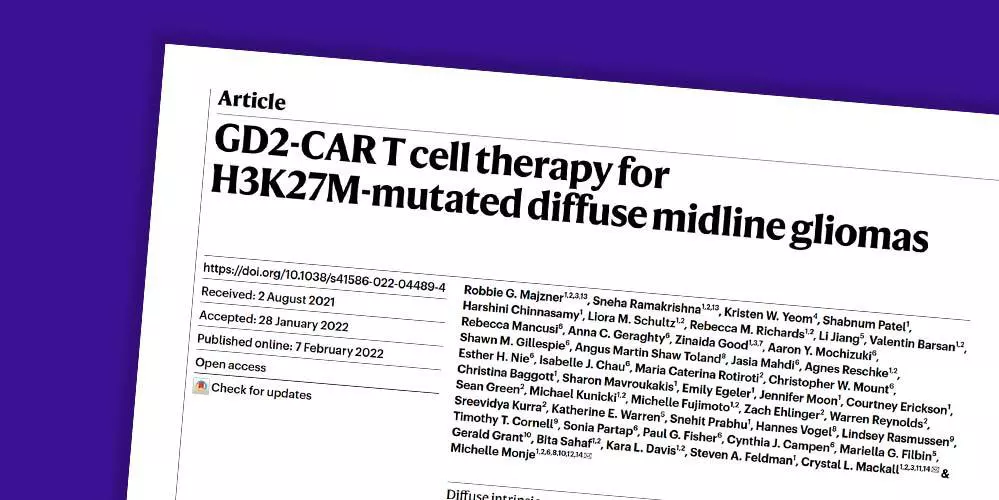
GD2-CAR T cell therapy for H3K27M-mutated diffuse midline gliomas
Majzner, R. G. et al. (2022) Nature 603: 934.
A first-in-human phase I clinical trial examined the use of CAR T cells directed against the disialoganglioside GD2 in four patients with diffuse intrinsic pontine glioma or diffuse midline glioma. Toxicity was reversible with intensive supportive care, and three of four patients exhibited clinical improvement.
Publication
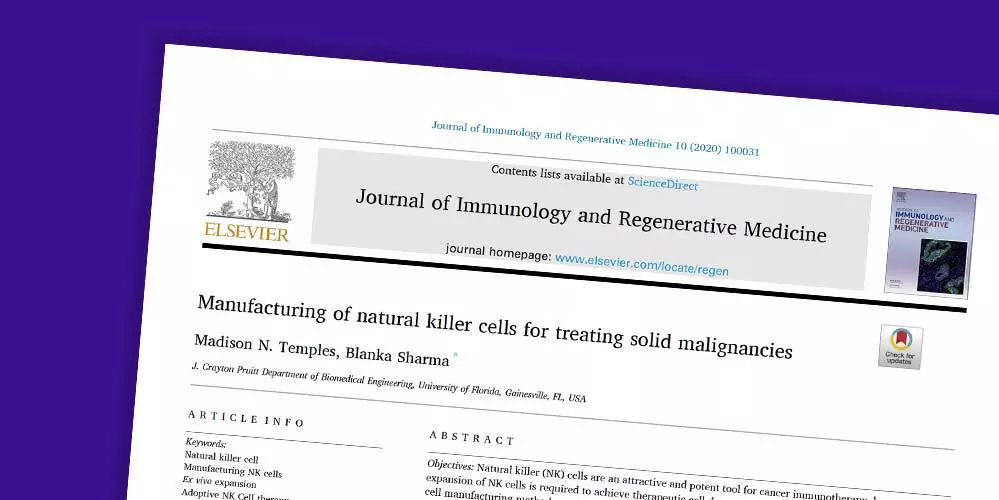
Manufacturing of natural killer cells for treating solid malignancies
Temples, M. N. and Sharma, B. (2020) J. Immunol. Reg. Med. 10: 100031.
Natural killer (NK) cells are an attractive option for developing engineered cell therapies that effectively treat solid tumors. They also enable "off-the-shelf" approaches. This review explores NK cell manufacturing methods used in clinical trials.
Additional publications
- Mahdizadeh, H. et al. (2025) The safety and feasibility of multiple intrathecal injections of allogenic NK cells in pediatrics with refractory/recurrent brain tumors. BMC Cancer 25: 952. | Read article
- Berneman, Z. N. et al. (2025) Correction: WT1-mRNA dendritic cell vaccination of patients with glioblastoma multiforme, malignant pleural mesothelioma, metastatic breast cancer, and other solid tumors: type 1 T-lymphocyte responses are associated with clinical outcome. J. Hematol. Oncol. 18: 34. | Read article
- Brennan, P. N. et al. (2025) Autologous macrophage therapy for liver cirrhosis: A phase 2 open-label randomized controlled trial. Nat. Med. 31: 979–987. | Read article
- Vounckx, M. et al. (2024) A randomized phase II clinical trial of stereotactic body radiation therapy (SBRT) and systemic pembrolizumab with or without intratumoral avelumab/ipilimumab plus CD1c (BDCA-1)+/CD141 (BDCA-3)+ myeloid dendritic cells in solid tumors. Cancer Immunol. Immunother. 73: 167. | Read article
- van 't Land, F. R. et al. (2024) Dendritic cell-based immunotherapy in patients with resected pancreatic cancer. J. Clin. Oncol. 42: 3083–3093. | Read article
- Aerts, J. G. et al. (2024) Dendritic cells loaded with allogeneic tumour cell lysate plus best supportive care versus best supportive care alone in patients with pleural mesothelioma as maintenance therapy after chemotherapy (DENIM): A multicentre, open-label, randomised, phase 2/3 study. Lancet Oncol. 25: 865–878. | Read article
- Tijtgat, J. et al. (2024) Intratumoral administration of the immunologic adjuvant AS01B in combination with autologous CD1c (BDCA-1)+/CD141 (BDCA-3)+ myeloid dendritic cells plus ipilimumab and intravenous nivolumab in patients with refractory advanced melanoma. J. Immunother. Cancer. 12: e008148. | Read article
- Fischer-Riepe, L. et al. (2024) Preclinical development of CAR T cells with antigen-inducible IL18 enforcement to treat GD2-positive solid cancers. Clin. Cancer Res. OF1–OF14. | Read article
- Schreibelt, G. et al. (2024) Fully closed and automated enrichment of primary blood dendritic cells for cancer immunotherapy. Methods Cell Biol. 183: 33–50. | Read article
- Vincent, B. G. et al. (2023) Efficacy of a dual-epitope dendritic cell vaccine as part of combined immunotherapy for HER2-expressing breast tumors. J. Immunol. 211: 219–228. | Read article
- Schwarze, J. K. et al. (2022) Intratumoral administration of CD1c (BDCA-1)+ and CD141 (BDCA-3)+ myeloid dendritic cells in combination with talimogene laherparepvec in immune checkpoint blockade refractory advanced melanoma patients: a phase I clinical trial. J. Immunother. Cancer 10: e005141 | Read article
- Lau, S. P. et al. (2022) Autologous dendritic cells pulsed with allogeneic tumour cell lysate induce tumour-reactive T-cell responses in patients with pancreatic cancer: a phase I study. European J. Cancer 169: P20–31. | Read article
- Bloemendal, M. et al. (2021) Immunological responses to adjuvant vaccination with combiend CD1c+ myeloid and plasmacytoid dendritic cells in stage III melanoma patients. Oncoimmunol. 11: 2015113. | Read article
- Aerts, J. G. J. V. et al. (2018) Autologous dendritic cells pulsed with allogeneic tumor cell lysate in mesothelioma: from mouse to human. Clin. Cancer Res. 24: 766–776. | Read article

Next step? Look at other indications or talk to us!
Unless otherwise specifically indicated, Miltenyi Biotec products and services are for research use only and not for therapeutic or diagnostic use. For complete regulatory notes, please click here.
You have previously chosen International as your location.
What do you want to do?