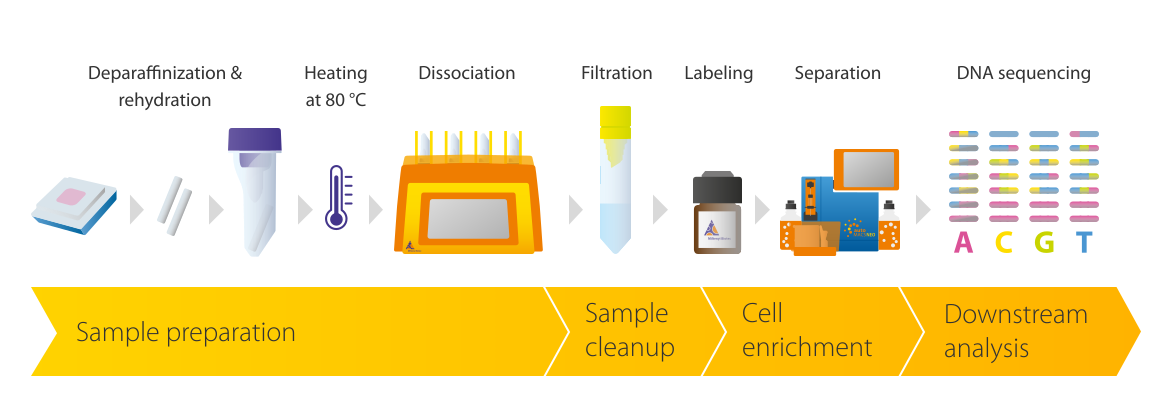
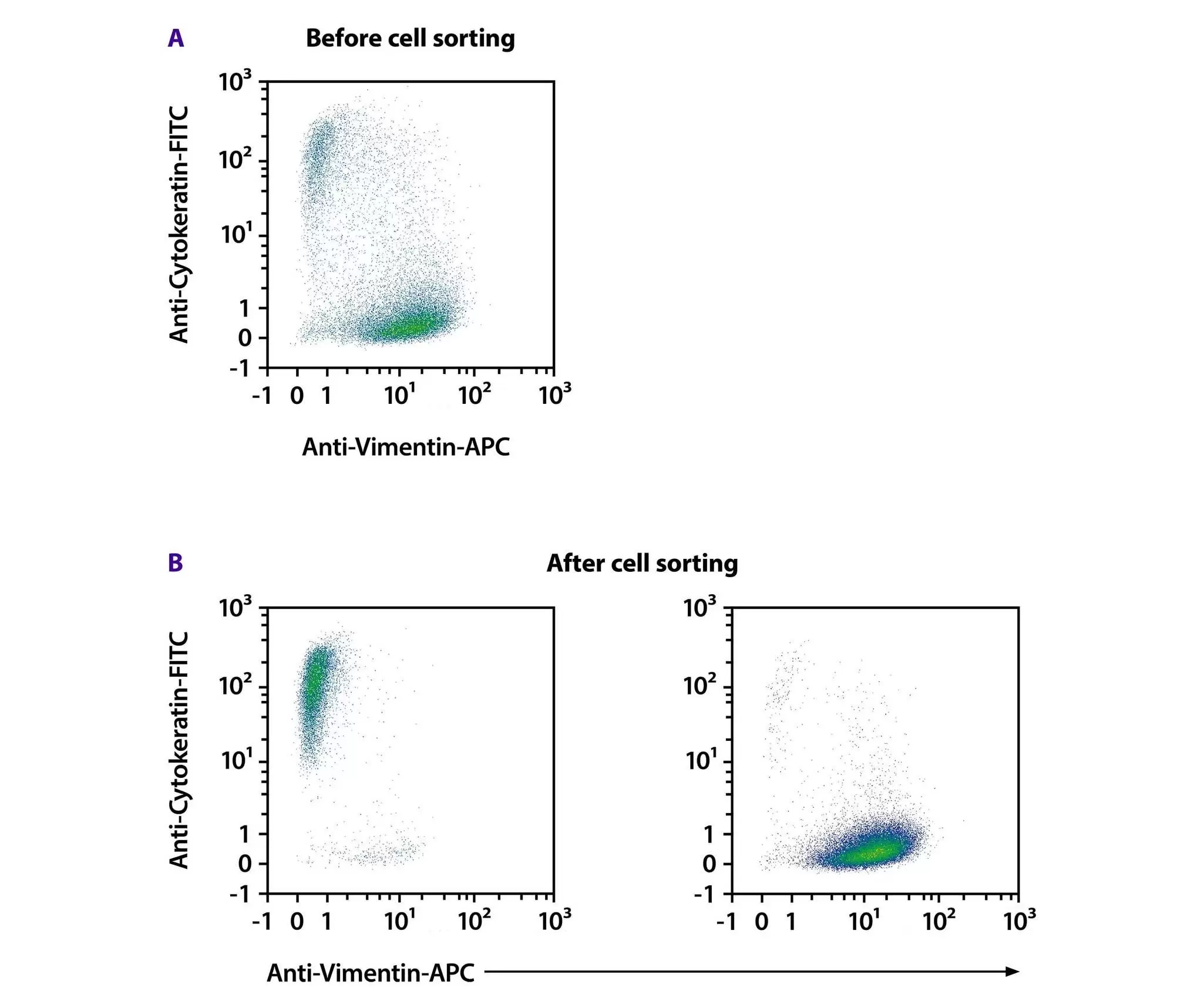
After enzymatic dissociation of FFPE tissue sections, cell-surface epitopes such as cytokeratins and vimentins are recovered. These epitopes can then be used for flow cytometric sorting or MACS Technology. This allows distinction between carcinoma cells, stromal cells, and tumor-infiltrating lymphocytes (TILs) based on cytoskeletal marker expression. Cytokeratin is expressed in epithelial-derived carcinoma cells, while vimentin is expressed in stromal cells and TILs. This marker-based approach enables precise cell enrichment and improves the accuracy of downstream molecular analyses.
After isolation of tumor cells using cytokeratin-based selection, the enriched tumor cell fraction can be directly used for DNA sequencing.
Sequencing of tumor cells previously enriched using cytokeratin-based selection reveals several advantages over a macrodissection approach. Higher tumor cell purity increases sequencing accuracy, allowing the identification of relevant somatic mutations even for samples with a low tumor cell count.
This approach enhances sensitivity without requiring greater sequencing depth, thereby optimizing resource use by focusing analysis on the relevant target cells.