Cell-based assays for immunogenicity prediction
New biotherapeutic drugs that elicit complex immune responses are revolutionizing the field of immuno-oncology (IO). Unwanted immune responses can result in severe adverse effects, therefore their early detection is vital.
Cellular assays for immunogenicity prediction offer several benefits:
- Immune response can be monitored directly from blood, PBMCs, or isolated cell subsets;
- Human primary cells represent a more reliable physiology;
- No animal testing required; afford the possibility of testing different HLA types and selected test populations;
- Minimize the risk of overprediction and so on.
Efficient and highly reproducible DC:T assay for immunogenicity prediction
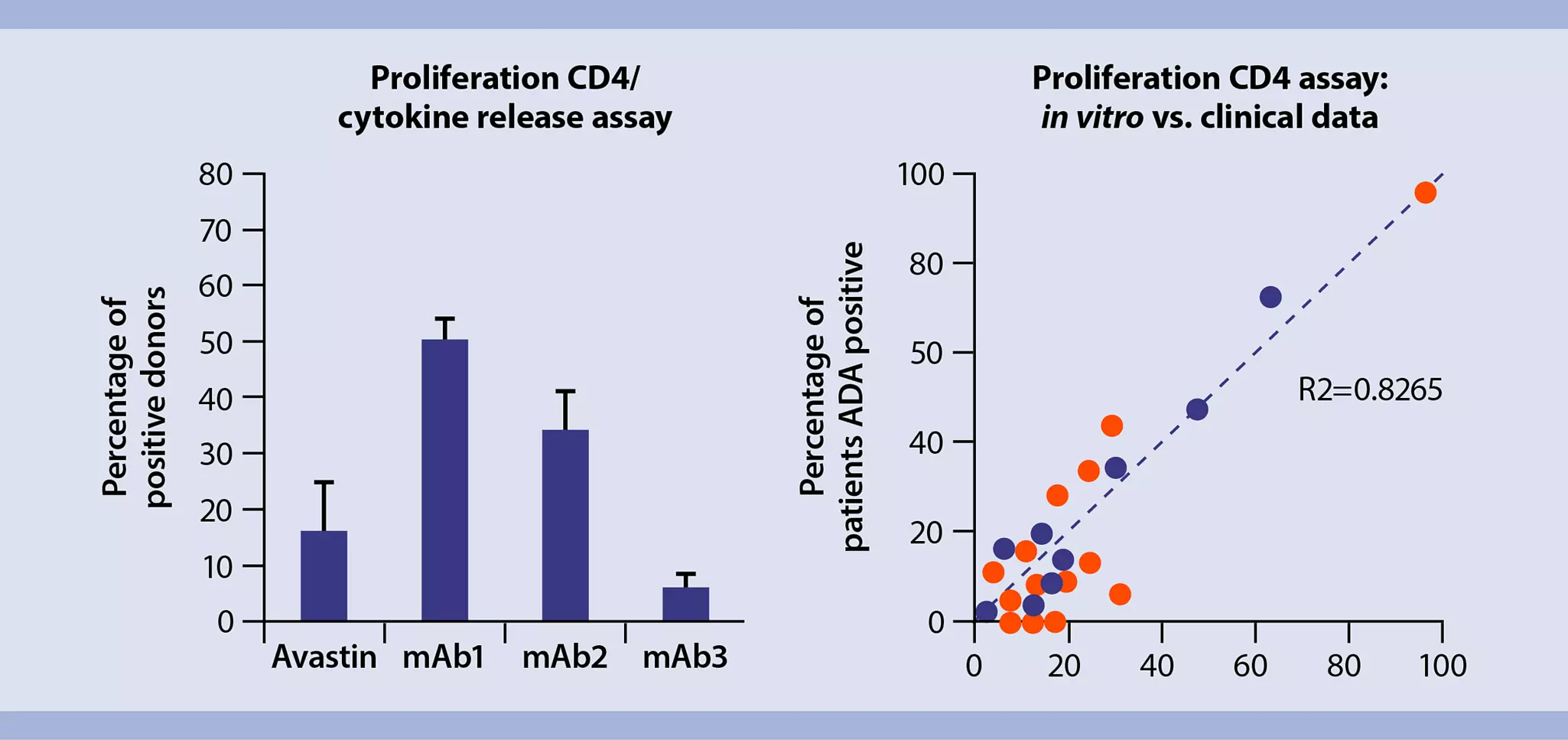
In this study, a DC:T assay was performed to predict the immunogenicity potential of different therapeutic antibody candidates. T cell proliferation data from the DC:T assay was compared with percentage of patient developing anti-drug-antibody response under clinical trial. Linear correlation between these data-sets indicated sensitivity of the in vitro assay for immunogenicity prediction.
Webinar
Immunogenicity testing – drug development
Watch the webinar to learn about immunogenicity testing at the early phase of drug development. Find out how it can play a crucial role in avoiding possible clinical consequences of unwanted immune responses.
You have previously chosen International as your location.
What do you want to do?