Stimulate T cells reactive to the spike protein of the SARS-CoV-2 Wuhan wild-type using PepTivator Peptide Pools. PepTivators are pools of lyophilized peptides, consisting mainly of 15-mer sequences with 11 amino acids overlap. PepTivator SARS-CoV-2 Prot_S is a pool of lyophilized peptides, covering the immunodominant sequence domains of the surface (or spike) glycoprotein (“S”) of SARS-Coronavirus 2 (GenBank MN908947.3, Protein QHD43416.1). The PepTivator SARS-CoV-2 Prot_S contains the sequence domains aa 304-338, 421-475, 492-519, 683-707, 741-770, 785-802, and 885 – 1273 (sequence end).


Related products for PepTivator® SARS-CoV-2 Prot_S
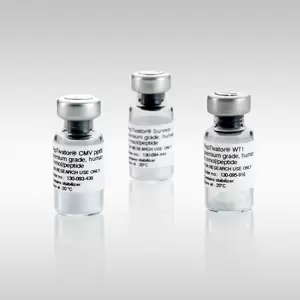

(excl. tax)
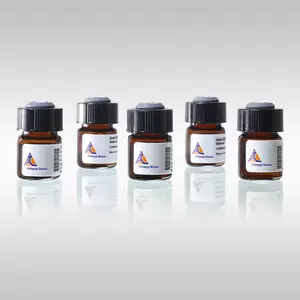
Stimulate T cells reactive to the spike protein of the SARS-CoV-2 Wuhan wild-type using PepTivator Peptide Pools. PepTivators are pools of lyophilized peptides, consisting mainly of 15-mer sequences with 11 amino acids overlap. PepTivator SARS-CoV-2 Prot_S is a pool of lyophilized peptides, covering the immunodominant sequence domains of the surface (or spike) glycoprotein (“S”) of SARS-Coronavirus 2 (GenBank MN908947.3, Protein QHD43416.1). The PepTivator SARS-CoV-2 Prot_S contains the sequence domains aa 304-338, 421-475, 492-519, 683-707, 741-770, 785-802, and 885 – 1273 (sequence end).
In contrast, PepTivator SARS-CoV-2 Prot_S Complete covers all functional domains (aa 5–1273), Prot_S1 the complete N-terminal S1 domain (aa 1–692) and Prot_S+ parts of the C-terminal S2 domain (aa 689–895). The complete S2 domain (and parts of the S1 domain: aa 304–338, 421–475, and 492–519) is covered, when PepTivator SARS-CoV-2 Prot_S and Prot_S+ are combined.
In vitro stimulation of antigen-specific T cells with PepTivator Peptide Pools causes the secretion of effector cytokines and the up-regulation of activation markers, which then allow the detection and isolation of antigen-specific T cells.
SARS-CoV-2 (severe acute respiratory syndrome coronavirus 2), also known as novel coronavirus 2019-nCoV, causes fever, severe respiratory illness and can lead to life threatening pneumonia. The first cases of this disease, termed COVID-19 for coronavirus disease 2019, have been detected in December 2019 in Wuhan, China.
SARS-CoV-2 Prot_S stands for the surface glycoprotein of SARS-CoV-2, the “spike protein”. This protein is responsible for the recognition and binding of the coronavirus to the host cell. Once SARS-CoV-2 has bound to the ACE2 receptor of the host cell, fusion of viral envelope and host cell membrane initiate, which enables the viral genome to enter the host cell. Thus, the spike proteins are crucial for the infection of cells with coronaviruses and have been suggested as possible target for vaccine development.
The PepTivator SARS-CoV-2 Prot_S covers selected immunodominant sequence domains of the spike protein (aa 304–338, 421–475, 492–519, 683–707, 741–770, 785–802, and 885–1273).
In contrast, PepTivator SARS-CoV-2 Prot_S Complete covers all functional domains (aa 5–1273), Prot_S1 the complete N-terminal S1 domain (aa 1–692) and Prot_S+ parts of the C-terminal S2 domain (aa 689–895). The complete S2 domain (and parts of the S1 domain: aa 304–338, 421–475, and 492–519) is covered, when PepTivator SARS-CoV-2 Prot_S and Prot_S+ are combined.
PepTivator SARS-CoV-2 Prot_S – research grade has been specifically developed for in vitro stimulation of SARS-CoV-2– specific T cells. Peptides of 15 amino acids in length and 11 amino acids overlap represent an optimized solution for stimulating both CD4+ and CD8+ T cells in various applications, including:
- Detection and analysis of SARS-CoV-2–specific CD4+ and CD8+ effector/memory T cells in PBMCs by MACS® Cytokine Secretion Assays, intracellular cytokine staining, or other technologies.
- Isolation of viable SARS-CoV-2–specific CD4+ T cells with the CD154 MicroBead Kit, or of viable CD4+ and CD8+ T cells using MACS Cytokine Secretion Assay – Cell Enrichment and Detection Kits. Subsequently, cells can be expanded for generation of T cell lines.
- Generation of SARS-CoV-2–specific CD4+ and CD8+ effector/ memory T cells from naive T cell populations.
- Pulsing of antigen-presenting cells, e.g. for research on dendritic cell vaccination.
- The PepTivator SARS-CoV-2 Prot_S+ can be combined with PepTivator SARS-CoV-2 Prot_S (# 130-126-700; # 130-126-701) for covering the complete C-terminal S2-domain of the spike protein (and parts of the S1 domain: aa 304–338, 421–475, and 492–519).
More information regarding the work with antigen-specific T cells can be found in the T cell application section.
Schematic alignment of the spike glycoprotein and different SARS‑CoV‑2 PepTivator Peptide Pools based on this protein. PepTivator SARS‑CoV‑2 Prot_S covers the predicted immunodominant domains of the SARS‑CoV‑2 spike glycoprotein (protein S), PepTivator SARS‑CoV‑2 Prot_S1 covers the N-terminal S1 domain, PepTivator SARS‑CoV‑2 Prot_S+ covers a part of the C-terminal S2 domain, and PepTivator SARS-CoV-2 Prot_S Complete covers the whole protein sequence of the spike protein without the first 4 amino acids of the signal peptide.
Exemplary analysis of SARS-CoV-2–specific CD4+ and CD8+ T cells. A) PBMCs were stimulated with a mix of PepTivator SARS-CoV-2 Prot_N, Prot_M, and Prot_S or unstimulated as negative control. The data shows CD154 and TNF-α for CD4+ T cells and TNF-α and IFN-γ for CD8+ T cells. B/C). Either PepTivators covering the complete sequence of the nucleoprotein (N; PepTivator SARS-CoV-2 Prot_N), the membrane protein (M; PepTivator SARS-CoV-2 Prot_M), the spike protein (S; PepTivator SARS-CoV-2 Prot_S, Prot_S1, and Prot_S+), or the mix of all were used to stimulate SARS-CoV-2–reactive T cells. Frequencies of CD154+ within CD4+ T cells and TNF-α+ within CD8+ T cells are shown. In the quantitative analysis (B) each dot corresponds to one donor and in the heat maps (C) SARS-CoV-2–reactive T cell frequencies measured for each donor are color coded.
Recovered COVID-19 patients show elevated levels of IFN-γ–producing CD3+ T cells upon stimulation with SARS‑CoV‑2 PepTivator Peptide Pools. Samples of a healthy donor and a recovered COVID-19 patient were stimulated for 4 h with the indicated SARS-CoV-2 PepTivator Peptide Pools (Prot_N, Prot_M, Prot_S, or a mix of all three) in the presence of BFA. As negative control, samples were left untreated without (w/o) antigen. Subsequently, T cell lineage surface markers and intracellular cytokines were stained. The presented plots are exemplary data showing IFN-γ+CD3+ T cells.
Quantitative analysis of spike protein–specific CD4+ T cells in convalescent COVID-19 donors. Quantitative analysis of SARS‑CoV‑2–specific CD4+ T cells of convalescent COVID-19 donors highlights that similar numbers of activated T cells can be observed whether the mix of three PepTivator Peptide Pools (PepTivator SARS-CoV-2 Prot_S, PepTivator SARS-CoV-2 Prot_S1, and PepTivator SARS-CoV-2 Prot_S+) or the single PepTivator SARS-CoV-2 Prot_S Complete is used.
Stimulation with SARS-CoV-2 PepTivator Peptide Pools reveals the presence of virus-specific CD4+ T cells after vaccination. A whole blood sample of a vaccinated donor was stimulated with the mix of three PepTivator Peptide Pools (PepTivator SARS-CoV-2 Prot_S, PepTivator SARS-CoV-2 Prot_S1, and PepTivator SARS-CoV-2 Prot_S+) or with PepTivator SARS-CoV-2 Prot_S Complete alone. Both, the applied mix of peptide pools as well as SARS-CoV-2 Prot_S Complete cover the complete sequence of the spike protein. As negative control, the sample was left unstimulated. T cell lineage surface markers and intracellular cytokines were stained, and cells were analyzed using a MACSQuant Analyzer 16. The presented plots are exemplary data showing CD154 and TNF-α for pregated CD4+ T cells.
- Sir Karakus, G. et al. (2021) Preclinical efficacy and safety analysis of gamma-irradiated inactivated SARS-CoV-2 vaccine candidates. Sci Rep 11 (1): 5804
- Demaret, J. et al. (2020) Severe SARS‐CoV‐2 patients develop a higher specific T‐cell response. Clin Transl Immunology 9 (12): e1217
- Thieme, C. J. et al. (2020) Robust T Cell Response Toward Spike, Membrane, and Nucleocapsid SARS-CoV-2 Proteins Is Not Associated with Recovery in Critical COVID-19 Patients. Cell Rep Med. 1 (6): 100092
- Cooper, R. S. et al. (2021) Rapid GMP-Compliant Expansion of SARS-CoV-2-Specific T Cells From Convalescent Donors for Use as an Allogeneic Cell Therapy for COVID-19. Front Immunol 11: 598402
- Mazzoni, A. et al. (2021) First dose mRNA vaccination is sufficient to reactivate immunological memory to SARS-CoV-2 in ex COVID-19 subjects. J. Clin. Invest. 131 (12): doi: 10.1101/2021.03.05.21252590
- Ferreras, C. et al. (2020) SARS-CoV-2-Specific Memory T Lymphocytes From COVID-19 Convalescent Donors: Identification, Biobanking, and Large-Scale Production for Adoptive Cell Therapy. Front Cell Dev Biol. 9: 9:620730
- Sattler, A. et al. (2020) SARS-CoV-2-specific T cell responses and correlations with COVID-19 patient predisposition. J. Clin. Invest. 130 (12): 6477-6489
- Jung, J. H. et al. (2021) SARS-CoV-2-specific T Cell Memory is Sustained in COVID-19 Convalescents for 8 Months with Successful Development of Stem Cell-like Memory T Cells. Nat Commun 12 (1): 4043
- Aiello, A. et al. (2021) Spike is the most recognized antigen in the whole-blood platform in both acute and convalescent COVID-19 patients. Int J Infect Dis 106: 338-347
- Silva-Cayetano, A. et al. (2021) A booster dose enhances immunogenicity of the COVID-19 vaccine candidate ChAdOx1 nCoV-19 in aged mice. Med (N Y) 2 (3): 243-262
- Habel, J. R. et al. (2020) Suboptimal SARS-CoV-2-specific CD8+ T cell response associated with the prominent HLA-A*02:01 phenotype. Proc. Natl. Acad. Sci. U.S.A. 117 (3): 24384-24391
- Cotugno, N. et al. (2021) Virological and immunological features of SARS-CoV-2-infected children who develop neutralizing antibodies. Cell Rep 34 (11): 108852
- Harrington, P. et al. (2021) Single dose of BNT162b2 mRNA vaccine against severe acute respiratory syndrome coronavirus-2 (SARS-CoV-2) induces neutralising antibody and polyfunctional T-cell responses in patients with chronic myeloid leukaemia. Br J Haematol 194 (6): 999-1006
- Riou, C. et al. (2020) Rapid, simplified whole blood-based multiparameter assay to quantify and phenotype SARS-CoV-2 specific T cells. Eur. Respir. J. 59 (1): 2100
- Kramer, K. J. et al. (2022) Single-Cell Profiling of the Antigen-Specific Response to BNT162b2 SARS-CoV-2 RNA Vaccine. Nat Commun 13 (1): 3466
- Strafella, C. et al. (2021) Case Report: Sars-CoV-2 Infection in a Vaccinated Individual: Evaluation of the Immunological Profile and Virus Transmission Risk. Front Immunol 12 (doi: 10.3389/fimmu.2021.708820)
- Leung, W. et al. (2020) Rapid production of clinical-grade SARS-CoV-2 specific T cells. Adv Cell Gene Ther : doi: 10.1002/acg2.101
- Singh, D. K. et al. (2021) Responses to acute infection with SARS-CoV-2 in the lungs of rhesus macaques, baboons and marmosets. Nat Microbiol 6 (1): 73-86
- Kusnadi, A. et al. (2021) Severely ill COVID-19 patients display augmented functional properties in SARS-CoV-2-reactive CD8+ T cells. Sci Immunol 6: eabe4782
- Shomuradova, A. S. et al. (2020) SARS-CoV-2 epitopes are recognized by a public and diverse repertoire of human T cell receptors. Immunity 53 (6): 1245-1257
- Meckiff, J. et al. (2020) Imbalance of Regulatory and Cytotoxic SARS-CoV-2-Reactive CD4+ T Cells in COVID-19. Cell 183 (5): 1340-1353
- Chan, Y.-H. et al. (2021) Asymptomatic COVID-19: disease tolerance with efficient anti-viral immunity against SARS-CoV-2. EMBO Mol. Med. 13 (6)
- Fendler, A. et al. (2021) Adaptive immunity to SARS-CoV-2 in cancer patients: The CAPTURE study. Nat Cancer 2: 1321-1337
- Bonifacius, A. et al. (2021) COVID-19 immune signatures reveal stable antiviral T cell function despite declining humoral responses. Immunity 54 (2): 340-354
- Au, L. et al. (2021) Cytokine release syndrome in a patient with colorectal cancer after vaccination with BNT162b2. Nat Med 27 (8): 1362-1366
- Riou, C. et al. (2021) Profile of SARS-CoV-2-specific CD4 T cell response: Relationship with disease severity and impact of HIV-1 and active Mycobacterium tuberculosis co-infection. J. Clin. Invest. 131 (12): doi: 10.1172/JCI149125
- Shroff, R. T. et al. (2021) Immune Responses to COVID-19 mRNA Vaccines in Patients with Solid Tumors on Active, Immunosuppressive Cancer Therapy. Nat Med 27 (11): 2002-2011
- Anft, M. et al. (2021) Detection of pre-existing SARS-CoV-2-reactive T cells in unexposed renal transplant patients. J Nephrol. 34 (4): 1025-1037
- Fischer, D. S. et al. (2021) Single-cell RNA sequencing reveals ex vivo signatures of SARS-CoV-2-reactive T cells through ‘reverse phenotyping’. Nat Commun 26 (12): 4515
- Stephenson, E. et al. (2021) Single-cell multi-omics analysis of the immune response in COVID-19. Nat Med 27 (5): 904-916
- Grau-Expósito, J. et al. (2021) Peripheral and lung resident T cell responses against SARS-CoV-2. Nat Commun 12 (1): 3010
- Sekine, T. et al. (2020) Robust T Cell Immunity in Convalescent Individuals with Asymptomatic or Mild COVID-19. Cell 183 (1): 158-168
You have previously chosen International as your location.
What do you want to do?