PepTivator RAS Q61R is a pool of lyophilized peptides, consisting of 15-mer, 10-mer and 9-mer sequences and containing the Q61R mutation. Q61R is a common driver mutation that occurs with high frequency across various human cancer types.
PepTivator RAS Q61R covers the mutated protein domain RAS47-75 [DGETCLLDILDTAGREEYSAMRDQYMRTG] and contains every 15-mer, 10-mer and 9-mer peptide bearing the mutated amino acid. This diversity allows loading of HLA without prior knowledge of alleles. The proteins H-Ras, N-Ras, and K-Ras share 90% identity in their G domain (residues 1–166


Related products for PepTivator® RAS Q61R
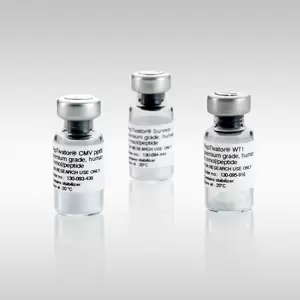

(excl. tax)

PepTivator RAS Q61R is a pool of lyophilized peptides, consisting of 15-mer, 10-mer and 9-mer sequences and containing the Q61R mutation. Q61R is a common driver mutation that occurs with high frequency across various human cancer types.
PepTivator RAS Q61R covers the mutated protein domain RAS47-75 [DGETCLLDILDTAGREEYSAMRDQYMRTG] and contains every 15-mer, 10-mer and 9-mer peptide bearing the mutated amino acid. This diversity allows loading of HLA without prior knowledge of alleles. The proteins H-Ras, N-Ras, and K-Ras share 90% identity in their G domain (residues 1–166), and this peptide pool covers the respective mutation for all three isoforms.
The PepTivator peptide pools have been developed for the efficient in vitro stimulation of antigen–specific T cells. Peptides of 15-, 10- and 9 amino acids in length, represent an optimal solution for stimulating both CD4+ and CD8+ T cells in various applications, as well as providing the best coverage of potential HLA alleles.
Quantitative, phenotypical, or functional analysis of RAS Q61R–specific T cell immunity can provide important information on the natural course of immune responses.
RAS or KRAS (UniProtKB Acc. no P01116) from (Kirsten) Rat Sarcoma virus, belongs to a family of proteins that are ubiquitously expressed in all animal cell types and is composed of 189 aa. It is involved in cell growth, differentiation and survival and the mutations in RAS genes, here Q61R, can lead to different cancer formation acting as oncogenes. This PepTivator covers the above mentioned mutation in all 3 Isoforms of Ras: K-Ras, N-Ras and H-Ras. The RAS mutations are found within approximately 20-30% of all human cancers. Cancers with very high RAS mutational burden include pancreatic cancer (90%), colorectal cancer (55%) and non-small cell lung cancer (30%).
Stimulation of T cells with this PepTivator causes the secretion of effector cytokines and upregulation of activation markers, which then allows the detection or isolation of RAS Q61R–specific T cells.
Quantitative, phenotypical, or functional analysis of T cell immunity can provide important information on the course of immune responses in patients suffering from cancer or healthy individuals.
You have previously chosen International as your location.
What do you want to do?