In human blood and bone marrow, CD304 (BDCA-4, Neuropilin-1) is exclusively expressed on plasmacytoid dendritic cells (PDCs), which are characterized as CD11c, CD123bright, and CD303 (BDCA-2)+.1,2 PDCs represent about 0.2% of white blood cells.
They are the main producers of type 1 interferons, which strongly stimulate the differentiation of other immune cells. PDCs have a poor pino- and phagocytosis capacity and take up exogenous antigens predominantly by receptor-mediated endocytosis.3 Apart from their immune stimulatory functions, they are also inte


Related products for CliniMACS® CD304 (BDCA-4) Product Line
In human blood and bone marrow, CD304 (BDCA-4, Neuropilin-1) is exclusively expressed on plasmacytoid dendritic cells (PDCs), which are characterized as CD11c, CD123bright, and CD303 (BDCA-2)+.1,2 PDCs represent about 0.2% of white blood cells.
They are the main producers of type 1 interferons, which strongly stimulate the differentiation of other immune cells. PDCs have a poor pino- and phagocytosis capacity and take up exogenous antigens predominantly by receptor-mediated endocytosis.3 Apart from their immune stimulatory functions, they are also intensively discussed to be involved in tolerance induction.4
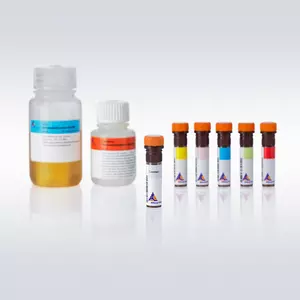
The CliniMACS® CD304 (BDCA-4) Product Line consists of murine CD304 (BDCA-4) monoclonal antibodies conjugated to superparamagnetic iron dextran particles.
One vial contains 7.5 mL sterile, non-pyrogenic solution.
The performance of the CliniMACS CD304 (BDCA-4) Product Line depends on the individual separation strategy. For information on respective capacities, refer to the CliniMACS User Manual or contact your local representative.
Please inquire about required CliniMACS System components and accessories.
The CliniMACS CD304 (BDCA-4) Product Line was developed for enrichment of CD304 (BDCA-4)+ plasmacytoid dendritic cells from human heterogeneous hematologic cell populations in combination with the CliniMACS System.
The therapeutic potential of PDCs has been studied in several mouse models, investigating, for example, their regulatory role in tumor regression5,6 or induction of allograft tolerance7. Pre-clinical studies in humans, for example, analyze impaired PDC function within tumor environment8 or their immunosuppressive role in GvHD9.
The CliniMACS® System components, including Reagents, Tubing Sets, Instruments, and PBS/EDTA Buffer, are designed, manufactured and tested under a quality system certified to ISO 13485.
In the EU, the CliniMACS System components are available as CE-marked medical devices for their respective intended use, unless otherwise stated. The CliniMACS Reagents and Biotin Conjugates are intended for in vitro use only and are not designated for therapeutic use or direct infusion into patients. The CliniMACS Reagents in combination with the CliniMACS System are intended to separate human cells. Miltenyi Biotec as the manufacturer of the CliniMACS System does not give any recommendations regarding the use of separated cells for therapeutic purposes and does not make any claims regarding a clinical benefit. For the manufacturing and use of target cells in humans the national legislation and regulations - e.g., for the EU the Directive 2004/23/EC ("human tissues and cells"), or the Directive 2002/98/EC ("human blood and blood components") - must be followed. Thus, any clinical application of the target cells is exclusively within the responsibility of the user of a CliniMACS System.
In the US, the CliniMACS CD34 Reagent System, including the CliniMACS Plus Instrument, CliniMACS CD34 Reagent, CliniMACS Tubing Sets TS and LS, and the CliniMACS PBS/EDTA Buffer, is FDA approved as a Humanitarian Use Device (HUD), authorized by U.S. Federal law for use in the treatment of patients with acute myeloid leukemia (AML) in first complete remission. The effectiveness of the device for this indication has not been demonstrated. Other products of the CliniMACS Product Line are available for use only under an approved Investigational New Drug (IND) application, Investigational Device Exemption (IDE) or FDA approval.
CR/GMP products are for ex vivo cell processing only, and are not intended for human in vivo applications. CR/GMP products are designed, manufactured and tested under an ISO 13485 quality management system and are in compliance with relevant GMP guidelines. They are designed following the recommendations of USP <1043> on ancillary materials. The manufacturing and testing of CR/GMP products of biological origin are in compliance with EP chapter 5.2.12 for “Raw materials of biological origin for the production of cell-based and gene therapy medicinal products”.
Flow cytometric analysis of CD304 (BDCA-4)–enriched cells from leukapheresis harvest using the CliniMACS CD304 (BDCA-4) System.
To access a Certificate of Analysis (CoA) follow the link below and enter the specific lot of your product.
Should you wish to request additional documentation, such as a Safety Data Sheet (SDS) in other languages than English or Swedish, an SDS-replacement document, or a Certificate of Origin (CoO), please direct your inquiry to your local technical support team.
- de Vries et al. (2010) 11th Int. Sym. Dendritic Cells : S05-003
- Liu, C. et al. (2008) Plasmacytoid dendritic cells induce NK cell-dependent, tumor antigen-specific T cell cross-priming and tumor regression in mice. J. Clin. Invest. 118: 1165-1175
- Orchando, J. C. et al. (2006) Alloantigen-presenting plasmacytoid dendritic cells mediate tolerance to vascularized grafts. Nat Immunol 7: 652-62
- Benitez-Ribas, D. et al. (2006) Plasmacytoid dendritic cells of melanoma patients present exogenous proteins to CD4+ T cells after Fc gamma RII-mediated uptake. J. Exp. Med. 203: 1629-1635
- Moseman, E. A. et al. (2004) Human plasmacytoid dendritic cells activated by CpG oligodeoxynucleotides induce the generation of CD4+CD25+ regulatory T cells. J Immunol 173: 4433-4442
- Heckelmiller, K. et al. (2002) Combined dendritic cell- and CpG oligonucleotide-based immune therapy cures large murine tumors that resist chemotherapy. Eur. J. Immunol. 32: 3235-3245
- Dzionek, A. et al. (2000) BDCA-2, BDCA-3, BDCA-4: Three markers for distinct subsets of dendritic cells in human peripheral blood. J Immunol 165: 6037-6046
- Hartmann, E. et al. (2003) Identification and functional analysis of tumor-infiltrating plasmacytoid dendritic cells in head and neck cancer. Cancer Res. 63: 6478-6487
- Dzionek, A. et al. (2002) Plasmacytoid dendritic cells: from specific surface markers to specific cellular functions. Hum Immunol 63: 1133-1148
- Hadeiba, H. et al. (2008) CCR9 expression defines tolerogenic plasmacytoid dendritic cells able to suppress acute graft-versus-host disease. Nat Immunol 9: 1253-1260
You have previously chosen International as your location.
What do you want to do?