Pluripotent stem cell (PSC) differentiation is a core aspect of PSC research. In the last decade, protocols for the generation of PSC-derived midbrain dopaminergic (mDA) neurons have been established and optimized. Nevertheless, differences in the manufactured cell lots cannot be avoided and can be influenced by slight variations (e.g. user-dependent handling variations, cell density, variations in starting cell composition, substance concentration, and activity).
Therefore, a quality control step that allows a reliable in vitro evaluation of the efficiency of the differentiation is pivotal. Such a quality control assay would need to reliably and efficiently assess the identity of the cells, the cell number of the different sub-populations, and to detect non-differentiated cells that might contaminate the culture.
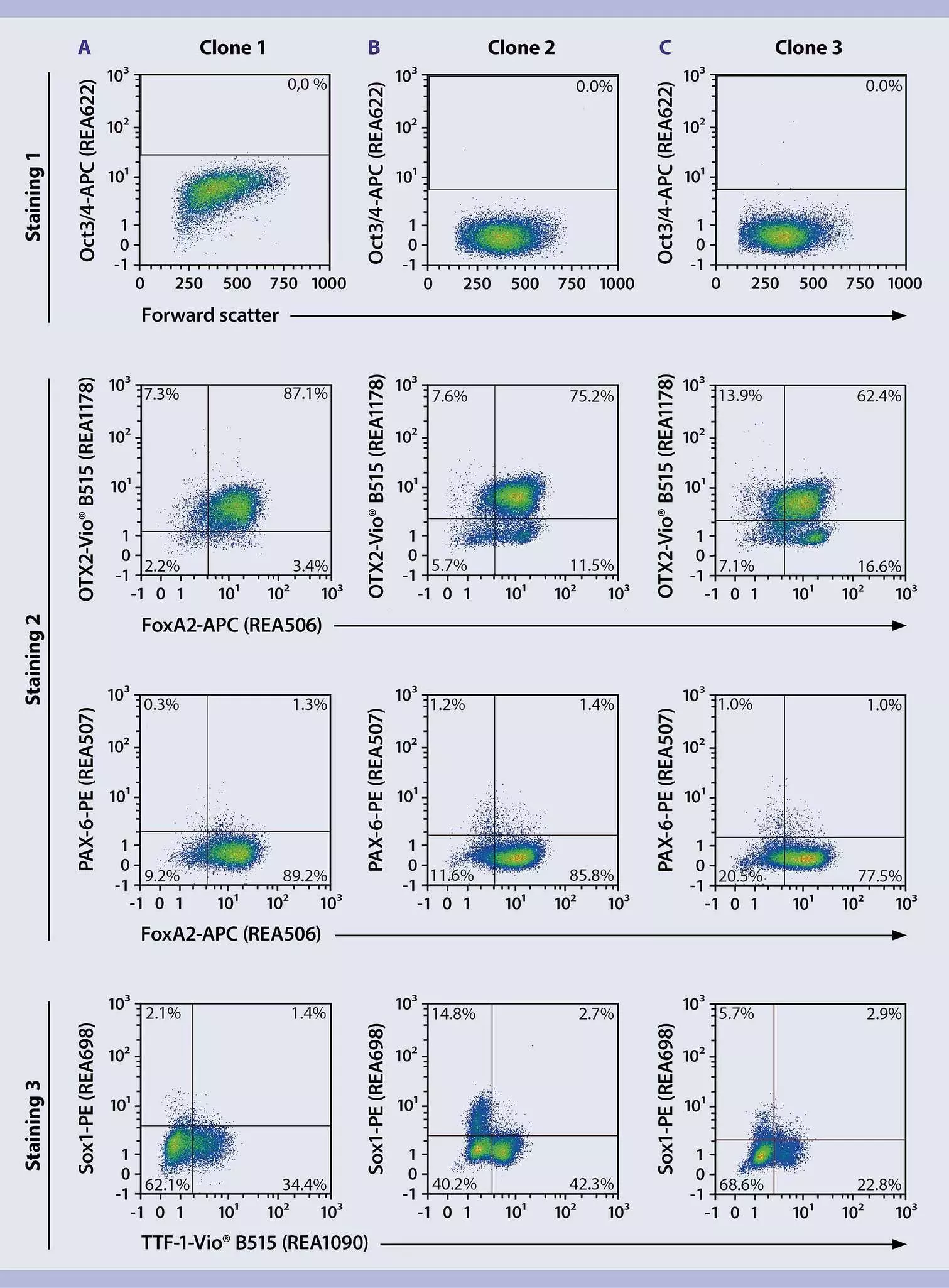
The PSC-mDA Neuron Analysis Kit, anti-human, REAfinity has been developed as flow cytometry-based quality control assay for in vitro phenotyping of the identity and purity of the culture during differentiation of human PSCs in mDA neurons by combination of antibodies specific for positive and negative mDA markers. The kit allows the detection of early expressed and specific regional markers and enables to assess the identity of the cells, the cell number of the different sub-populations, and to detect non-differentiated cells that might contaminate the culture.
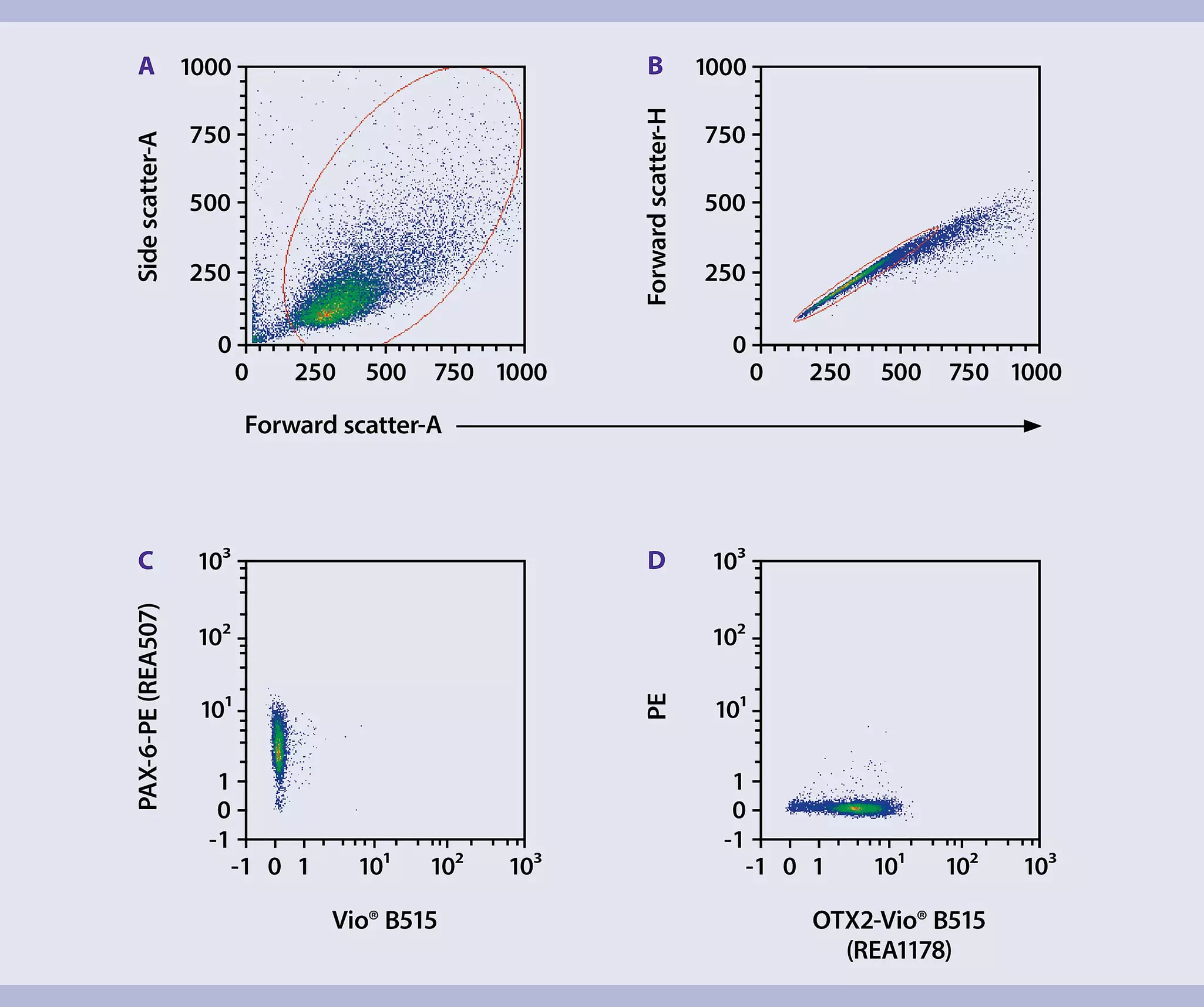
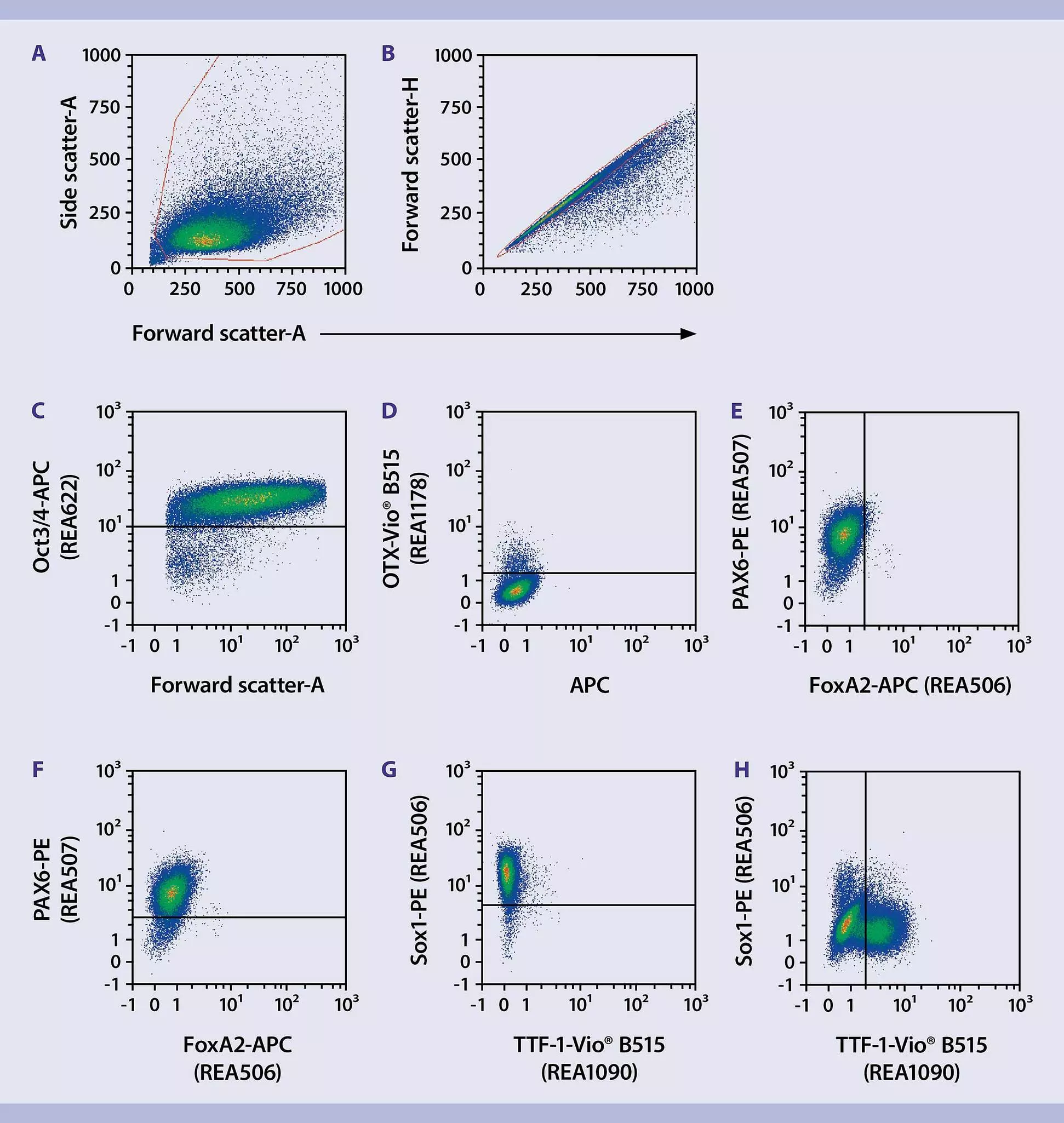
FoxA2- and OTX2-specific antibodies are included as positive markers for ventral midbrain dopaminergic progenitors. In addition, the panel includes markers that indicate contamination by other cell populations. The PAX-6-specific antibody specifically detects cells of a dorsal phenotype, whereas a caudal phenotype is indicated by loss of OTX2 expression. Moreover, SOX-1 is a neural ectoderm marker and identifies contamination of different neural cell populations. TTF-1 (also known as Nkx2.1) is a ventral forebrain marker but can be partially expressed by the target cells depending on the cell clone. Finally, Oct3/4 serves as marker to detect residual pluripotent cells (figure 1).
Cellular controls specific to other brain regions, such as ventral and dorsal forebrain cells, ventral hindbrain cells, as well as remnant PSC, are also evaluated for reliable gate definition and detection of contaminating cell populations.