TLR7 and TLR8 are members of the Toll-like-receptor (TLR) family, recognizing (virally derived) double- or single-stranded RNA, leading to activation of immune cells.
ORN R-1263 can be used as a sequence and backbone control for ORN R-0002 and ORN R-0006.3


Related products for ORN R-1263
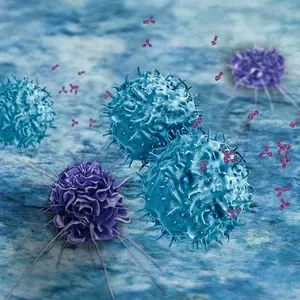
TLR7 and TLR8 are members of the Toll-like-receptor (TLR) family, recognizing (virally derived) double- or single-stranded RNA, leading to activation of immune cells.
ORN R-1263 can be used as a sequence and backbone control for ORN R-0002 and ORN R-0006.3
TLR7 and TLR8 are members of the Toll-like-receptor (TLR) family recognizing pathogen-associated molecular patterns.1,7 The natural ligands of TLR7 and TLR8, double- or single-stranded RNA, can be mimicked by short synthetic oligoribonucleotides (ORNs).2-5 RNA motifs activating either TLR7 or TLR8 only or both, TLR7 and TLR8, have been described.
In human cells, TLR7 is predominantly expressed in pDCs and B cells, whereas TLR8 is mainly expressed on cells of the myeloid lineage, such as monocytes, macrophages, and myeloid dendritic cells (mDCs). In mice, TLR7 is also expressed on mDCs and monocytes. Murine TLR8 is functionally impaired.1,7
Due to the sensitive nature of RNA, most nucleic acid TLR7/8 agonists need to be formulated with cationic lipids in order to activate an appropiate immune response. The recommended cationic lipid is DOTAP-Cl (1,2-Dioleoyloxy-3-trimethylammonium-propane chloride).
TLR7 and TLR8 agonists can be used for the activation of immune cells, such as human PBMCs, murine splenocytes, or isolated immune cells, e.g., B cells, pDCs, mDCs, and monocytes.
Control ORNs with similar sequences and identical backbone but no induction of sequence-specific signaling allow for control of unspecific sequence or backbone effects.
- Blasius, A. L. and Beutler, B. (2010) Intracellular toll-like receptors. Immunity 32 (3): 305-315
- Kawai, T. and Akira, S. (2010) The role of pattern-recognition receptors in innate immunity: update on Toll-like receptors. Nat Immunol 11 (5): 373-384
- Jurk, M. et al. (2011) Immunostimulatory potential of silencing RNAs can be mediated by a non-uridine-rich toll-like receptor 7 motif. Nucleic Acid Ther 21 (3): 201-214
- Forsbach, A. et al. (2011) Dual or triple activation of TLR7, TLR8, and/or TLR9 by single-stranded oligoribonucleotides. Nucleic Acid Ther 21 (6): 423-436
- Diebold, S. S. et al. (2004) Innate antiviral resonses by means of TLR7-mediated recognition of single-stranded RNA. Science 303: 1529-1531
- Forsbach, A. et al. (2008) Identification of RNA sequence motifs stimulating sequence- specific TLR8-dependent immune responses. J Immunol 180: 3729-3738
- Heil, F. et al. (2004) Species-specific recognition of single-stranded RNA via toll-like receptor 7 and 8. Science 21 (6): 1526-1529
You have previously chosen International as your location.
What do you want to do?