New look, same trusted quality! Check out the newest addition to our UltraPure portfolio, CD3 MicroBeads Ultrapure, human
CD3 MicroBeads were developed for positive selection or depletion of CD3+ T cells from peripheral blood, bronchial lavage, cell culture, or various tissues such as lymphoid, nasal, and tumor tissue.


Related products for CD3 MicroBeads, human



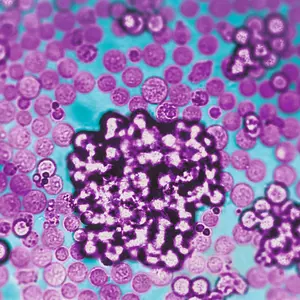
New look, same trusted quality! Check out the newest addition to our UltraPure portfolio, CD3 MicroBeads Ultrapure, human
CD3 MicroBeads were developed for positive selection or depletion of CD3+ T cells from peripheral blood, bronchial lavage, cell culture, or various tissues such as lymphoid, nasal, and tumor tissue.
CD3 is expressed on all T cells and CD56+ NKT cells, and is associated with the T cell receptor. 70–80% of human peripheral blood lymphocytes and 65–85% of thymocytes are CD3+. The epitope recognized by CD3 MicroBeads is located on the CD3ε chain.
T cells isolated by MACS® Technology have been used for various studies, e.g., on T cell cytotoxicity, T cell activation1, HIV infectivity2, signal transduction, and surface marker expression.
For positive selection: MS, LS, XS, or autoMACS® Columns. For depletion: LD, D, or autoMACS Columns.
Separation of CD3+ cells from PBMCs using CD3 MicroBeads and a MiniMACS™ Separator with an MS Column.
- Pitti, R. M. et al. (1998) Genomic amplification of a decoy receptor for Fas ligand in lung and colon cancer. Nature 396: 699-703
- Nicoll, G. et al. (2003) Ganglioside GD3 expression on target cells can modulate NK cell cytotoxicity via siglec-7-dependent and -independent mechanisms. Eur. J. Immunol. 33: 1642-1648
- Heath, S. L. et al. (1995) Follicular dendritic cells and human immunodeficiency virus infectivity. Nature 377: 740-744
- Lorenzen, D. R. et al. (1999) Immunoglobulin A1 protease, an exoenzyme of pathogenic Neisseriae, is a potent inducer of proinflammatory cytokines. J. Exp. Med. 190: 1049-1058
- Klein, U. et al. (1994) Variable region gene analysis of B cell subsets derived from a 4-year-old child: somatically mutated memory B cells accumulate in the peripheral blood already at young age. J. Exp. Med. 180: 1383-1393
- Heidenreich, F. and Jovin, T. (1996) Synthesis of anti-acetylcholine receptor antibodies by CD5- B cells from peripheral blood of myasthenia gravis patients. J. Neurol. 243: 57-62
You have previously chosen International as your location.
What do you want to do?