The CD133 MicroBead Kit allows basic isolation or depletion of CD133+ cells from various sources.
Note: Optimized isolation kits with improved performance are available for the following tissues:
- For hematopoietic or endothelial progenitor cells, choose the CD133 MicroBead Kit – Hematopoietic Tissue
- For cancer or tissue stem cells the CD133 MicroBead Kit – Tumor Tissue is recommended


Related products for CD133 MicroBead Kit, human


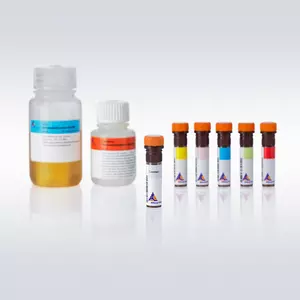

The CD133 MicroBead Kit allows basic isolation or depletion of CD133+ cells from various sources.
Note: Optimized isolation kits with improved performance are available for the following tissues:
- For hematopoietic or endothelial progenitor cells, choose the CD133 MicroBead Kit – Hematopoietic Tissue
- For cancer or tissue stem cells the CD133 MicroBead Kit – Tumor Tissue is recommended
CD133, formerly known as AC133, recognizes epitope 1 of the CD133 antigen.2,3 It is a marker that is frequently found on multipotent progenitor cells, including immature hematopoietic stem and progenitor cells. In the hematopoietic system, CD133 is expressed on a small portion of CD34– cells4 as well as on a subset of CD34bright stem and progenitor cells in human fetal liver, bone marrow, cord blood, and peripheral blood5. CD133 has also been found to be expressed on circulating endothelial progenitor cells,6,7 fetal neural stem cells,8,9 other tissue-specific stem cells, such as renal10, prostate11, and corneal12 stem cells, cancer stem cells from tumor tissues, as well as ES and iPS cell-derived cells.
There is a growing interest in CD133-expressing stem cells from normal blood or bone marrow in regenerative medicine, for example, in the field of cardiovascular13-17, liver, or peripheral artery diseases18-20.
The CD133 MicroBeads included in the kit recognize epitope CD133/1. For quality control staining of isolated CD133+ cells, the use of CD133/2 (293C3)-PE or -APC is recommended.
For positive selection: MS, LS, XS, or autoMACS® Columns. For depletion: LD, D, or autoMACS Columns.
Isolation of CD133+ cells from human PBMCs using the CD133 MicroBead Kit, two MS Columns, and a MiniMACS™ Separator.
- Schulte am Esch 2nd, J. et al. (2005) Portal application of autologous CD133+ bone marrow cells to the liver: a novel concept to support hepatic regeneration. Stem Cells 23 (4): 463-470
- Thill, M. et al. (2004) Identification of a population of CD133+ precursor cells in the stroma of human cornea. Invest. Ophthalmol. Vis. Sci. 45: 3519
- Bussolati, B. et al. (2005) Isolation of renal progenitor cells from adult human kidney. Am. J. Pathol. 166: 545-555
- Peichev, M. et al. (2000) Expression of VEGFR-2 and AC133 by circulating human CD34+ cells identifies a population of functional endothelial precursors. Blood 95: 952-958
- Klein, H. M. et al. (2007) Intramyocardial implantation of CD133+ stem cells improved cardiac function without bypass surgery. Heart Surg. Forum 10: E66-69
- Piechaczek, C. (2001) CD133. J. Biol. Regul. Homeost. Agents 15: 101-102
- Gehling, U. M. et al. (2000) In vitro differentiation of endothelial cells from AC133-positive progenitor cells. Blood 95: 3106-3112
- Cañizo, M. C. et al. (2007) Peripheral endothelial progenitor cells (CD133+) for therapeutic vasculogenesis in a patient with critical limb ischemia. One year follow-up. Cytotherapy 9 (1): 99-102
- Gallacher, L. et al. (2000) Isolation and characterization of human CD34–Lin– and CD34+Lin– hematopoietic stem cells using cell surface markers AC133 and CD7. Blood 95 (ARVO Annual Meeting Abstract): 2813-2820
- Stamm, C. et al. (2003) Autologous bone-marrow stem-cell transplantation for myocardial regeneration. Lancet 361 (9351): 45-46
- Bartunek et al. (2005) Circulation 30: 178-183
- Yin, A. H. et al. (1997) AC133, a novel marker for human hematopoietic stem and progenitor cells. Blood 90: 5002-5012
- Richardson, G. et al. (2004) CD133, a novel marker for human prostatic epithelial stem cells. J. Cell. Sci. 117: 3539-3545
- Klein (2007) Eur. Cardiovasc. Dis. 1: 123-125
- Bühring, H. J. et al. (1999) Expression of novel surface antigens on early hematopoietic cells. Ann. N. Y. Acad. Sci. 872: 25-39
- Galic, Z. et al. (2006) T lineage differentiation from human embryonic stem cells. Proc. Natl. Acad. Sci. U.S.A. 103: 11742-11747
- Uchida, N. et al. (2000) Direct isolation of human central nervous system stem cells. Proc. Natl. Acad. Sci. U.S.A. 97: 14720-14725
- Fürst, G. et al. (2007) Portal vein embolization and autologous CD133+ bone marrow stem cells for liver regeneration: initial experience. J Immunother 243 (1): 171-179
- Stamm, C. et al. (2007) Intramyocardial delivery of CD133+ bone marrow cells and coronary artery bypass grafting for chronic ischemic heart disease: safety and efficacy studies. J. Thorac. Cardiovasc. Surg. 133: 717-725
- Cummings, B. J. et al. (2005) Human neural stem cells differentiate and promote locometer recovery in spinal cord-injured mice. Proc. Natl. Acad. Sci. U.S.A. 102: 14069-14074
You have previously chosen International as your location.
What do you want to do?