HUNGEXPO Budapest Congress and Exhibition Centre
Miltenyi Biotec booth #91
June 8–11 | Budapest, Hungary


At the Annual Congress of the European Association for Cancer Research (EACR 2026) in Budapest, we are moving beyond the limits of standard workflows.
Whether you are interested in spatial multiomics, high-quality antibodies, or tumor dissociation, discover practical approaches to investigate the tumor microenvironment and advance your immuno-oncology research.
Visit our booth #91 and step into an experience designed to uncover cancer research secrets and provide fresh perspectives you can bring back to the lab.
HUNGEXPO Budapest Congress and Exhibition Centre
Miltenyi Biotec booth #91
June 8–10, 2026 | Exhibit opening hours
Monday, June 8 | 12:00 p.m.–08:00 p.m.
Tuesday, June 9 | 10:30 a.m.–07:00 p.m.
Wednesday, June 10 | 10:30 a.m.–07:00 p.m.
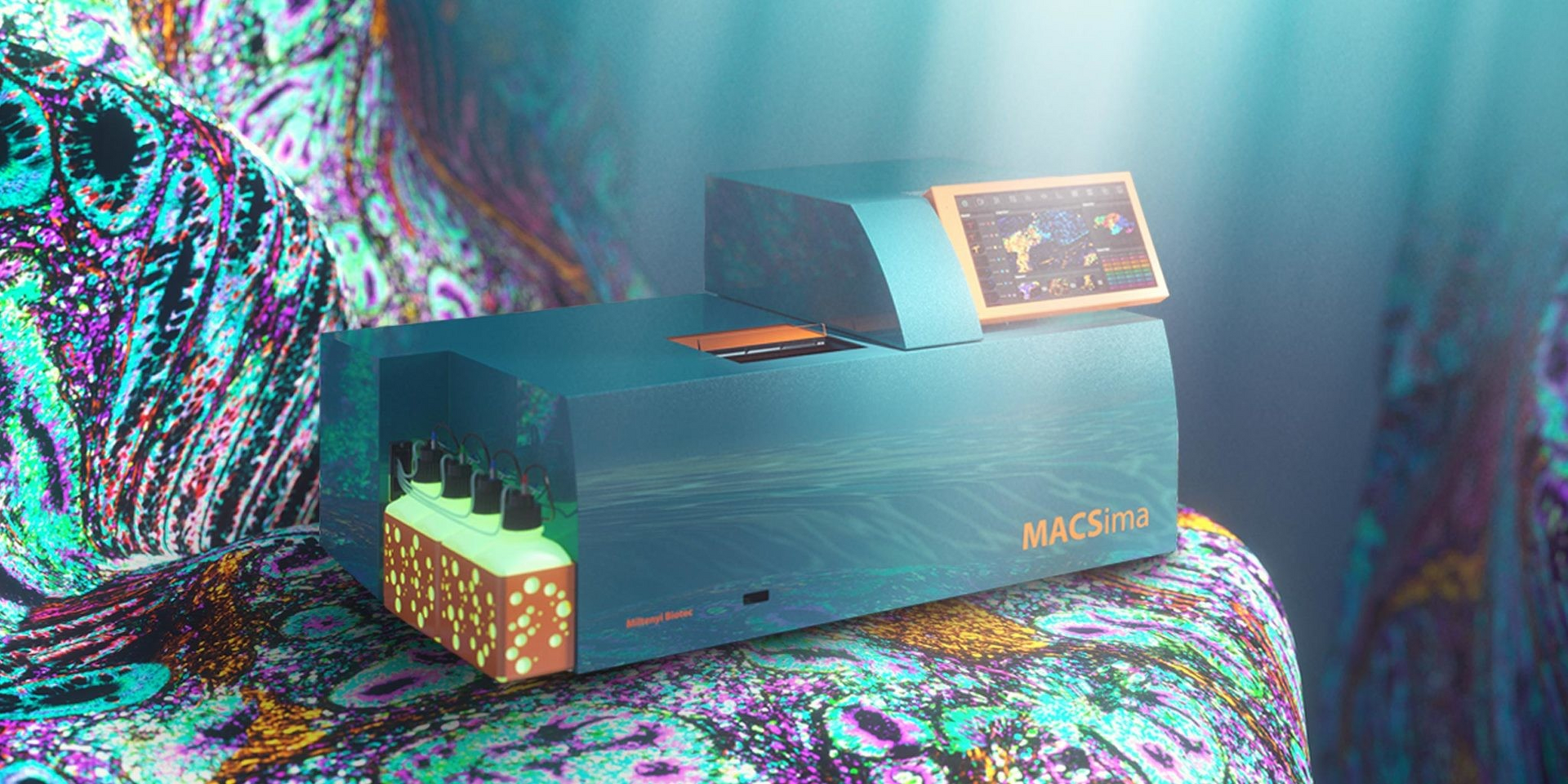
Spatial biology enables detailed analysis of molecular processes within native tissue architecture. Using MACSima Imaging Cycling Staining (MICS), hundreds of proteins and dozens of RNA markers can be detected on the same section, generating high-dimensional datasets that enhance cellular characterization and improve therapeutic target selection.
At the Symposium, we will introduce our innovative spatial biology and imaging solutions, and explore how regulatory B cells drive immune suppression in renal cell carcinoma using a multimodal spatial and single-cell approach.

Dr. Bernd Müller-Zülow
Business Development for Imaging and Microscopy, Miltenyi Biotec, Germany
Speaker information
Dr. Bernd Müller-Zülow received his degree in Physical Chemistry from the Technical University of Braunschweig, Germany, in 1993. He then worked as an Applications Scientist and Manager for Thermomicroscopes in Germany and the USA. He joined the newly formed LaVision BioTec in 2001 and developed his special interest in modern microscopy techniques for biomedical research. Following the acquisition of LaVision BioTec in 2018, he worked as Sales Manager for the Export and Asia Divisions of Miltenyi Biotec and loved to share his technical expertise with many scientists in these regions. With the full integration into Miltenyi Biotec, he advanced into Business Development, taking the position of Executive Senior Expert for Imaging and Microscopy.

Dr. Thomas Daubon
Research Director at the National Centre for Scientific Research (CNRS) and Principal Investigator of the Glioblastoma Metabolism (GBmetabo) group at the University of Bordeaux, France
Abstract
Glioblastoma (GB) is a highly invasive brain tumor associated with poor survival despite aggressive treatment. Metabolic exchanges within the tumor microenvironment play a central role in tumor progression. Using spatial transcriptomics, mass spectrometry imaging, and the spatial biology MACSima Platform, Dr. Thomas Daubon and his team investigate how metabolic heterogeneity drives glioblastoma recurrence and resistance to therapy.
Their work revealed a lactate symbiosis between glycolytic and oxidative GB cells, supporting tumor growth and invasion, and demonstrated that targeting oxidative phosphorylation can effectively reduce tumor development. Following surgical resection, residual GB cells rapidly undergo metabolic reprogramming, contributing to relapse.
Speaker information
Dr. Thomas Daubon is a Research Director (Full Professor) at CNRS. He also leads the GBmetabo group, focusing on intratumoral heterogeneity and metabolic pathways regulating interactions between different glioblastoma regions and other organs. In collaboration with local and international neuroscience teams, the group aims to develop new cancer treatments using experimental models.
Dr. Daubon was trained as a cell biologist at the University of Toulouse and worked as a PhD student in cancer biology at the University of Poitiers, France, and the Flemish Institute for Biotechnology (VIB), Belgium. Later, he conducted research at the University of Bordeaux, France, and the University of Bergen, Norway. Recently, after obtaining a permanent position at CNRS, he developed expertise in characterizing the role of energy metabolism in GB development. His work integrates spatial biology, cancer neuroscience, and experimental glioblastoma models to investigate how metabolic interactions shape tumor progression and treatment response.
The scientific posters from our R&D specialists are now available for download and offer
fresh insights into the future of cancer research.
#0283 Enabling automated manufacturing of gene-modified T cells with lipid nanoparticles
Presenter: Caroline Brandes
#1643 VHH-based tandem CARs enable OR-gated multi-targeting of pancreatic cancer
Presenter: Camille Dourlens
The video shows the 3D rendered visualization of a pancreatic carcinoma. GFP-expressing tumor cells are shown in green, infiltrating CAR T cells in purple, and the vasculature in orange. Imaging was performed using UltraMicroscope technology.
Do you want to get in contact with us? Send your inquiry to:
Jonathan Druge, PhD
Global Product Manager
You have previously chosen International as your location.
What do you want to do?