
Synonyms: CAT
RECOMBINANT
- Clone:
- REAL553
- Type of antibody:
- Releasable fluorochromes, Primary antibodies, Recombinant antibodies
- Applications:
- MICS, IF, IHC Glossary


Related products for Catalase Antibody, anti-human, REAdye_lease™

MICS (MACSima Imaging Cyclic Staining) applications
PE
Fixation:
FFPE
Species tested:
human
Tissue used:
kidney
Recommended dilution:
1:50
Data source:
Miltenyi Biotec
Compatible applications:
IF, IHC
Conjugate:
PE
Used products:
130-123-367
Testing grade:
Description:
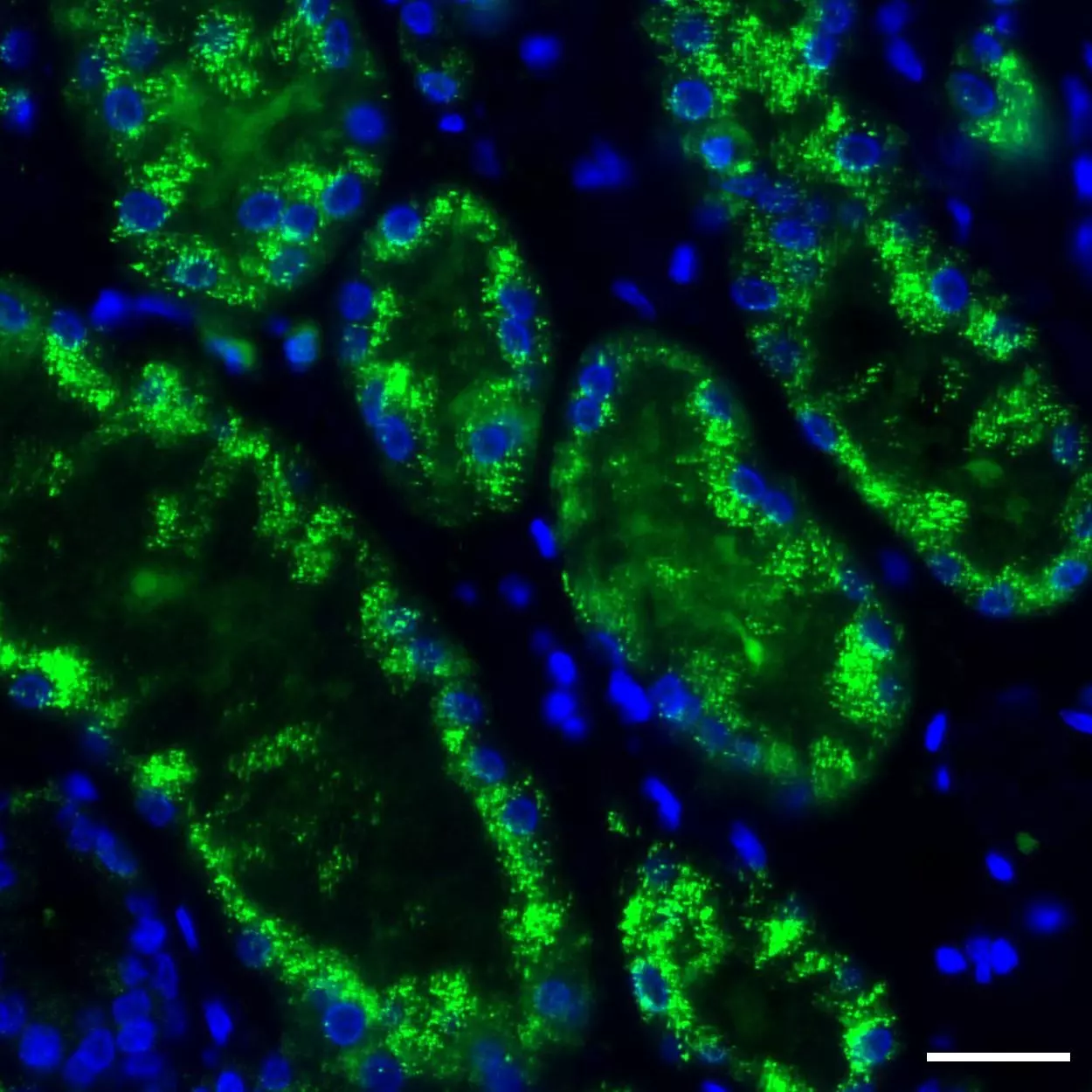
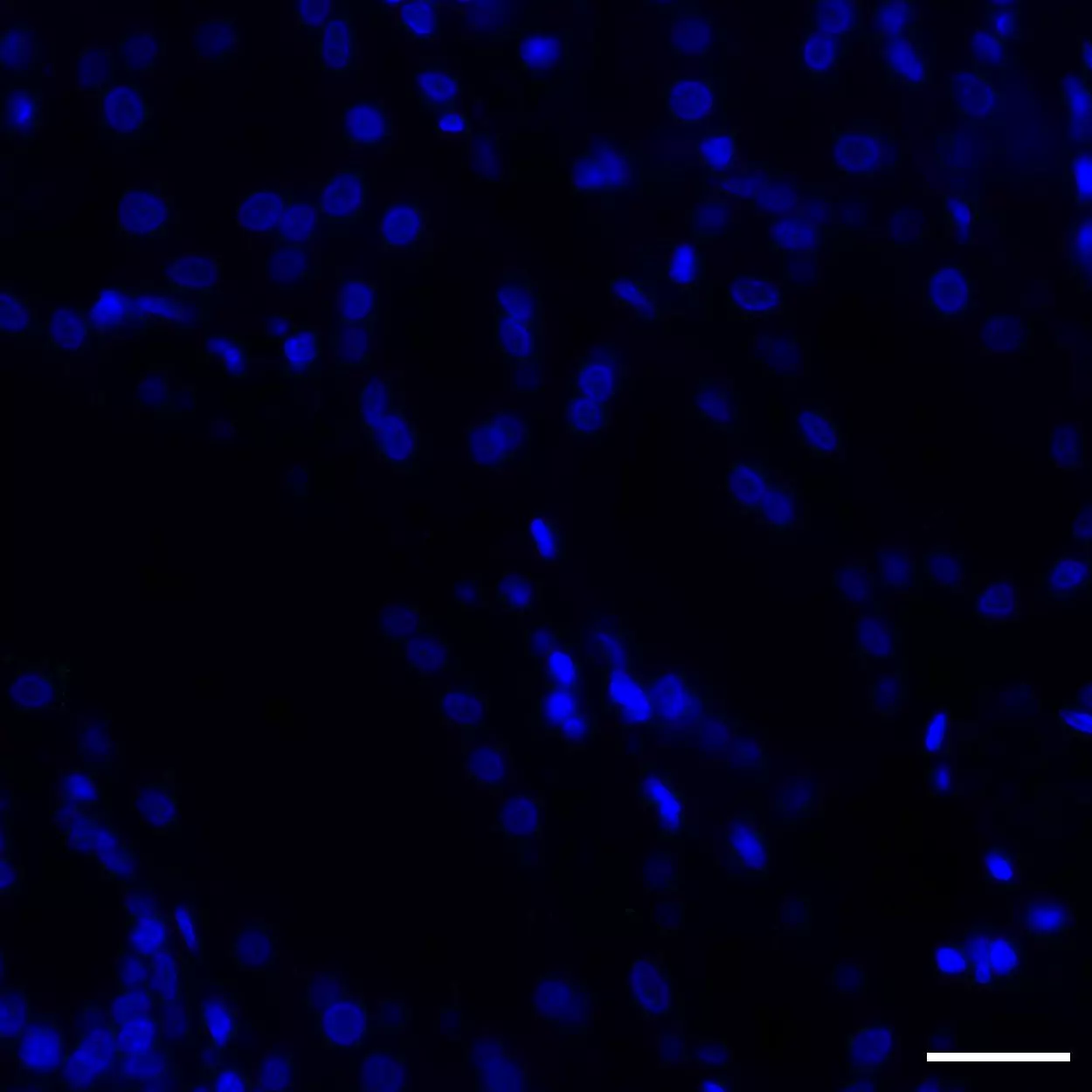
Immunofluorescence analysis of a formalin-fixed, paraffin embedded (FFPE) human kidney. Before staining, antigens were retrieved using heat-induced epitope retrieval (HIER) at pH 9. The section was stained using Catalase Antibody, anti-human, PE (green) for 10 min at room temperature (A). Catalase Antibody, anti-human, PE staining was released using the REAlease Release Reagent (B). Nuclei were visualized with Hoechst™ (blue). Scale bar: 30 µm.
A
 view details
B
 view details
Specifications for Catalase Antibody, anti-human, REAdye_lease™
Overview
Clone REAL553 is an antibody fragment derived from the full Catalase antibody molecule. It displays no binding to Fc receptors. The recombinantly engineered antibody fragments are multimerized to form the REAdye_lease Complex to bind markers with high avidity.
Clone REAL553 recognizes catalase, a key antioxidant enzyme against oxidative stress. Catalase catalyzes the decomposition of hydrogen peroxide to water and oxygen and is present in the peroxisome of nearly all aerobic cells. Oxidative stress is hypothesized to play a role in the development of many chronic or late-onset diseases such as diabetes, asthma, Alzheimer's disease, systemic lupus erythematosus, rheumatoid arthritis, and cancers. Catalase promotes growth of cells including T-cells, B-cells, myeloid leukemia cells, melanoma cells, mastocytoma cells and normal and transformed fibroblast cells.
For removal of REAdye_lease fluorochromes for optional relabeling with different fluorochrome-conjugated REAdye_lease antibodies use the REAlease Support Kit (130-120-675).
CAT
Detailed product information
Technical specifications
Clone
REAL553
Clonality
monoclonal
Isotype control
Control Antibody
Host
cell line
Type of antibody
Releasable fluorochromes, Primary antibodies, Recombinant antibodies
Species reactivity
human
Antigen
Catalase
Distribution of antigen
ubiquitous, kidney, bone marrow, liver
RRID
AB_2857591
Resources for Catalase Antibody, anti-human, REAdye_lease™
Certificates
To access a Certificate of Analysis (CoA) follow the link below and enter the specific lot of your product.
Should you wish to request additional documentation, such as a Safety Data Sheet (SDS) in other languages than English or Swedish, an SDS-replacement document, or a Certificate of Origin (CoO), please direct your inquiry to your local technical support team.
Citations for Catalase Antibody, anti-human, REAdye_lease™
Publications
- Böhm, B. et al. (2015) Extracellular localization of catalase is associated with the transformed state of malignant cells. Biol Chem Hoppe Seyler 396 (12): 1339-1356
- Glorieux, C. et al. (2017) Catalase, a remarkable enzyme: targeting the oldest antioxidant enzyme to find a new cancer treatment approach. Biol Chem Hoppe Seyler 398 (10): 1095-1108
- Glorieux, C. et al. (2015) Regulation of catalase expression in healthy and cancerous cells. Free Radic. Biol. Med. 87: 84-97
You have previously chosen International as your location.
What do you want to do?