Content overview
CAR T cell technology
Three tailored portfolios
CAR detection solutions
Resources
All products
Content
- CAR T cell technology
- Three tailored portfolios
- CAR detection solutions
- Resources
- All products
Chimeric antigen receptors (CARs) are engineered proteins that enable T cells to recognize and target cancer cells, making precise detection essential for advancing CAR T cell therapies.
Built on REAfinity® Recombinant Antibody Technology, our CAR detection portfolio offers reliable solutions to match your needs at every stage, from CAR discovery to analytical assays in cell therapy development. Choose from CAR linker antibodies, antigen-based reagents, or CAR idiotype antibodies, covering a broad range of CAR targets, including CD19, BCMA, CD22, and CD33.
Content overview
CAR T cell technology
Three tailored portfolios
CAR detection solutions
Resources
All products
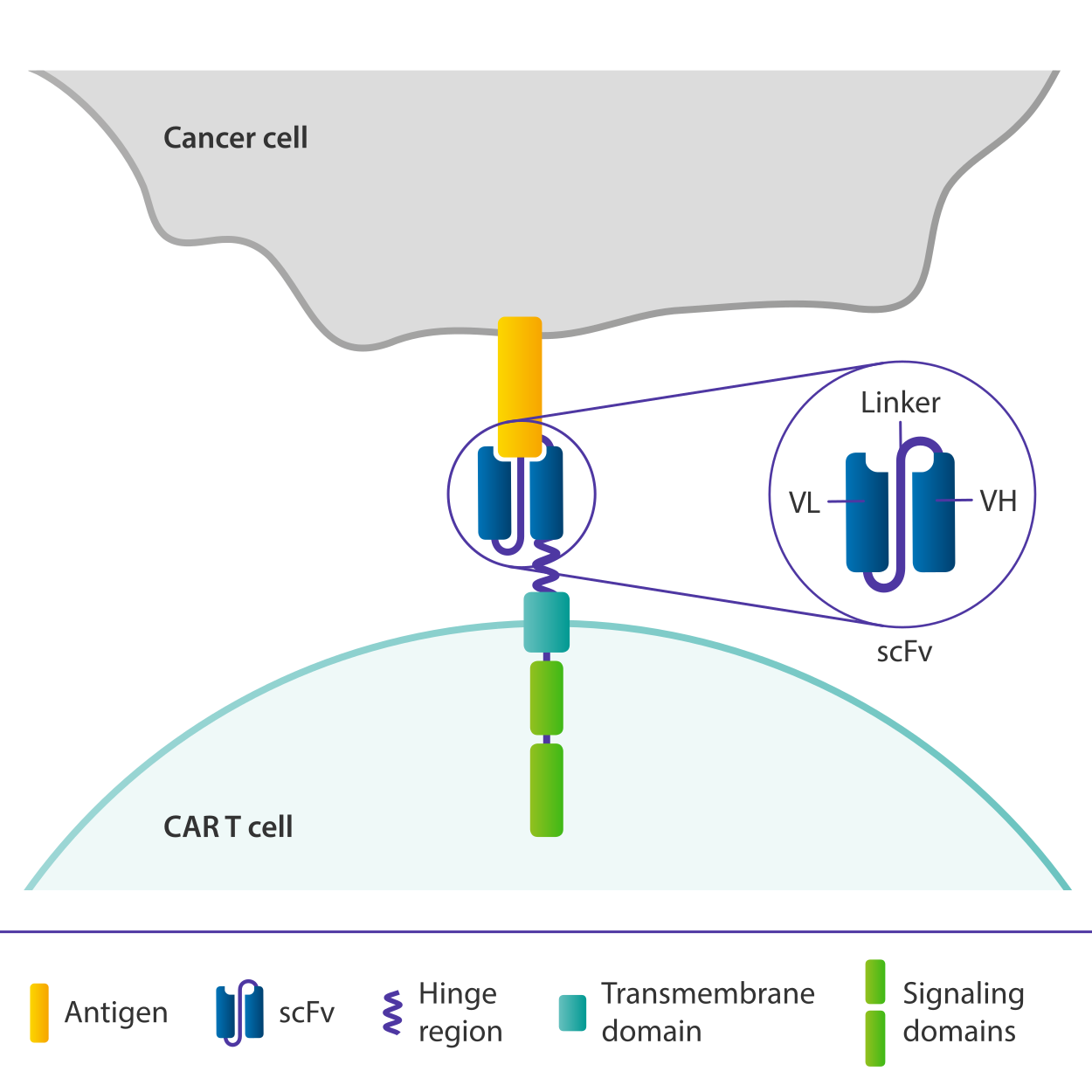
Each structural component of the CAR plays a vital role in ensuring effective expression, signaling, and function:
Our CAR detection reagents are engineered with REAfinity® Recombinant Antibody Technology and undergo rigorous quality control throughout development, delivering high precision, exceptional reproducibility, and consistent performance in analytical flow cytometry assays.
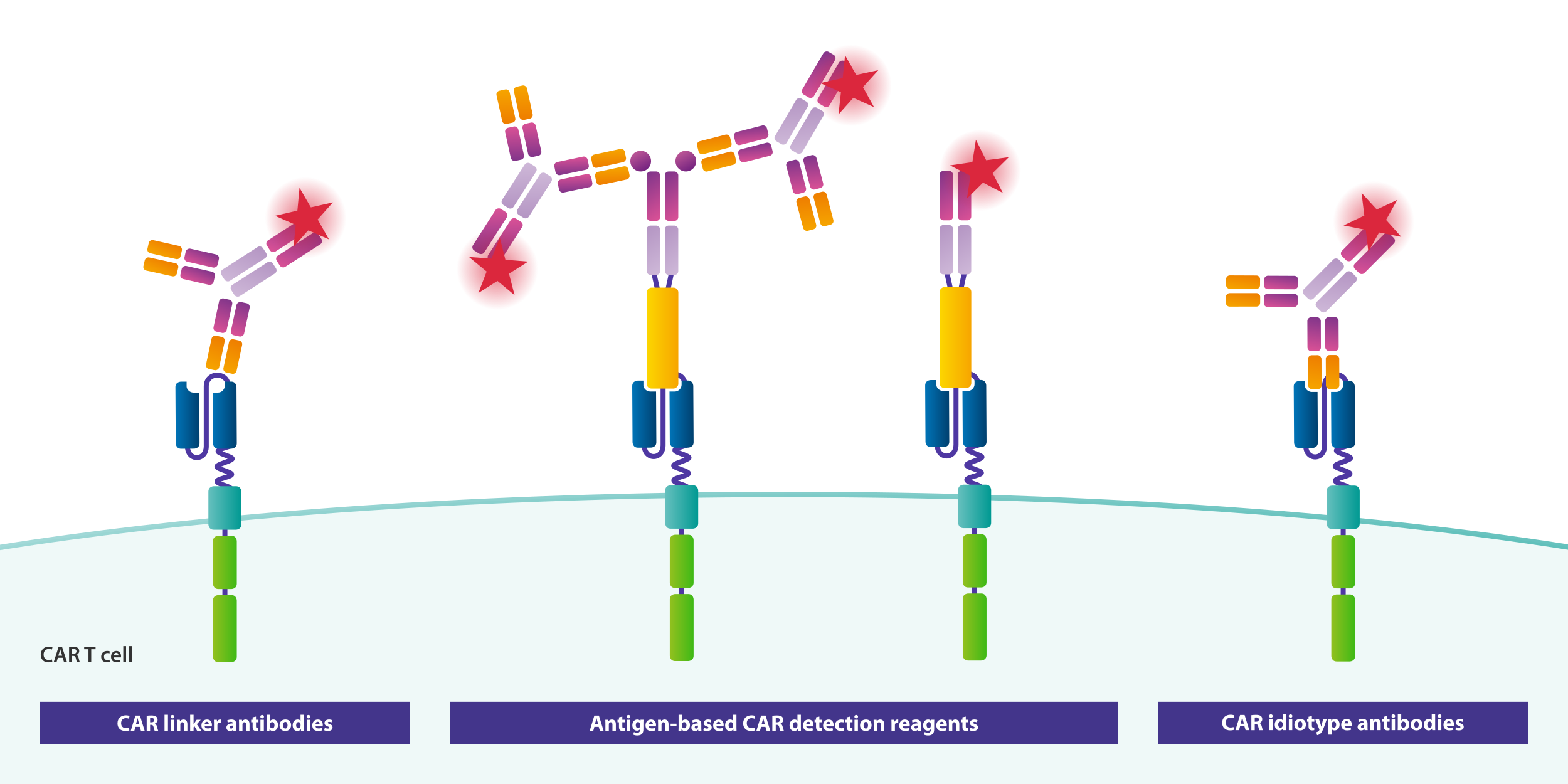
Our CAR detection portfolio offers three distinct solution types, each leveraging a different detection strategy to match diverse CAR designs:
All three solution types are compatible with CAR T, CAR NK, and other CAR-engineered cell therapies, supporting flow cytometry assays across all stages of research and cell manufacturing.


"Miltenyi Biotec's CAR Detection Reagent has transformed our workflow. It enables fast, reliable flow cytometry CAR detection with a simple protocol, expediting batch release. When integrated with the magnetic cell sorting platform, it allows efficient CAR T enrichment without traditional FACS, saving time and resources."

| CAR detection reagent | CAR linker antibodies | Antigen-based CAR detection reagents | CAR idiotype antibodies |
| Detection type | Antibody-based | Antigen-based | Antibody-based |
| Target binding site | Linker region | Antigen-binding site in the variable scFV region | Within the variable scFV region |
| Key characteristics | - Broad detection of diverse CAR constructs, independent of antigen specificity - Reporter-free | - Prove CAR functionality by confirming active binding to specific antigens | - Highly specific detection of individual CAR constructs |
| Main application | Discovery | Clinical cell manufacturing workflows | CAR identity testing in clinical cell manufacturing workflows |
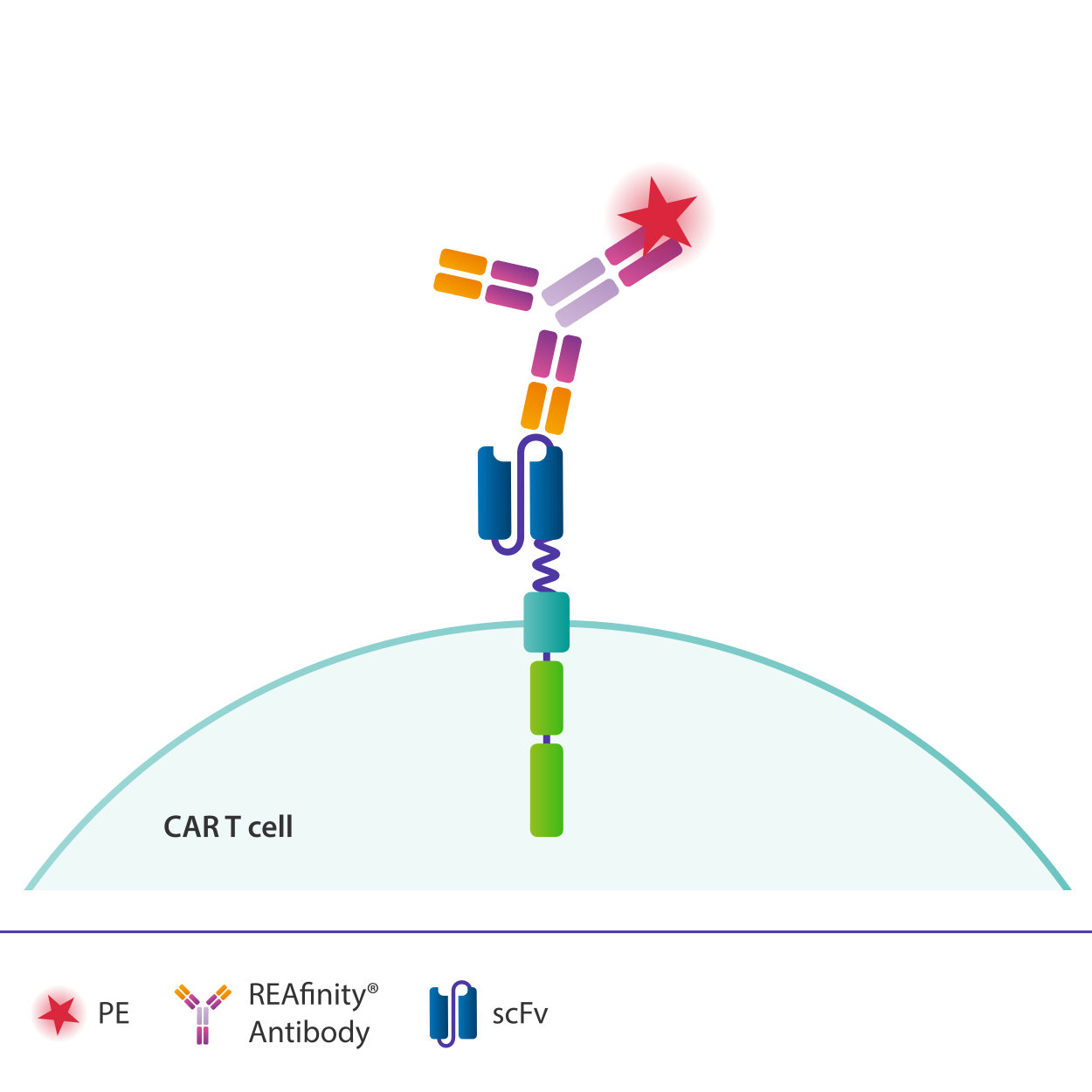
These reagents target the linker region, a conserved structural motif shared across many CAR constructs. This versatility enables fast screening, discovery, and validation, streamlining early-stage research and accelerating the development of promising CAR therapies.
Broad CAR detection: Detect a wide range of CAR T cells, independent of the specific target antigen.
Streamlined translation: Enable direct CAR T cell detection without relying on reporter genes, saving time and freeing up space on the vector for other essential components.
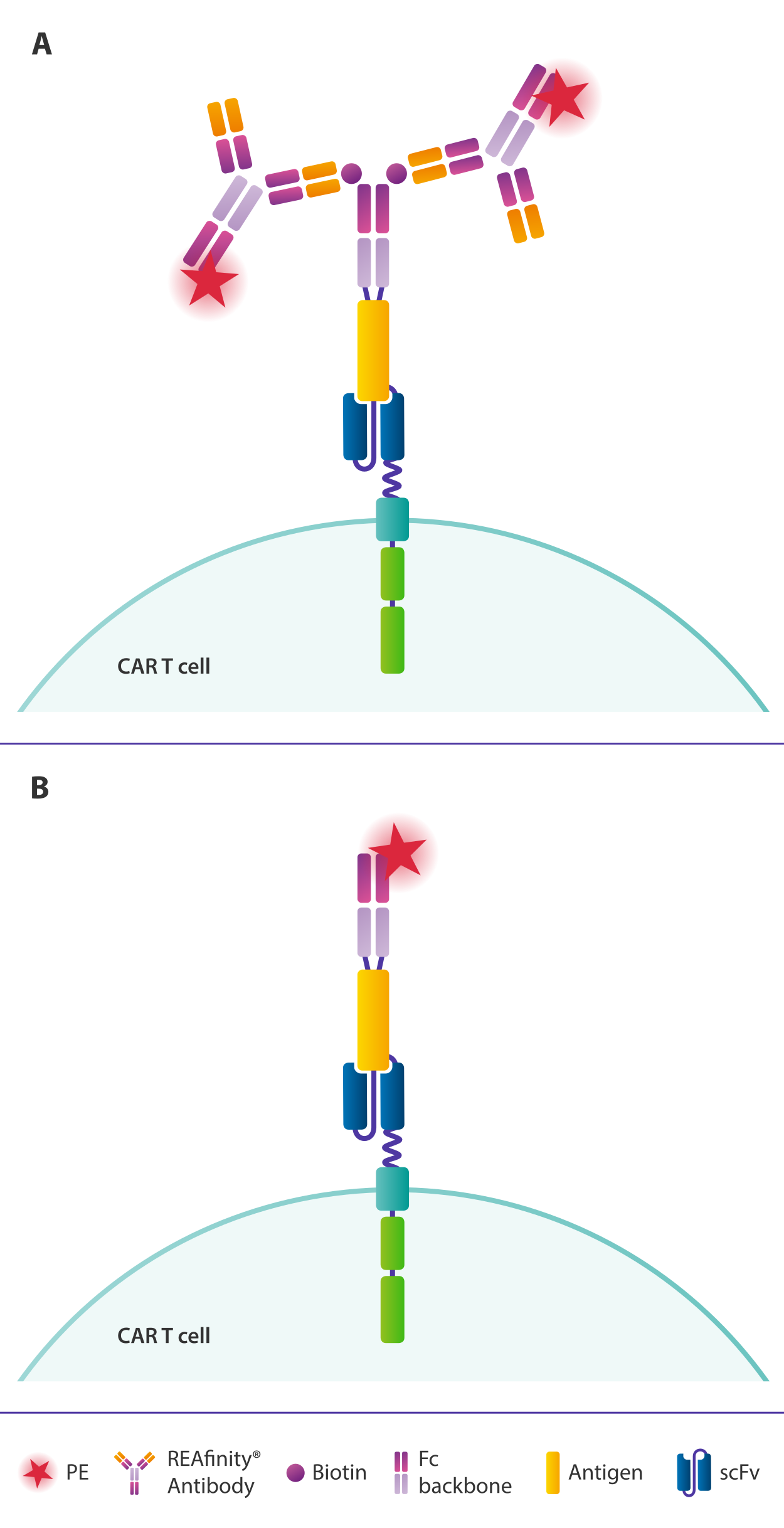
These recombinant proteins mimic the natural CAR target antigens, binding to the antigen binding site within the CAR's scFv region. For enhanced specificity and flexible detection options, the recombinant protein is fused to the mutated Fc backbone derived from REAfinity Recombinant Technology and conjugated either with biotin (A) or a fluorochrome (B).
Validation of CAR functionality: Proves functional CAR activity by confirming specific antigen binding.
Flexible detection: Available in biotin- or fluorochrome-conjugated formats; the biotin conjugates enable signal amplification with anti-biotin antibodies (REA746).
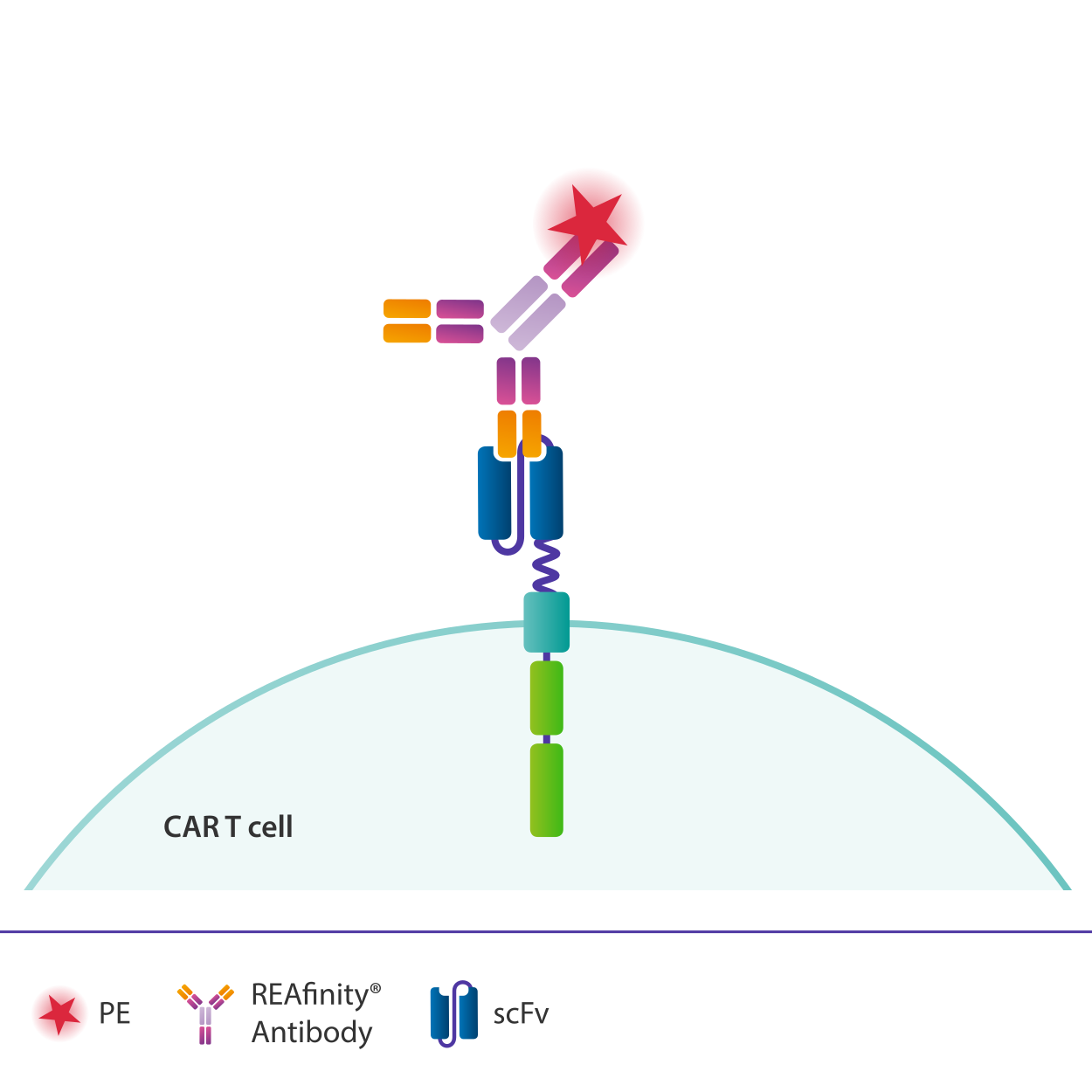
Anti-idiotype antibodies specifically recognize the variable scFv region of a CAR, unique for each CAR construct.
Highly specific detection: These antibodies enable precise identification of individual CAR constructs (e.g., FMC63-based CD19 CARs), even when multiple CARs target the same antigen.
Reliable product identity testing: Ideal for confirming the identity of the CAR T cell product, especially in cell manufacturing wokflows where construct specificity and traceability are essential.

Access the detailed performance data for our CAR detection reagents and discover how CAR detection reagents support reliable analytical workflows in cell therapy applications.
In this webinar, we will delve into the crucial role of flow cytometry in analyzing and characterizing critical quality attributes of CAR T cell products, including identity, purity, and potency, throughout the manufacturing process.

Need a quick solution? Discover Miltenyi Biotec's pretested antibody panels (MBTPs) tailored for precise CAR T cell characterization. Our MBTPs simplify your immunophenotyping workflow, delivering reproducible results for CAR T analysis.

15 products found
|
You have previously chosen International as your location.
What do you want to do?
