Logo

Induced pluripotent and embryonic stem cell culture and maintenance workflow

High-quality human pluripotent stem cell (PSC) lines, either embryonic or induced pluripotent stem cells, are the foundation for any successful and reproducible PSC research. Choosing the most supportive cell culture conditions are critical when expanding, passaging, or cryopreserving PSCs, as only high-quality lines show pluripotent characteristics and successfully pass all mandatory characterization assays.

Application overview

Infographic showing iPS and ES culture and maintenance workflow
Pluripotent stem cell culture and maintenance workflow
Scientist pipetting a sample into a MACS SmartStrainer to remove cell clumps
Debris and erythrocytes detected in cell suspensions before and after sample clearing

1. Maintenance of pluripotent and embryonic stem cells

Balanced and carefully optimized media formulations are key features for high-quality PSC maintenance. StemMACS™ iPS-Brew XF, human, and StemMACS PSC-Brew XF, human, have been specifically designed to provide your cells with the best-quality nutrients to sustain robust growth and maintain a high pluripotent phenotype and differentiation potential.

Our recombinant, xeno-free MACSmatrix Laminin 511 cell culture matrix has been thoroughly tested with StemMACS media, offering superior coating efficiency compared to similar full-length products on the market. Conveniently provided as a ready-to-use liquid, the matrix can be stored at 2–8°C for ease of use.

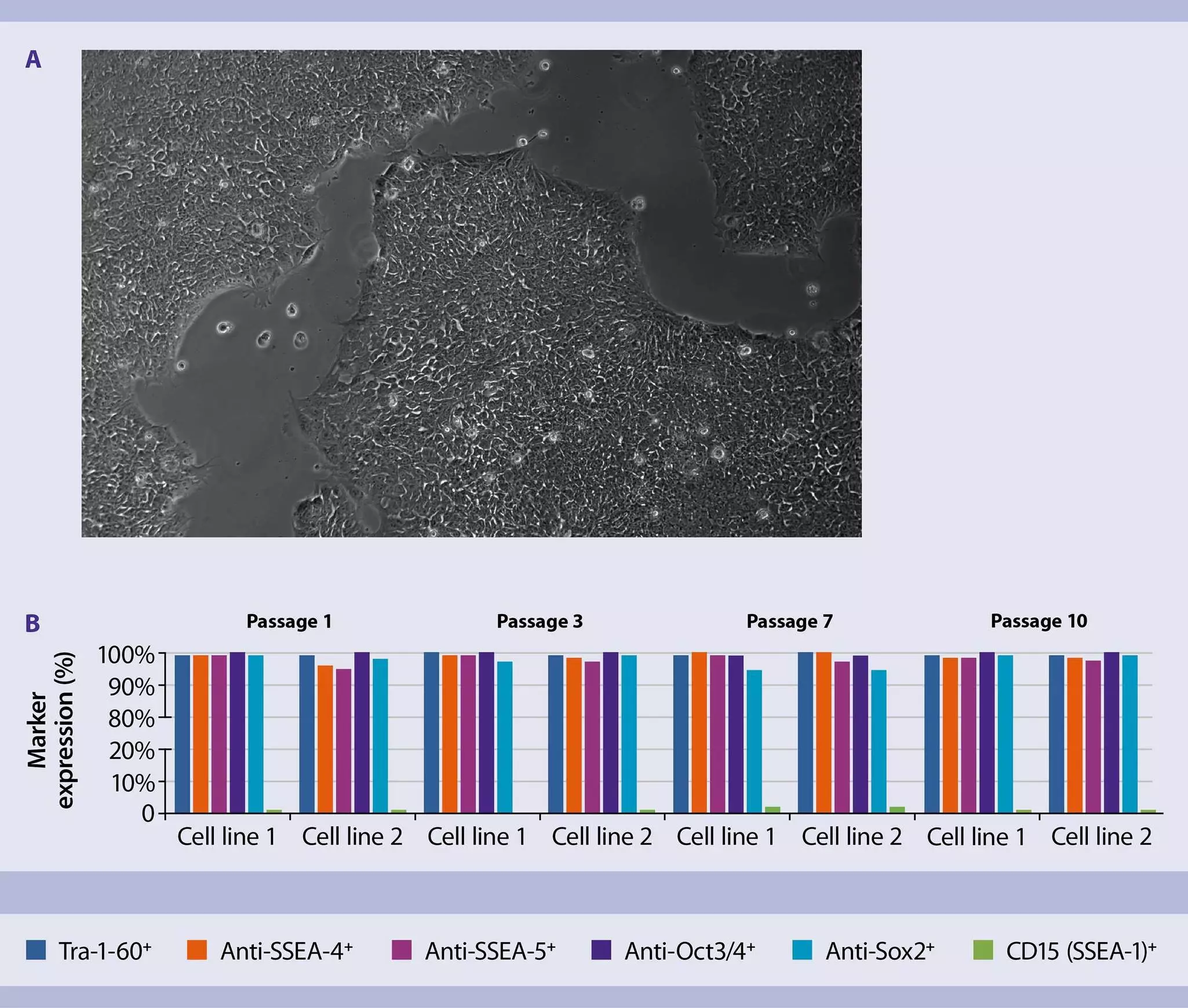
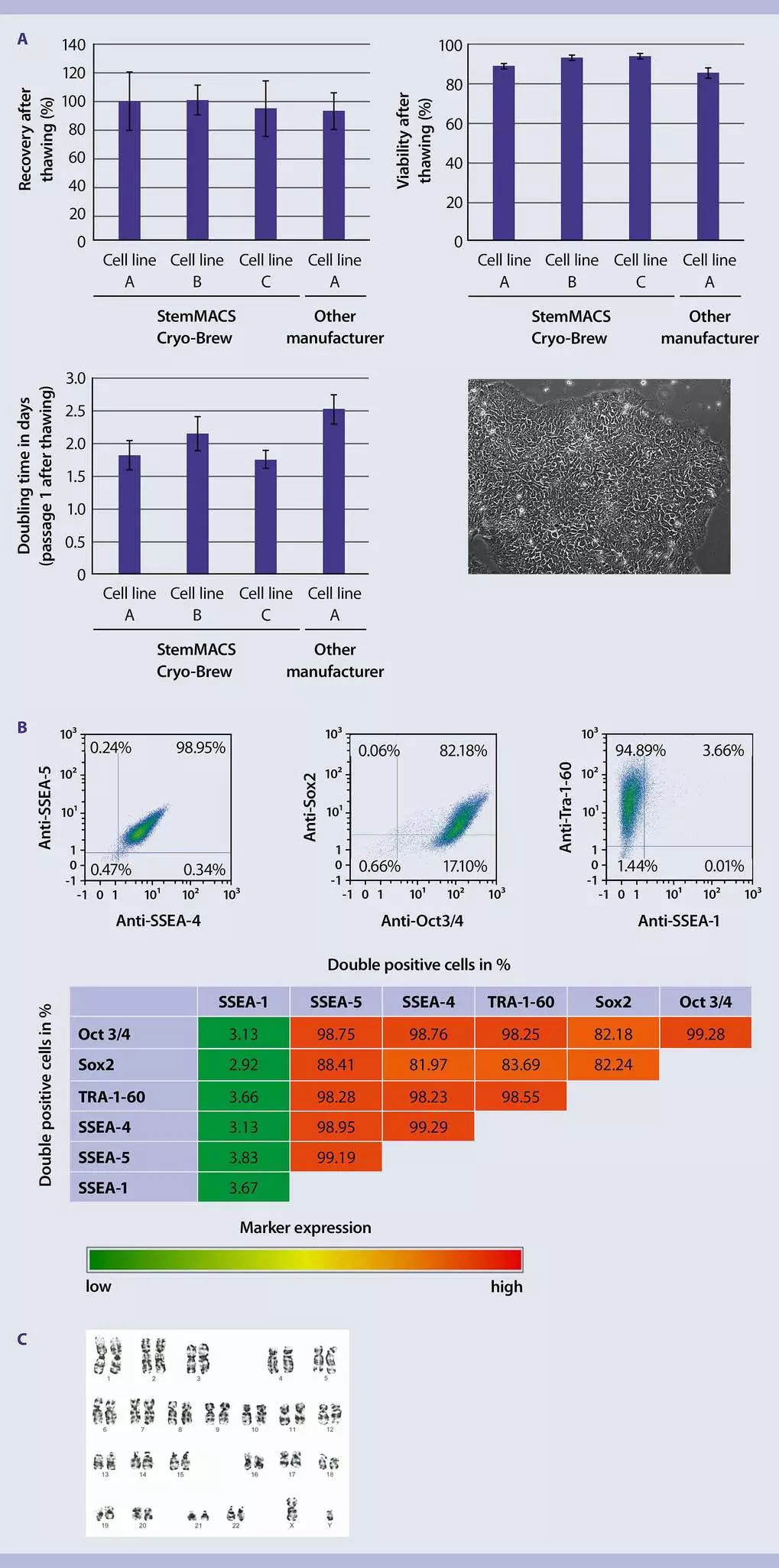
Scientific data showing that pluripotent stem cells cultured in StemMACS PSC-Brew XF display typical colony morphology and high expression of pluripotency markers
Pluripotent stem cells cultured in StemMACS PSC-Brew XF display typical colony morphology (A) and high expression of pluripotency markers (B).

StemMACS PSC-Brew XF, human

Ensuring a state-of-the-art PSC culture with stable doubling times, our products provide high expression of pluripotency markers, full pluripotent potential, and a stable karyotype. Our solutions enable hPSCs grown in StemMACS PSC-Brew XF, human, the ability to show typical morphology, expression of pluripotency-associated markers and retain the ability to differentiate into cell types that derive from the three embryonic germ layers, even after consecutive passages in culture.

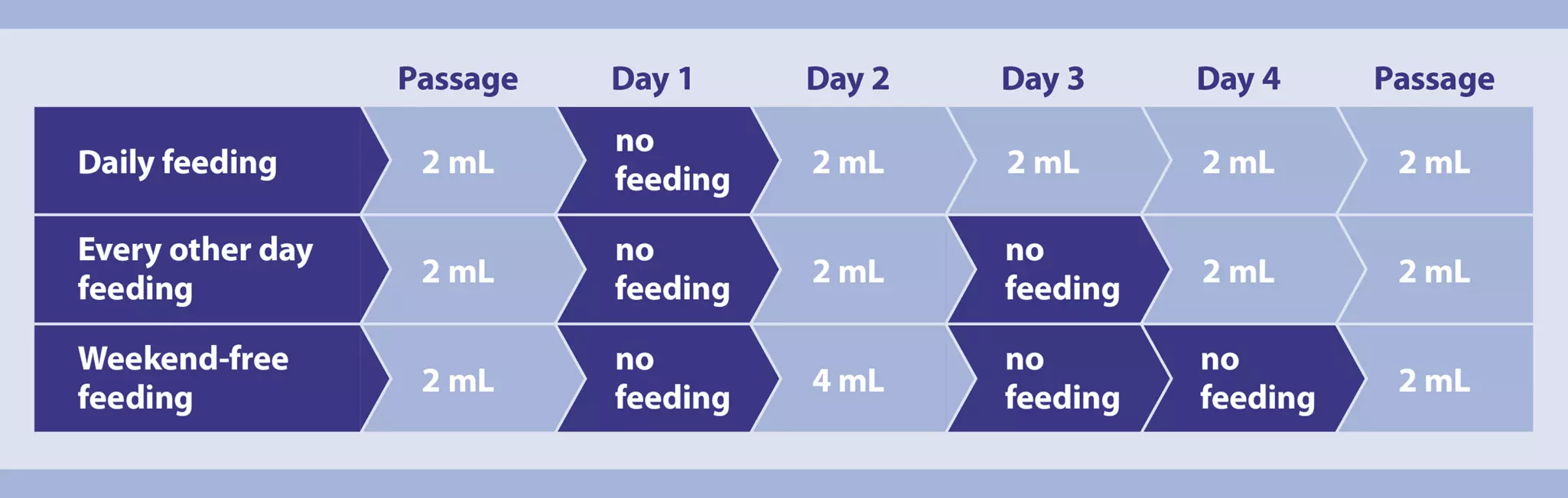
Illustration giving an overview of flexible feeding schedules with the cell culture media StemMACS PSC-Brew, human and StemMACS iPS-Brew XF, human
Overview of flexible feeding schedules with StemMACS PSC-Brew, human and StemMACS iPS-Brew XF, human.

Feeding schedule

Moreover, StemMACS PSC-Brew XF, human, gives you the possibility of free weekends, allowing more time for what matters. With optimized nutrient supply, stable pH, and FGF-2 IS you can now routinely skip feeding on weekends and rely on an every other day schedule throughout the week to meet your needs. Additional combinations with StemMACS PSC Support XF also provide the opportunity for cutting edge applications, such as gene editing or cell sorting, providing complete support throughout your workflow.

2. Passaging of pluripotent and embryonic stem cells

After some days in culture, PSCs will reach confluence triggering the need to split into additional culture plates (passaging). Splitting the PSC culture is a delicate time point and specific techniques and reagents are necessary for maintaining a stable line. Classic passaging techniques, such as the use of trypsin, are not suitable due to its tendency to damage PSC epitopes usually generating single cell suspension, a condition not well tolerated by PSCs.

Video

Passaging of Pluripotent Stem Cells

Contrastingly to traditional techniques, StemMACS Passaging Solution XF ensures gentle detachment of PSC colonies and dissociation as cell clusters, therefore preserving cell-cell contacts. The solution is designed to minimize manipulation of the culture, eliminating inactivation, dilution, or centrifugation steps.

3. Characterization of pluripotent and embryonic stem cells

PSCs must show a specific characterization for embryonic stem cell (ESC) or induced pluripotent stem cell (iPSC) lines. Importantly, these characteristics must be established during propagation of already established lines in order to detect early signs of spontaneous differentiation. Typical PSC characterization includes assessment of extra- and intracellular marker expression as well as assessment of pluripotent differentiation potential.

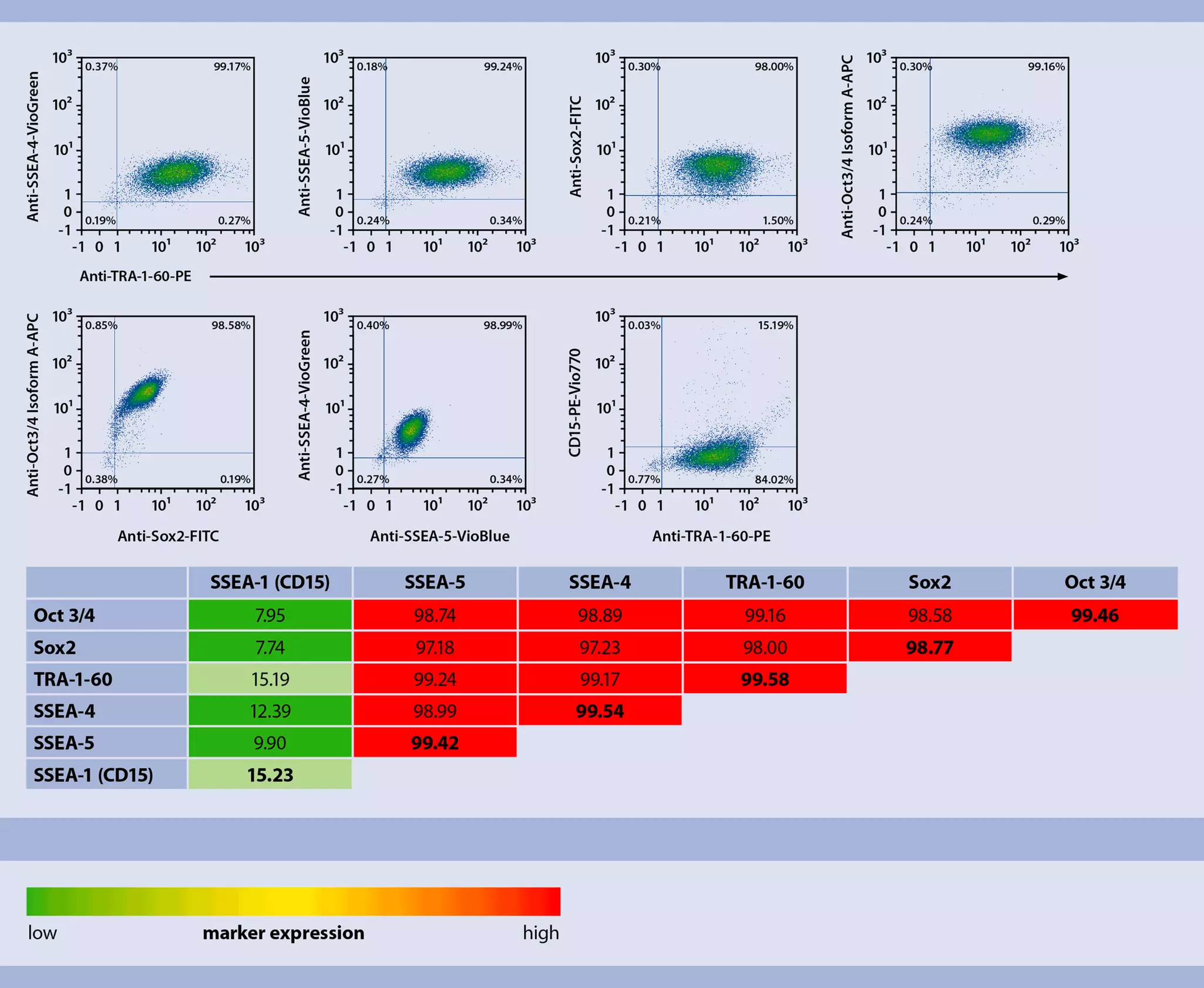
Scientific data showing immunophenotyping of the pluripotency status of human pluripotent stem cells using flow cytometry
Multicolor flow cytometry analysis of undifferentiated human iPSCs.

Expression of pluripotency-associated markers

PSCs must demonstrate high and stable expression of key pluripotency-associated markers. To streamline this process, the PSC Analysis Cocktail Kit, anti-human, provides a ready-to-use solution with a multicolor panel for flow cytometry. This kit allows the simultaneous quantification of intracellular and surface markers such as SSEA-4, TRA-1-60, Oct3/4, and CD15 for differentiation detection.

Its flexible design not only simplifies the assessment but also enables the addition of markers like Nanog or SOX2, delivering both qualitative and quantitative data for more precise characterization. The kit is also compatible with GFP-labeled cell lines, supporting a wide range of applications.

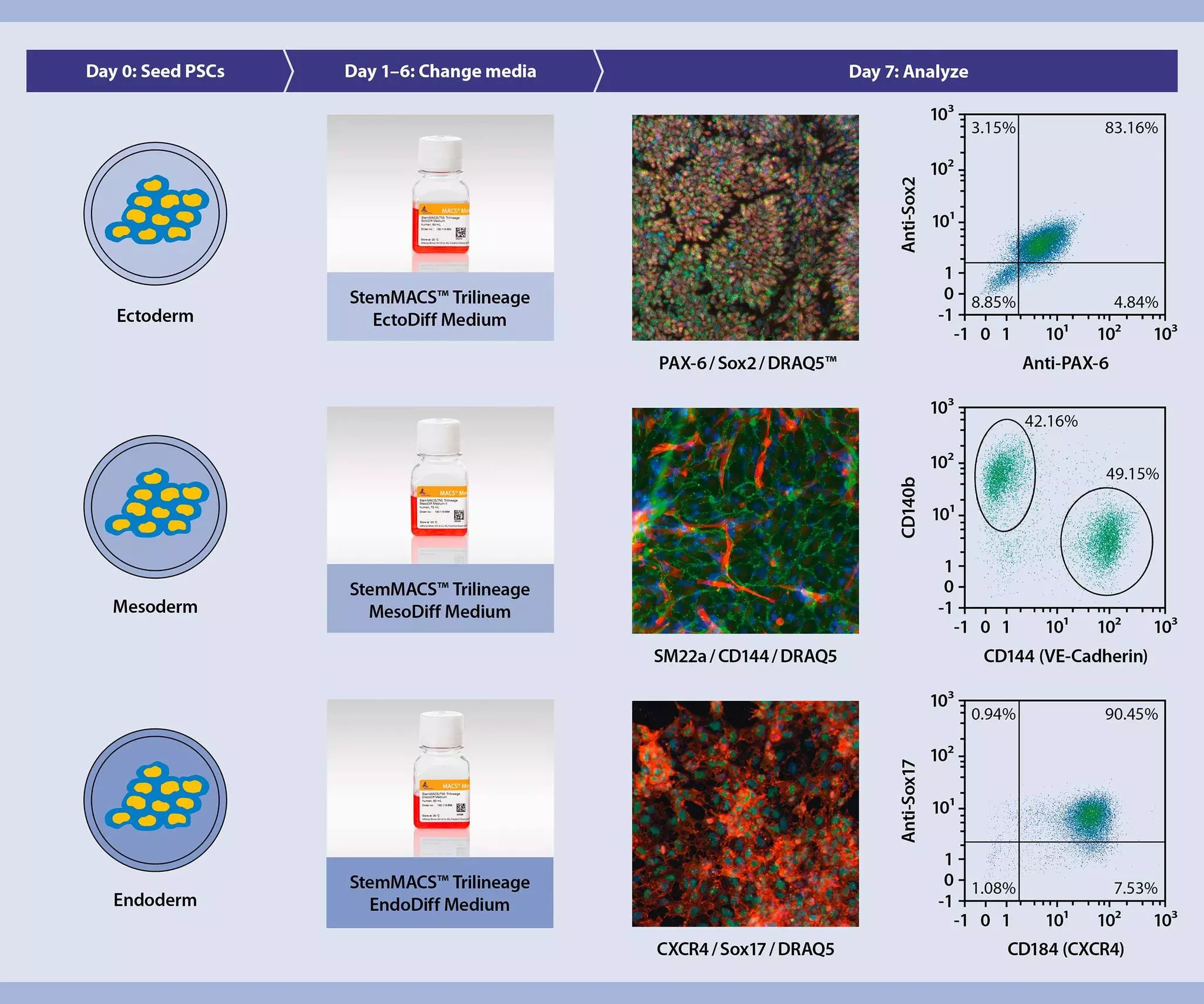
Infographic showing the workflow for pluripotency assessment with StemMACS™ Trilineage Differentiation Kit, human
Workflow for pluripotency assessment with StemMACS Trilineage Differentiation Kit, human.

Functional assessment of pluripotency in just seven days

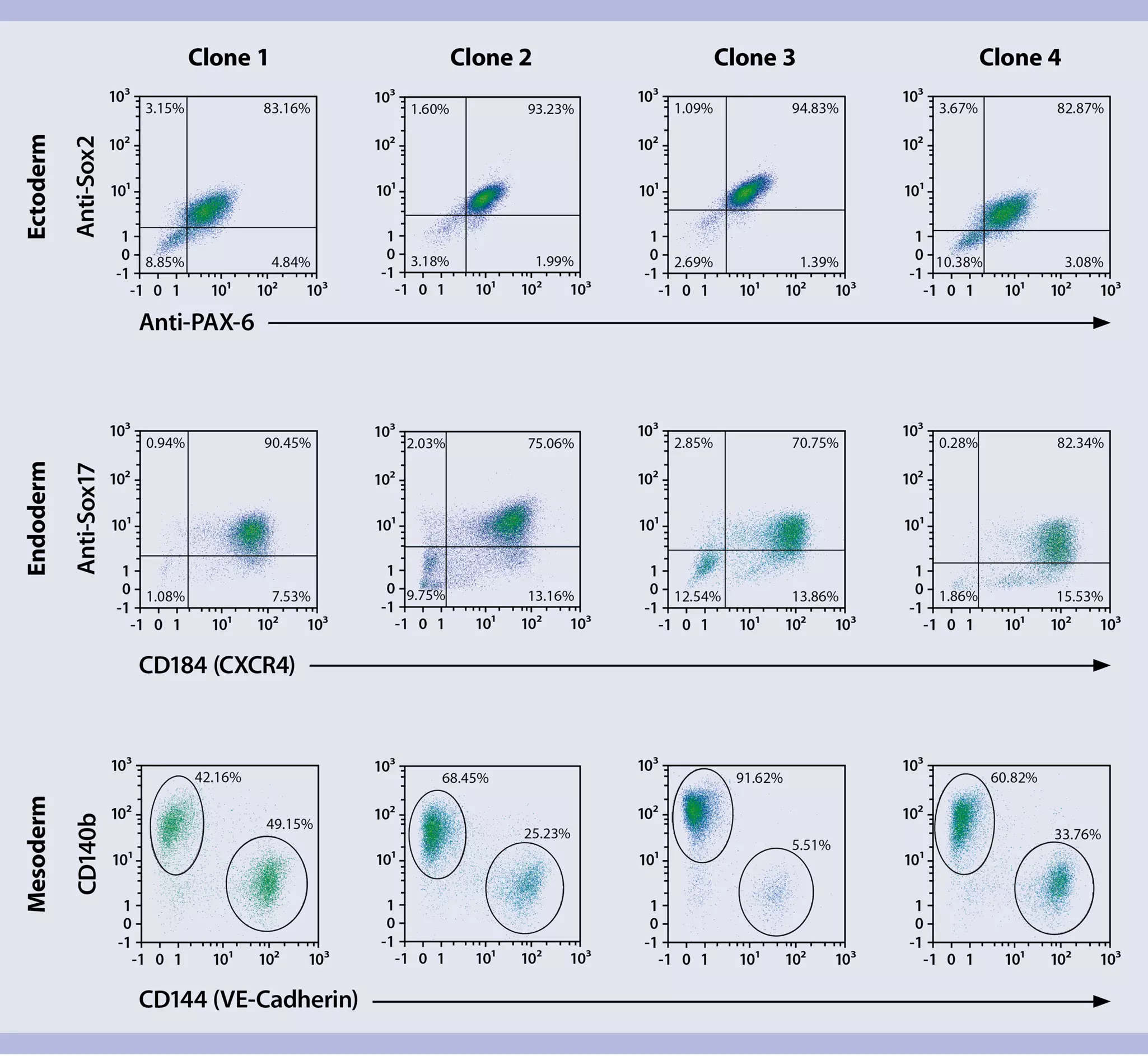
PSCs by definition, need to be able to differentiate into cellular types that derive from the 3 embryonic germ layers (endoderm, mesoderm, ectoderm). This property needs to be routinely assessed, to prove the highest quality of the line. To make this task easier and even more accurate, we have developed a standardized and quantifiable differentiation assay based on lineage-specific complete media that directly supports 2D differentiation into all three germ layers within seven days.

The StemMACS Trilineage Differentiation Kit, human, contains ready-to-use media to ensure reproducibility and minimizes your effort allowing a definitive side-by-side comparison of different cell lines or clones.

Data showing a quantitative flow cytometric analysis of trilineage differentiation using the StemMACS Trilineage Differentiation Kit, human
Quantitative flow cytometric analysis of trilineage differentiation using the StemMACS Trilineage Differentiation Kit, human

Multicolor panel for flow cytometry with REAfinity™ Recombinant Antibodies

We have also extended this innovation by quickening analysis capabilities with our multicolor panel for flow cytometry with REAfinity Recombinant Antibodies. The antibody panel now allows for rapid but sensitive, qualitative, and quantitative analysis of hPSC differentiation potential. Consisting of two antibody combinations for each embryonic germ layer (ectoderm, mesoderm, and endoderm) the ability to detect both surface and intracellular markers are now accessible.

4. Cryopreservation of pluripotent and embryonic stem cells

Scientific data showing that StemMACS Cryo‑Brew ensures high recovery and viability after cryopreservation of induced pluripotent stem cells (iPSCs)
StemMACS Cryo‑Brew ensures high recovery and viability after cryopreservation of induced pluripotent stem cells (iPSCs)

Optimal storage and cryopreservation is essential for the stability and accuracy of many cell culture workflows. The importance of trusting such a medium to maintain these characteristics is vital in workflow success. StemMACS Cryo-Brew is a cryopreservation medium that has been designed for use with xeno- and serum- free culture systems ensuring high recovery, viability, and genetic stability of PSCs.

Step-by-step protocols for pluripotent stem cell research

Get acquainted with our protocols and antibody panels for your workflows in pluripotent stem cell research.

You have previously chosen International as your location.
What do you want to do?