In vitro micronucleus test
Multiparameter ToxTracker® ACE genotoxicity assay
Content
- In vitro micronucleus test
- Multiparameter ToxTracker® ACE genotoxicity assay


Genotoxicity testing is an integral component of toxicity evaluation for drug development as recommended by regulatory agencies in most countries. However, discovering genotoxic effects of therapeutic candidates during the later stages of clinical development can be costly and cause significant impacts on project timelines. Recently, genotoxicity testing has evolved towards earlier stages of drug discovery in order to identify compounds with genotoxic liabilities early in development.
In vitro micronucleus test
Multiparameter ToxTracker® ACE genotoxicity assay
For preclinical safety assessments in compound screening, mutagenic test systems, such as the in vitro micronucleus assay, are an established part of the safety testing procedures used to analyze the potential risk for genetic damage. They provide information on chromosomal damage in cultured or primary cells by detecting the formation of small membrane bound DNA fragments (micronuclei) in the cytoplasm of interphase cells. Traditionally, the in vitro micronucleus assay requires a microscopic analysis of the treated samples, which limits its applications to high-throughput compound screening.

In this study by Litron Laboratories, an in vitro micronucleus test for high-throughput genotoxicity screening was performed by combining the In Vitro MicroFlow® Kit (Litron Laboratories) with the MACSQuant® Analyzer 10, thereby providing a fast, standardized, and automated flow cytometry–based workflow that overcomes the limitations of microscopic analysis by providing high-content information, which is both reproducible and reliable. The increased number of events in the MN gate is clearly evident indicating the genotoxic activity of the compound. The results show that this methodology provides a much faster, more objective approach than traditional methods marked by manual scoring.
A review of semi-automated products and procedures for higher throughput genetic toxicology testing and DNA damage response.
Novel test compounds must be assessed for potential adverse and carcinogenic properties, ideally in early phases of development. In order to test mutagenicity and carcinogenicity properties, several standard in vitro and in vivo assays are currently in use, such as the Ames test and micronucleus assays. However, these standard assays suffer from a limited sensitivity and specificity and do not provide insights into the mechanism of action of test compounds. In order to overcome these limits, the ToxTracker® assay was developed. ToxTracker® is a mammalian stem cell–based reporter assay that detects the activation of specific cellular signaling pathways upon chemical exposure. It contains six different GFP-tagged reporters that allow for the discrimination between induction of DNA damage, oxidative stress, or protein damage in a single test. In combination with a MACSQuant® X flow cytometer this assay can be performed in a fast, standardized, high-throughput, and automated manner.
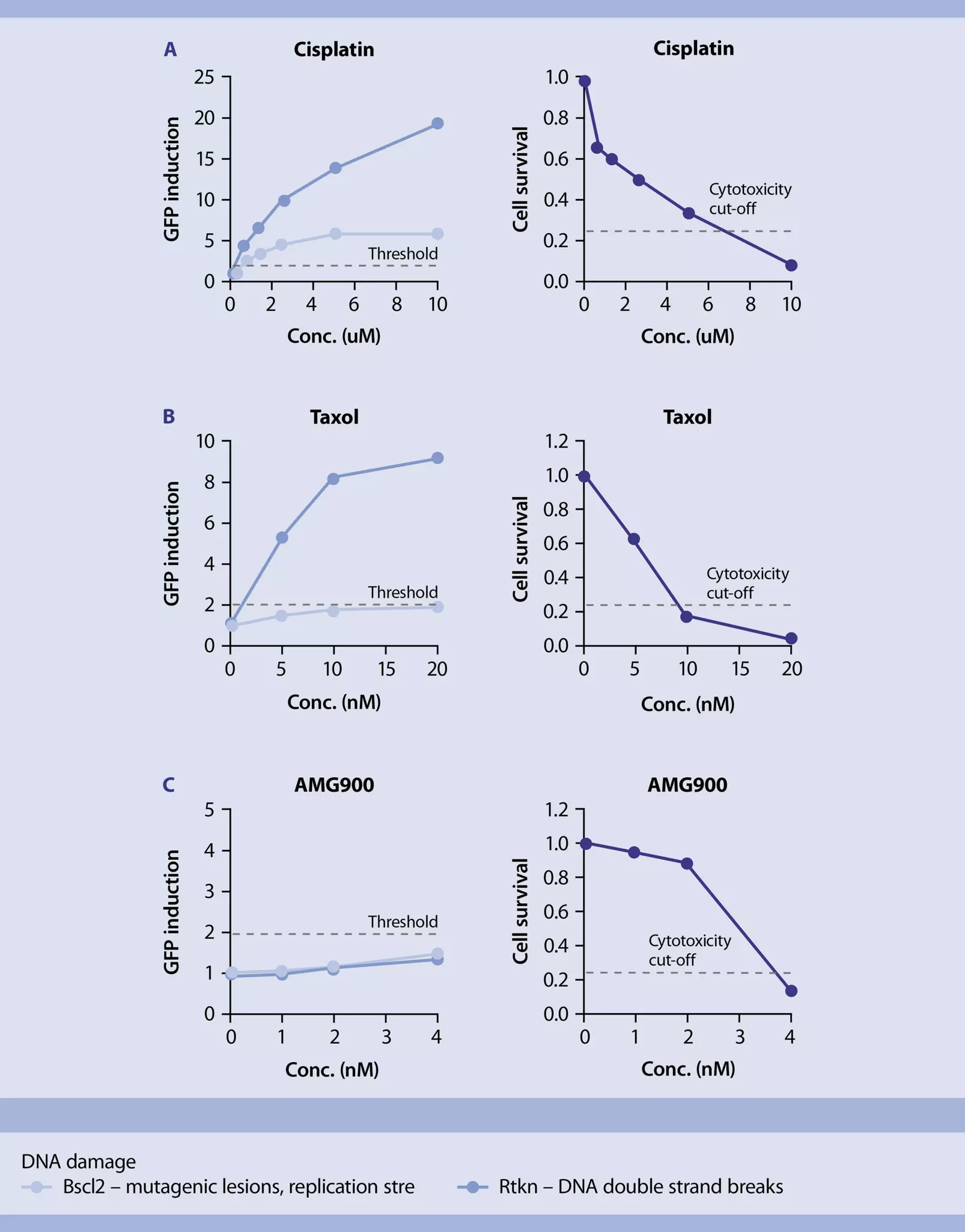
In this study, to validate the ToxTracker assay for separating aneugenic from clastogenic DNA damaging agents and to identify tubulin poisons, as well as kinase inhibitors, three compounds were evaluated with known properties using an extension of this assay termed ToxTracker ACE (aneugen and clastogen evaluation). The results demonstrate that the combination of the ToxTracker assay with a MACSQuant X flow cytometer enables a rapid, simple collection of genotoxicity information that is required for compound screening and safety studies in the field of drug discovery, such as DNA damage, oxidative stress, and protein damage with cell cycle analysis and polyploidy detection.
You have previously chosen International as your location.
What do you want to do?
