Understanding NK cells and cancer: the body’s first line of defense against tumors

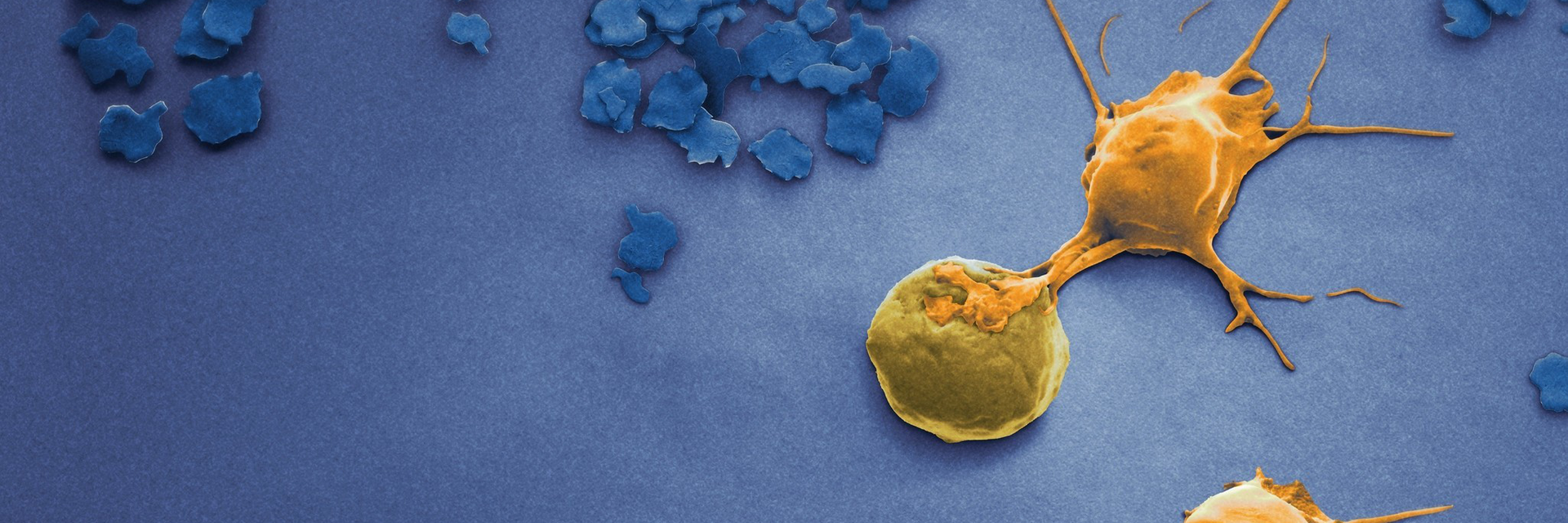
3D illustration of an NK cell eliminating an aberrant cell
Logo

Understanding NK cells and cancer: the body’s first line of defense against tumors

The immune system is our body’s defense network, designed to fend off harmful invaders like viruses, bacteria, and even cancerous cells. Among the many immune cells that protect us, Natural Killer (NK) cells stand out as a unique and vital force. NK cells are the body’s first responders, ready to destroy abnormal cells without needing prior exposure or activation, making them a critical part of both cancer immunotherapy and natural immunity.

In this blog post, we explore what NK cells are, how they work, and why they are gaining attention in cancer research and treatment.

Read time: 5–10 minutes

This information is intended for biological researchers and should not be viewed as advice on medical treatments for cancer using NK cells.

Check out our blog and get up to speed on NK cell biology and promising NK therapies

Content overview

Content

  • What are NK cells?
  • How do NK cells function?
  • What are important NK cell markers and NK subtypes?
  • NK cells and their function in diseases
  • How NK cells can be used to kill cancer
  • Universal CAR NK–cell therapy: "off-the-shelf" CAR therapy
  • Challenges and future directions of NK therapies
  • What new developments are there in NK cell research?

What are NK cells?

NK cells are an integral part of the innate immune system. Unlike T and B cells, which are part of the adaptive immune system and require prior exposure to an invader before they can mount an attack, NK cells are naturally programmed to identify and destroy abnormal cells, such as cancer cells or virus-infected cells, without prior sensitization. What makes NK cells "natural" killers is their ability to detect and respond to threats rapidly. They don't require the immune system to first "learn" the identity of an invader, making them a frontline defense mechanism.

How do NK cells function?

NK cells are constantly patrolling the body, searching for signs of abnormal cells. Once an NK cell identifies a target, it releases cytotoxic molecules like perforin and granzymes. Perforin forms pores in the target cell's membrane, allowing granzymes to enter and induce apoptosis, or programmed cell death.1

NK cells use two main mechanisms to distinguish between healthy and harmful cells:

  • Missing self: NK cells rely on receptors to recognize when a cell is missing the "self" marker, Major Histocompatibility Complex (MHC) class I. Healthy cells usually display MHC class I proteins on their surfaces. However, cancer cells and cells infected with certain viruses often lose this marker. NK cells identify this absence and destroy the cell.
  • Activating receptors: NK cells also have receptors that detect stress signals on the surface of abnormal cells. These activating signals can come from cells that are damaged, stressed, or cancerous. Once NK cells detect these stress signals, they initiate a powerful attack to kill the targeted cell.

Icon showing a shining lightbulb with an exclamaiton mark on it

Did you know?

NK cells use a "License to Kill" system? During their development, NK cells undergo a licensing process. If they successfully recognize self-MHC molecules, they become fully functional killers. Unlicensed NK cells are still present in the body but remain less active under normal conditions.

What are important NK cell markers and NK subtypes?

NK cells develop through distinct stages marked by changes in surface marker expression and function. These markers help identify NK cell subsets and track their maturation. Understanding NK cell markers is essential for both immunological research and clinical applications, including immunotherapy.

Markers by developmental stage

As NK cells mature, they express a distinct sequence of markers that reflect their developmental progression. These changes help track their transition from precursors to fully functional effector cells. Below, you will find an overview of the NK cells development stages, from hematopoietic stem cells into early maturation into NK cells.

Overview of the most important NK cell markers for the different developmental stages2,3

Development stageHematopoietic stem cells – early progenitorsCommon lymphoid progenitors NK Cell Precursors (NKPs)Immature NK cells – early maturation
MarkersCD34⁺, CD117⁺ (c-Kit), CD135⁺ (Flt3)CD34⁺, CD10⁺, CD117⁺(c-Kit), IL-7Rα⁺ (CD127), CD135⁺ (Flt3)CD34⁺, CD122⁺ (IL-2Rβ), CD127⁺ (IL-7R), CD244⁺ (2B4), NKG2D⁺CD56⁺ (NCAM1) (bright), CD94⁺, NKG2A⁺, CD161⁺, CD117⁺

LocationBone marrowBone marrowBone marrowBone marrow, secondary lymphoid organs
AttributesMultipotent progenitors that can differentiate into various immune cells, including NK cells.Give rise to NK cells, T cells, and B cells, with NK cell commitment beginning at this stage.NKPs lose the potential to become T or B cells and commit to NK lineage, but lack cytotoxic function.High CD56 expression (CD56⁺⁺ or "bright" phenotype).
Low cytotoxicity but high cytokine production potential.
Express inhibitory receptor NKG2A but lack mature cytotoxic receptors like KIRs.

Markers by NK cell type

Mature NK cells can be classified into distinct functional subsets based on their surface markers, tissue distribution, and immune roles. Cytotoxic, regulatory, and tissue-resident NK cells each display unique marker profiles that reflect their specialized functions and locations. Below, you will find an overview of the major NK subsets and their relevant markers.

Overview of the most important NK cell markers by NK cell type2,3

NK cell typeRegulatory NK cells
Cytotoxic NK cellsTissue-resident NK cellsAdaptive/memory-like NK cellsCytokine-induced memory-like NK cells
DescriptionThese are the classical NK cells found in the blood and secondary lymphoid organs, primarily responsible for cytotoxicity and cytokine secretion.These NK cells do not recirculate in the blood, but reside in the tissues, like liver, lungs, uterus, gut, and skin, where they have specialized functions depending on the tissue.These NK cells exhibit characteristics of immune memory, typically seen in response to infections like Cytomegalovirus (CMV).These are NK cells that acquire enhanced effector functions after being exposed to cytokines like IL-12, IL-15, and IL-18.
MarkersCD56⁺bright, CD16⁻, NKG2A⁺, CD94⁺, perforin⁻, granzyme B⁻CD56⁺dim, CD16⁺, KIR⁺, NKG2A⁻, perforin⁺, granzyme B⁺Including, but not limited to: CD49a, CXCR6, CD69, CD9, CXCR4, KIRs, CD103, Eomes, T-bet, etc.CD57⁺, NKG2C⁺, KIR⁺, FcγRIIIA (CD16)⁺, perforin⁺, granzyme B⁺CD25⁺, CD69⁺, CD56⁺dim, granzyme B⁺
FunctionHigh cytotoxicity (killing virus-infected and tumor cells) with moderate cytokine production. Express Killer Immunoglobulin-like Receptors (KIRs) to regulate activity.High cytotoxicity (killing virus-infected and tumor cells) with moderate cytokine production. Express KIRs to regulate activity.Involved in immune tolerance and inflammation regulation, wound healing (skin), or supporting pregnancy by regulating placental development and vascular remodeling (uterine).Long-lived, stronger response upon re-exposure to antigens and increased cytokine production and cytotoxicity.Enhanced response upon re-stimulation and increased IFN-γ production.

Activating and inhibitory markers for NK cells

Other important surface molecules for NK cells include:

  • NKG2, also known as CD159, is a C-type lectin-like receptor for NK cells. There are seven NKG2 types: A, B, C, D, E, F, and H. NKG2A, B, C, E, and H form heterodimers with CD94 (KLRD1), whereas NKG2D forms homodimers, and NKG2F associates with DAP-12.4
    • NKG2A (KLRC1/CD159a/NKG2B) (inhibitory receptor): works with CD94 to recognize HLA-E and prevents NK cells from killing HLA-E–expressing healthy cells.
    • NKG2C (KLRC2/CD159c) (activating receptor): associates with CD94 to recognize HLA-E, but in a way that triggers activation to promote the killing of infected or stressed cells.
    • NKG2D (KLRK1/CD314) (strong activating receptor): recognizes stress-induced ligands (e.g. MICA, MICB, and ULBPs) expressed on damaged cells.
  • KIRs are a family of both activating and inhibitory receptors that regulate NK cell activity by recognizing specific HLA class I molecules on target cells. Inhibitory KIRs recognize self-MHC class I molecules, helping to prevent NK cells from attacking normal cells, while activating KIRs help to trigger cytotoxic activity when MHC class I molecules are downregulated (a common feature of cancer and virus-infected cells). Common KIRs include KIR2DL1, KIR3DL1 (inhibitory), and KIR2DS1 (activating).5
  • Natural cytotoxicity receptors are key activating markers on NK cells. They bind to ligands present on infected or transformed cells, triggering NK cell activation and killing of the target cell. They include NKp46 (CD335), NKp44 (CD336), and NKp30 (CD337).6

NK cells and their function in diseases

NK cells are critical players in infection control, cancer surveillance, and immune regulation. Here’s a breakdown of diseases where NK cells play a role and how they function:

  • Cancer: NK cells are crucial in detecting and eliminating tumor cells. However, tumors often develop mechanisms to evade NK cell surveillance.
  • Viral infections: NK cells are first responders to viral infections, especially those that suppress MHC class I molecules (which T cells need to recognize infected cells).7 Examples of viral diseases include CMV and Epstein-Barr virus, HIV/AIDS8, hepatitis B & C9, and COVID-19 (SARS-CoV-2).10
  • Autoimmune and inflammatory diseases: NK cells help regulate immune tolerance, but dysfunction can contribute to autoimmunity. Examples of autoimmune diseases include systemic lupus erythematosus, rheumatoid arthritis,11 and multiple sclerosis.12
  • Pregnancy-related disorders: NK cells in the uterus (uNK cells) regulate placental development and prevent excessive immune responses. Impaired uNK cells affect placental blood vessel formation, and have been linked to complications such as pre-eclampsia and potentially miscarriage.13
  • Primary immunodeficiencies (NK cell deficiency disorders): Some rare genetic conditions lead to defective NK cell function, making individuals highly susceptible to infections. Examples of NK cell deficiencies include familial hemophagocytic lymphohistiocytosis, Chediak-Higashi syndrome (CHS), and GATA2 deficiency.

How NK cells can be used to kill cancer

Harnessing the power of NK cells for cancer therapy is a growing field of research. While therapies like CAR T cells (which we discussed in a previous post) have gained attention, NK cell–based therapies offer distinct advantages, particularly when it comes to safety and potential use against solid tumors. There is more than one way to employ NK cells to target cancer cells, the most common of which are listed below:

  • NK cell expansion and activation: NK cells can be harvested from either the patient or a healthy donor. These cells are then stimulated and expanded outside the body to create a larger, more potent army of NK cells, which are then reinfused into the patient.14
  • Allogeneic NK cells: Unlike T cells, NK cells are less likely to cause graft-versus-host disease, a condition where donor immune cells attack the recipient's healthy tissue. This makes NK cells ideal candidates for "off-the-shelf" treatments, where donor cells could potentially be used for many different patients.15
  • NK cell engagers: Bispecific antibodies, known as NK cell engagers, are designed to bind simultaneously to NK cells and cancer cells, facilitating targeted immune responses. For instance, AFM13 is a bispecific antibody that targets CD30 on cancer cells and CD16A on NK cells, effectively bringing them together to enhance tumor cell destruction.16
  • Combination therapies: NK cells are also being combined with other immunotherapies like checkpoint inhibitors, which remove the brakes from the immune system and allow NK cells and T cells to attack cancer more aggressively.17

Universal CAR NK–cell therapy: "off-the-shelf" CAR therapy

CAR NK cells combine the natural tumor-killing abilities of NK cells with the precision targeting of CARs, which are more commonly associated with CAR T–cell therapies. The advantages of CAR NK cells over CAR T cells include:18

  • Lower risk of cytokine release syndrome: Unlike CAR T cells, CAR NK cells are less likely to cause severe immune overactivation.
  • No need for patient-specific engineering: NK cells can be derived from donor cells or cell lines, making them a potential off-the-shelf therapy.
  • Faster action: as an off-the-shelf option, treatment can begin sooner than with certain autologous T-cell therapies.
  • Broad tumor recognition: NK cells can kill cancer cells even if the CAR doesn't bind, thanks to their natural cytotoxic abilities.

CAR NK cells are being explored for treating leukemias, lymphomas, and solid tumors. Clinical trials are ongoing to determine their safety and effectiveness. These include orphan drug designation to IGNK001 (Gengleucel), an investigational CAR NK–cell therapy targeting AML,19 as well as CAR-engineered NK-92 cells, a standardized NK cell line, in treating hematological malignancies and solid tumors.20

A recently completed phase 1/2 clinical trial evaluating cord blood–derived allogeneic CAR19/IL-15 NK cells showed a favorable safety profile and encouraging anti-tumor activity in patients with CD19+ B–cell malignancies. The study concluded that these CAR19/IL-15 CBU-NK cells offer efficacy comparable to autologous CAR19 T cells, but with a markedly different safety profile – specifically, minimal cytokine release syndrome (CRS) or neurotoxicity.21

Icon publication
Research highlight

Read more about how REAfinity® Recombinant Antibodies and the NK Cell Isolation Kit contributed to investigating NK cell activity after allogeneic hematopoietic stem cell transplantation.

Dynamic Changes of Inhibitory Killer-Immunoglobulin-Like Receptors on NK Cells after Allogeneic Hematopoietic Stem Cell Transplantation: An Initial Study.
Dekojová, T. et al. (2020) J Clin Med. 9(11):3502. | Read article

Person operating a CliniMACS Prodigy with a document icon
Research highlight

Read more about how the CliniMACS Prodigy® System, cell culture reagents, and REAfinity Recombinant Antibodies in the NK cell composition panel contributed to producing CAR NK cells for the treatment of myeloid leukemia.

Manufacturing of primary CAR-NK cells in an automated system for the treatment of acute myeloid leukemia.
Albinger, N. et al. (2024) Bone Marrow Transplant. 59(4):489-495. | Read article

Challenges and future directions of NK therapies

While NK cell–based therapies hold great promise, there are still challenges to overcome before they can become widely available.22

  • Limited persistence: NK cells tend to have a shorter lifespan in the body than T cells, which means they may need to be administered multiple times for sustained effectiveness.
  • Tumor microenvironment: Solid tumors often create an immunosuppressive environment that can inhibit NK cells' ability to function effectively. Researchers are working on ways to modify NK cells or their environment to overcome this barrier.
  • Specific targeting: While NK cells can broadly detect abnormal cells, ensuring they specifically target cancer cells without harming healthy cells is a complex challenge. More research is needed to improve their precision in therapy.

What new developments are there in NK cell research?

Recent advances in NK cell biology, engineering, and therapeutic applications are rapidly expanding the possibilities for treating cancer, viral infections, and autoimmune diseases.

Quadruple gene-engineered NK cells for multiple myeloma

Researchers have developed NK cells engineered with four genetic modifications, derived from induced pluripotent stem cell (iPSC), better known as “iNK” (iPSC-derived NK) cells. The quadruple gene-modified iNK cells enabled them to target multiple antigens associated with multiple myeloma. This multi-antigen–targeting approach has demonstrated durable antitumor activity, offering a potential new therapy for this challenging cancer.

Quadruple gene-engineered natural killer cells enable multi-antigen targeting for durable antitumor activity against multiple myeloma.
Cichocki, F. et al. (2022) Nat Commun. 13(1):7341. | Read article

MEF2C: a key transcription factor in NK cell function

The absence of MEF2C impairs NK cell responses, highlighting its critical role in immune defense mechanisms.

MEF2C regulates NK cell effector functions through control of lipid metabolism
Li, JH. et al. (2024) Nat Immunol. 25(5):928. | Read article

NK cell therapy for ovarian cancer

Melbourne-based biotech company Cartherics has developed a novel NK cell therapy, CTH-401, designed to combat ovarian cancer. This therapy involves administering engineered NK cells directly into the pelvic cavity to target cancer cells. They recently received a positive pre-IND meeting from the FDA and plan to start clinical trials in 2025.

Positive pre-IND meeting with US FDA for new ovarian cancer cell therapy
Cartherics Pty Ltd (2024) | Read article

You have previously chosen International as your location.
What do you want to do?