The StemMACS iPSC mRNA Reprogramming Kit, human has been designed for the rapid and highly efficient reprogramming of human fibroblasts into induced pluripotent stem cells (iPSCs).


Related products for StemMACS™ iPSC mRNA Reprogramming Kit, human
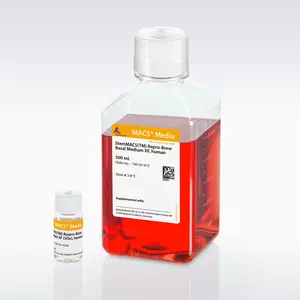
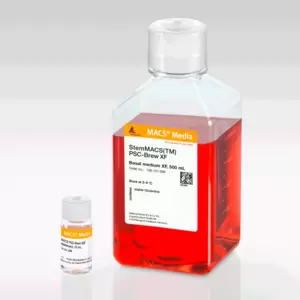
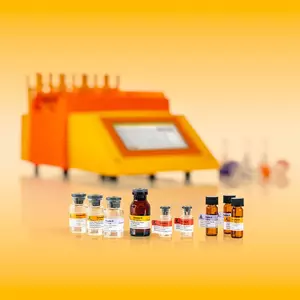

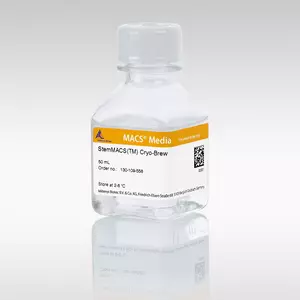
The StemMACS iPSC mRNA Reprogramming Kit, human has been designed for the rapid and highly efficient reprogramming of human fibroblasts into induced pluripotent stem cells (iPSCs).
With the StemMACS iPSC mRNA Reprogramming Kit, human iPSCs can be generated within 14 days under feeder-free conditions without the need for a conditioned medium or the use of B18R protein. The used mRNA-based approach in contrast to traditional viral- or DNA-based reprogramming methods eliminates the risk for genomic integration and the safety concerns connected with using viral-based vectors. There is no need for subsequent screening and laborious experiments to confirm the elimination of the exogenous factors. The StemMACS mRNA Reprogramming Cocktail, human contains transcripts of the following genes: POU5F1 (OCT3/4 ), SOX2, KLF4, MYC, NANOG, LIN28A, and SOCS1. The StemMACS iPSC mRNA Reprogramming Kit, human is an all-inclusive reagent set, containing the mRNA cocktails, transfection reagents, and reprogramming medium needed for the whole reprogramming process. The kit supports reprogramming of nine wells in 6-well plate format.
mRNA-based reprogramming of human fibroblasts into iPSC
Timeline of reprogramming of human fibroblasts into iPSCs using the StemMACS iPSC mRNA Reprogramming Kit, human (A). The bright-field view of human BJ fibroblasts during the reprogramming process; iPSC colonies can usually be isolated from day 11 on (B).
The successful reprogramming of human BJ fibroblasts using the StemMACS iPSC mRNA Reprogramming Kit, human. Overview of fixed cells on day 11 of reprogramming in a 12-well plate, displaying Oct3/4-positive colonies (A). Reprogramming efficiency of BJ fibroblasts seeded at densities ranging from 8–18x103 cells per well in a 12-well plate across multiple experiments and operators (B). Immunostaining results of an iPSC colony on day 11 of reprogramming, validating the expression of pluripotency markers Oct3/4 and Sox2 in iPSCs, while non-reprogrammed fibroblasts were stained with fibroblast or fibronectin antibodies (C).
Analysis of pluripotency marker expression by iPSCs four passages after reprogramming of human BJ fibroblasts using the StemMACS iPSC mRNA Reprogramming Kit, human. The upper panel shows exemplary flow cytometry dot plots. The lower panel presents marker expression by twelve iPSC lines, indicating a high and stable expression in the stem cell population.
Evaluation of the trilineage differentiation potential by iPSCs four passages after reprogramming of human BJ fibroblasts using the StemMACS iPSC mRNA Reprogramming Kit, human. Using the StemMACS Trilineage Differentiation Kit, human, stem cells were differentiated into the three germ layers endoderm, ectoderm, and mesoderm. The upper panel illustrates the flow cytometric analysis of the expression of markers specific for each germ layer. The lower panel presents the differentiation efficiency into the three germ layers for four iPSC clones.
Assessment of the genomic integrity of iPSCs four passages after reprogramming of human BJ fibroblasts using the StemMACS iPSC mRNA Reprogramming Kit, human. The illustration depicts the intact genomic integrity for five iPSC clones as determined by digital PCR, capturing over 92% of recurrent defects in human PSCs.
- Macedo, T. et al. (2026) Human iPSCs derived from cryopreserved testicular somatic cells enable germline regeneration in childhood cancer survivors. Hum Reprod Open : doi: 10.1093/hropen/hoag054
- Klein, T. et al. (2024) Small fibre neuropathy in Fabry disease: a human-derived neuronal in vitro disease model and pilot data. Brain Commun. 6 (2): fcae095
- Ballion, B. et al. (2025) Electrophysiological characterisation of intranigral-grafted hiPSC-derived dopaminergic neurons in a mouse model of Parkinson's disease. Stem Cell Res Ther. 16 (1): 232
- Brot, S. et al. (2022) Long-Term Evaluation of Intranigral Transplantation of Human iPSC-Derived Dopamine Neurons in a Parkinson’s Disease Mouse Model. Cells 11 (10): 1596
- Padilla, A. L. et al. (2026) Cell-based regenerative interventions in Parkinson's disease: Overcoming pharmacological limitations. Acta Pharmacol Sin : doi: 10.1016/j.apsb.2026.03.031
- Mangiameli, E. et al. (2021) Human iPSC-based neurodevelopmental models of globoid cell leukodystrophy uncover patient- and cell type-specific disease phenotypes. Stem Cell Reports 16 (6): 1478-1495
You have previously chosen International as your location.
What do you want to do?