Glossary
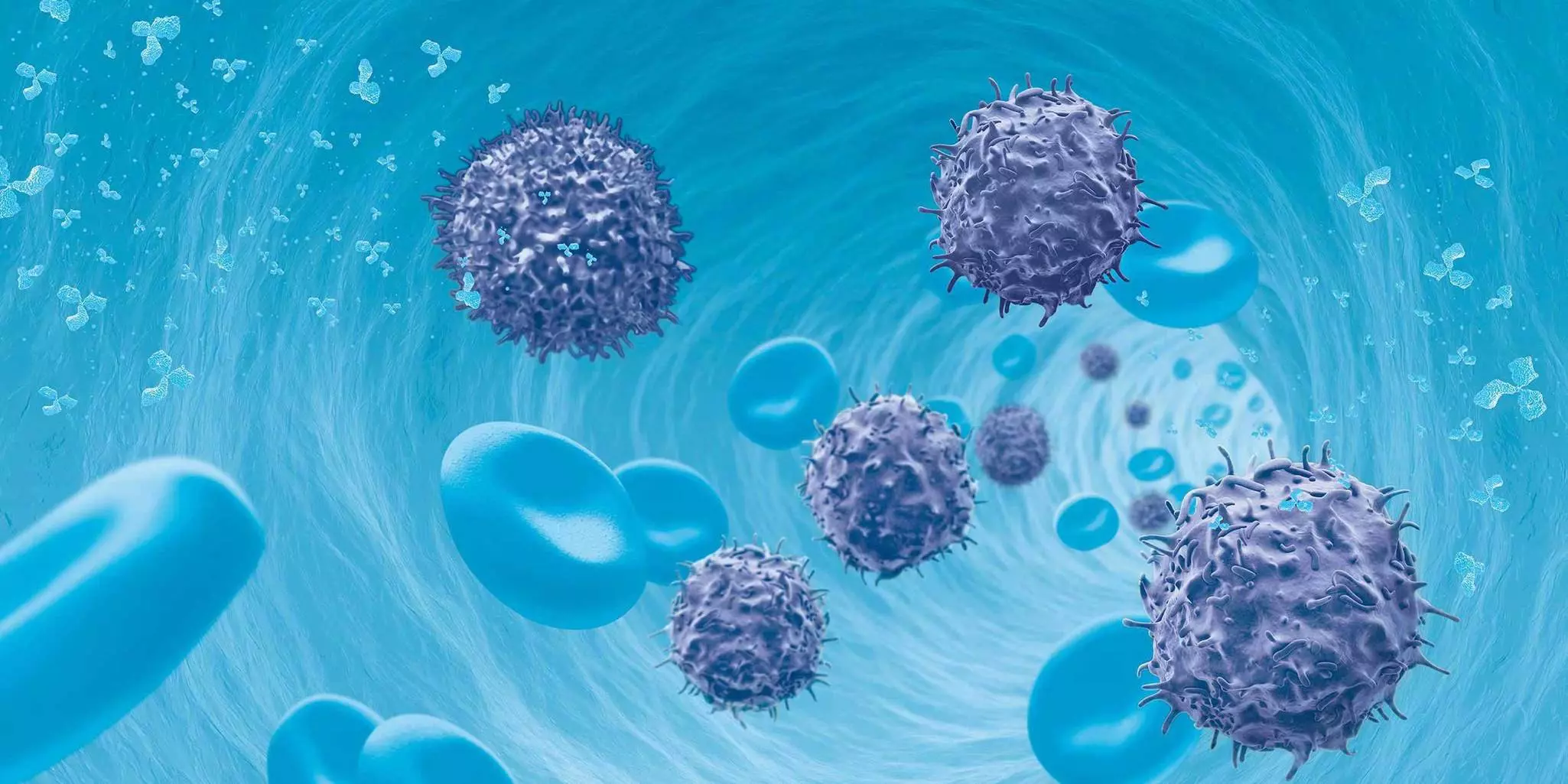
Taken from a different individual.
Allogeneic stem cell transplantation
A patient receives blood-forming stem cells from a donor.
AML
Acute myeloid leukemia (also known as acute myelogenous leukemia) is a cancer of the blood and bone marrow, caused by an overgrowth of immature blood cells.
Anemia
Reduced number of red blood cells causing symptoms like weakness and fatigue.
Apheresis
Withdrawal of donor blood using an automated collection device that spins blood into layers. For stem cell collection, the mononuclear cell layer is separated from plasma, platelets, and red cells. The mononuclear cells are retained while all other cells are returned to the donor in the same procedure.
Autologous stem cell transplantation
A patient provides his own stem cells for transplantation. Blood stem cells are collected from the patient while he is in remission and are given back following chemotherapy.
Bone marrow
Tissue that fills the cavities of the bones. It contains blood stem cells, the precursors of white blood cells, red blood cells, and platelets. All blood cells originate in the bone marrow.
CD34
A molecule on the surface of blood stem cells.
Chemotherapy
Treatment of cancer with chemotherapeutic agents which kill rapidly dividing cells, a characteristic of cancer cells. Unfortunatley all cells that divide rapidly are killed, like hair follicles or digestive tract cells, causing side effects like hair loss and mucositis. It is often used with other treatments, such as radiation and stem cell transplantation.
Chromosomal abnormalities
Chromosomes are the structures that hold your genes. Alteration in their number or structure is called a chromosomal abnormality.
Chronic disease
A long-lasting condition that can be controlled but not cured.
CliniMACS® CD34 Reagent System
An FDA-approved medical device to select and enrich CD34-positive cells from donor apheresis products.
Complete remission
No leukemia cells are detectable in a period of time after treatment.
Conditioning
The destruction of the patient’s blood and immune system before the transplantation of blood stem cells.
Consolidation therapy
Treatment after induction therapy to destroy remaining leukemia cells and prevent the recurrence of the disease.
Engraftment
The process in which the transplanted stem cells find their way to the bone marrow and begin to produce new blood cells.
Ex vivo
Outside the body.
Ex vivo T cell depletion
The depletion of T cells from the graft before transplantation.
Graft
Cells transplanted to the patient.
Graft-versus-host disease (GVHD)
A serious complication after allogeneic stem cell transplantation in which transplanted cells identify the patient’s body as foreign and attack it, resulting in organ damage. Acute GVHD is normally observed within 100 days following transplantation, whereas chronic GVHD occurs after.
Graft versus leukemia effect GVL
The activity of newly generated immune cells that attack residual leukemic cells.
Immunosuppressive drugs
Agents that inhibit or prevent the activity of the immune system.
Induction therapy
Initial phase of chemotherapy to get rid of all detectable leukemia cells and treat the immediate disease.
GVHD prophylaxis
Attempts to prevent GVHD from developing. Different methods are used to prevent donor T cells attack the patient’s body, like T cell depletion or immunosuppressive drugs.
Matched related donor
A related person that is chosen to donate his cells for an allogeneic stem cell transplantation and whose tissue type matches that of the patient. A close match between the donor and the patient reduces the likelihood of GVHD.
Myeloid cell
Precursor cell in the bone marrow that develops into white blood cells.
Peripheral blood stem cells (PBSC)
Blood stem cells that moved from the bone marrow into the blood stream and can be collected from there.
Platelets
Small cells (thrombocytes) that aggregate at blood vessel injures and seal the vessel to stop bleeding. Normal platelet counts are 150,000–450,000/mm3. Below 150,000/mm3, increased bruising and bleeding occur in a condition called thrombocytopenia. Spontaneous bleeding occurs if platelet counts drop below 20,000/mm3 – particularly dangerous if bleeding occurs in the brain, or blood leaks from the intestine or stomach.
Red blood cells
Carry oxygen from the lungs to all cells in the body. A blood test (hematocrit) measures the percentage of blood composed of red blood cells. The normal range is about 35% to 50% for adults. Percentages below this level indicate anemia, which can lead to pale skin, feeling cold, tired, and short of breath.
Relapse
The recurrence of cancer.
Remission
See complete remission.
Stem cells
Can differentiate into numerous cell types. Blood stem cells develop into red cells, white cells, or platelets in the presence of specific chemical signals. Following a successful stem cell transplant, the bone marrow is repopulated with healthy blood stem cells to rebuild the patient’s blood and immune systems.
T cells
A subgroup of white blood cells responsible for defending the body against virally infected or tumor cells. When transplanted to a patient, donor T cells may attack the patient’s tissue and cause organ damage, resulting in a disease called graft-versus-host-disease.
Umbilical cord blood
Blood taken from a newborn baby's umbilical cord after birth. It contains a rich source of stem cells which can be used to treat various disorders like leukemia, lymphoma, and genetic disorders.
White blood cells (WBC)
Fight infections caused by bacteria, viruses, and fungi. T cells and neutrophils are subgroups which are critical in fighting infections. Infection risk increases when the absolute neutrophil count drops below 1,000/mm3 in a condition called neutropenia. The greatest danger is at levels below 500/mm3.
Humanitarian Device
Authorized by U.S. Federal Law for use in the treatment of patients with acute myeloid leukemia (AML) in first complete remission. The effectiveness of the device for this use has not been demonstrated.
Indications for Use
The CliniMACS® CD34 Reagent System is indicated for processing hematopoietic progenitor cells collected by apheresis (HPC, Apheresis) from an allogeneic, HLA-identical, sibling donor to obtain a CD34+ cell-enriched population for hematopoietic reconstitution following a myeloablative preparative regimen without the need for additional graft versus host disease (GVHD) prophylaxis in patients with acute myeloid leukemia (AML) in first morphologic complete remission.
Contraindications
Do not use CD34+ cells prepared with CliniMACS CD34 Reagent System in patients with known hypersensitivity to murine (mouse) proteins or iron dextran.
Rx only
You have previously chosen International as your location.
What do you want to do?