Pluripontent stem cells
Mesenchymal stem cells
Hematopoietic stem cells
Neural stem cells
Content
- Pluripontent stem cells
- Mesenchymal stem cells
- Hematopoietic stem cells
- Neural stem cells


Stem cells, known for their fragility and potential to differentiate into various cell types, require careful handling to maintain viability and functionality. Mechanical or environmental stress can easily trigger unwanted differentiation or activation pathways, compromising the self-renewal ability and pluripotency of stem cells, as well as altering epigenetic states and gene expression patterns.
The MACSQuant® Tyto® Cell Sorter provides optimal conditions, offering gentle sorting within a closed, sterile cartridge that protects and preserves the delicate nature of stem cells.
Pluripontent stem cells
Mesenchymal stem cells
Hematopoietic stem cells
Neural stem cells
Induced pluripotent stem cells (iPSCs) drive advancements in disease modeling and developmental research, drug discovery and toxicity screening, and cell and gene therapy. Due to their fragility, gentle sorting is essential to preserve the functionality and differentiation potential of iPSCs, leading to better outcomes in research and clinical applications.

GFP-positive iPSCs were sorted using the MACSQuant Tyto Cell Sorter, then replated and cultured for 24 hours. When compared to controls, GFP-positive iPSCs showed comparable replating efficiencies, highlighting the gentle sorting when using the MACSQuant Tyto Cell Sorter.
Subsequently, these cells were differentiated into cardiomyocytes and sorted to 98% purity. After replating, cardiomyocytes started contracting within 24–48 hours, confirming the functionality of cells.
Mesenchymal stem cells (MSCs) are found in the cord blood, bone marrow, and adipose tissue. Despite their low native abundance, MSCs exhibit significant therapeutic potential in regenerative medicine and cell-based therapies due to their immunomodulatory properties, differentiation capacity, and paracrine effects.
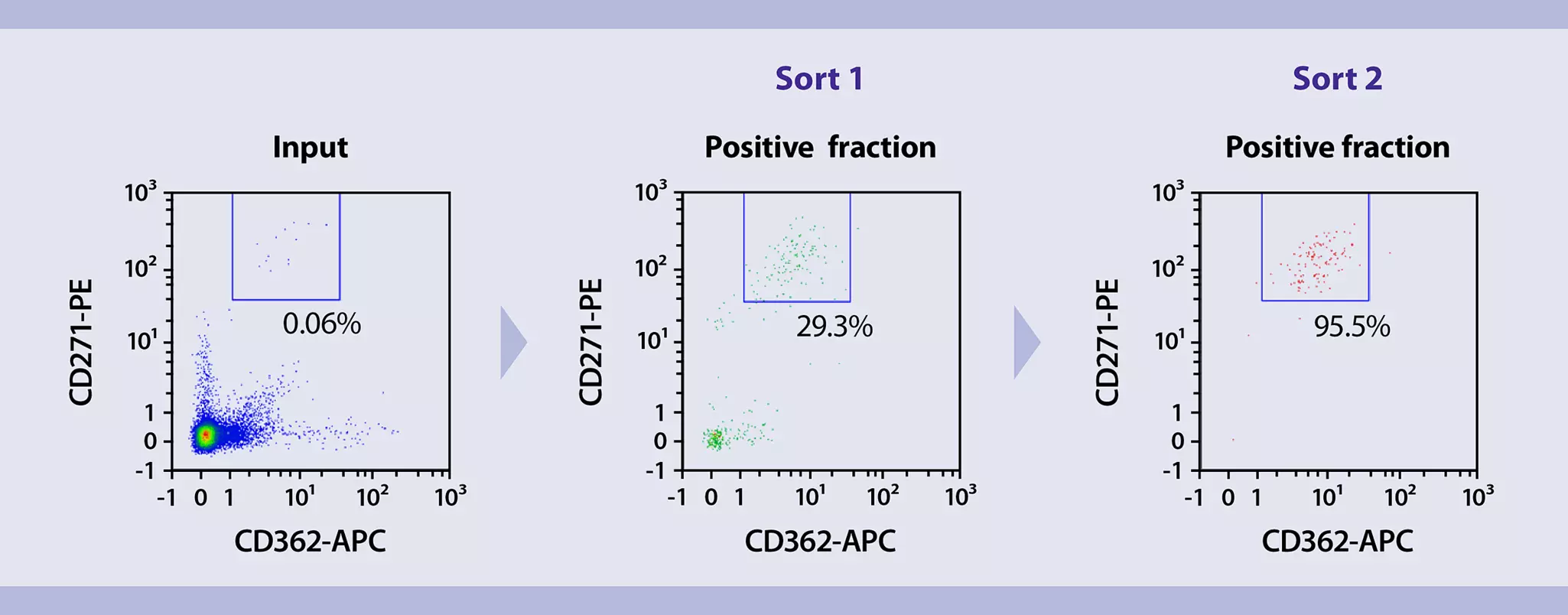
Check our data on sorting marrow-derived mesenchymal stem cells to high purity in a two-step sequential sorting strategy using the MACSQuant Tyto Cell Sorter. The gentle sorting conditions allow for the enrichment of rare cells through multiple rounds of sorting.
Hematopoietic stem cells (HSCs), found in bone marrow, peripheral blood, and umbilical cord blood, have the unique ability to self-renew and generate all blood cell lineages. Their regenerative potential is a cornerstone for stem cell therapies, particularly in hematological disorders, immune reconstitution, and bone marrow transplants.
The gentle cell sorting provided by the MACSQuant Tyto Cell Sorter is ideal for cell sorting of HSCs, preserving cell viability, functionality, and engraftment potential for therapeutic applications.
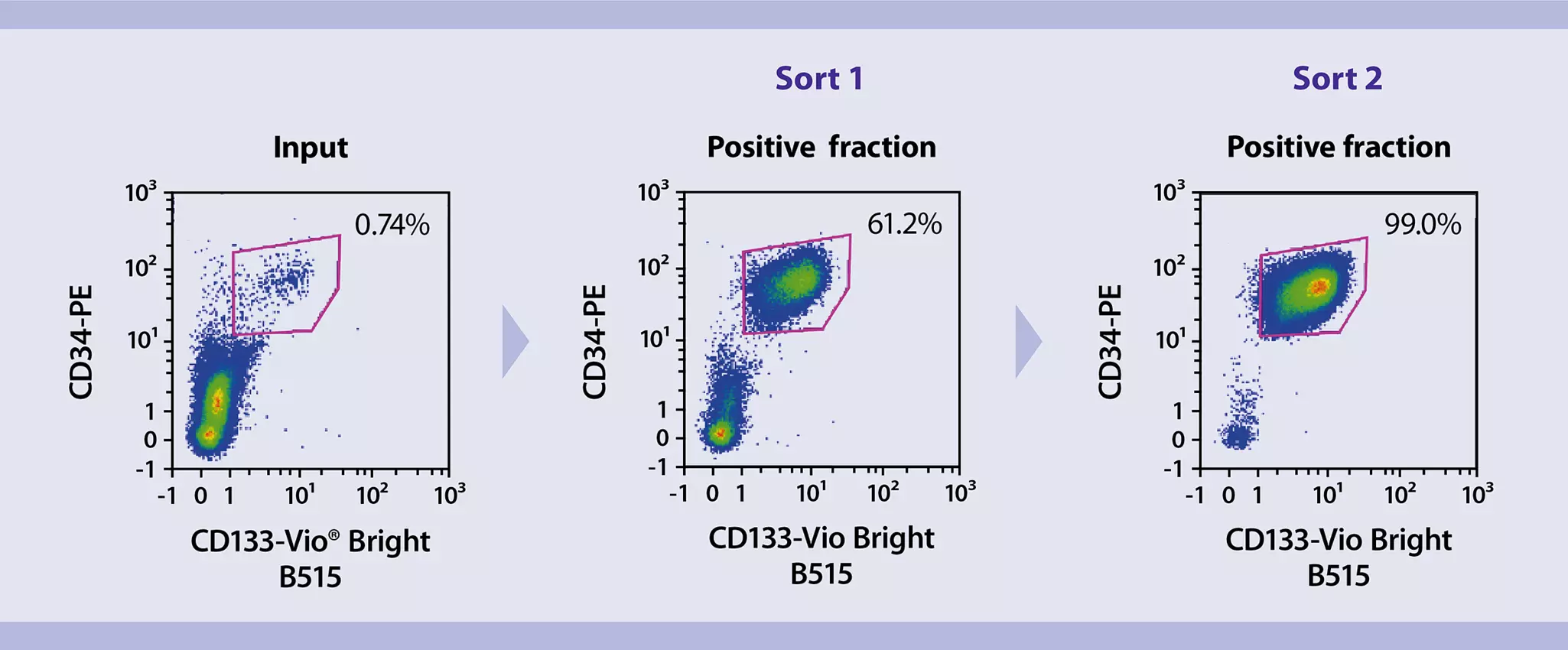
Hematopoietic progenitor cells were successfully sorted from frozen cord blood mononuclear cells (MNCs) using a two-step sequential sorting strategy. In the first sorting step, rare CD133+ cells were enriched. The positive fraction from this initial sort was used for a second round of sorting, yielding a highly pure cell population.
Neural stem cells (NSCs) have the potential to self-renew and differentiate into neurons, astrocytes, and oligodendrocytes used in regenerative medicine and cell therapies for neurodegenerative diseases. Gentle sorting is crucial to preserve their viability, functionality, and therapeutic potential, as harsh methods can damage these delicate cells and induce premature differentiation. Maintaining their integrity is essential for successful applications in tissue repair and regenerative therapies.
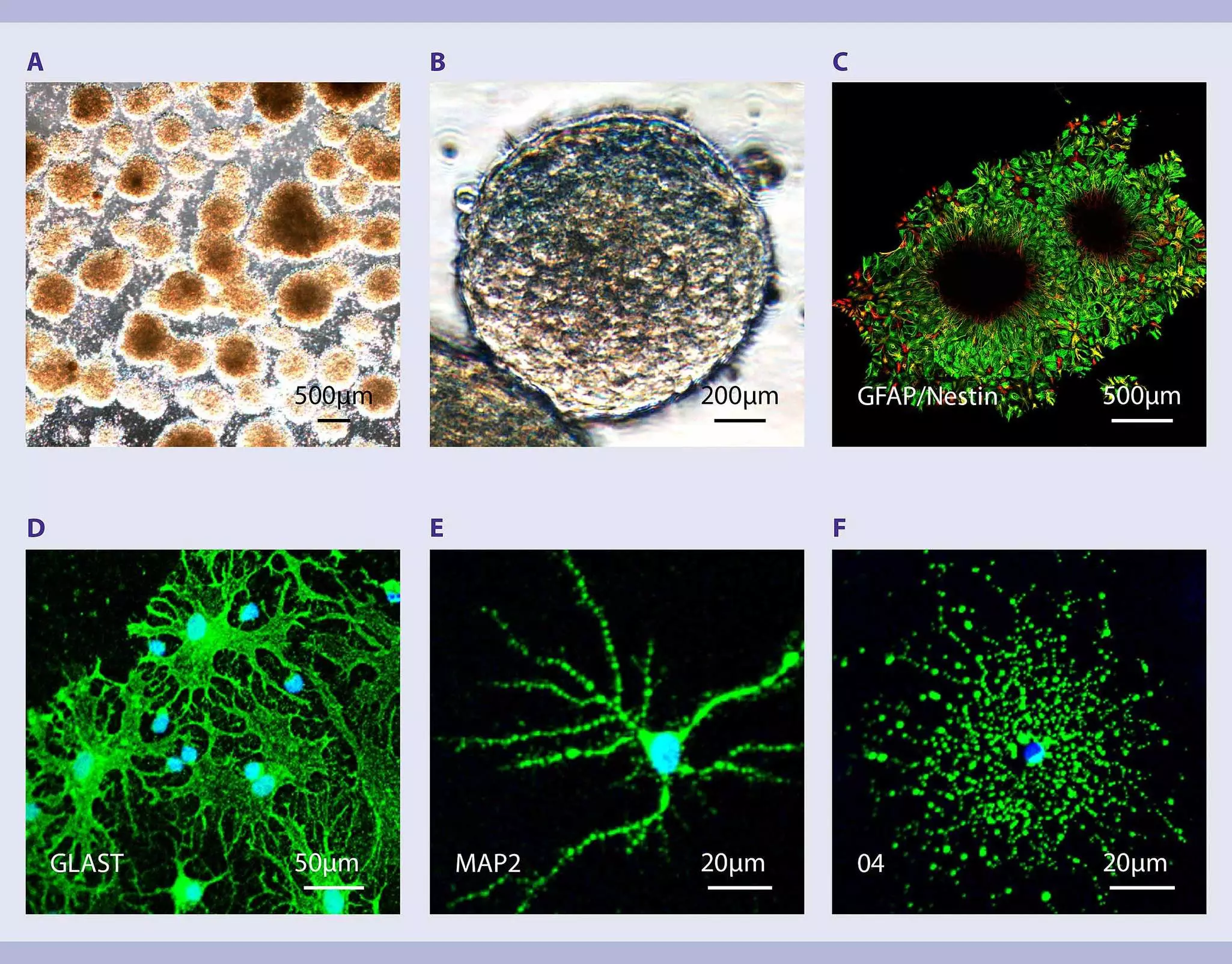
Sorted neural stem cells were cultured for several days and generated primary and secondary neurospheres, confirming their ability to self-renew. Neurospheres were also able to differentiate into glial cells, expressing astrocyte markers GFAP, nestin, and GLAST, as well as neuronal cells marked by MAP2 and oligodendrocytes identified by O4 expression. Check the entire study here.
You have previously chosen International as your location.
What do you want to do?