What is graft-versus-host disease (GVHD)?

Allogeneic stem cell transplantation can be potentially curative treatment option for acute myeloid leukemia (AML), but carries risks. One major complication is GVHD, a condition where donor cells attack the patient's body.
Why does GVHD develop?
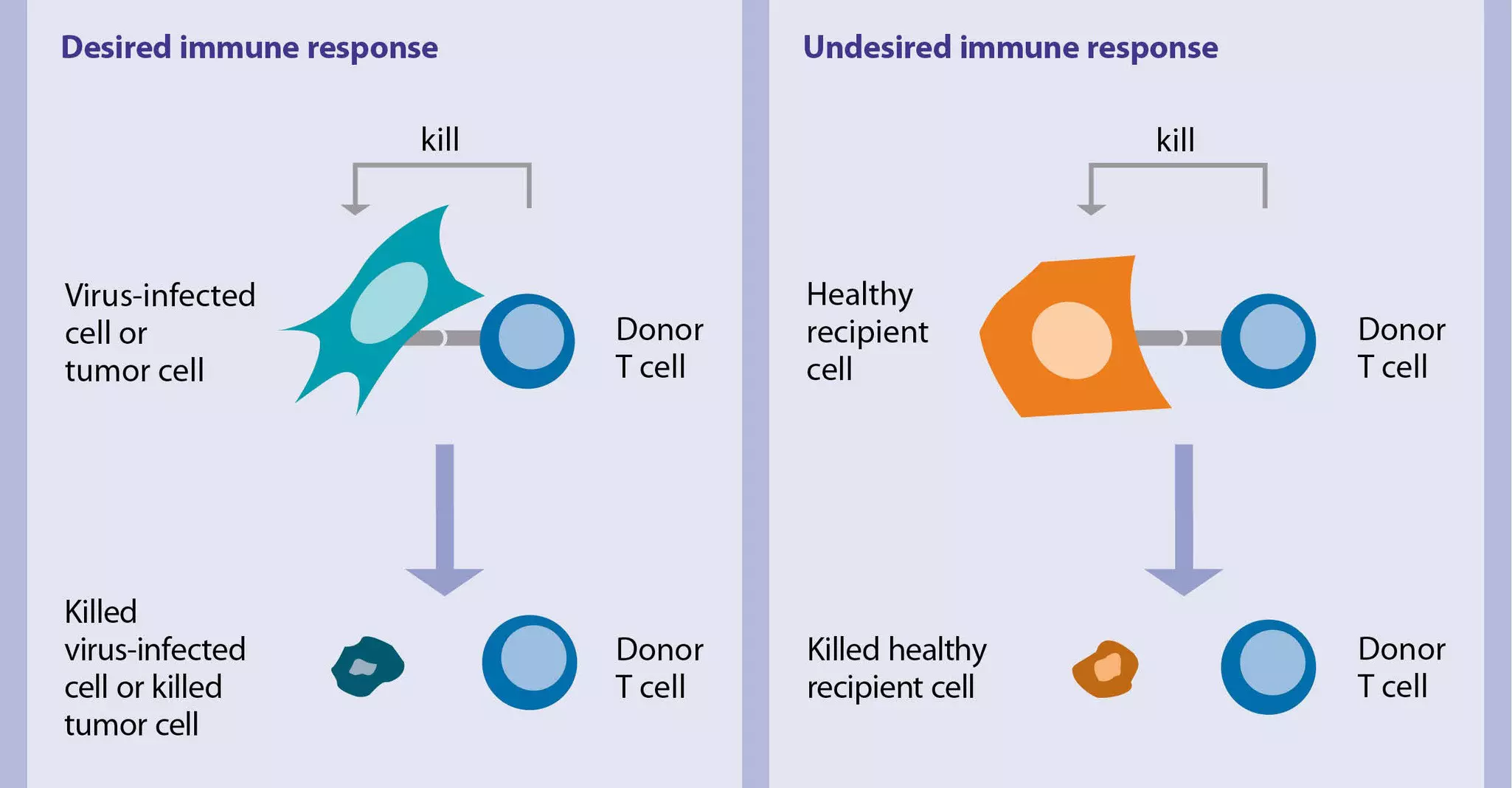
GVHD occurs following stem cell transplantation as the donor stem cells grow and repopulate the body’s immune system. A specific group of the donor’s white blood cells in the transplant, called T cells, identify the patient’s body as foreign and attack it.
Normally, these T cells perform their job correctly by protecting the body from abnormal cells, such as virus-infected or tumor cells. However, during GVHD, the transplanted T cells also react against the patient’s tissue, resulting in tissue and organ damage.
Graft-versus-host disease can damage different parts of the body, including the liver, skin, mucosa, and gastrointestinal tract. Symptoms can include rashes, intestinal inflammation, severe diarrhea, nausea, and vomiting.
GVHD is divided into two categories: acute and chronic. Whereas acute GVHD is normally observed within the first 100 days after transplantation, chronic GVHD occurs after 100 days and in some cases, may occur years after transplantation as a long-term side effect of the treatment.
The course of GVHD varies from mild to severe and can even be a life-threatening disease. When GVHD becomes a chronic disease, it is frequently accompanied by a dramatic decrease in the patient’s quality of life.
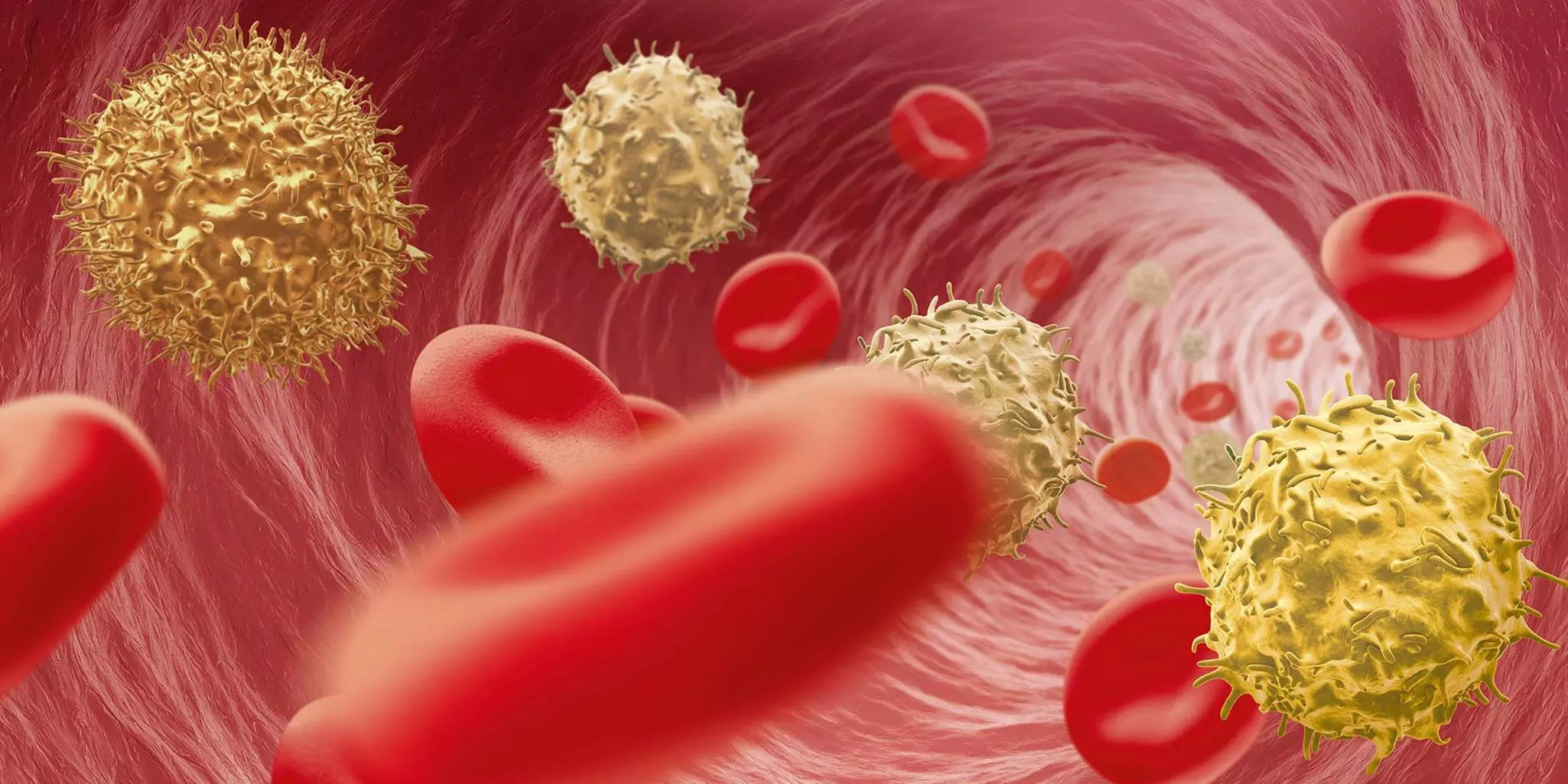
What are T cells?
T cells are a subset of white blood cells that play a large role in the immune response. The abbreviation “T” stands for thymus, the organ in which their final stage of development occurs.
How to prevent GVHD?
Different approaches are used to prevent the development of GVHD. Matching patient and donor tissue types and immune systems is the first step to avoid an undesired immune response. In addition, GVHD prophylaxis can be accomplished with various methods to reduce the activity of T cells from the donor graft.
Immunosuppressive drugs are commonly used to inhibit the activity of the patient’s immune system, including the donor's T cells. These drugs are used as prophylaxis for GVHD. Unfortunately, immunosuppressive drugs can have severe side effects.
Another viable option for graft-versus-host disease prophylaxis is the removal of donor T cells before transplantation in a process called ex vivo T cell depletion. Removal of the T cells takes place ex vivo, meaning outside the patient’s body. This is accomplished by processing donor cells using an FDA-approved medical device before transplantation to the patient.

What is ex vivo T cell depletion?
T cells can be removed from the transplant with the use of a medical device. By collecting the donor blood stem cells, the most important players in the transplant, all other cells, including T cells, are depleted. The highly purified stem cells are then given to the patient.
Magnetic cell separation for ex vivo T cell depletion
Cell types of the human body can be identified by the molecules they bear on their surface. Human blood stem cells are often characterized by a protein marker they bear on their surface called CD34. By coupling a magnetic particle (comprised of iron and dextran, a sugar molecule) to an antibody that is capable of binding very specifically to the CD34 surface marker, stem cells can be separated from other cells when placed in a magnetic field within the medical device.
The preparation of a T cell-depleted graft for transplantation involves a series of steps:
- Collection of blood stem cells from the donor
- Incubation with the anti-CD34 magnetic particle (fig. 1)
- Passage through a magnetic field
- Retention of the blood stem cells within the magnetic field, while all other donor cells are removed, including potentially harmful T cells
- Removal of the magnetic field and collection of the highly purified stem cells for transplantation

The CliniMACS® CD34 Reagent System – clinical outcome
The enrichment of CD34-positive stem cells with the CliniMACS CD34 Reagent System is an FDA-approved method for GVHD prophylaxis. It is used for patients with AML in first complete remission who are undergoing allogeneic stem cell transplantation from a matched related donor. The infusion of highly purified blood stem cells eliminates the need for pharmacological therapies, while T cell depletion with the CliniMACS CD34 Reagent System reduces the risk of both acute and chronic GVHD in these patients.
The low risk of acute and chronic GVHD by ex vivo T cell depletion has been demonstrated in a clinical study conducted by the Bone Marrow Transplantation Clinical Trials Network (BMT CTN 0303).

How can I learn more about the clinical data?
Ask your doctor about the BMT CTN 0303 study that was conducted to evaluate ex vivo T cell depletion as GVHD prophylaxis and showed low rates of chronic GVHD in patients receiving T cell-depleted transplants.
Humanitarian Device
Authorized by U.S. Federal Law for use in the treatment of patients with acute myeloid leukemia (AML) in first complete remission. The effectiveness of the device for this use has not been demonstrated.
Indications for Use
The CliniMACS® CD34 Reagent System is indicated for processing hematopoietic progenitor cells collected by apheresis (HPC, Apheresis) from an allogeneic, HLA-identical, sibling donor to obtain a CD34+ cell-enriched population for hematopoietic reconstitution following a myeloablative preparative regimen without the need for additional graft versus host disease (GVHD) prophylaxis in patients with acute myeloid leukemia (AML) in first morphologic complete remission.
Contraindications
Do not use CD34+ cells prepared with CliniMACS CD34 Reagent System in patients with known hypersensitivity to murine (mouse) proteins or iron dextran.
Rx only
You have previously chosen International as your location.
What do you want to do?