

Synonyms: T cell antigen receptor complex, T3, AI504783, CD3epsilon, T3E, Ctg-3, Ctg3, T3g
RECOMBINANT EXTENDED VALIDATION
- Clone:
- REA641 | 17A2
- Type of antibody:
- Primary antibodies, Recombinant antibodies
- Isotype:
- recombinant human IgG1
- Applications:
- FC, MICS, 3D-IF, IF, IHC Glossary
- Select a conjugate:


Related products for CD3 Antibody, anti-mouse, REAfinity™


Flow cytometry applications
APC
APC-Vio 770
Biotin
FITC
PE
PE-Vio 770
PerCP-Vio 700
Vio Bright B515
Recommended dilution:
1:50
Remark:
The antibody is suited for staining of formaldehyde-fixed cells.
Data source:
Miltenyi Biotec
Conjugate:
APC
Used products:
130-122-943
Description:
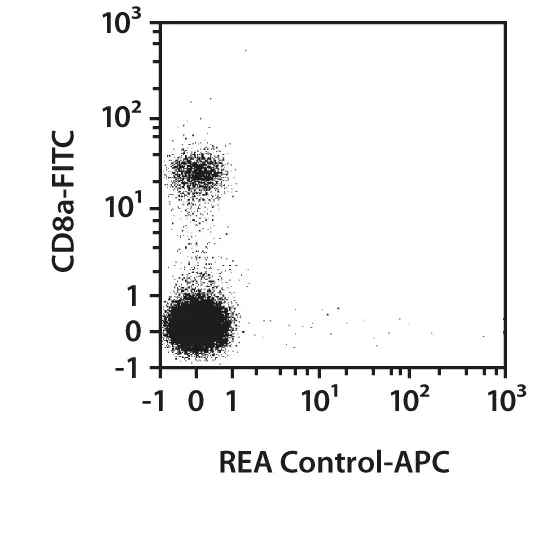
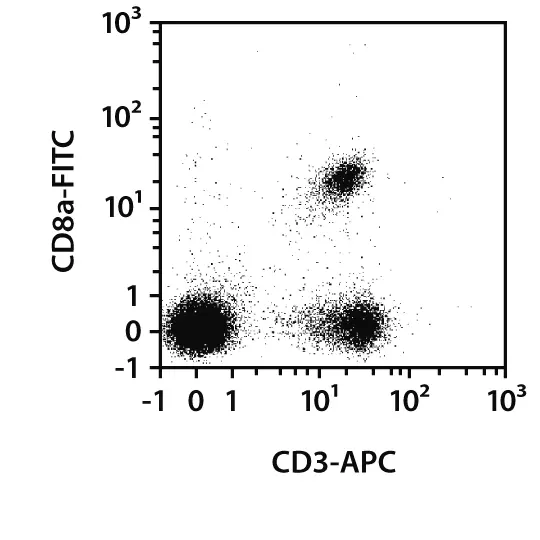
Splenocytes from C57BL/6 mice were stained with CD3 antibodies or with the corresponding REA Control antibodies (left images) as well as with CD8a antibodies. Flow cytometry was performed using the MACSQuant® Analyzer. Cell debris and dead cells were excluded from the analysis based on scatter signals and propidium iodide fluorescence or 4',6-diamidino-2-phenylindole (DAPI) fluorescence, as in the case of tandem conjugates.
 view details
 view details
MICS (MACSima Imaging Cyclic Staining) applications
APC
FITC
PE
Fixation:
frozen – PFA
Species tested:
mouse
Tissue used:
small intestine
Recommended dilution:
1:50
Data source:
Miltenyi Biotec
Compatible applications:
IF, IHC
Conjugate:
APC
Used products:
130-122-943
Testing grade:
Description:
Immunofluorescence analysis of a small intestine section cryosection fixed with 4% PFA. The section was stained using CD3 APC (green) for 10 min at room temperature. Nuclei were visualized with Hoechst™ (blue). Scale bar: 30 µm.

Fixation:
frozen – Acetone
Species tested:
mouse
Recommended dilution:
1:50
Data source:
Miltenyi Biotec
Compatible applications:
IF, IHC
Conjugate:
APC
Used products:
130-122-943
Testing grade:
3D-Immunofluorescence applications
Vio 780
Vio B515
Vio G570
Vio R667
Tissue clearing:
MACS® Clearing Kit
Fixation:
PFA
Species tested:
mouse
Tissue used:
lymph node
Recommended dilution:
1:50
Data source:
Miltenyi Biotec
Compatible applications:
IF, IHC
Conjugate:
Vio 780
Used products:
130-135-517
Protocols:
Immunostaining and clearing of mouse lymph nodes for 3D imaging analysis.
Description:
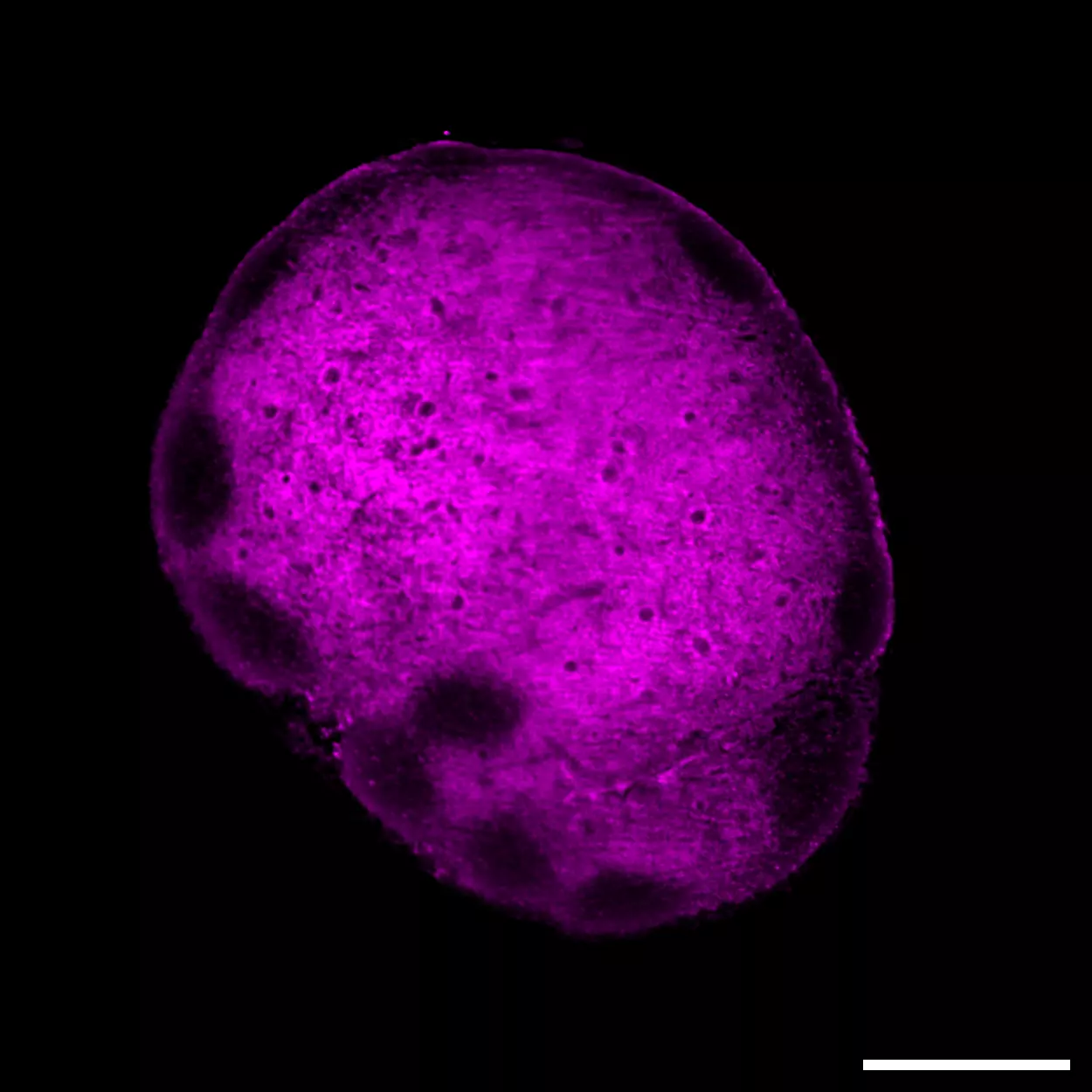
3D-immunofluorescence analysis of mouse lymphnodes fixed with 4% PFA and subjected to whole-mount immunostaining with CD3 Antibody, mouse, Vio® 780 (magenta). The sample was processed and optically cleared using the MACS® Clearing Kit and imaged with an UltraMicroscope Blaze light sheet instrument. Sample detail image of lymphnodes (A), overview of lymphnode (B). Scale bars: 100 µm (A), 500 µm (B).
A
 view details
B
 view details
Extended validation for CD3 Antibody, anti-mouse, REAfinity™
Specificity
In order to compare the epitope specificity of an antibody, the clone being used is compared with other known clones recognizing the same antigen in a competition assay.
Other clones
Overlap in epitope recognition with REA641
145-2C11
partial
17A2
high
500A2
partial
REA606
partial
Cells were incubated with an excess of purified unconjugated CD3 (REA641) antibody followed by staining with fluorochrome-conjugated antibodies from other known clones targeting the same antigen. Fluorescence intensity was then used to assess epitope overlap: a minimal or absent signal indicated high epitope overlap, an intermediate signal suggested partial overlap, and a strong signal reflected low overlap.
Sensitivity
Selected fluorochrome conjugated antibodies from Miltenyi Biotec were compared to commercially available hybridoma clones in flow cytometry analysis.
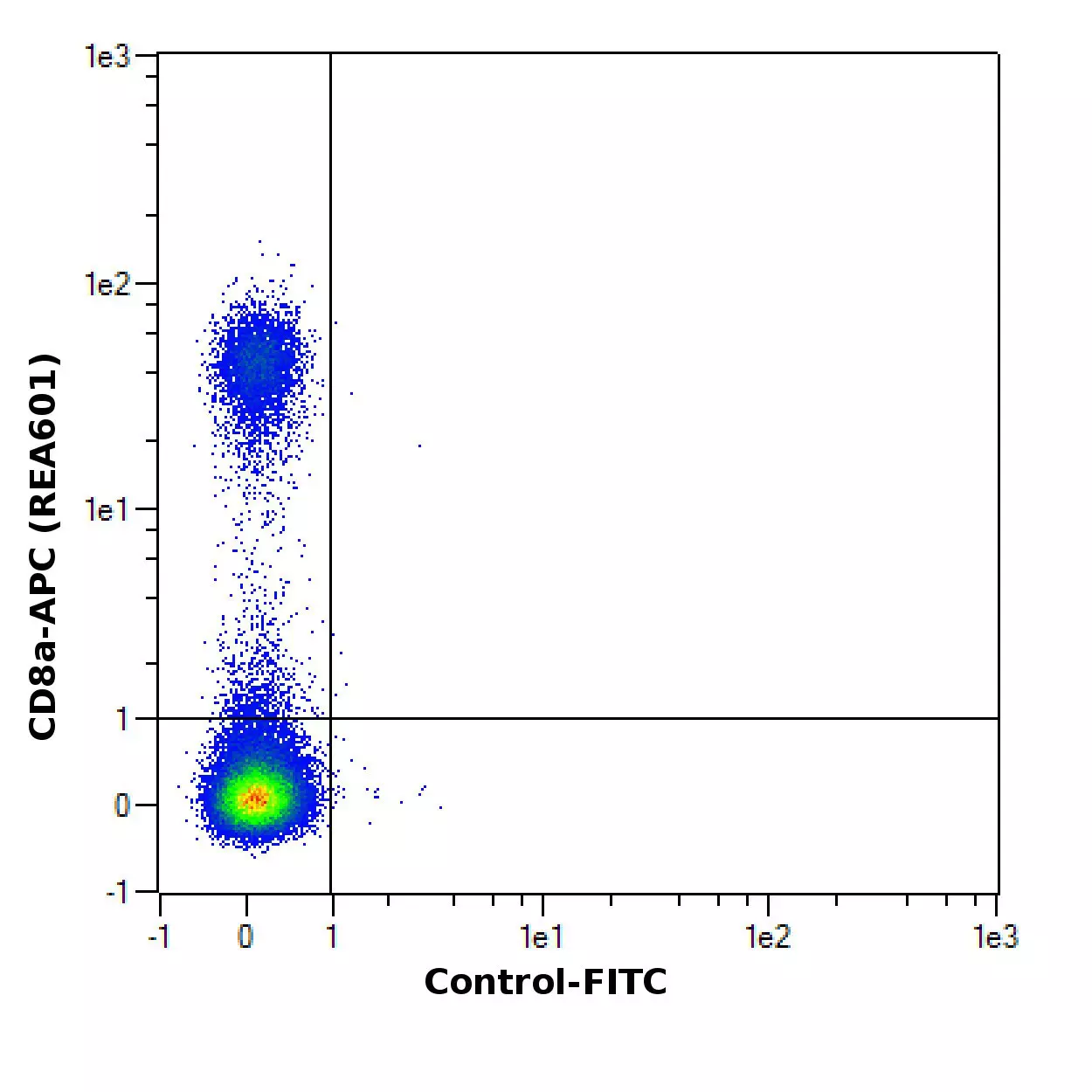

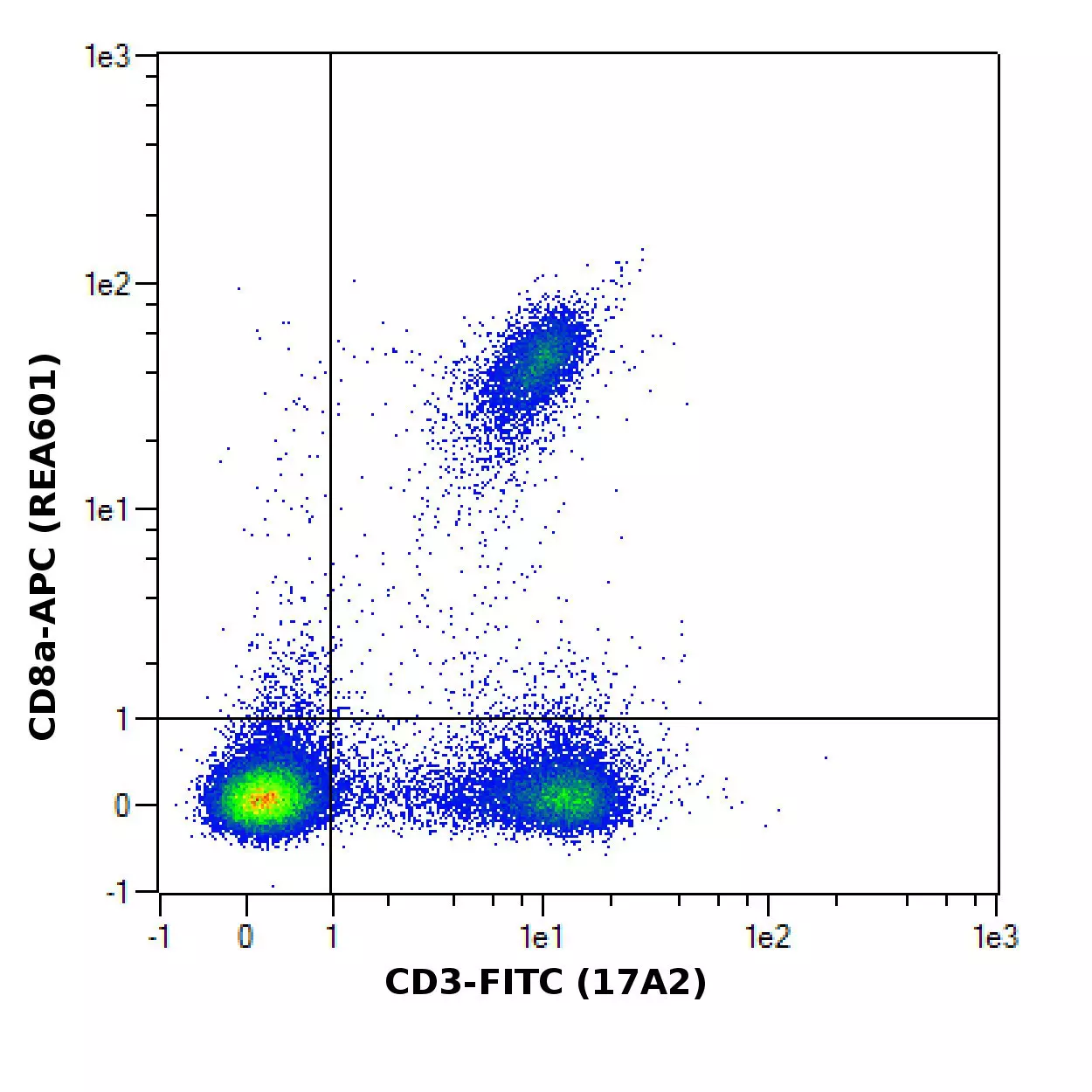
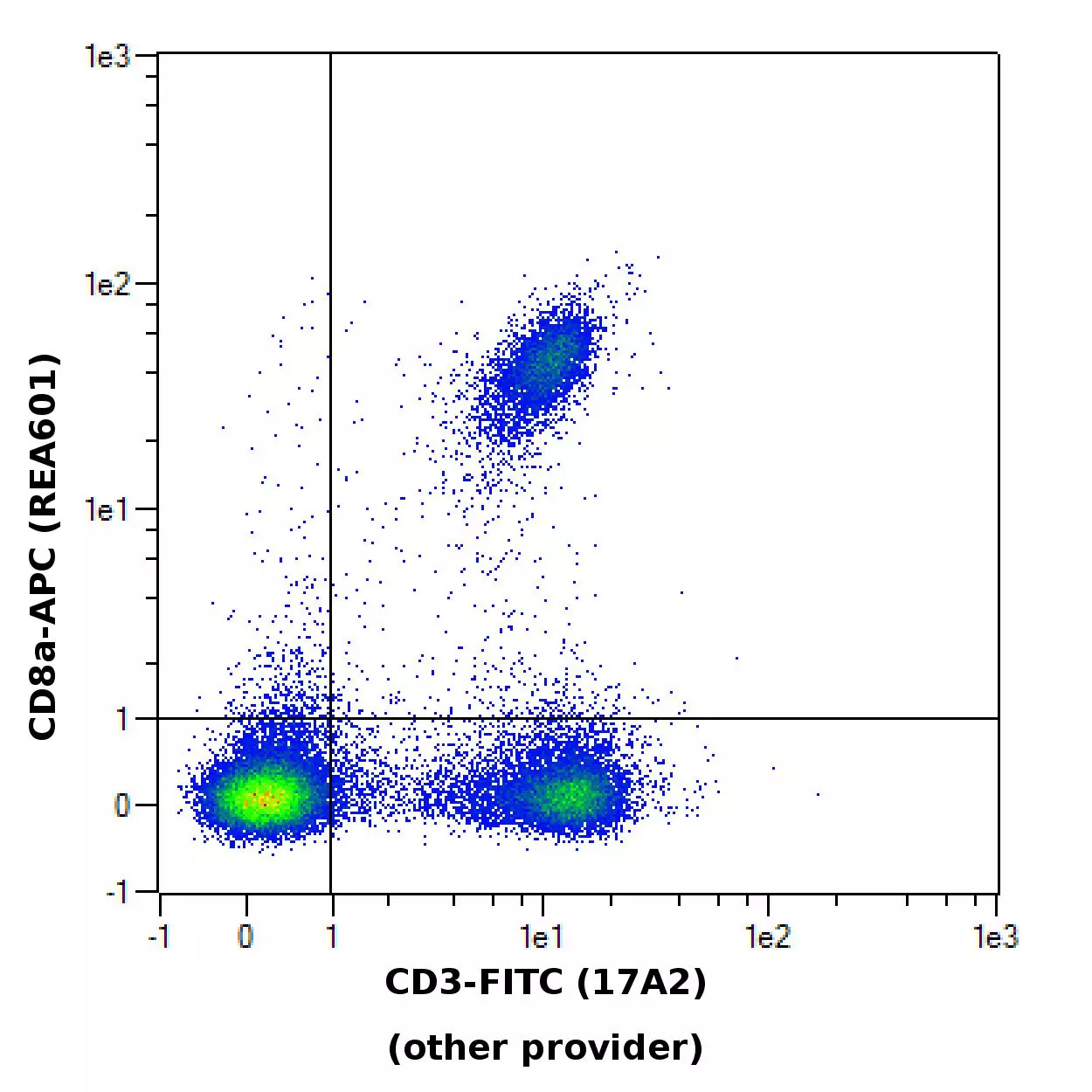
Flow cytometric comparison of different clones for CD3. Splenocytes from BALB/c mice were stained with CD3 antibodies and with a suitable counterstaining. As a control, CD3 antibody staining was omitted and cells were measured in the same channels. Flow cytometry was performed with the MACSQuant® Analyzer. Cell debris, dead cells, and cell doublets were excluded from the analysis based on scatter signals and 4',6-diamidino-2-phenylindole (DAPI) fluorescence. No FcR Blocking Reagent was used. The recommended titers of respective antibodies from different suppliers were used.
To provide an indication on how an antibody performs after fixation of cells, in-house data on staining results before and after fixation with 3.7% formaldehyde using Miltenyi Biotec antibodies are provided. Different experimental settings may lead to different results.
No fixation
Post fixation

Comparison of staining pattern on non-fixed and fixed cells using CD3 (REA641). The performance of the antibody after fixation was tested by comparing the staining pattern on fresh (no fixation) versus fixed (post fixation) cells.
Specifications for CD3 Antibody, anti-mouse, REAfinity™
Overview
Clone REA641 recognizes the mouse CD3 complex, which is expressed on all mature T lymphocytes, NKT cells, and during the development of thymocytes. CD3, also known as T3, belongs to the Ig superfamily. It consists of CD3ε, δ, γ, and ζ chains and forms a TCR complex by associating with TCR α/β or γ/δ chains. The TCR does not possess intracellular signaling domains, uncoupling Ag recognition from T cell signaling. The TCR is instead non-covalently associated with a multisubunit signaling apparatus, consisting of the CD3εγ and CD3εδ heterodimers and the CD3ζζ homodimer, which collectively form the TCR-CD3 complex. CD3 is involved in T cell activation, signal transduction, and antigen recognition by binding the peptide/MHC antigen complex.
Additional information: Clone REA641 displays negligible binding to Fc receptors.
T cell antigen receptor complex, T3, AI504783, CD3epsilon, T3E, Ctg-3, Ctg3, T3g
Detailed product information
Technical specifications
Clone
REA641
Clonality
monoclonal
Isotype
recombinant human IgG1
Isotype control
REA Control Antibody, human IgG1
Host
human cell line
Type of antibody
Primary antibodies, Recombinant antibodies
Species reactivity
mouse
Antigen
CD3
Molecular mass of antigen [kDa]
37, sum of molecular weights of subunits
Distribution of antigen
T cells, thymocytes, NKT cells
RRID
AB_2751847, AB_2751851, AB_2752207, AB_2922265, AB_2727593, AB_2751822, AB_2727569, AB_2801803, AB_2819528, AB_2801978
Recombinant antibodies at Miltenyi Biotec
As an innovation-powered company with a commitment to quality and excellence, Miltenyi Biotec applies cutting-edge methods to discover and develop newer and better antibodies to satisfy both market demand and regulatory requirements.
The Miltenyi way of generating best-in-class antibodies and antibody conjugates
At Miltenyi Biotec, we opt for recombinant antibodies, which enable sequence verification and optimization for lot-to-lot consistency, making them superior to hybridoma-based antibodies.
Infusing our unique expertise
Recombinants are the result of combining genetic material from different immunized animals, and using display technologies to screen in-house antibody libraries for the best antibodies. Additional analyses on existing hybridoma-based antibodies can also give rise to sequences contributing to novel recombinants.
Maximizing value for your research
By further re-engineering these antibody sequences, we can precisely control their properties to achieve the following benefits:
reduce undesirable binding to Fc gamma receptors,
- eliminate destabilizing amino acid motifs,
- increase specific bonding affinity for stronger, more accurate targeting, and
- optimize fluorochrome conjugation for brighter and clearer signals.
In a final step, by synthesizing and cloning the resulting gene sequence, we achieve an expression vector that develops a cell line, which in turn produces a special recombinant antibody.
Better science with quality antibodies
Already in 2015, 100 of the world’s leading scientists collectively called for better standards and reproducibility in antibody production, proposing recombinant antibodies to circumvent variability (Baker, M. Reproducibility crisis: Blame it on the antibodies. Nature 521, 274–276 (2015). https://doi.org/10.1038/521274a). Moreover, by applying reverse engineering, which is encouraged by the EU Directive 2016/943 r, Miltenyi Biotec acts “[i]n the interest of innovation and fostering competition…” (§16).
Resources for CD3 Antibody, anti-mouse, REAfinity™
Documents and Protocols
Certificates
To access a Certificate of Analysis (CoA) follow the link below and enter the specific lot of your product.
Should you wish to request additional documentation, such as a Safety Data Sheet (SDS) in other languages than English or Swedish, an SDS-replacement document, or a Certificate of Origin (CoO), please direct your inquiry to your local technical support team.
 Powered by Bioz
You have previously chosen International as your location.
What do you want to do?